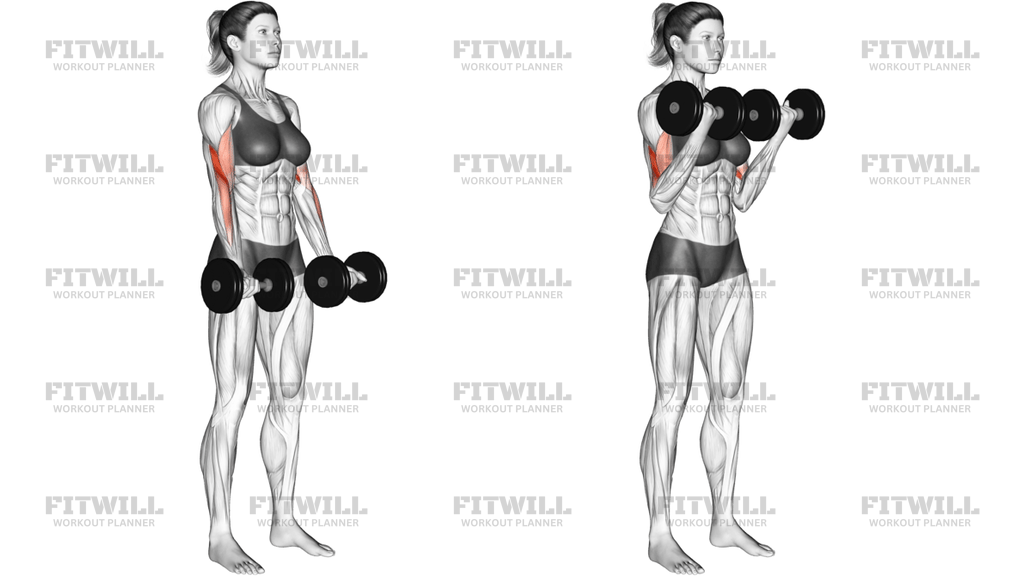
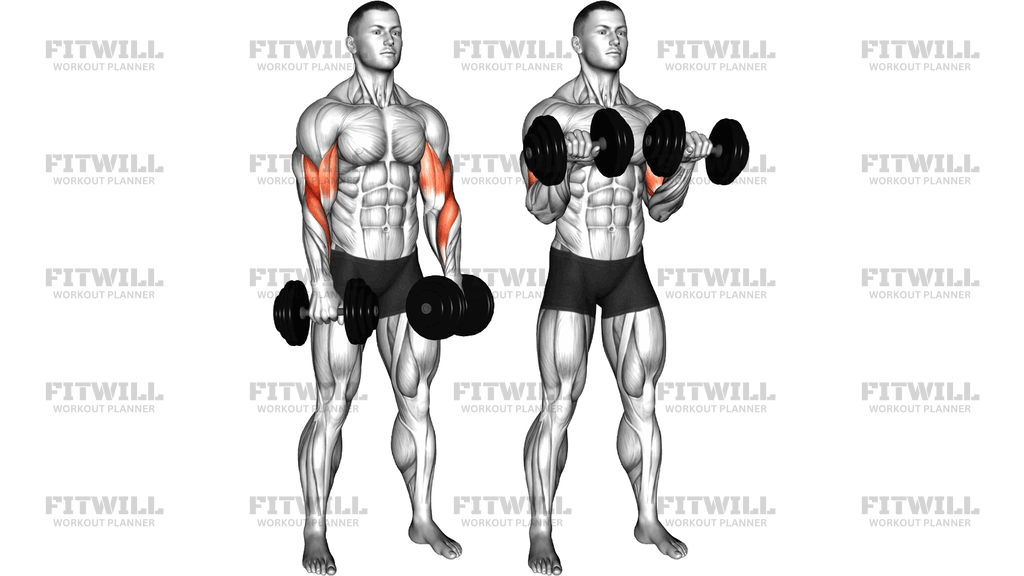
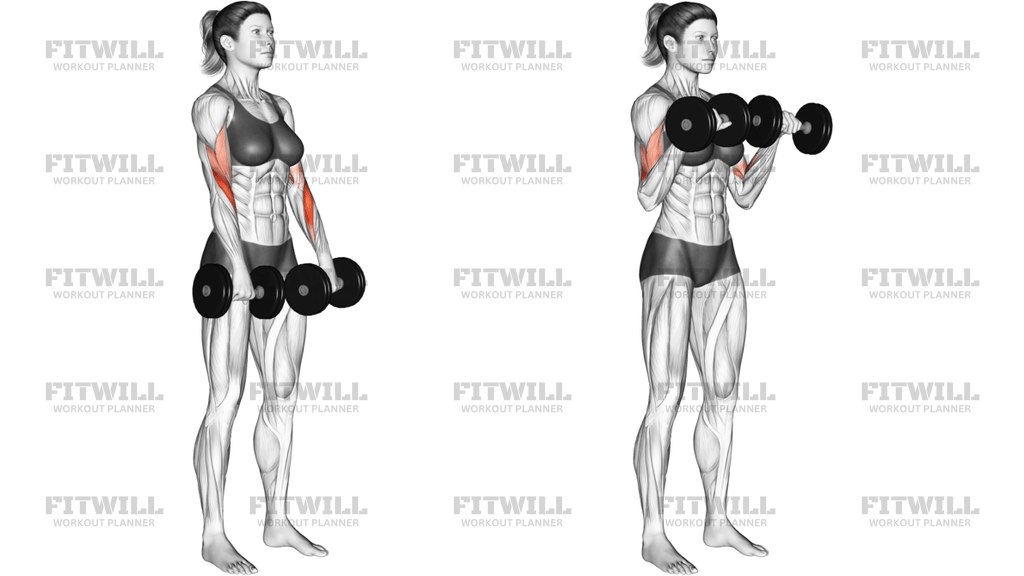
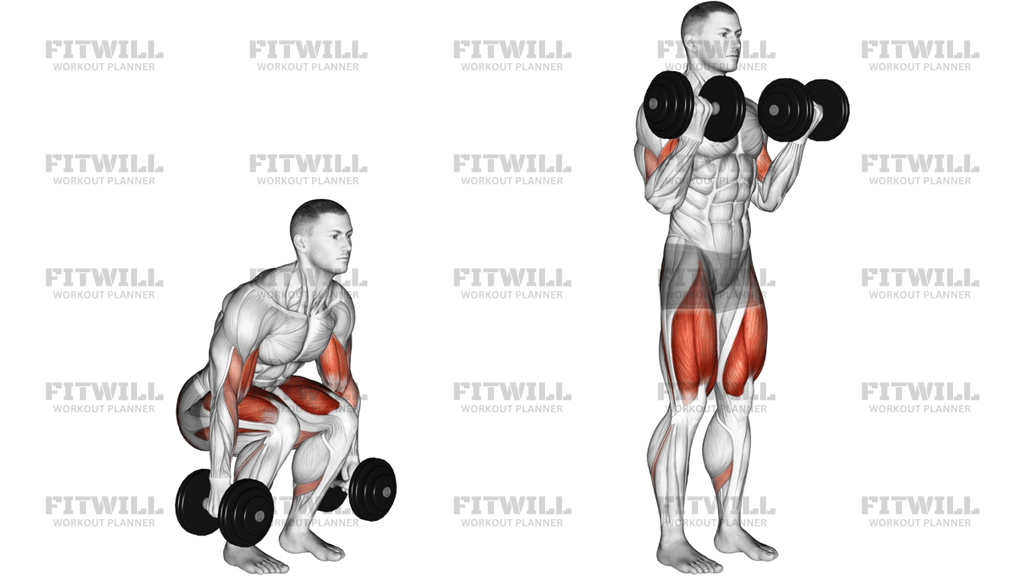
Dumbbell Seated Reverse-Grip Concentration Curl
Dumbbell Seated Reverse-Grip Concentration Curl is a strict single-arm arm-builder done with the upper arm braced against the inner thigh and the palm facing down. That pronated grip shifts the work away from a classic supinated curl and places more demand on the brachioradialis, brachialis, and forearm extensors while the biceps still assist through the lift.
The seated concentration setup matters because it removes most opportunities to cheat. With the elbow pinned to the thigh and the torso leaned slightly forward, the curl becomes a focused elbow-flexion drill instead of a whole-body heave. The bench gives you a stable base, but the rep should still feel isolated in the working arm, not in the shoulder or lower back.
Use the exercise when you want direct arm hypertrophy, forearm emphasis, or cleaner strict curling mechanics. It is especially useful as an accessory movement after heavier pulling work, when the elbows and grip are already warm and you want to finish with a slower, more controlled arm pattern.
The best reps are smooth and deliberate. Start with the arm almost straight, keep the wrist stacked, curl the dumbbell upward without letting the shoulder roll forward, then lower it under control until the elbow is nearly extended again. Because the pronated grip is less mechanically friendly than a regular curl, the load usually needs to be lighter than you expect.
If the movement turns into a shoulder lift, torso swing, or wrist bend, the weight is too heavy or the setup is too loose. Keep the upper arm pressed into the thigh, breathe out as you curl, and use a controlled eccentric so the forearm and elbow flexors stay under tension through the full range.
[ Workout Log & Planner ]
Put your next workout in Fitwill
Keep your plan and training log ready when you are.


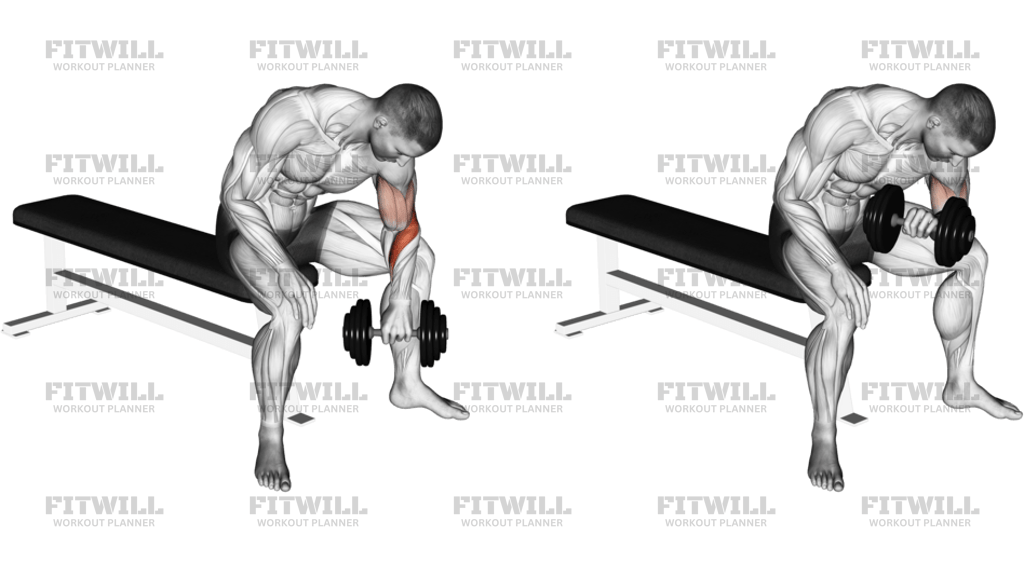
Instructions
- Sit on the end of a flat bench with one dumbbell in hand and plant both feet firmly on the floor.
- Lean forward slightly and place the back of your upper arm against the inside of the same-side thigh just above the knee.
- Hold the dumbbell with a pronated, palms-down grip and let the arm hang almost straight beneath the shoulder.
- Set your shoulder down and keep your wrist straight before you start the curl.
- Curl the dumbbell up by bending only the elbow, driving the knuckles toward the front of the shoulder.
- Keep the upper arm glued to the thigh so the elbow does not slide forward as the weight rises.
- Squeeze briefly near the top without letting the wrist bend or the shoulder roll forward.
- Lower the dumbbell slowly until the arm is almost straight again and keep tension through the descent.
- Breathe out on the curl and inhale as you lower, then repeat on the other side after the set is complete.
Tips & Tricks
- Use a lighter dumbbell than you would for a regular concentration curl because the pronated grip reduces leverage.
- If the elbow pops off the thigh, reset the setup before the next rep instead of finishing with a sloppy range.
- Keep the wrist stacked over the forearm; bending the wrist back turns the rep into a grip fight instead of an arm curl.
- A small forward lean is fine, but do not turn the exercise into a torso crunch or shoulder swing.
- Stop the descent just before the elbow fully locks out if straightening the arm makes the shoulder drift forward.
- The dumbbell should travel in a smooth arc, not in a diagonal swing away from the leg.
- If the top position feels cramped, move the elbow slightly farther down the thigh so the forearm has room to rotate through the rep path.
- Match the tempo on both arms so the non-working side does not get a lighter, faster version of the movement.
Frequently Asked Questions
What muscles does this reverse-grip concentration curl emphasize?
It emphasizes the brachioradialis and brachialis first, with the biceps and forearm muscles helping through the curl.
Why use a palms-down grip instead of a normal curl grip?
The pronated grip shifts more demand to the forearm side of the arm and makes the curl feel stricter and less biceps-dominant.
Where should my upper arm be during the rep?
The back of the upper arm should stay pressed against the inside of the same-side thigh so the elbow cannot drift forward.
How much should my torso move?
Very little. A slight forward lean is normal, but the set should not turn into a body swing or a shoulder-driven lift.
Is this a good beginner exercise?
Yes, if the load is kept light. The setup is simple, but the pronated grip makes it easy to cheat with the wrist or shoulder.
What are the most common mistakes?
Letting the elbow lose contact with the thigh, bending the wrist back, and using momentum to start the curl are the biggest ones.
Should I straighten my arm all the way at the bottom?
Only if you can do it without the shoulder rolling forward or the elbow coming off the thigh. A near-straight bottom position is usually cleaner.
Can I use this as a finisher after back or pulling work?
Yes. It works well as a strict accessory movement when you want extra forearm and elbow-flexor volume without heavy loading.