Jump Squat Version 2
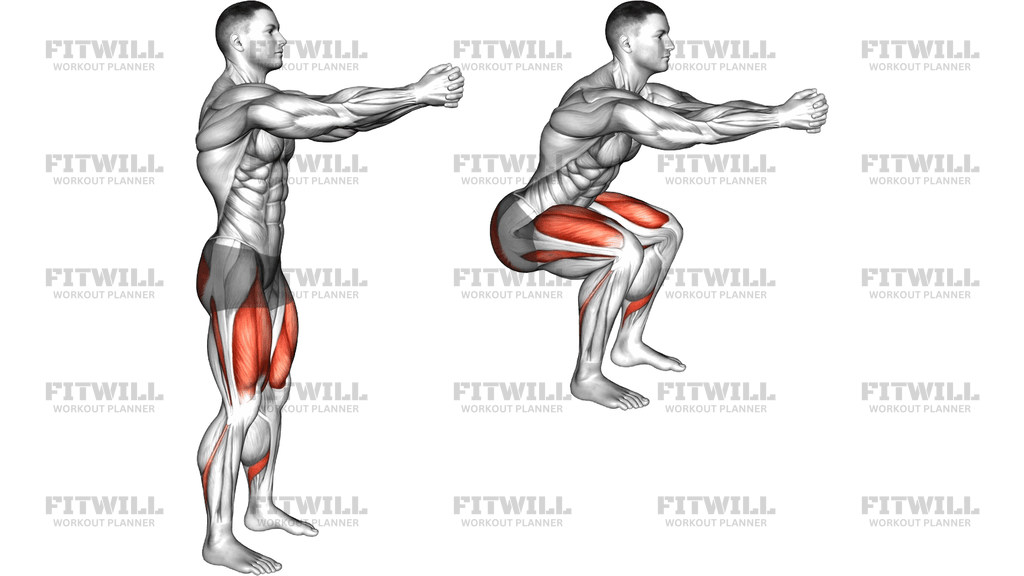
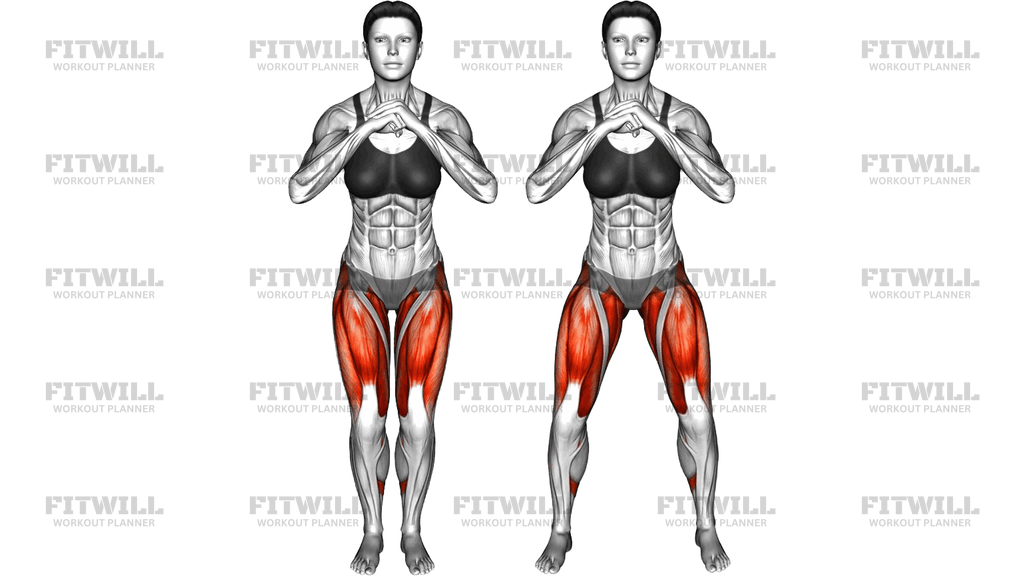
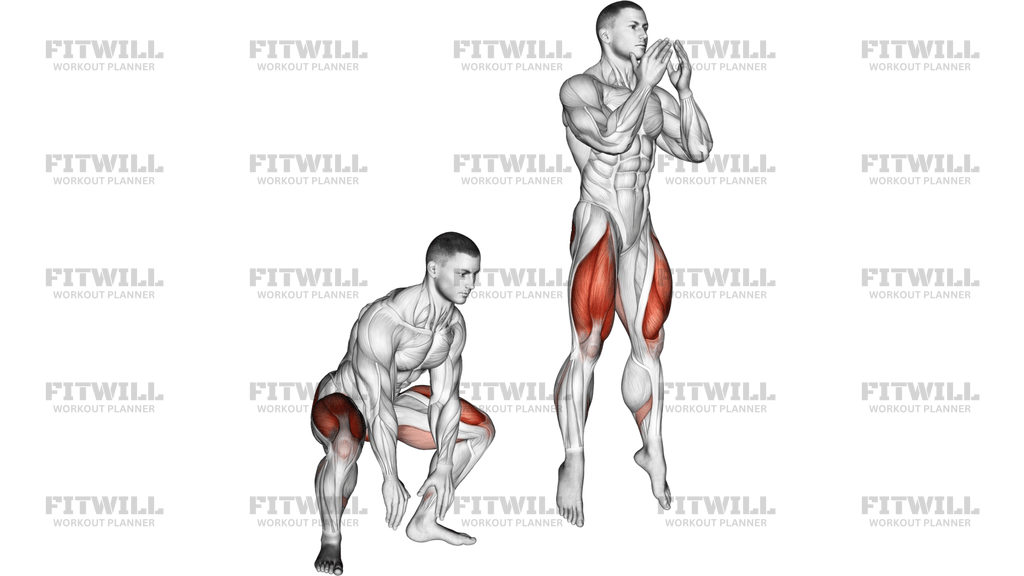
Jump Squat Version 2 is a bodyweight power exercise that combines a deep squat with an explosive vertical jump. The image shows a tall, athletic stance at the top and a compact loaded squat before takeoff, with the hands held in front of the chest to help keep the torso organized. That hand position matters because it reduces arm swing and makes the legs do the work instead of momentum.
This movement places the greatest demand on the thighs and hips while also asking the calves, core, and spinal stabilizers to keep the body aligned during a fast change of direction. In practice, the exercise trains force production, landing control, and repeatable lower-body rhythm. It is useful when you want a simple bodyweight drill that raises heart rate while still demanding crisp mechanics.
The setup should feel springy but stable. Stand with feet about shoulder width apart, sit into a squat until the hips are loaded, and keep the chest lifted as the knees track over the toes. The jump starts from a controlled dip, not a collapse. If the torso folds forward or the heels pop up too early, the jump becomes noisy and unstable instead of powerful.
At the top of each rep, drive through the whole foot, extend the hips and knees, and leave the floor with enough power to stay balanced. Land softly on the midfoot, then let the knees and hips bend immediately to absorb force and return to the next squat. The goal is not the biggest possible jump; it is a clean repeatable cycle of load, takeoff, landing, and reset.
Jump Squat Version 2 works well in conditioning circuits, athletic warmups, or leg-focused sessions where you want a bodyweight drill that challenges power without equipment. Because the movement is fast, it rewards restraint: stop the set as soon as landing quality drops, the knees cave inward, or the jump height starts to come from momentum instead of the legs. Beginners can use it if they keep the range modest and the landings quiet; more advanced trainees can use it to sharpen explosiveness and lower-body coordination.
[ Workout Log & Planner ]
Put your next workout in Fitwill
Keep your plan and training log ready when you are.


Instructions
- Stand with your feet about shoulder width apart and hold your hands together in front of your chest.
- Sink into a controlled squat by sending the hips back and bending the knees until you are loaded for the jump.
- Keep your chest lifted and your heels rooted as the knees track in line with the toes.
- Drive forcefully through the midfoot and extend the hips, knees, and ankles to jump straight up.
- Keep the hands close to the chest so the upper body stays quiet and balanced during the takeoff.
- Land softly on the balls of the feet or midfoot, then let the knees and hips bend to absorb the impact.
- Reset immediately into the next squat with control instead of standing rigidly between reps.
- Breathe in on the way down and exhale as you explode upward.
- Stop the set when your landings become loud, your knees cave inward, or your torso tips forward.
Tips & Tricks
- Use a squat depth you can rebound from without losing heel contact or chest position.
- Keep the hands pinned near the sternum to prevent a wild arm swing from hijacking the jump.
- Think about pushing the floor away rather than reaching upward with the shoulders.
- Land quietly; a loud landing usually means you are dropping too hard or missing the bend in the knees and hips.
- Let the knees travel over the toes as long as they stay aligned with the toes instead of collapsing inward.
- Choose a jump height you can repeat for every rep, not a max effort that falls apart after the first few jumps.
- If your heels lift before takeoff, shorten the dip and focus on loading the hips and midfoot.
- Keep the neck neutral and the gaze forward so the torso stays stacked over the hips.
- Cut the set when the landing turns stiff, because tired jump squats become a joint stress drill instead of a power drill.
Frequently Asked Questions
What does Jump Squat Version 2 work most?
It mainly trains the thighs and hips, especially the glutes and quadriceps, while the calves and core help stabilize each landing.
Why are the hands held in front of the chest?
That position keeps the upper body quiet and reduces momentum, which makes the legs produce most of the force.
How low should I squat before jumping?
Go only as low as you can while still keeping the chest lifted, the heels down, and the knees controlled over the toes.
Should I land on my heels or toes?
Land on the midfoot or balls of the feet and let the heels settle as the knees and hips absorb the force.
Is Jump Squat Version 2 beginner friendly?
Yes, if you keep the jump small, the squat depth controlled, and the landings quiet and stable.
What is the biggest technique mistake?
The most common problem is turning the rep into a forward fold or an uncontrolled hop instead of a vertical jump from a loaded squat.
How many reps should I do?
Use low to moderate reps and stop before your jump height or landing quality drops off.
Can I use this in conditioning work?
Yes, it fits well in athletic warmups or conditioning circuits when you want bodyweight power and a higher heart rate.