Jumping Jack
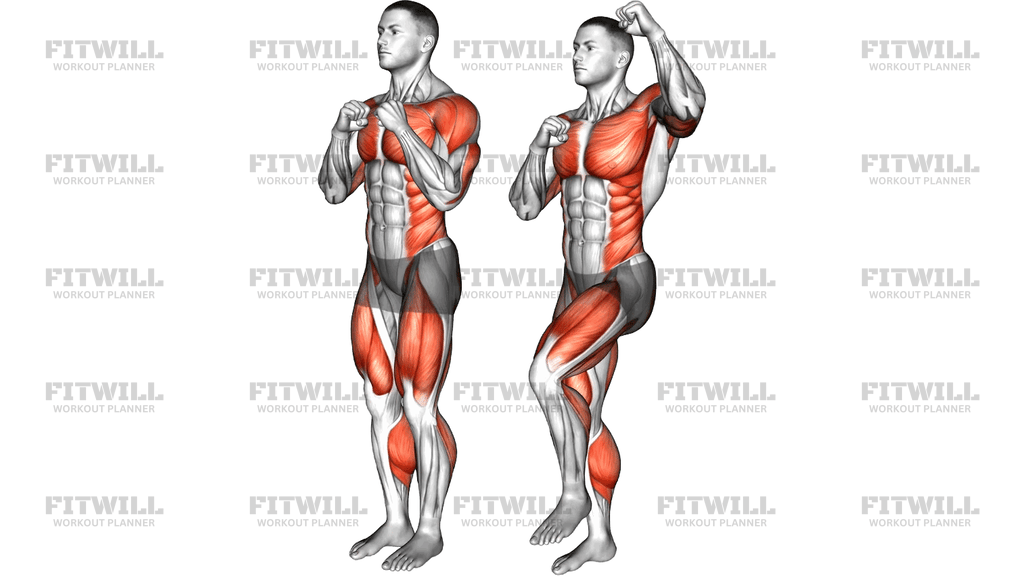
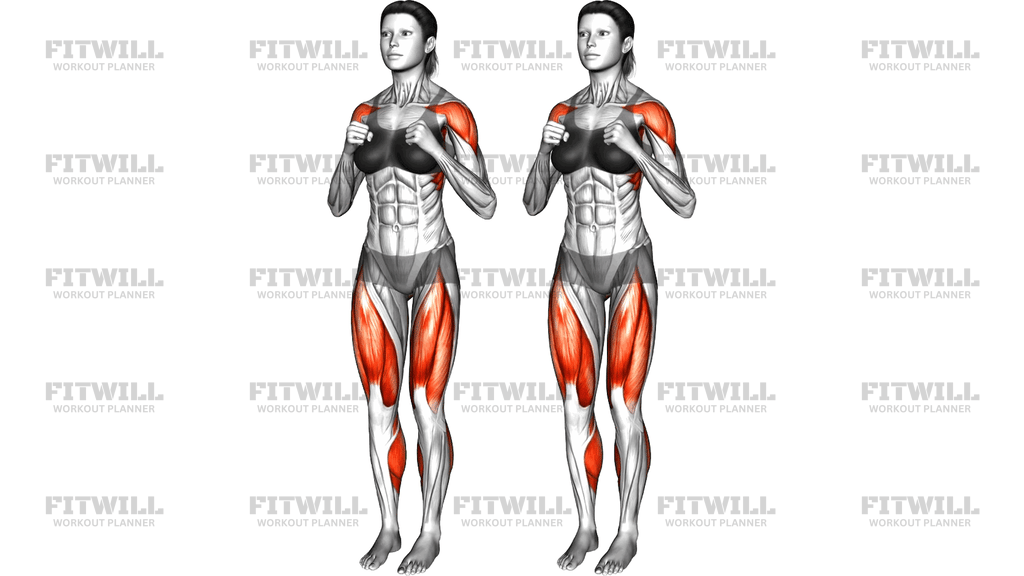
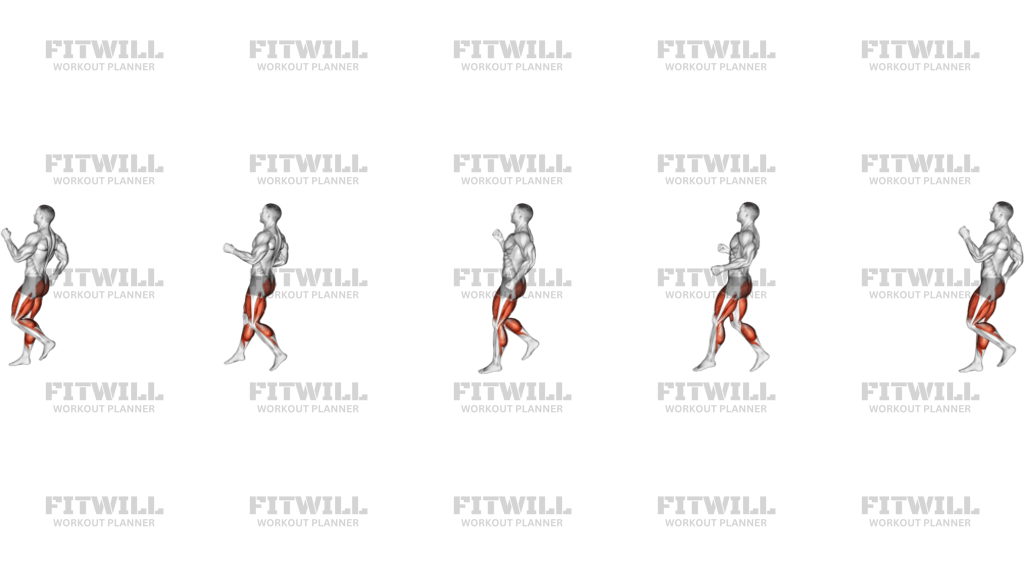
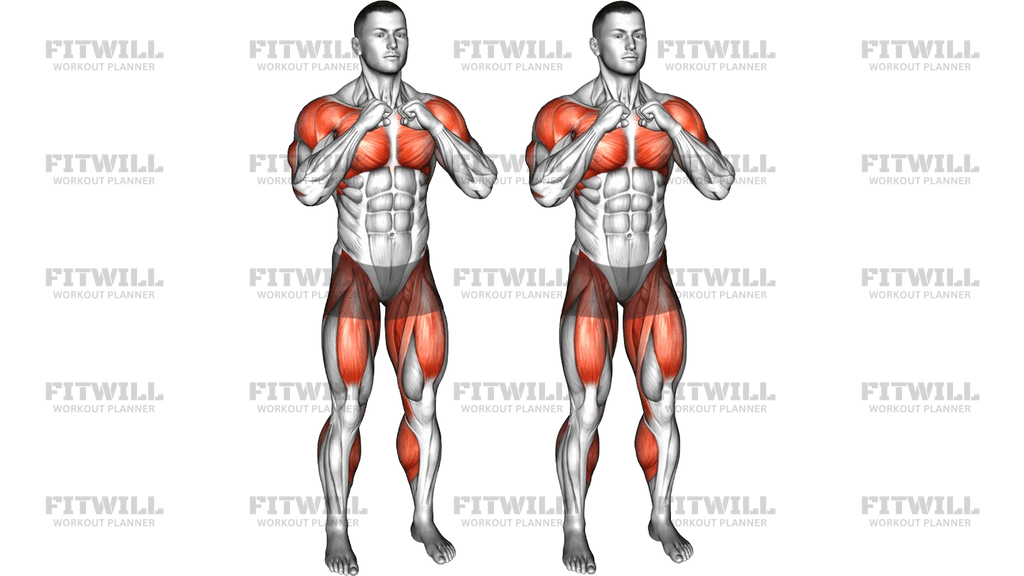
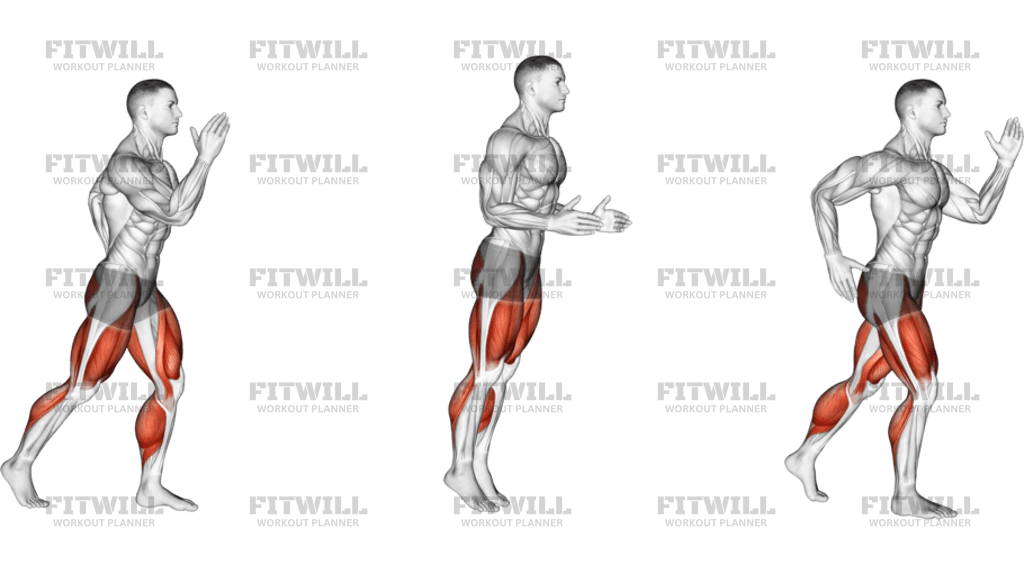
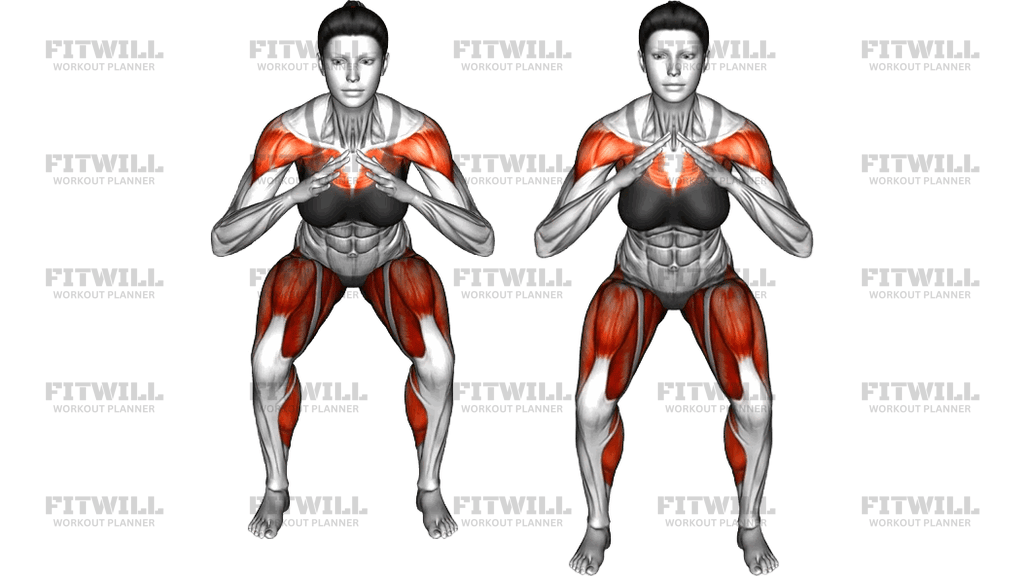
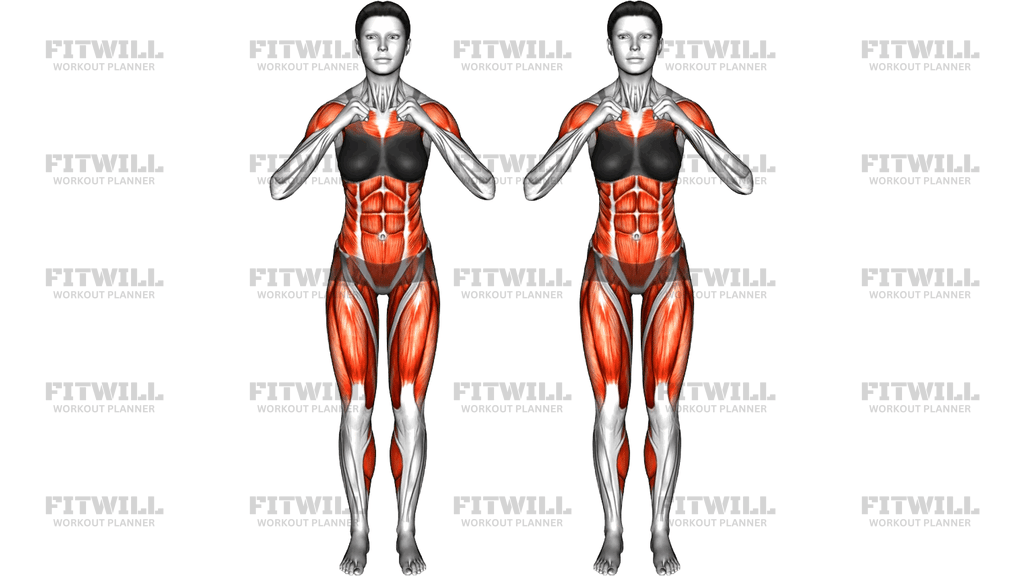
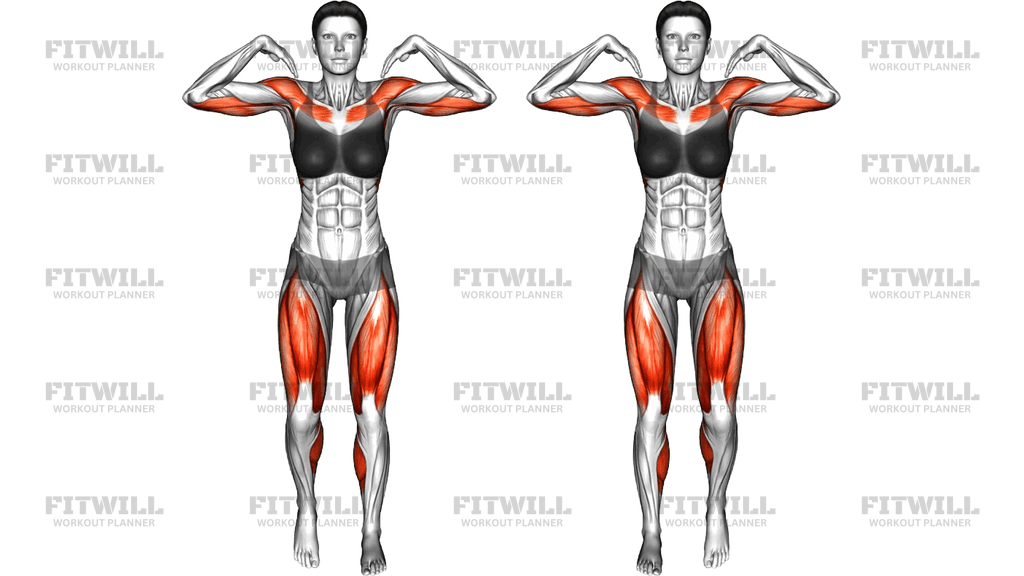
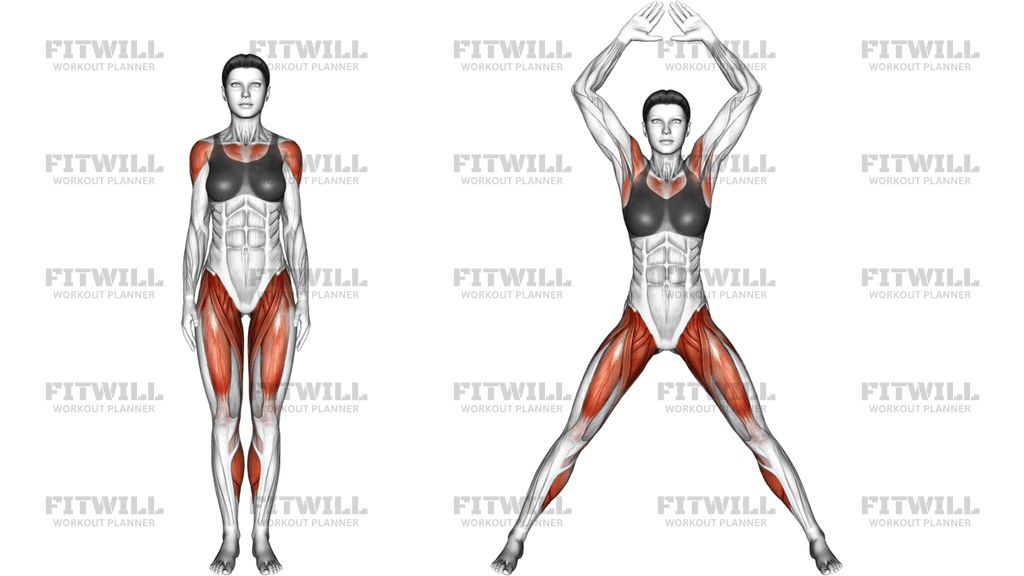
Jumping Jack is a bodyweight cardio drill that combines repeated leg abduction with an overhead arm sweep. It is simple on paper, but the value comes from crisp rhythm, soft landings, and staying tall as you move. In this version, the quads do most of the visible work, while the calves, glutes, shoulders, and trunk help you absorb impact and keep the pattern smooth.
The exercise is often used to raise heart rate, warm up the shoulders and hips, or add a light conditioning dose between strength sets. Because both arms and legs move at once, the rep quality depends on coordination as much as speed. If the feet slap the floor or the torso folds forward, the movement stops being a clean jumping jack and turns into sloppy bouncing.
Set up in a narrow stance with your arms relaxed by your sides and your weight centered over the midfoot. From there, jump the feet out wide while the arms travel in a smooth arc overhead until the hands nearly meet. The return should be just as deliberate: bring the feet back together under the hips and lower the arms to the sides before repeating. Keep the chest lifted and the ribs stacked so the shoulders can rise without arching the lower back.
A good rep has a clear rhythm: out, up, in, down. Land quietly with bent knees and avoid letting the knees cave inward as the feet touch down. The range should be large enough to feel athletic, but not so large that you lose balance or time. If the movement is used in a warm-up, keep the pace easy and elastic. If it is used for conditioning, increase speed only after the landing mechanics stay consistent.
Jumping jacks work well as a general warm-up, a low-equipment cardio option, or a simple finisher when you want whole-body movement without loading the joints heavily. Beginners can start with a smaller hop or step-out version if impact is too high. Anyone with shoulder, knee, or ankle irritation should shorten the range, slow the tempo, or choose a lower-impact variation so the movement stays smooth and pain-free.
[ Workout Log & Planner ]
Put your next workout in Fitwill
Keep your plan and training log ready when you are.


Instructions
- Stand tall with your feet together, knees soft, arms relaxed at your sides, and your weight centered over the midfoot.
- Brace lightly through your trunk so your ribs stay stacked over your pelvis before you leave the floor.
- Jump your feet out wider than hip width while sweeping both arms out and up in a smooth arc overhead.
- Keep your chest lifted and your shoulders away from your ears as the hands approach one another above your head.
- Land softly with bent knees, letting the hips and ankles absorb the impact instead of locking out on contact.
- Jump the feet back together under the hips while lowering the arms to your sides at the same pace.
- Keep the out-and-in rhythm even so the movement stays springy rather than chaotic.
- Breathe naturally through the set and exhale on the more forceful part of each jump if that helps your rhythm.
- Stop the set if your landings get loud, your torso starts leaning forward, or your knees lose alignment.
Tips & Tricks
- Think about jumping and landing from the balls of the feet, not stomping flat-footed.
- Let the arms reach overhead without forcing the lower back to arch to get them there.
- Keep the knees tracking in line with the toes each time the feet come back together.
- Use a smaller hop if the shoulders, ankles, or knees feel stressed by the full version.
- Stay tall through the crown of the head instead of folding forward as the pace increases.
- Make the hand path symmetrical so one side does not lead the motion more than the other.
- Choose a tempo you can repeat for the whole set without turning the landing into a crash.
- If you want more conditioning, increase duration before you turn the movement into a frantic bounce.
Frequently Asked Questions
What does a jumping jack train most?
It is mainly a cardio and coordination drill, with the quads, calves, shoulders, and trunk all helping the movement.
Can beginners perform this exercise?
Yes. Beginners can use a smaller hop or step-out version first if the full jump feels too aggressive.
Do I need special equipment for jumping jacks?
No. This is a bodyweight movement, so you only need enough floor space to jump your feet out and back in safely.
What is the most common form mistake?
People usually rush the rhythm, land too hard, or arch the lower back when the arms go overhead.
Should my hands touch overhead?
They can come close together, but do not force contact if that makes you shrug, overreach, or lose the brace.
How can I make it lower impact?
Step one foot out at a time or keep the hop very small so the feet travel in the same pattern without a hard landing.
When is this exercise most useful?
It works well as a warm-up, a short conditioning burst, or a simple finisher between strength exercises.
What should I do if my shoulders feel tight?
Reduce the height of the arm sweep and keep the shoulders down as the hands travel overhead.