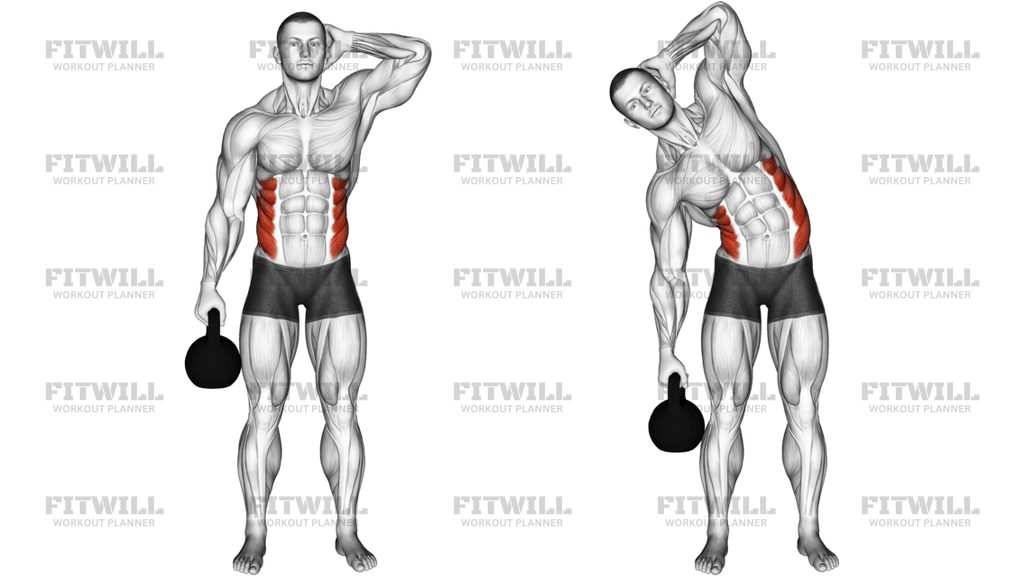
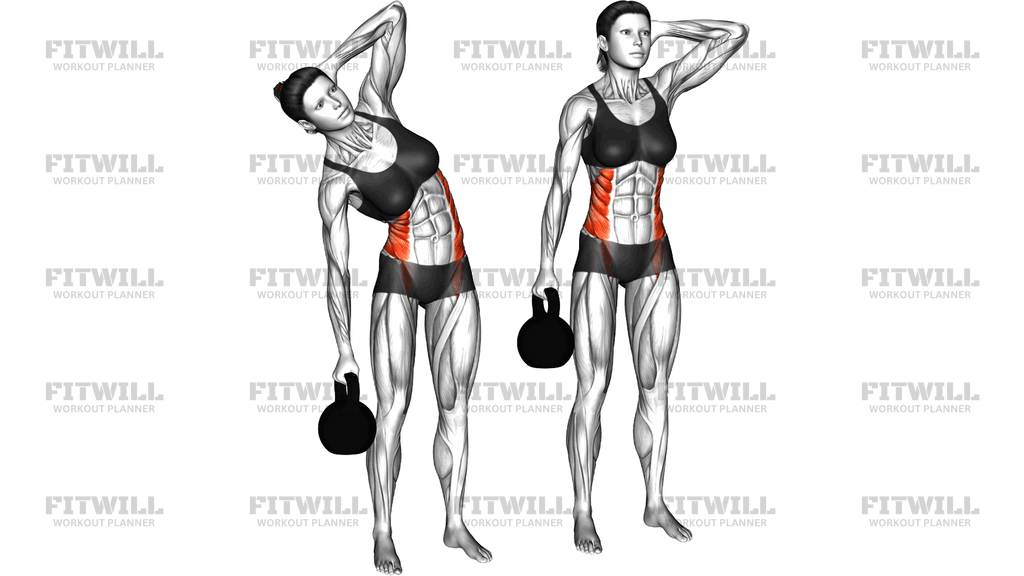
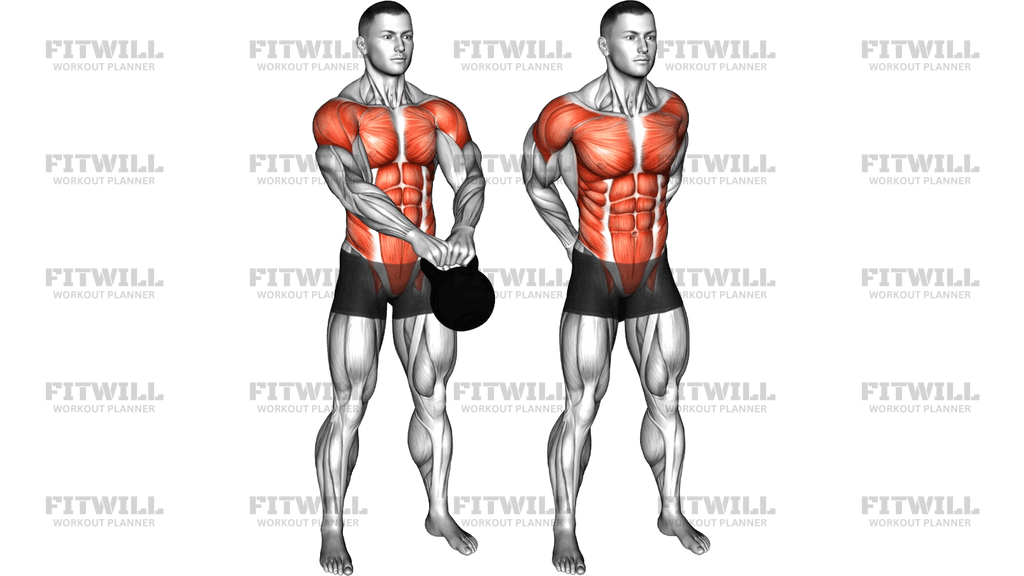
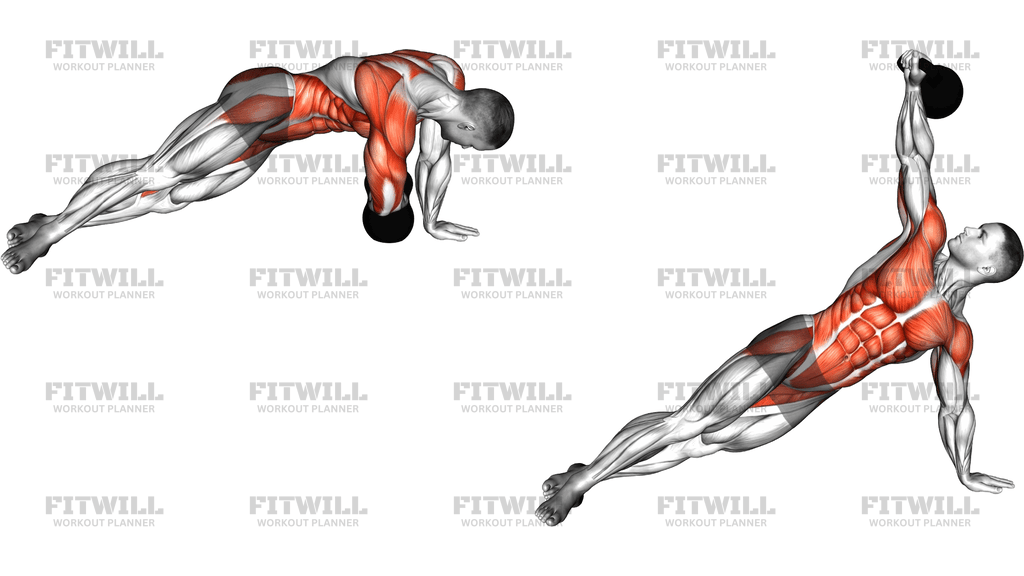
Kettlebell Windmill
Kettlebell Windmill is a loaded mobility-and-strength drill built around a locked overhead arm, a hinged hip, and a controlled side bend under the weight. It asks you to keep the kettlebell stacked over the shoulder while the torso rotates open and the free hand reaches down the inside of the leg. The movement is simple in appearance, but the setup matters because small changes in foot angle, hip position, and overhead alignment decide whether the rep feels smooth or unstable.
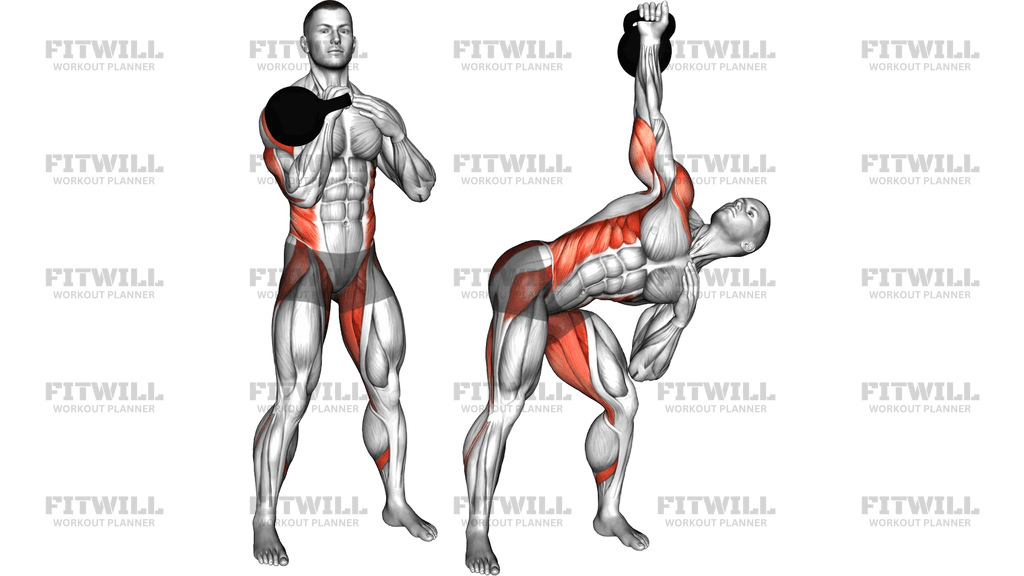
This exercise is especially useful for the obliques, deep core, shoulder stabilizers, glutes, and hamstrings. The image shows a classic windmill shape: one arm straight overhead, the ribs and pelvis turning away from each other, and the torso lowering toward the front leg while the eyes stay up toward the bell. That makes it a strong choice when you want trunk control, overhead stability, and hip hinge skill in the same rep.
A good windmill starts with a light bell and a deliberate overhead lockout. Stand tall first, then press or snatch the kettlebell overhead, stack wrist over elbow and shoulder, and turn the feet out enough that the hips can travel back. From there, the free hand should slide down the leg as the working hip shifts away from the bell. The goal is not to collapse sideways; it is to hinge, rotate, and maintain a long line from the bell through the shoulder and torso.
Lower only as far as you can keep the kettlebell steady and the spine organized. The bottom position should still feel active, not loose: the overhead arm remains vertical, the chest stays open, and the back stays controlled while the free hand reaches toward the shin or ankle. Come back up by driving the hips forward and re-stacking the torso under the weight. Exhale through the effort, and reset fully before the next rep if your balance, shoulder position, or breathing gets sloppy.
Use Kettlebell Windmill as a technique lift, accessory core drill, or mobility-strength hybrid when you want quality over load. It is most valuable when the range is repeatable and pain-free, especially for lifters who need better overhead control or stronger oblique engagement in split-stance positions. If the shoulder feels unstable, the hamstrings tug the pelvis out of position, or the lower back starts taking over, shorten the range and clean up the setup before adding weight.
[ Workout Log & Planner ]
Put your next workout in Fitwill
Keep your plan and training log ready when you are.


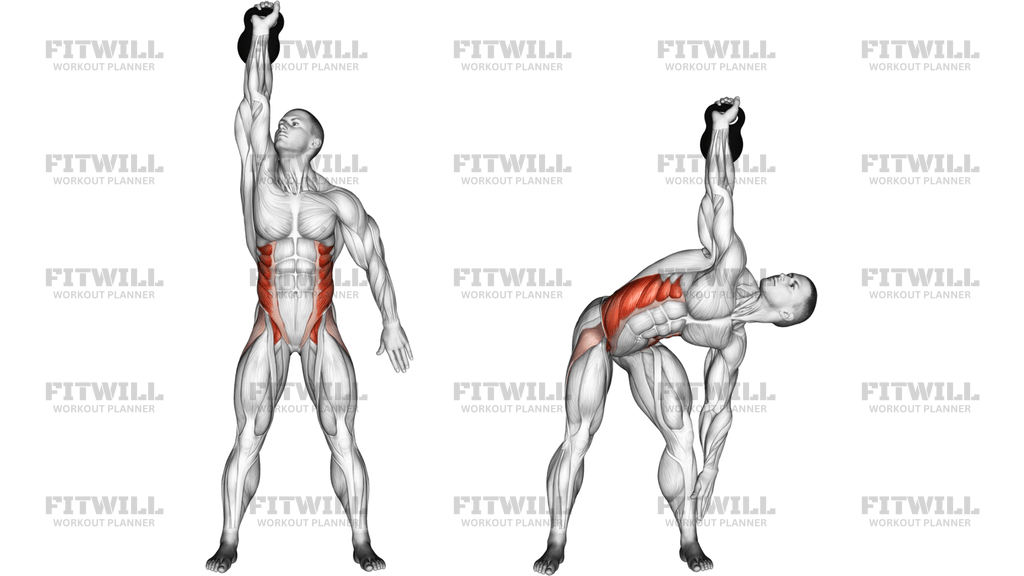
Instructions
- Stand with your feet about shoulder width apart and turn the toes slightly out so the hips can shift back and out to the side.
- Press the kettlebell overhead in one arm and lock the elbow so the wrist, elbow, shoulder, and bell are stacked vertically.
- Keep your eyes on the kettlebell and let the free arm hang straight down in front of the working leg.
- Brace your trunk, then shift the hips away from the bell instead of leaning sideways from the waist.
- Hinge at the hips and slide the free hand down the inside of the front leg while the overhead arm stays straight.
- Descend only until the torso can stay organized and the kettlebell remains steady above the shoulder.
- Pause briefly at the bottom if you can keep balance, then drive the hips forward to stand back up.
- Return to full standing under control, re-stack the ribs over the pelvis, and reset before the next rep.
- Breathe out as you rise and repeat for the planned reps before switching sides.
Tips & Tricks
- Start with a lighter kettlebell than you think you need; the overhead stack and balance matter more than load here.
- Keep the arm straight without shrugging the shoulder toward the ear.
- Let the free hand trace the leg so the hinge stays organized instead of turning into a loose side bend.
- If the bell drifts forward, shorten the range and re-stack the shoulder before going deeper.
- A soft knee on the working side helps the hip move back and keeps the hamstrings from yanking the pelvis out of position.
- Keep the chest open by rotating slightly toward the overhead arm rather than folding the rib cage toward the floor.
- Move slowly enough that you can pause and feel control at the bottom of every rep.
- If your lower back takes over, reduce range or load and focus on hinging the hips back harder.
- Switch sides only after you can finish the rep without wobbling, twisting, or losing the vertical line of the bell.
Frequently Asked Questions
What muscle does Kettlebell Windmill target most?
The main target is the obliques, with strong help from the deep core, glutes, and shoulder stabilizers.
Can beginners perform this exercise?
Yes, but beginners should use a very light kettlebell and a short range until the overhead position feels stable.
Why do I keep my eyes on the kettlebell?
Looking at the bell helps you keep the shoulder stacked and makes it easier to stay balanced as you hinge and rotate.
How far should I lower my torso?
Lower only as far as you can keep the bell steady overhead, the chest open, and the free hand sliding down the leg under control.
Should this feel more like a side bend or a hinge?
It should feel like a hip hinge with rotation and a controlled side bend, not a collapse through the lower back.
Can I use a dumbbell instead of a kettlebell?
Yes, a dumbbell can work, but the kettlebell usually feels easier to balance overhead because the handle sits naturally in the hand.
What is the most common mistake?
Letting the kettlebell drift forward or twisting the torso instead of keeping the arm stacked over the shoulder.
Is this safe for my lower back?
It can be, if you keep the spine organized and stop the rep before the lumbar area starts to round or rotate aggressively.