Kettlebell Side Bend Version 2
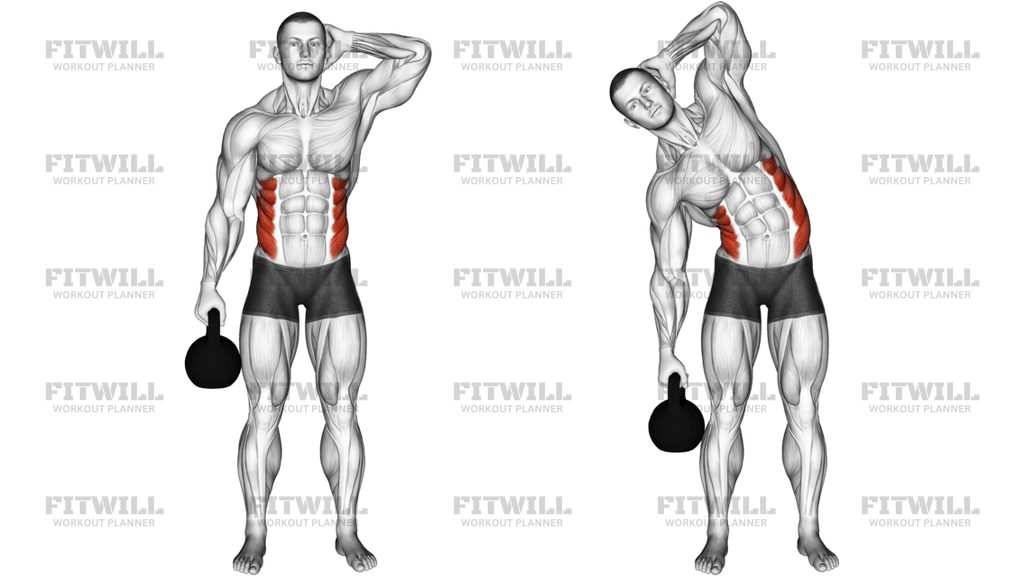
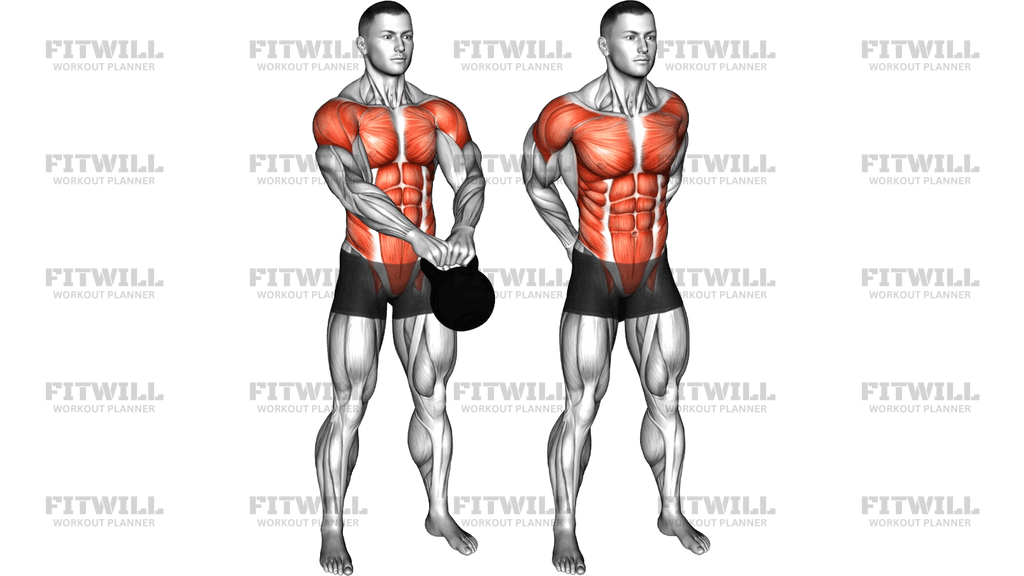
Kettlebell Side Bend Version 2 is a standing lateral-flexion exercise that puts the waist and obliques to work while the hips and trunk keep the body from drifting. The kettlebell hangs from one hand and the opposite hand stays behind the head, which makes it easier to keep the chest open and read whether the torso is truly bending sideways instead of twisting or collapsing forward. It is a useful accessory movement when you want direct side-body work without needing a machine or bench.
The setup matters because the exercise is easy to turn into a shrug, a hip sway, or a partial twist if the stance is loose. Stand tall with the feet about hip width, keep the knees soft, and let the kettlebell hang straight down beside one thigh. The free elbow should stay wide enough to keep the ribcage open, but not so wide that the shoulder lifts or the neck tenses. Ribs stacked over the pelvis is the starting point for every rep.
The repetition should feel like a smooth arc through the torso, not a drop. Inhale before you bend, then let the upper body travel sideways under control while the kettlebell stays close to the leg. Stop the descent when the side body is fully lengthened but the pelvis is still level, then exhale and bring the ribs back over the hips without swinging or yanking on the neck. The top position should look tall and reset, not leaned back.
Kettlebell Side Bend Version 2 works best as controlled accessory work, a core finisher, or a lighter strength drill for improving trunk awareness. It can help athletes and general lifters build a stronger waist position for carries, unilateral lifting, and bracing under load. Because the movement is small and precise, load choice matters more than ego; once the bell is heavy enough to pull the torso forward or make the shoulder creep up, the set stops being useful.
Keep the reps crisp and repeatable, and treat the bottom position as a controlled stretch rather than a bounce. If the lower back starts taking over, shorten the range and slow the tempo. If the neck feels crowded, lighten the bell and relax the hand behind the head. Done well, Kettlebell Side Bend Version 2 is a clean way to train side-body control, posture, and breathing together.
[ Workout Log & Planner ]
Put your next workout in Fitwill
Keep your plan and training log ready when you are.


Instructions
- Stand with your feet about hip width apart and hold the kettlebell in one hand beside your thigh.
- Place your other hand lightly behind your head and keep both elbows relaxed, with the chest facing forward.
- Stack your ribs over your pelvis, soften your knees, and let the kettlebell hang straight down without swinging.
- Inhale and brace through your waist before you start the first side bend.
- Lower your torso sideways in a smooth arc while keeping the kettlebell close to your leg and your hips square.
- Keep the free elbow open and your neck relaxed as you bend until you feel a strong stretch through the side of your trunk.
- Exhale and bring your torso back to tall standing by pulling your ribs back over your hips.
- Pause at the top, reset your shoulders, and repeat for the planned reps before lowering the kettlebell safely.
Tips & Tricks
- Keep the kettlebell almost brushing the outside of your thigh so it does not pull your torso forward.
- Do not yank the head with the hand behind it; that hand should only guide the position.
- If your hips shift sideways, shorten the range and make the ribs move instead of the pelvis.
- A small knee bend helps you keep the lower back from locking out too hard.
- Choose a weight you can lower slowly and still reverse without a hip pop.
- Exhale as you return to standing so the waist finishes the rep, not the shoulder.
- Stop the set if the top shoulder starts creeping toward your ear.
- The best rep is a clean side arc, not a deeper bend that turns into twisting.
Frequently Asked Questions
What muscles does Kettlebell Side Bend Version 2 train most?
It mainly targets the waist and obliques, with the core and hips helping keep the torso from drifting or rotating.
Should my hand behind the head be pulling?
No. Keep that hand light so it only supports the head position; if you pull hard, the neck and upper trap take over.
How far should I bend on Kettlebell Side Bend Version 2?
Bend only until the side body is clearly lengthened and the pelvis still stays level. If you lose the tall setup, the range is too deep.
Can beginners do this exercise?
Yes, but start light and keep the movement slow. Beginners usually do best with a shorter range and a very steady return to standing.
What is the most common mistake with this movement?
Most people either twist the torso or swing the kettlebell. The rep should stay in one side plane with the bell hanging quiet beside the leg.
How heavy should the kettlebell be for side bends?
Use a load that lets you pause at the bottom and still stand back up without a hip pop or shoulder shrug.
Can I use a dumbbell instead of a kettlebell?
Yes. A dumbbell works if it hangs cleanly at your side, but keep the same tall stance and side-bending path.
Why do I feel Kettlebell Side Bend Version 2 in my lower back?
Usually the bell is too heavy, the ribs are flaring, or the torso is twisting. Lighten the load and keep the movement focused on the waist rather than the lumbar spine.