Weighted Seated Calf Raise
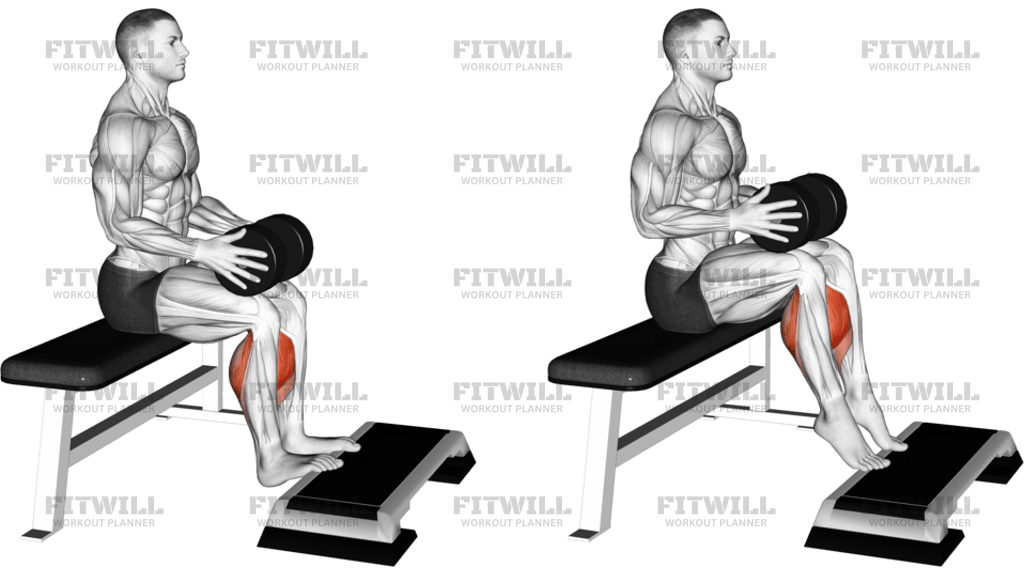
Weighted Seated Calf Raise is a seated lower-leg exercise that trains ankle plantar flexion with the knees bent, which shifts the work toward the soleus while still involving the gastrocnemius. In the image, the lifter sits upright on a bench, places the balls of the feet on a raised block, and loads the thighs with a dumbbell to create resistance without standing balance demands.
That seated position matters. With the knees flexed, the calf muscles work from a shorter gastrocnemius position, so the movement feels different from a standing calf raise. The goal is to move only at the ankles: heels drop into a controlled stretch, then rise as high as possible without bouncing, knee drive, or rocking the torso. The weight on the thighs should stay steady so the force goes through the calves instead of sliding around.
This version is useful when you want direct calf work with simple setup, easy load changes, and less spinal loading than barbell or machine versions. It fits accessory work, calf specialization blocks, or lower-body sessions where you want precise tension through a full plantar-flexion range. Because the knees stay bent and the torso stays braced, the exercise is also easier to keep strict than many standing calf options.
The main technique priorities are foot placement, range control, and tempo. Keep the forefoot on the edge of the platform, let the heel travel down until you feel a strong but tolerable stretch, then press through the big toe and second toe to finish high on the ball of the foot. A clean rep should look smooth and repeatable. If the dumbbell shifts, the ankles collapse inward, or the heels bounce off the bottom, the load is too high or the setup is too unstable.
Fitwill
Log Workouts, Track Progress & Build Strength.
Achieve more with Fitwill: explore over 9600 exercises with images and videos, access built-in and custom workouts, perfect for both gym and home sessions, and see real results.
Start your journey. Download today!




Instructions
- Sit tall on a bench and place the balls of both feet on the edge of a step, block, or calf platform so your heels can hang freely.
- Rest a dumbbell, plate, or padded weight across the upper thighs just above the knees and hold it in place with your hands.
- Keep your knees bent about 90 degrees, feet hip-width apart, and chest stacked over the hips without leaning back.
- Start with the heels lowered until you feel a strong stretch through the calves, but keep the forefoot planted on the platform.
- Brace your midsection and drive up by pressing through the ball of each foot, lifting the heels as high as you can.
- Pause briefly at the top and squeeze the calves without bouncing, locking the knees, or rolling the ankles outward.
- Lower the heels slowly until you return to the deep stretch position under control.
- Keep breathing steady and repeat for the planned reps, then carefully step the feet down and remove the weight from your thighs.
Tips & Tricks
- Keep the weight centered on the upper thighs; if it slides toward the knees, the setup becomes unstable and the calves lose tension.
- Use a block or step that lets the heels drop below the forefoot without your toes slipping off the edge.
- Hold the knee angle mostly fixed so the repetition comes from ankle movement, not from straightening and bending the legs.
- Press through the big toe and second toe instead of the outer edge of the foot to avoid ankle rolling.
- Let the bottom stretch build gradually, but do not relax enough to lose foot contact with the platform.
- Pause at the top long enough to feel the calves shorten; a quick bounce usually turns the set into momentum work.
- Choose a load that still lets you reach a full heel drop and a clear peak contraction on every rep.
- If your Achilles tendon feels irritated, shorten the bottom range slightly and slow the descent further.
Frequently Asked Questions
What does the weighted seated calf raise work most?
It mainly trains the calves, especially the soleus because the knees stay bent during the lift.
Why sit instead of doing a standing calf raise?
The seated position reduces balance demands and changes the calf angle, so you can isolate ankle plantar flexion more directly.
Where should the feet sit on the platform?
Place only the balls of the feet on the edge so the heels can drop freely and the calves can move through their full range.
Should the knees move during the rep?
No. Keep the knee bend mostly fixed and let the ankles do the work so the set stays focused on the calves.
Why is the dumbbell placed on the thighs?
The weight on the thighs adds resistance without needing a machine, but it must stay stable so the calves keep producing the force.
Can beginners use this exercise safely?
Yes. Start with a light weight, a steady bench setup, and a platform height that lets you control the heel drop.
What is the most common form mistake?
Bouncing at the bottom or letting the weight shift on the thighs usually reduces calf tension and makes the set sloppy.
How should I progress the weighted seated calf raise?
Add load only after you can hold the top squeeze, control the lowering phase, and keep the foot position identical on every rep.