Reverse Hyper Extension On Stability Ball
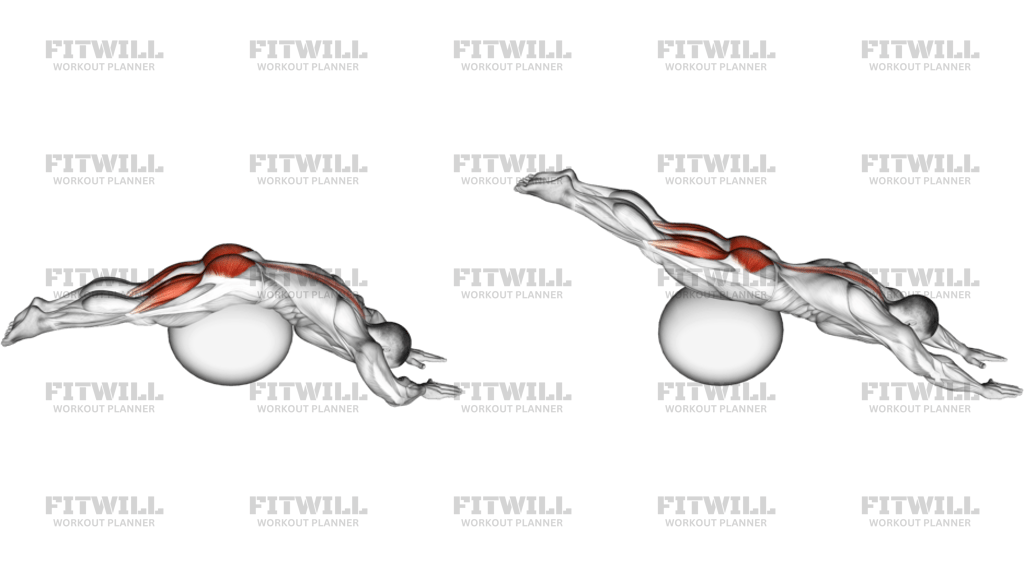
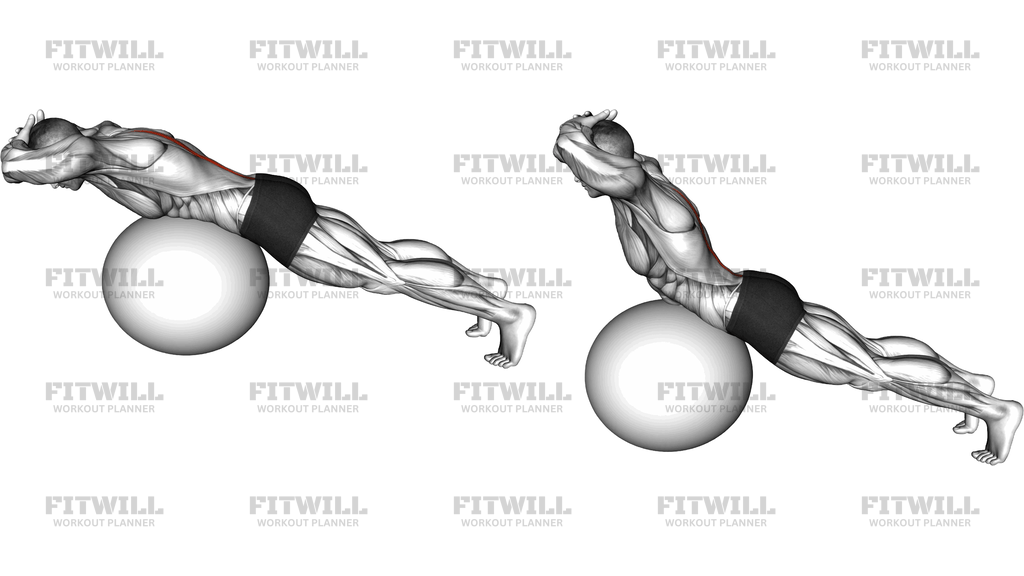
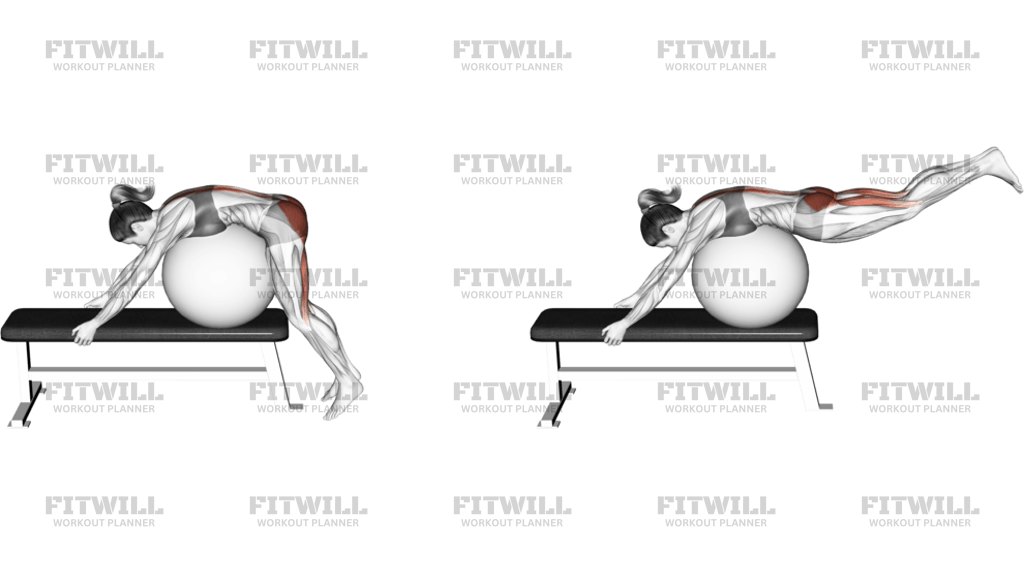
Reverse Hyper Extension on a Stability Ball is a prone hip-extension movement that trains the glutes through a controlled lift and lower. The ball supports the pelvis and lower abdomen while the legs travel behind the body, so the exercise rewards clean positioning more than brute force. When the setup is correct, the hips stay anchored on the ball and the legs move from the hip joint instead of the lower back taking over.
This version emphasizes the glutes most strongly, with the hamstrings helping to extend the hips and the core and spinal erectors stabilizing the trunk. That combination makes the exercise useful for posterior-chain work, accessory glute training, and low-load conditioning when you want tension without heavy axial loading. It can also help reinforce a better hip hinge pattern because the trunk has to stay long and controlled while the legs move.
The setup matters a lot. The ball should sit under the lower abdomen and front of the hips, with the torso draped over it far enough that the legs can swing freely behind you. If you are too far forward, you lose stability; if you are too far back, the movement turns into a back extension. A light touch on the floor with the hands can help you balance, but the lift should still come from the glutes, not from pushing through the hands.
On each repetition, start with the legs long and the pelvis steady, then squeeze the glutes to lift the legs until the body makes a smooth line. The top position should feel like hip extension, not a hard lumbar arch. Lower under control, keep the ribs down, and breathe steadily so the torso does not rock on the ball. Small, repeatable reps are better than a big swing that steals tension from the target muscles.
Use this exercise as accessory work, a warm-up activation drill, or part of a posterior-chain circuit when you want glute work with minimal equipment. It fits beginners as long as the range stays short and controlled, and it fits advanced lifters when the tempo stays strict. If the low back feels loaded before the glutes do, reduce the range, slow the tempo, or reposition on the ball.
[ Workout Log & Planner ]
Put your next workout in Fitwill
Keep your plan and training log ready when you are.


Instructions
- Place the stability ball under your lower abdomen and front of your hips, then lie face down with your legs extended straight behind you.
- Walk your hands forward until your torso is balanced over the ball and you can keep your chest long without tipping.
- Set your feet lightly on the floor or let the legs float, depending on the version you are using, and keep the neck neutral.
- Brace your midsection so the ribs stay down and the pelvis stays steady on the ball.
- Squeeze the glutes to lift the legs behind you until the hips open and the body reaches a long line.
- Pause briefly at the top without cranking the low back or bouncing off the ball.
- Lower the legs slowly until you feel the glutes lengthen under control.
- Reset your breath, keep the ball still, and repeat for the planned number of reps.
Tips & Tricks
- Keep the ball under the lower abdomen and hips, not up under the chest, or the movement turns into a back extension.
- Think about lifting the heels toward the ceiling rather than tossing the legs upward; that usually keeps the glutes in charge.
- If the lower back feels like the main worker, shorten the range and stop the lift before the ribs flare.
- Keep a soft bend in the knees only if it helps you stay controlled; straight legs make the lever longer and the set harder.
- Use a slow lower so the hamstrings and glutes stay under tension instead of dropping the legs back to the floor.
- Light fingertip support on the floor is fine for balance, but do not push the body forward with the hands.
- Exhale as the legs lift and keep the breath steady as you come down to avoid rocking on the ball.
- Choose a ball size that lets your torso drape comfortably; a ball that is too large makes the setup unstable.
- Stop the set when the pelvis starts shifting side to side or the shoulders begin to shrug.
Frequently Asked Questions
What muscle does the stability-ball reverse hyper extension target most?
The glutes are the main target, with the hamstrings and lower back helping to stabilize and extend the hips.
Where should the ball sit during the setup?
It should sit under the lower abdomen and front of the hips so the torso can drape over it while the legs move freely behind you.
How high should the legs lift at the top?
Lift until the hips are fully extended and the body feels long, but stop before the lower back starts to arch hard.
Can I use my hands for balance on the floor?
Yes, light fingertip support is fine for balance, but the hands should not drive the movement or shift your weight forward.
What is the most common form mistake?
The biggest mistake is swinging the legs and turning the rep into a low-back arch instead of a controlled hip extension.
Is this a good beginner exercise?
Yes, as long as the range stays small, the ball feels stable, and the tempo stays slow enough to control the pelvis.
What should I do if I feel it mostly in my lower back?
Shorten the range, tighten the brace, and reposition on the ball so the hips stay supported and the glutes can finish the lift.
How can I make the exercise harder without adding weight?
Slow the lowering phase, hold the top briefly, or straighten the legs more so the lever gets longer.