Exercise Ball Seated Hamstring Stretch
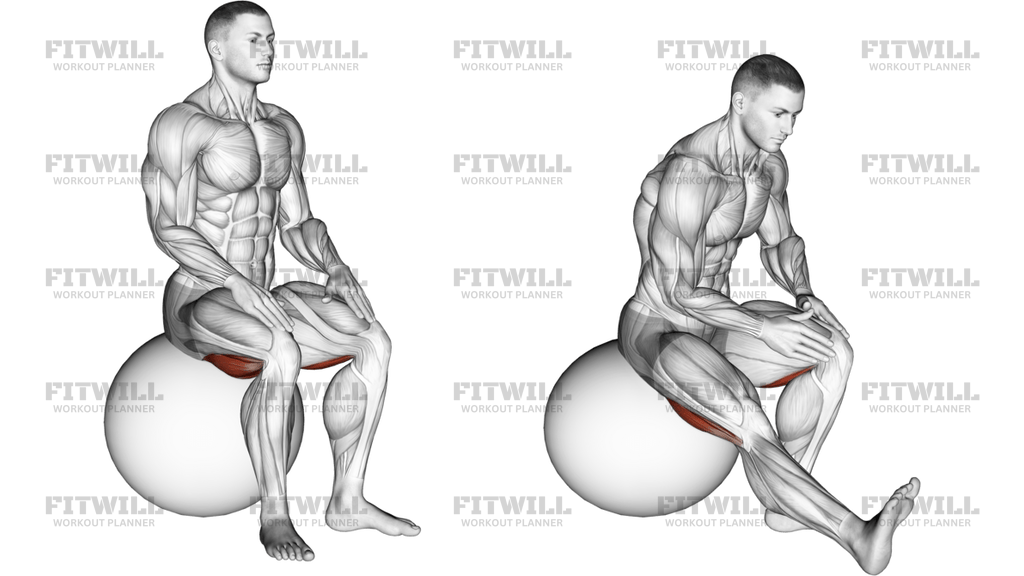
Exercise Ball Seated Hamstring Stretch is a supported mobility drill for the back of the thigh. Sitting on a stability ball lets you keep the torso tall while one leg stays bent and the other leg reaches forward, which makes it easier to isolate a hamstring stretch without collapsing through the low back. The exercise is simple, but the setup matters: if the ball is too low or you round hard through the spine, the stretch shifts away from the hamstrings and into the back.
The main target is the hamstrings of the extended leg. The glutes, calves, core, and the muscles around the hips and trunk help keep you balanced on the ball and control how far you hinge. Because the ball is unstable, this stretch also asks for a small amount of posture control while you move, but the goal is still a smooth lengthening sensation rather than an aggressive reach.
Set the ball so your hips are level and your feet can plant firmly. From there, keep the non-working leg bent for support and extend the other leg with the heel on the floor and the toes pointing up. Hold a tall chest, then hinge forward from the hips until you feel a clear stretch along the back of the extended thigh. Reaching with a long spine is more effective than curling into the toes.
This stretch works best when the movement is gradual and repeatable. A small forward hinge, a brief pause, and a controlled return usually produce a better result than forcing a deep position right away. Breathing stays calm and even, with the exhale helping the body relax into the end range. If the stretch ever becomes sharp, pinchy, or pulls in the knee or low back, back off and shorten the range.
Use it after lower-body training, during a mobility block, or as part of a warm-up when the hamstrings feel stiff. It is especially useful for lifters, runners, and anyone who sits for long periods and needs a gentle way to open the back of the thigh while practicing upright posture and balance on the ball.
Fitwill
Log Workouts, Track Progress & Build Strength.
Achieve more with Fitwill: explore over 9600 exercises with images and videos, access built-in and custom workouts, perfect for both gym and home sessions, and see real results.
Start your journey. Download today!




Instructions
- Sit on the stability ball with one foot flat on the floor and the other leg extended forward with the heel down and the toes pulled up.
- Keep your hips square and your chest tall before you reach toward the extended leg.
- Plant both hands lightly on the thighs or shins so you can hinge without losing balance.
- Exhale and fold forward from the hips until you feel a stretch along the back of the straight leg.
- Keep the extended knee soft but not bent excessively, and let the heel stay connected to the floor.
- Pause briefly at the end range without bouncing or pulling aggressively on the leg.
- Inhale as you return to a tall seated position on the ball with the pelvis centered.
- Switch sides and repeat with the same controlled setup and range.
Tips & Tricks
- If the ball feels too unstable, sit on a firmer surface first so you can learn the hip hinge without wobbling.
- Keep the chest moving forward instead of collapsing the head toward the shin; that keeps the stretch in the hamstring instead of the low back.
- A heel-down, toes-up foot position usually shifts the sensation higher into the hamstring and away from the calf.
- The stretch should feel strong but not sharp behind the knee; shorten the reach if the back of the knee lights up.
- Use your hands only for light support, not for pulling yourself deeper into the stretch.
- A slow exhale at the bottom often lets you gain a little more range without forcing it.
- Keep the bent leg grounded so the ball does not roll away as you hinge forward.
- If your low back rounds first, sit taller and stop the reach sooner.
Frequently Asked Questions
What does Exercise Ball Seated Hamstring Stretch target most?
It targets the hamstrings of the straight leg, especially the back of the thigh near the sit bone.
Why use a stability ball for this stretch?
The ball lets you sit tall and gently hinge forward while still getting enough support to control the position.
Where should I feel the stretch?
You should feel it along the back of the extended thigh, not in the lower back or a sharp tug behind the knee.
Can I bend the extended knee if I am tight?
Yes. A slight bend is fine if it helps you keep the torso long and the stretch comfortable.
Should I bounce at the bottom of the stretch?
No. Hold the end range briefly and let the breath help you relax instead of bouncing.
Is this exercise suitable before lower-body training?
Yes, it can work well as a light warm-up stretch if you keep the range easy and controlled.
What is the biggest form mistake?
Rounding the spine and reaching too far usually shifts the work away from the hamstring and toward the back.
How can I make the stretch easier?
Keep the hinge small, sit more upright, and use the hands on the thighs for balance rather than pushing deeper.