Snatch Pull
The snatch pull is an Olympic lifting pull used to build leg drive, hip extension, and upper-back strength without catching the bar overhead. It starts with the same wide snatch grip and organized setup you would use for a snatch, but the repetition finishes in a powerful standing extension and shrug rather than a turnover. Because the lift is performed against the floor with a straight-arm pull, the quality of the start position and the path of the bar matter more than trying to move heavy weight fast.
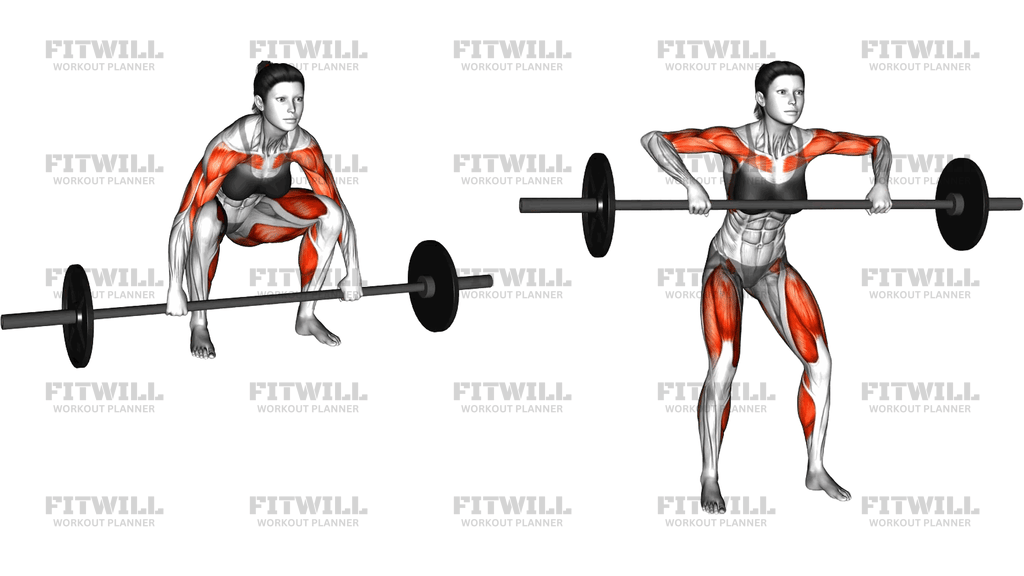
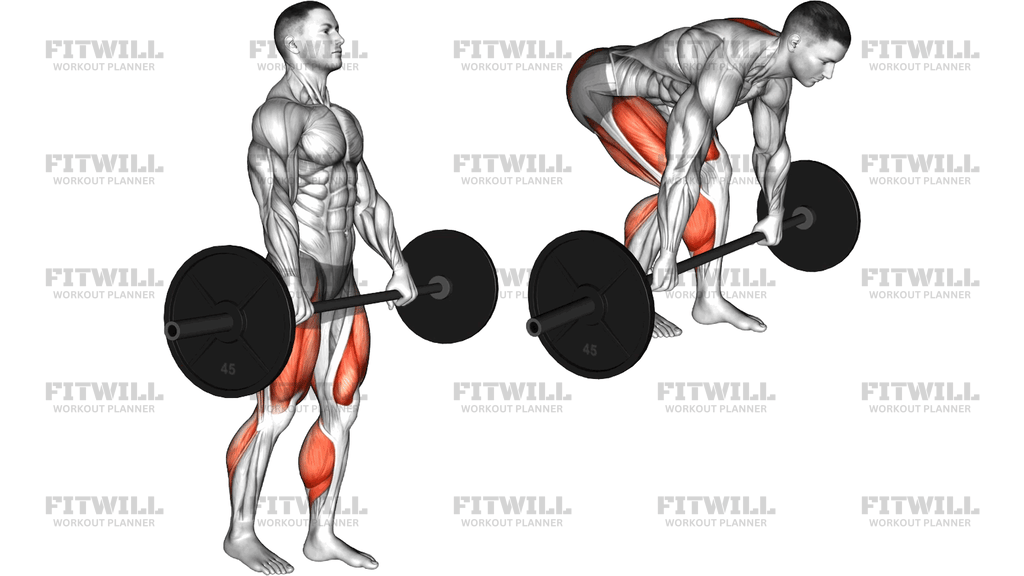
This movement emphasizes the posterior chain, traps, glutes, and quads while teaching you to keep the bar close as the knees clear, the hips extend, and the body rises tall. In the image, the bar begins on the floor with the torso forward and the shins close to the plates, then travels up the thighs as the lifter stays balanced over the midfoot. That path is the point of the exercise: the legs push first, the hips finish, and the shoulders and traps add the final explosive shrug.
A good snatch pull should look smooth off the floor and violent only at the top. Keep the chest set, lats engaged, and arms long so the bar does not drift away from the body or bend into a curl. Once the bar passes the knees, drive through the floor, finish with full extension, and let the elbows stay straight while the shoulders rise. Lower the bar with control to reset each rep instead of bouncing into the next one.
Use the snatch pull when you want snatch-specific power work, positional strength, or a cleaner way to train extension without the technical demands of a full catch. It is especially useful in strength blocks, pull variations, or accessory work for weightlifters and athletes who need explosive triple-extension. Keep the load heavy enough to be productive but light enough to preserve bar path, balance, and timing. If the bar moves away from you, the shrug comes early, or the torso collapses, the set is too heavy or the setup is off.
[ Workout Log & Planner ]
Put your next workout in Fitwill
Keep your plan and training log ready when you are.


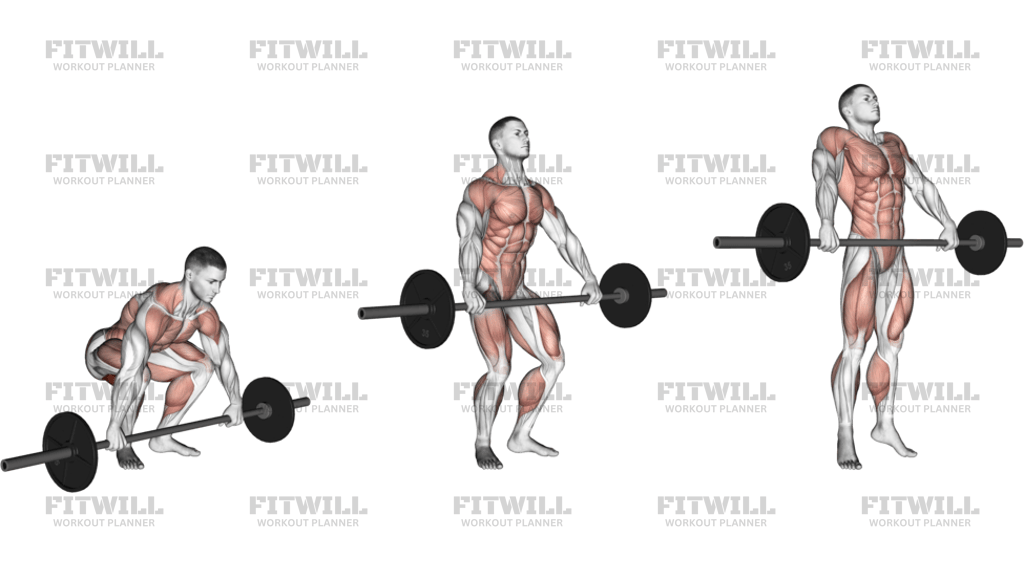
Instructions
- Stand with the bar over your midfoot, feet about hip to shoulder width, and take a wide snatch grip with your shoulders just over the bar.
- Set your hips above your knees, flatten your back, pull your chest up, and keep the bar close to your shins before the first rep starts.
- Brace your trunk, take the slack out of the bar, and begin the pull by pushing the floor away instead of yanking with your arms.
- Let the bar pass the knees while your knees move back and the torso angle stays controlled, keeping the bar brushing close to the thighs.
- As the bar reaches mid-thigh, extend the hips and knees together and keep the arms long so the legs and hips do the work.
- Finish tall by driving through the ankles, knees, and hips, then shrug the shoulders forcefully without bending the elbows to catch the bar.
- Lower the bar with control back to the floor or to the hang position, reset your posture, and re-brace before the next rep.
- Breathe in and brace before each pull, then exhale after the finish or once the bar is safely reset.
Tips & Tricks
- Think of the snatch pull as a leg and hip extension drill, not an arm exercise; the elbows should stay straight until the top.
- Keep the bar tight to your body from the floor to the finish so it does not swing forward away from the thighs.
- If your hips shoot up faster than your chest, lower the load and rebuild the start position before adding speed.
- Use plates or blocks that let the bar start from the same height every rep; inconsistent setup makes the pull feel sloppy.
- The finish should be tall and balanced, not leaned back with the ribs flared or the lower back overextended.
- A brief pause at the floor can help you reset the wedge position and stop the first pull from becoming a jerk.
- Choose a load that lets you accelerate the bar without losing the bar path or turning the shrug into a curl.
- If your grip starts to fail before your legs do, use hook grip or reduce the load rather than shortening the pull.
Frequently Asked Questions
What does the snatch pull train?
It builds leg drive, hip extension, upper-back strength, and bar speed for the snatch pattern.
Is the bar supposed to be caught overhead?
No. The rep ends at full extension and a strong shrug, with the arms staying long the whole time.
Where should the bar start for this movement?
Start with the bar over the midfoot, close to the shins, and set your back and chest before you pull.
Why do I need a wide snatch grip?
The wide grip matches the snatch pull position and lets you finish the extension without the bar drifting out in front.
Should I bend my elbows during the pull?
No. Keep the arms straight until the top so the legs, hips, and traps drive the lift instead of the biceps.
Can beginners use the snatch pull?
Yes, if they can hold a stable start position and use light enough weight to keep the bar path close.
What is the most common mistake?
Rounding the start or letting the bar swing away from the thighs usually ruins the pull and reduces power.
How heavy should I go?
Use a load that lets you keep the bar close, stay balanced, and finish with a fast, controlled extension.