Squat Arms Overhead
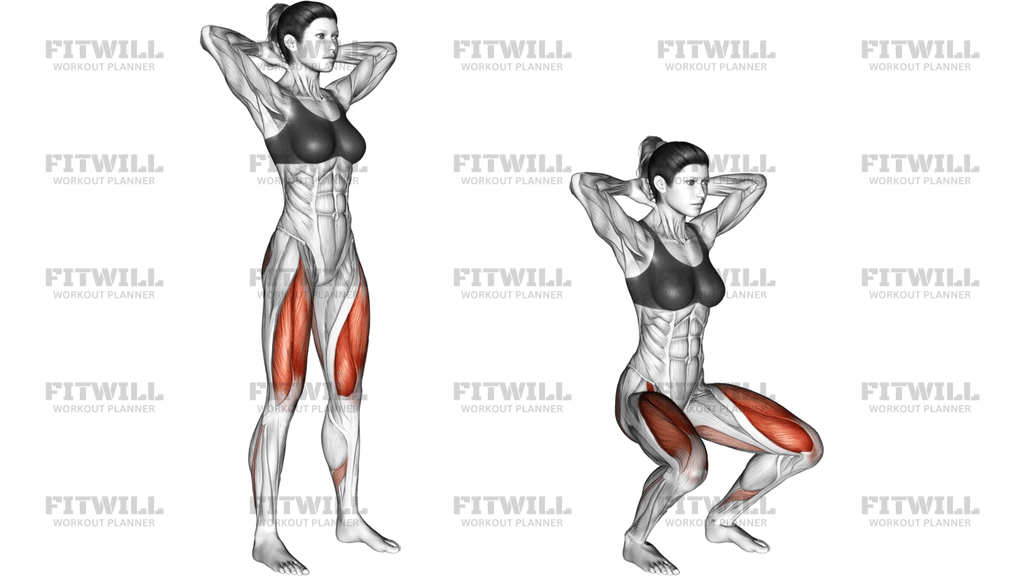
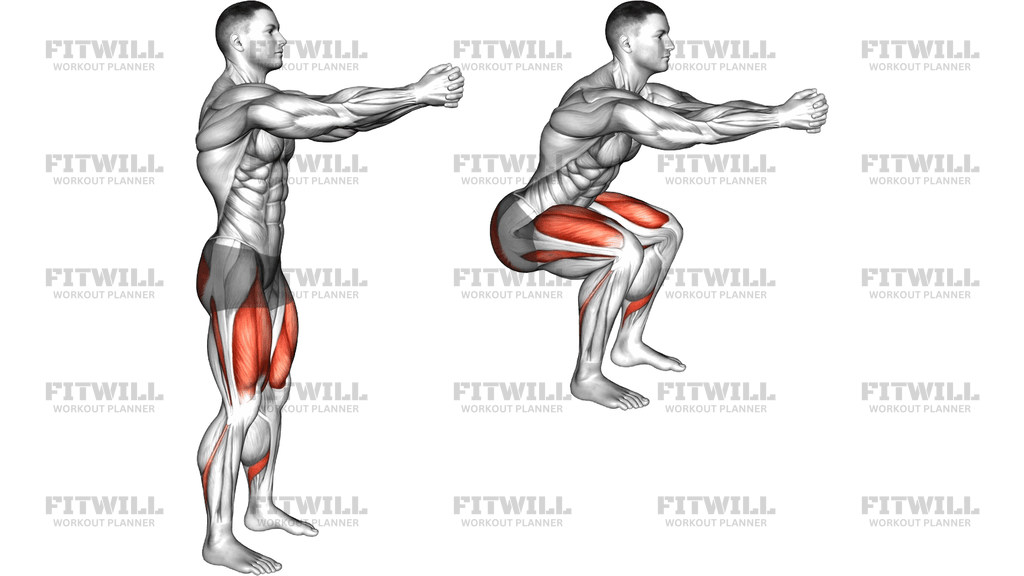
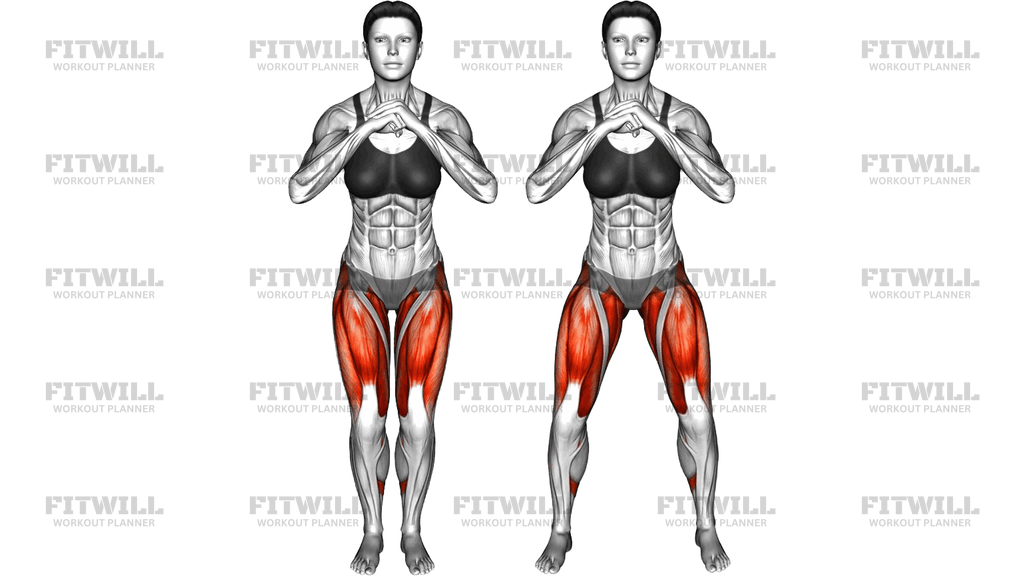
Squat Arms Overhead is a bodyweight squat variation built around a tall torso, a controlled descent, and steady lower-body work. In the supplied exercise image, the hands are placed behind the head with the elbows open, which helps keep the chest lifted and makes it easier to notice whether the trunk stays upright as the hips and knees bend. The movement is simple, but the setup matters because even a small change in foot angle, stance width, or upper-body position can shift the emphasis away from the legs.
The main training effect comes from repeated knee and hip flexion under bodyweight resistance. The glutes are the primary driver out of the bottom, while the quadriceps, hamstrings, and trunk muscles help you keep balance, control depth, and stand up without collapsing forward. In anatomy terms, the main work centers on the Gluteus maximus, with support from the Biceps femoris, Rectus abdominis, and Erector spinae. It is a useful squat pattern for teaching body awareness, improving control at different depths, and building a cleaner air-squat groove before adding load.
The top priority is a stable starting position. Stand with the feet about shoulder-width apart, toes slightly turned out, and the weight spread across the whole foot. Keep the elbows wide and the ribcage stacked so the chest does not flare forward as you descend. This upper-body position makes it easier to keep the spine long and the knees tracking in line with the toes instead of drifting inward or rolling onto the toes.
Each repetition should look like a controlled sit-down and stand-up, not a bounce. Send the hips back and down, bend the knees together, and lower until the thighs reach the desired depth without losing heel contact or trunk position. At the bottom, reverse direction by driving through the midfoot and heels, then stand tall without leaning back or snapping the hips forward. Breathe in on the way down, brace at the bottom if needed, and exhale as you rise.
This version fits well in warm-ups, technique work, conditioning circuits, and beginner strength sessions because it exposes flaws without requiring equipment. It is also useful for people who need a squat pattern that encourages posture control and leg engagement before progressing to goblet squats, front squats, or loaded variations. Keep the movement pain-free, stay honest about depth, and stop the set when the torso starts to fold or the knees start to cave.
[ Workout Log & Planner ]
Put your next workout in Fitwill
Keep your plan and training log ready when you are.


Instructions
- Stand with your feet about shoulder-width apart, toes slightly turned out, and place your hands behind your head with your elbows wide.
- Stack your ribs over your pelvis, keep your chest tall, and spread your weight across the heel, big toe, and little toe of each foot.
- Inhale and brace lightly before you lower, keeping the neck long and the elbows open instead of pulling the head forward.
- Send your hips back and down as your knees bend, keeping both knees tracking in the same direction as your toes.
- Descend under control until your thighs reach the chosen depth or until your posture starts to change.
- Pause briefly at the bottom without bouncing, then drive through the midfoot and heels to stand back up.
- Finish each rep by squeezing the glutes and returning to a tall stance without leaning back.
- Exhale as you rise, reset your brace at the top, and repeat for the planned number of reps.
Tips & Tricks
- Keep the elbows wide and resist the urge to pull the head forward with the hands; that usually turns the squat into a neck-and-back brace instead of a leg-focused rep.
- If your heels start lifting, shorten the depth slightly and think about sitting between the heels rather than tipping onto the toes.
- Use the knees as a guide for foot angle: if the knees collapse inward, turn the toes out a little more and keep pressure on the outer edge of the foot.
- A slower descent makes the pattern clearer; three seconds down is often enough to expose balance issues without turning the rep into a grind.
- Do not chase depth if the lower back rounds at the bottom; stop where the pelvis stays controlled and the chest can remain lifted.
- Keep the chin neutral and the eyes forward so the torso stays organized instead of curling through the upper back.
- If bodyweight squats are easy, hold the bottom for a second or add a tempo rather than throwing your arms around for momentum.
- A clean rep should feel like the glutes and thighs are doing the work, not the lower back, knees, or neck.
Frequently Asked Questions
What muscles does Squat Arms Overhead work most?
The glutes and quadriceps do most of the work, with the hamstrings and core helping you stay balanced and upright.
Why are the hands placed behind the head in the image?
That hand position helps keep the chest open and makes it easier to notice whether you are staying tall through the torso.
How low should I squat in this variation?
Go as low as you can while keeping your heels down, knees tracking over the toes, and the lower back from rounding.
Is this a good beginner squat pattern?
Yes. It is a useful bodyweight squat for learning stance, depth, and torso control before adding load.
What is the most common form mistake?
Letting the elbows pull the head forward, which rounds the upper back and shifts the work away from the legs.
What should I change if my knees cave inward?
Widen the toes slightly, keep pressure through the whole foot, and lower only as far as you can keep the knees tracking in line with the feet.
Can I make this harder without adding weight?
Yes. Slow the lowering phase, add a pause at the bottom, or do more reps with the same clean posture.
What should I do if my heels come off the floor?
Reduce the depth a little, keep the hips back, and make sure your weight stays centered over the midfoot and heels.