Squat Jacks
Squat Jacks are a bodyweight conditioning move that blends a jumping jack rhythm with a squat stance. You open the feet out, sink into a shallow-to-moderate squat, and coordinate the arms so the body stays tall while the legs do the work. The exercise is simple on paper, but the training effect comes from how cleanly you keep the landing, knee track, and squat depth under control.
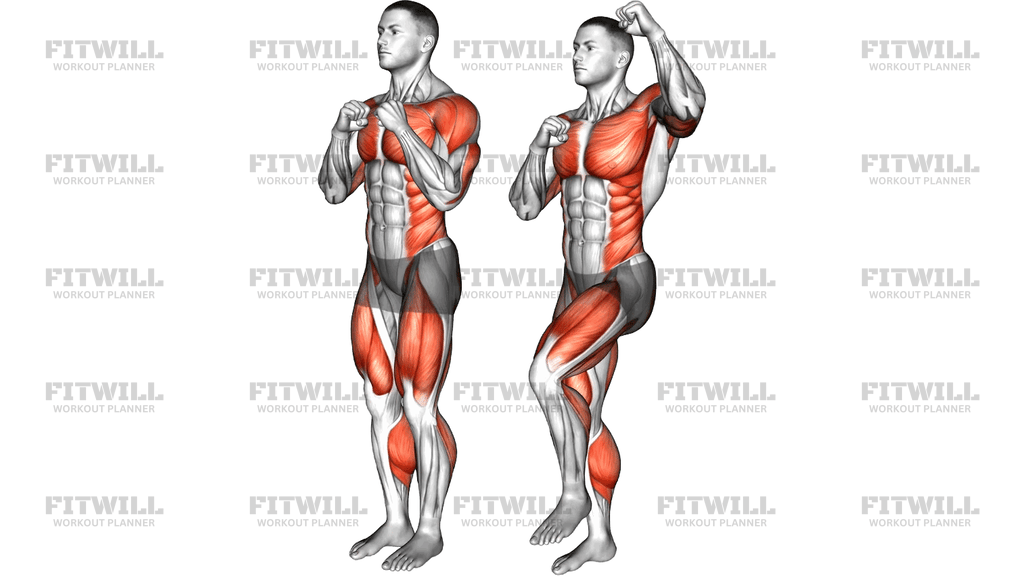
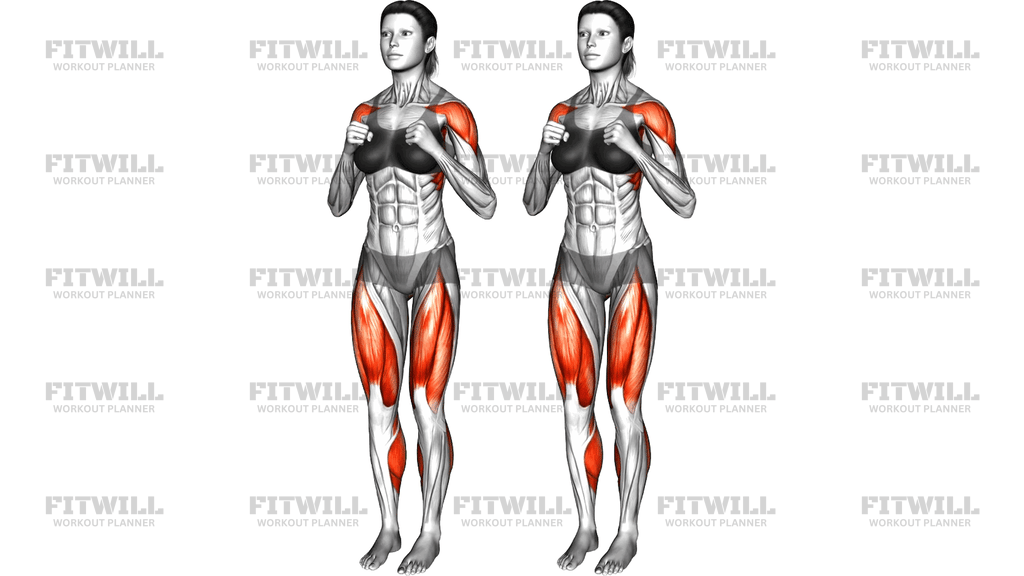
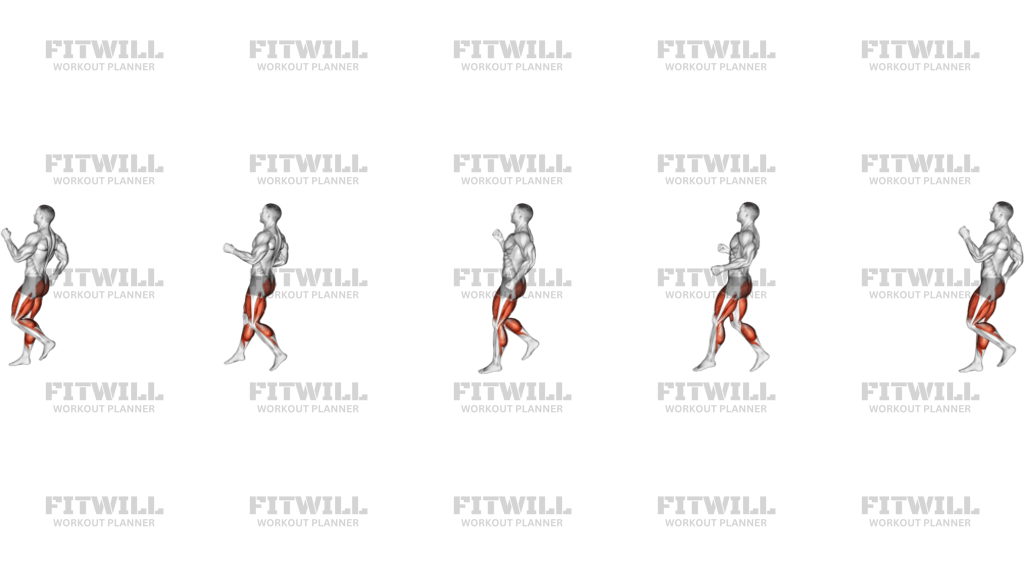
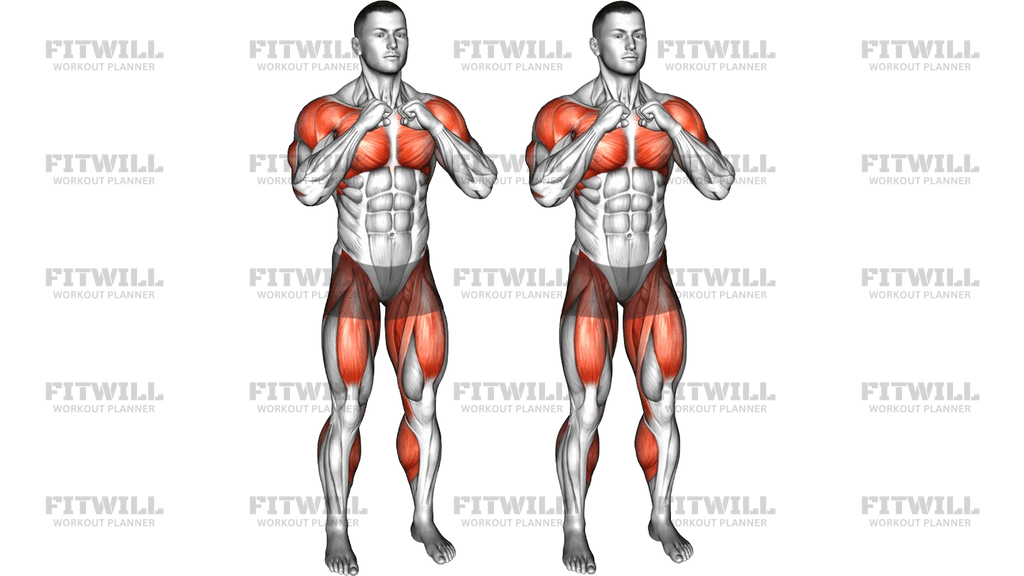
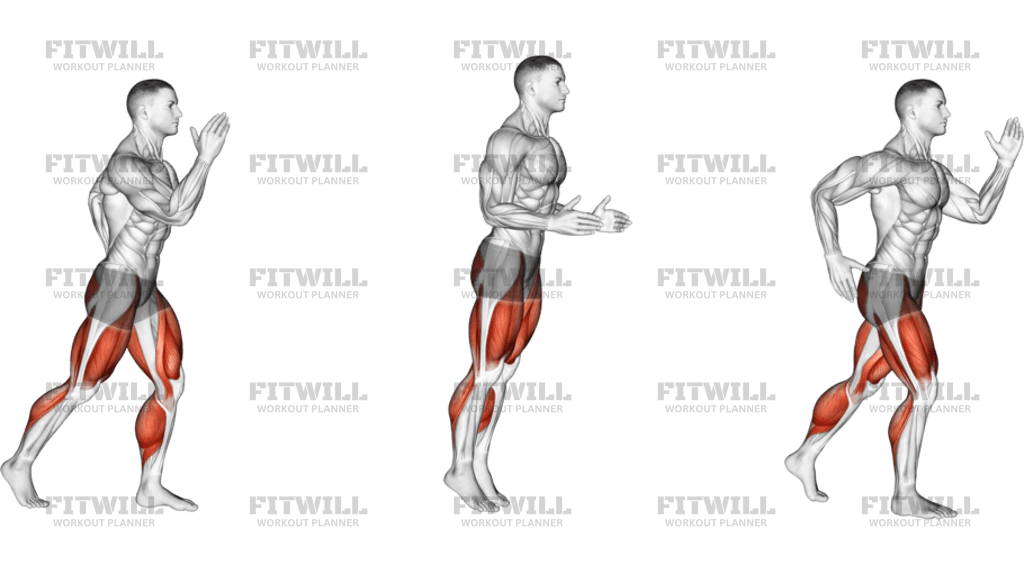
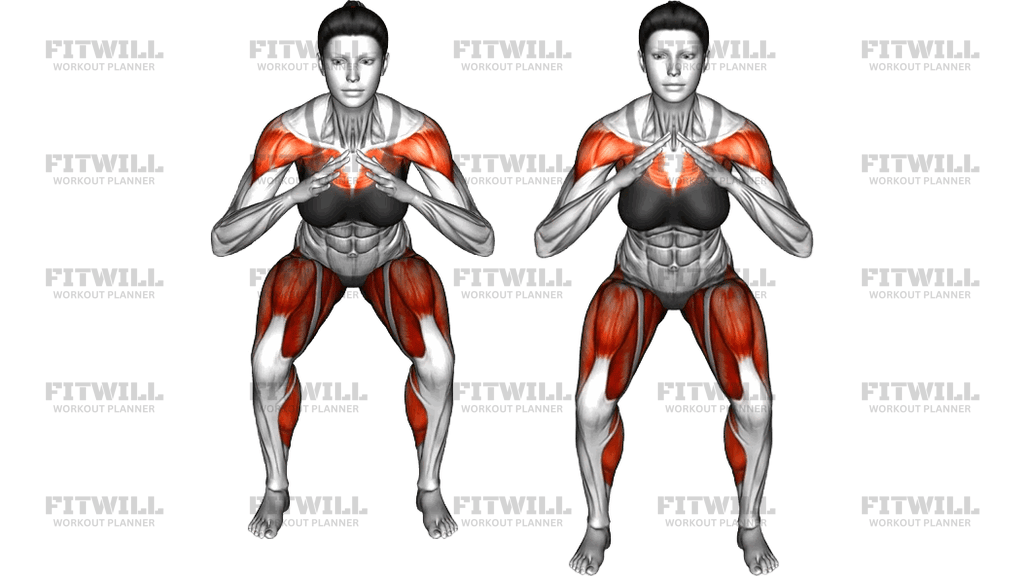
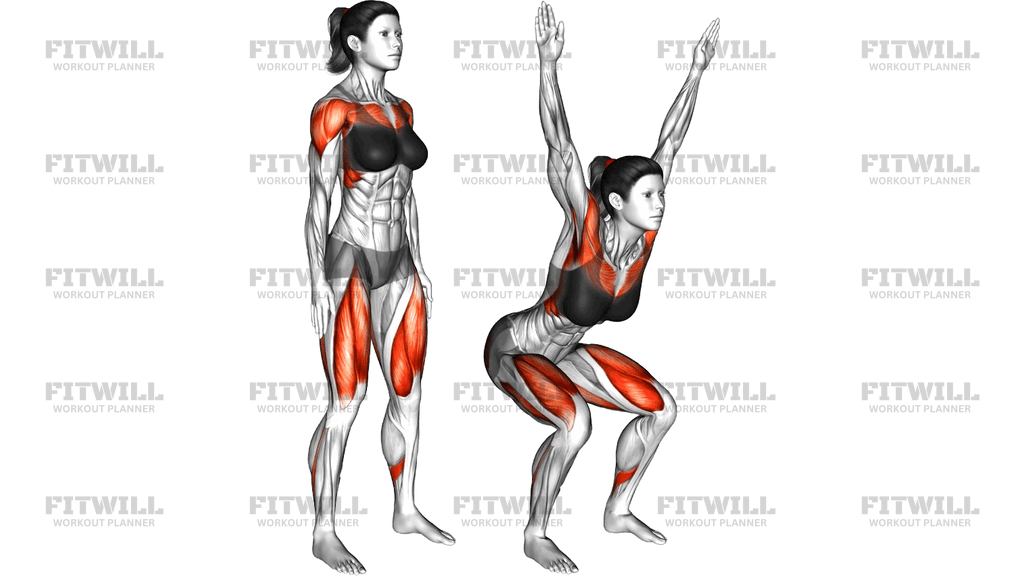
This movement is written for cardio and lower-body endurance, with the quadriceps doing most of the work and the glutes, calves, hip stabilizers, and core helping you keep the rep organized. In the image, the torso stays upright and the knees stay aligned over the feet rather than collapsing inward. That makes the squat jack more than just a fast jump: it becomes a repeatable lower-body drill that keeps tension on the legs while still raising heart rate.
The setup matters because the exercise changes quickly from standing to a wide squat. Start with your feet together, chest lifted, and weight centered over the middle of the foot. As you jump or step the feet apart, let the hips drop back and down enough to load the thighs without turning the rep into a fold at the waist. The arms should help with timing and balance, but they should not drag the shoulders forward or force the ribs to flare.
Use a smooth tempo and land softly every time. The best reps keep the knees tracking in line with the toes, the heels connected to the floor when you are in the squat, and the trunk steady as the feet move in and out. If you need less impact, step the feet out instead of jumping and keep the squat shallower until your coordination improves. That makes Squat Jacks practical for warm-ups, short conditioning intervals, bodyweight circuits, and anyone who wants lower-body work without equipment.
Treat the exercise as a quality movement, not a speed contest. Once the landing gets noisy, the torso starts twisting, or the knees cave in, the set has gone past the point where the legs are doing useful work. Stop before form falls apart, reset, and keep the reps crisp so the thighs, hips, and lungs all get the intended training dose.
[ Workout Log & Planner ]
Put your next workout in Fitwill
Keep your plan and training log ready when you are.


Instructions
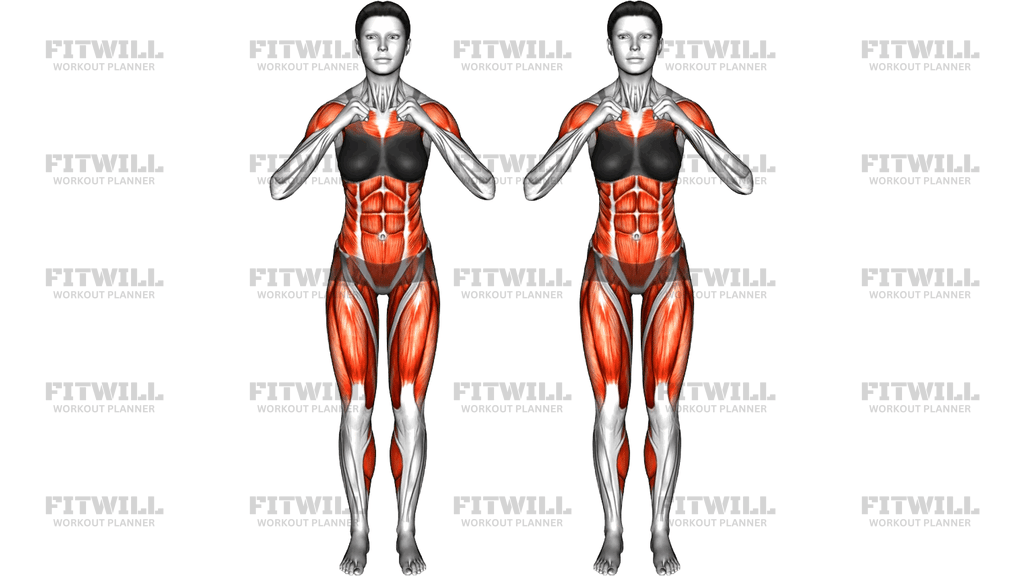
- Stand tall with your feet together, chest lifted, and arms ready to move.
- Brace your midsection and keep your weight centered over the middle of each foot.
- Jump or step your feet out to a wide squat stance while lowering your hips back and down.
- Keep your knees tracking in line with your toes as you settle into the squat.
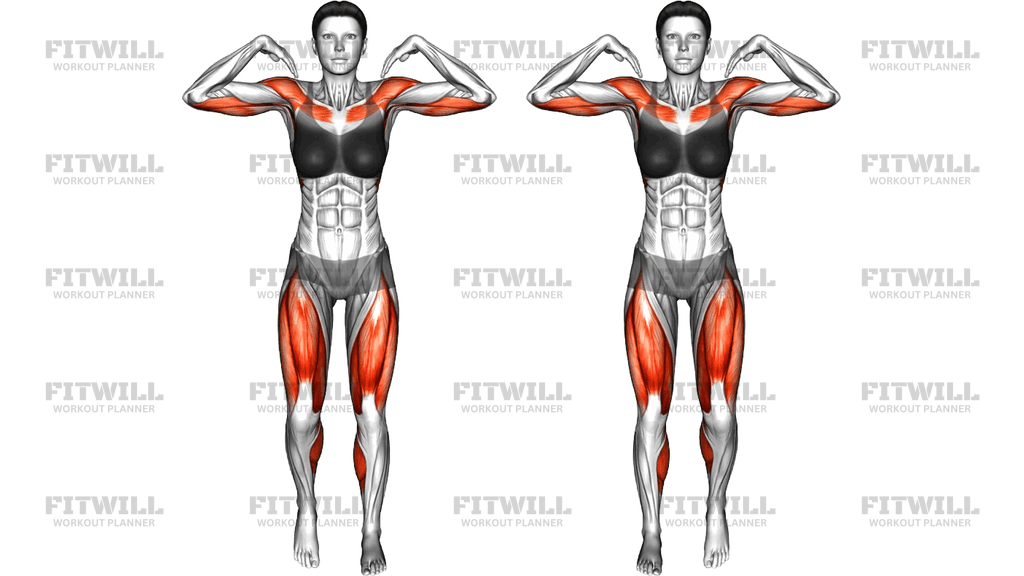
- Raise the arms in a way that matches the image and helps you stay balanced without shrugging.
- Drive through your feet to leave the squat and bring the feet back together under control.
- Land softly with quiet feet and a stable torso before starting the next rep.
- Keep breathing rhythmically so each repetition stays smooth and repeatable.
Tips & Tricks
- If the landing gets loud, shorten the jump and keep the feet closer to the floor.
- Let the hips travel back as you squat so the knees do not shoot too far forward.
- Keep the chest open and the ribs stacked so the torso does not fold over the thighs.
- Use a squat depth you can repeat for every rep instead of chasing the deepest position.
- Aim for the knees to stay out over the toes rather than drifting inward on the landing.
- A step-out version is useful when you want less impact or need to clean up your timing.
- The arms should support rhythm and balance, not force the shoulders into tension.
- Stop the set when your feet stop landing in the same place or your trunk starts rotating.
Frequently Asked Questions
What muscles do Squat Jacks work most?
The quads do most of the work, with help from the glutes, calves, core, and hip stabilizers.
Are Squat Jacks a good beginner cardio exercise?
Yes, especially if you start with a step-out version and keep the squat shallow until the pattern feels smooth.
How low should I squat during a Squat Jack?
Drop only as low as you can while keeping the chest up, heels stable, and knees tracking cleanly over the feet.
What is the most common mistake with this movement?
Most people rush the landing and let the knees cave in, which turns the rep into sloppy momentum instead of useful leg work.
Should the arms be overhead or out to the side?
Use the arm path shown in the image and keep it controlled; the goal is coordination, not aggressive shoulder motion.
Can I do Squat Jacks without jumping?
Yes. Step the feet out and back in while keeping the same squat pattern if you want less impact.
Where should I feel the exercise the most?
You should feel it primarily in the front of the thighs, with the glutes and calves working on each landing and push-off.
How do I make Squat Jacks harder?
Increase the pace only if you can keep the squat depth, knee position, and landing quality the same on every rep.