Weighted Russian Twist Legs Up
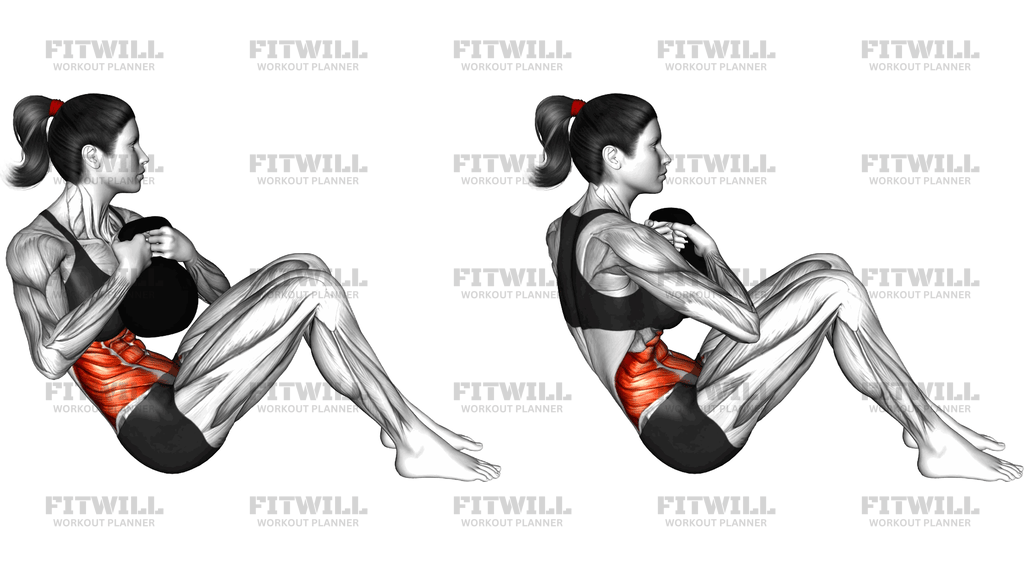
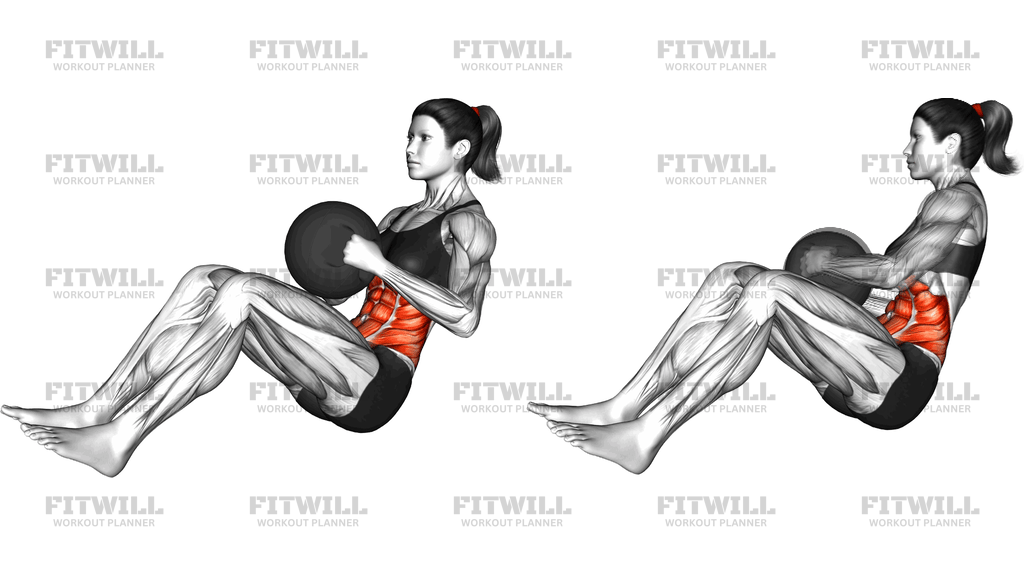
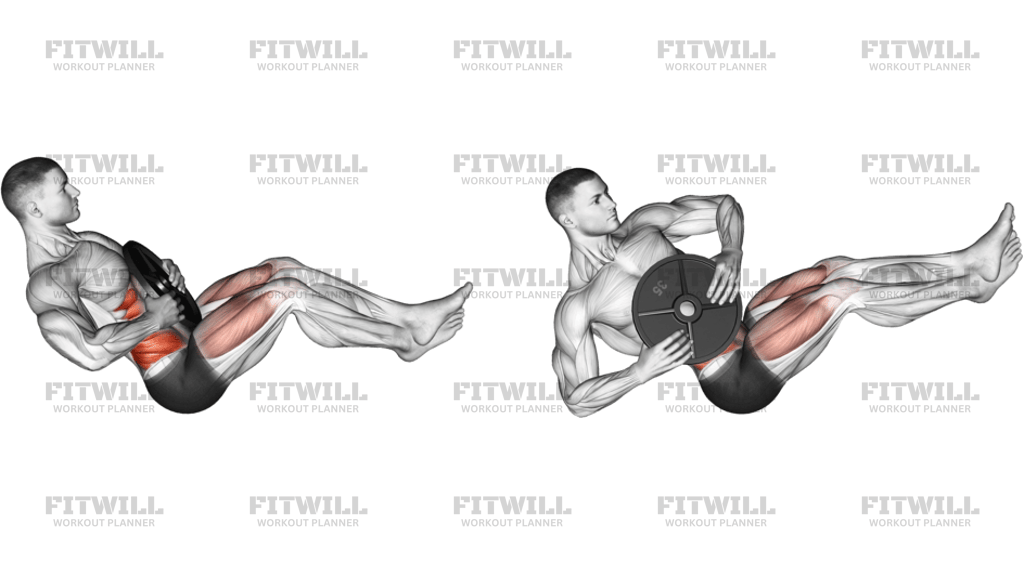
Weighted Russian Twist Legs Up is a floor core exercise built around controlled trunk rotation while the hips stay flexed and the feet stay off the ground. In the image, the torso is reclined, the shins are lifted, and a plate is held close to the chest so the abs and obliques have to resist both rotation and the longer lever created by the raised legs.
The main training effect is on the obliques, especially the external obliques, with the rectus abdominis and deeper abdominal wall helping keep the pelvis and ribcage organized. Because the legs are elevated, the lower back has less help from the floor, so the exercise becomes more demanding than a seated twist with the feet down. That makes setup important: a small change in recline, leg height, or load position can turn the set from controlled core work into swinging through the spine and hips.
Use a weight you can hold steadily with straight wrists and quiet shoulders. Sit back just enough to feel the abdominals working, then rotate the ribcage and shoulders as one unit from side to side while keeping the hips mostly still. The goal is not to fling the hands across the body; it is to create a clean, repeatable twist that comes from the trunk. If the feet drop, the low back arches, or the weight starts guiding the motion, the load is too heavy or the range is too aggressive.
This variation is useful for accessory core training, athletic rotation work, and finishers that need a lot of tension without a lot of equipment. It is also a good test of trunk control because the legs-up position removes some stability and forces the athlete to own the position. Keep the movement smooth, avoid rushing for extra reps, and stop the set when the torso starts collapsing backward or the rotation becomes a bounce instead of a twist.
Fitwill
Log Workouts, Track Progress & Build Strength.
Achieve more with Fitwill: explore over 9600 exercises with images and videos, access built-in and custom workouts, perfect for both gym and home sessions, and see real results.
Start your journey. Download today!




Instructions
- Sit on the floor and lean back to a strong reclined position, keeping your chest lifted and your spine long.
- Raise both feet off the floor so your shins stay in front of you and your hips stay tucked under control.
- Hold the plate or weight close to your sternum with both hands, keeping your elbows softly bent.
- Brace your abs before the first rep so your ribs stay stacked over your pelvis.
- Rotate your shoulders and ribcage to one side until the weight moves beside your hip or outer thigh.
- Pause for a moment without letting the shoulders shrug or the lower back arch.
- Twist back through center and rotate to the opposite side with the same controlled range.
- Exhale as you turn, inhale through the center, and keep the legs elevated for the whole set.
- Lower your feet or reduce the load if you can no longer control the torso without swinging.
Tips & Tricks
- Keep the weight close to your chest; letting it drift forward turns the set into a shoulder-lever exercise and makes control harder.
- Think about turning the ribcage, not just moving the hands, so the twist comes from the trunk instead of the arms.
- If the feet keep dropping, shorten the set or lower the load before the low back starts taking over.
- Stay slightly behind vertical rather than collapsing all the way back onto the floor, which reduces tension on the obliques.
- Move at a steady pace and avoid bouncing off the bottom of each twist.
- Use a plate, medicine ball, or dumbbell that you can hold symmetrically without gripping so hard that your shoulders tense up.
- Keep your chin tucked lightly and your gaze steady so the neck does not start leading the rotation.
- Stop the set when the shoulders start drifting instead of the torso, because that usually means the core is no longer controlling the rep.
Frequently Asked Questions
What muscles do Weighted Russian Twist Legs Up work most?
The obliques do most of the work, with the rectus abdominis and deeper core muscles helping keep the torso braced.
Why keep the legs lifted during the twist?
Raising the legs removes some support from the floor and increases the demand on the trunk, especially if you want more core tension.
What should I hold during this exercise?
A weight plate is common, but a medicine ball or dumbbell works if you can hold it close to the chest without losing control.
Should the hips move with each rep?
The hips should stay mostly quiet while the ribcage and shoulders rotate, otherwise the twist becomes a full-body swing.
How do I know the weight is too heavy?
If the feet drop, the low back arches, or the weight starts pulling you through the rep, the load is too much.
Can beginners do this version?
Yes, but they should start light, keep the torso less reclined, and lower the feet if the legs-up position is too hard to control.
What is the biggest form mistake?
Swinging the weight side to side instead of rotating the trunk is the main problem to watch for.
Where does this fit in a workout?
It works well as accessory core work, a finisher, or part of a rotation-focused abdominal block.