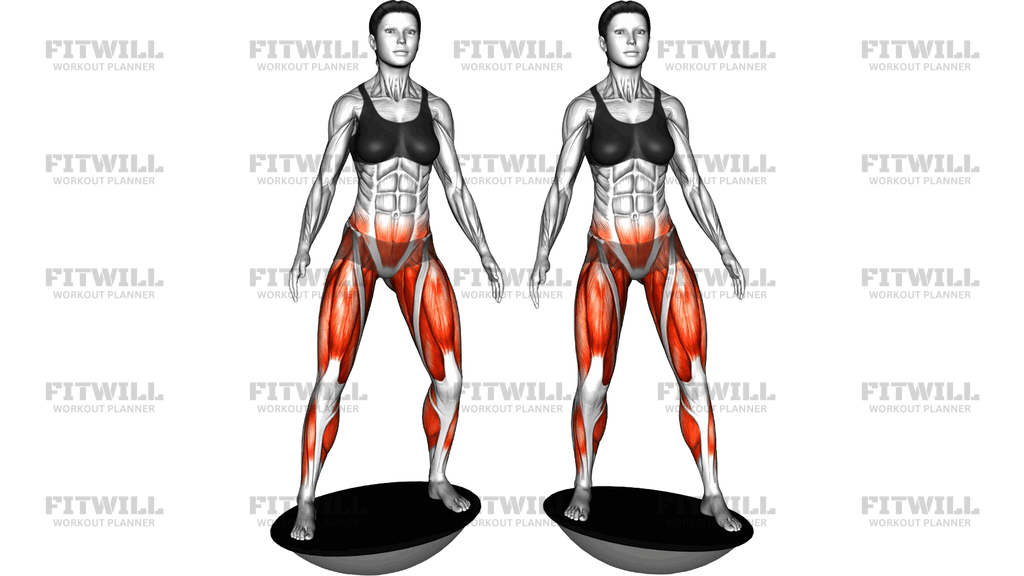
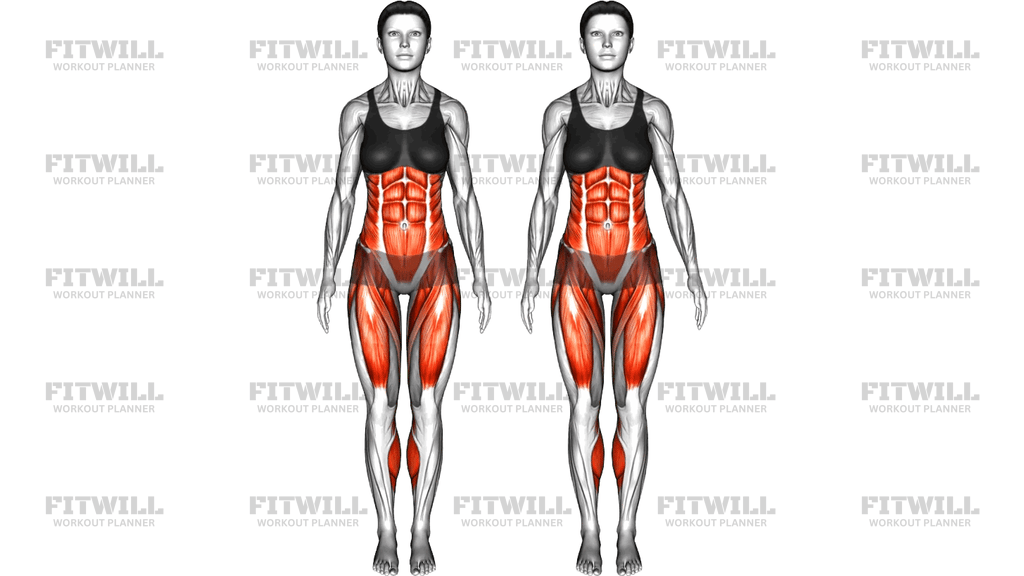
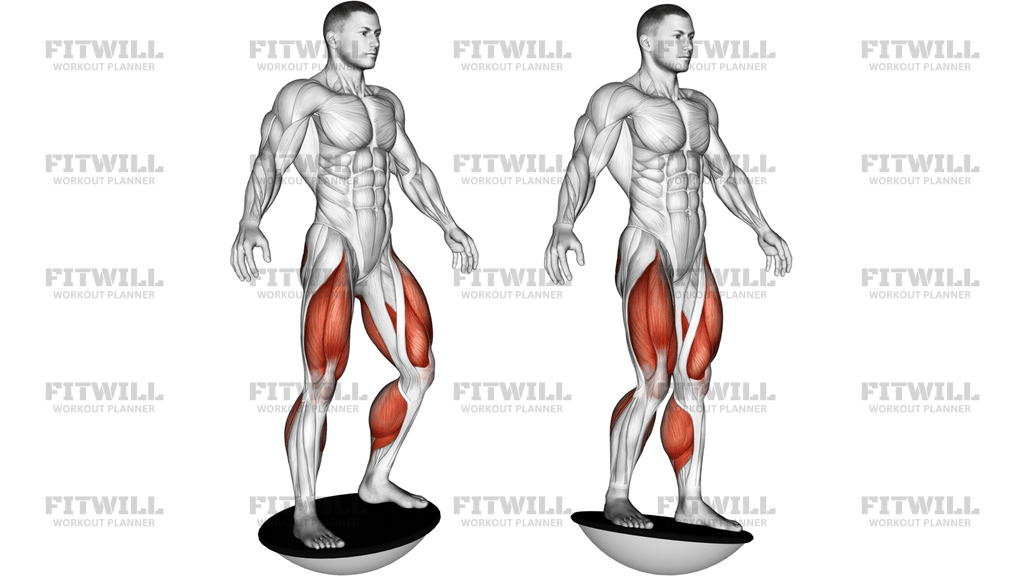
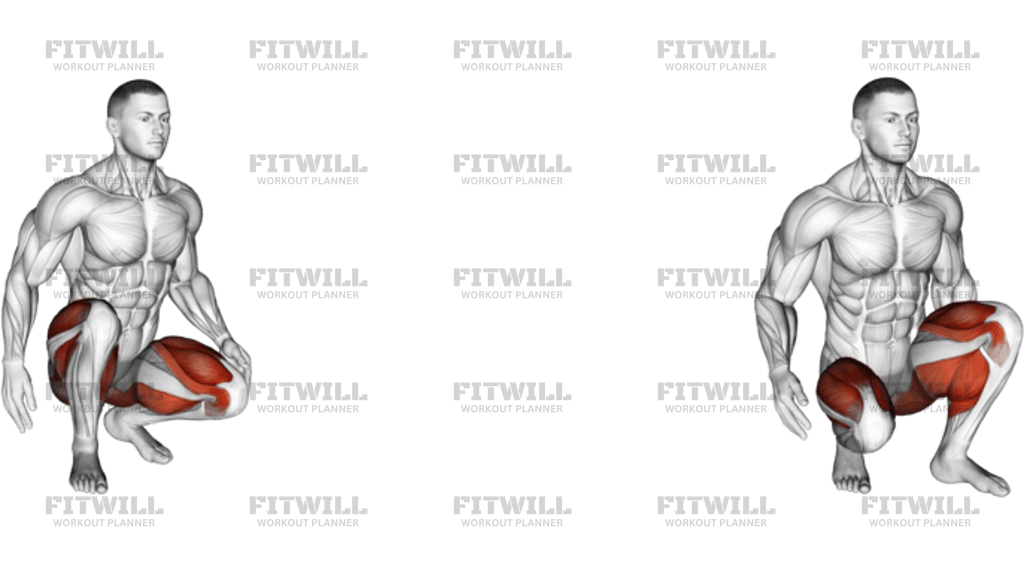
Sitting Ankle Dorsi Flexion
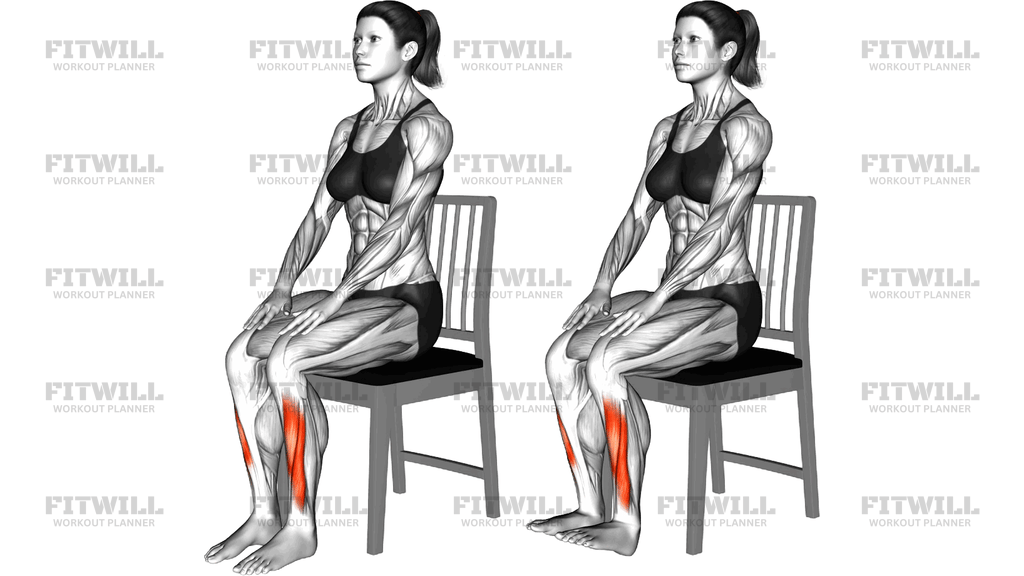
Sitting Ankle Dorsi Flexion is a simple seated exercise that targets the muscles on the front of your shin, mainly the tibialis anterior. You sit upright on a sturdy chair or bench with your feet flat on the floor, then repeatedly lift the balls of your feet and toes up toward your shins while your heels stay planted, and lower them back down with control. It looks almost trivial from the outside, but the burn along the front of the lower leg tells you quickly that these muscles are working.
Most people train the calves with raising and pressing movements but completely ignore the dorsiflexors, which create muscle imbalance around the ankle. This exercise is useful for runners and walkers who deal with tired or weak shins, for anyone recovering general strength and control after a lower-leg layoff, and for older adults who want to keep the ankle strong and responsive for balance and walking. It is also a common warm-up drill before squats, lunges, or running because it wakes up the ankle before loading.
Because you are seated with no external load, the setup matters mostly for posture and leverage. Sitting tall on the front half of the seat with knees bent roughly ninety degrees puts the ankle in a position where the tibialis anterior has to do the work. If you slump back or slide your feet too far away, the movement gets sloppy and the shin muscles stop doing their job cleanly.
Execution is deliberately slow. Pull your toes and the balls of your feet up toward your knees as high as they will go without your heels lifting, pause for a moment at the top, then lower your feet back to the floor under control. Both feet can work together, as shown with the legs side by side, or you can work one leg at a time if one side is noticeably weaker.
Since this is a bodyweight movement performed on a chair, it is very accessible and low risk. The main safety points are to keep the movement pain-free, avoid forcefully snapping the foot up and down, and keep your torso relaxed rather than bracing hard. If you feel a sharp or pinching sensation at the front of the ankle rather than muscle fatigue, reduce the range or stop and reassess.
[ Workout Log & Planner ]
Put your next workout in Fitwill
Keep your plan and training log ready when you are.


Instructions
- Sit upright on a sturdy chair or bench with your knees bent about ninety degrees and both feet flat on the floor, hip-width apart.
- Rest your hands on your thighs, keep your back tall and shoulders relaxed, and position your heels directly under your knees.
- Take a relaxed breath and let your upper body settle so your legs and ankles are free to move without tension elsewhere.
- Keeping your heels glued to the floor, pull your toes and the balls of both feet up toward your shins as high as you can.
- Hold the top position for a brief pause of one to two seconds so you feel the muscles along the front of your shins working.
- Lower your toes and forefeet back down to the floor slowly and smoothly until your feet are flat again.
- Exhale as you lift your toes up, and inhale as you lower them back down, keeping the breathing rhythm steady.
- Complete your target number of repetitions, keeping the tempo slow the entire time rather than bouncing the feet.
- After the last rep, sit still for a moment, gently point and flex the ankles a few times without tension, then stand up or move to the next set.
Tips & Tricks
- If your heels lift off the floor as you raise your toes, your feet are probably too far back under the chair — slide them forward until only the forefoot moves.
- A common mistake is turning this into a fast toe-tapping drill; slow the tempo down so the shin muscles, not momentum, do the lifting.
- Do not let your knees roll inward or outward as the feet lift — keep the kneecaps pointing straight ahead so the ankle hinges in one line.
- If both legs feel easy for high reps, switch to single-leg versions or add a light ankle weight across the forefoot before increasing speed.
- Watch for toes scrunching or splaying at the top of the movement; keep the foot relaxed and let the ankle do the hinging.
- A mild burn along the outer front of the shin is normal; a sharp pinch at the front of the ankle joint means you are forcing past your available range — shorten the range.
- Slumping back against the chair backrest reduces control — sit on the front half of the seat with a tall spine for the whole set.
- If your shins cramp early, which is common for beginners, do fewer reps per set but spread them across the day instead of pushing through a cramp.
- Use this as a pre-run or pre-leg-day warm-up with one light set of fifteen to twenty reps to prime the ankles before heavier work.
Frequently Asked Questions
Which muscles does Sitting Ankle Dorsi Flexion work?
The main muscle is the tibialis anterior on the front of the shin, which lifts the foot upward. Smaller supporting muscles around the ankle and foot assist with controlling the movement.
Is Sitting Ankle Dorsi Flexion suitable for complete beginners?
Yes, it is one of the most beginner-friendly lower-leg exercises because it is bodyweight-only and performed from a seated position. Start with ten to fifteen slow repetitions and build up gradually.
Why do my shins burn when I do Sitting Ankle Dorsi Flexion?
That burning comes from the tibialis anterior working through repeated lifts of the foot. It is a normal muscle fatigue sensation, especially if you have never trained the front of your shins directly before.
Should my heels stay on the floor during Sitting Ankle Dorsi Flexion?
Yes, the heels stay planted so the ankle hinges cleanly and the shin muscles do the lifting. If your heels rise, your feet are likely positioned too far under the chair.
Can I do Sitting Ankle Dorsi Flexion one leg at a time?
Absolutely. Working one leg at a time is a good option if one side is weaker or if you want to focus on the ankle that feels less coordinated.
How many reps and sets of Sitting Ankle Dorsi Flexion should I do?
Two to three sets of fifteen to twenty controlled repetitions is a solid starting point. Because the load is light, higher reps with a slow tempo work better than trying to add heavy resistance early.
What can I use instead of a chair for Sitting Ankle Dorsi Flexion?
Any stable seated position works, such as a bench, a sturdy box, or the edge of a bed, as long as your knees bend about ninety degrees and your feet rest flat on the floor.
How is Sitting Ankle Dorsi Flexion different from calf raises?
Calf raises work the muscles on the back of the lower leg by pointing the foot down, while this exercise works the front of the shin by lifting the foot up. Doing both keeps the muscles around the ankle more balanced.
Can I add resistance to Sitting Ankle Dorsi Flexion?
Yes, once bodyweight reps feel easy you can rest a light weight plate or wear a light ankle weight across the forefoot. Increase the load only when you can keep the heels planted and the tempo slow.
Is it safe to do Sitting Ankle Dorsi Flexion every day?
For most people, yes, because the resistance is low and the range is short. Keep the daily volume modest, and stop if you notice persistent shin soreness or pinching at the front of the ankle.