Squat Side Pendulum Leg
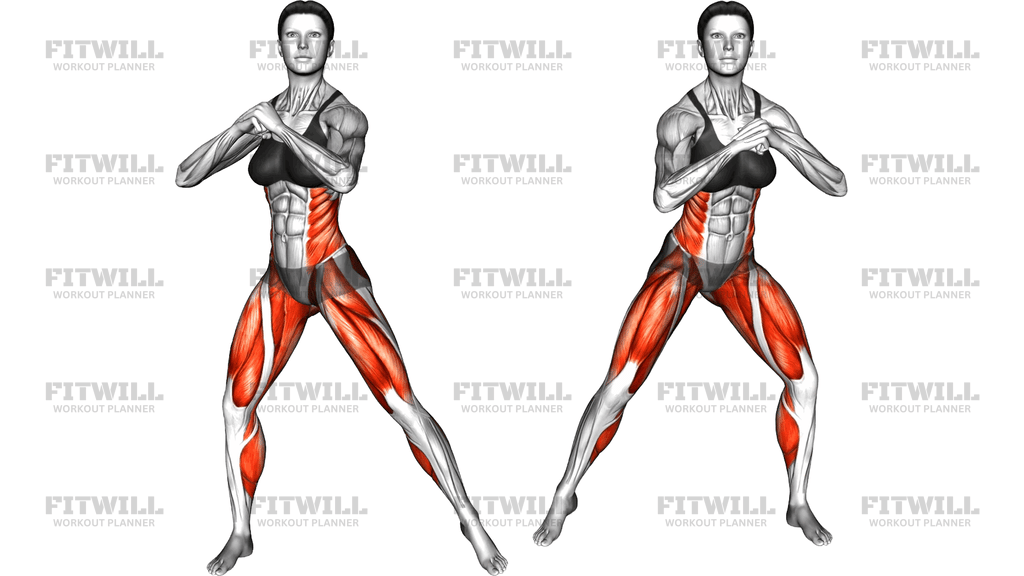
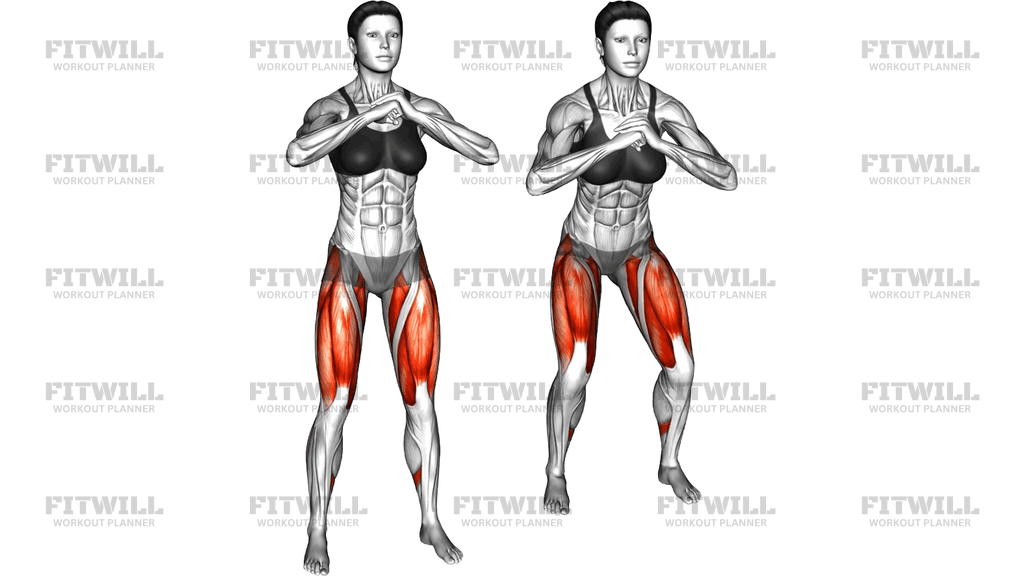
The Squat Side Pendulum Leg is a standing bodyweight movement that combines a shallow squat with a controlled side-to-side weight shift, letting one leg swing out like a pendulum while the other leg accepts the load. You keep your hands clasped in front of your chest for balance, sit into a partial squat, and rock your hips laterally so that your weight travels over one foot while the opposite leg extends out to the side with a pointed toe. Then you sweep back through center and repeat on the other side, creating a smooth, continuous pendulum rhythm.
Because the exercise requires no equipment and very little space, it fits easily into warm-ups, home workouts, and travel routines. It is especially useful for people who want to prepare their legs and hips for deeper squats or lateral work, since the rocking motion takes the hip joints through abduction and adduction under light load. Dancers, skaters, and field-sport athletes often recognize the pattern, but beginners benefit from it just as much because it teaches single-leg weight transfer in a low-risk way.
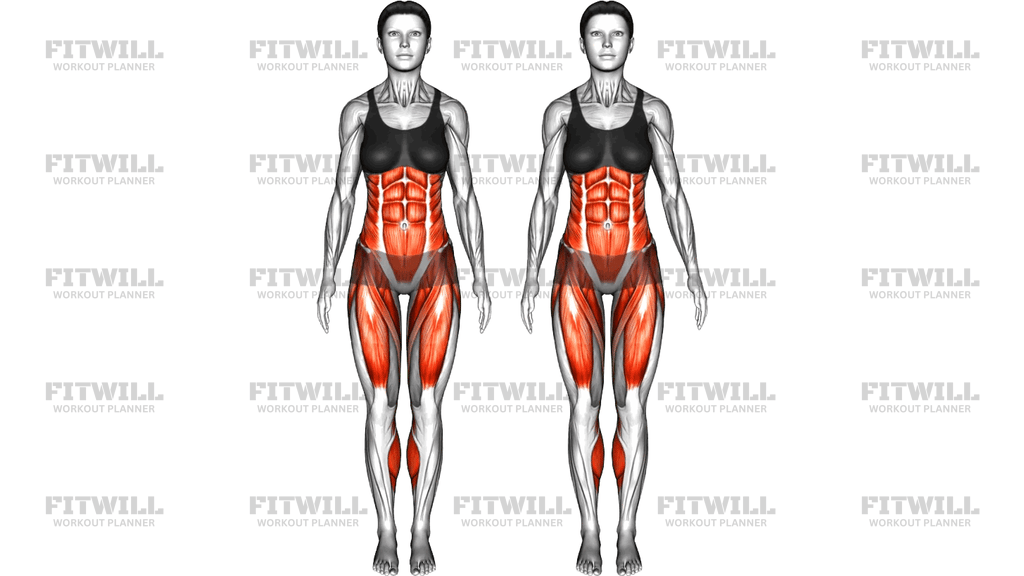
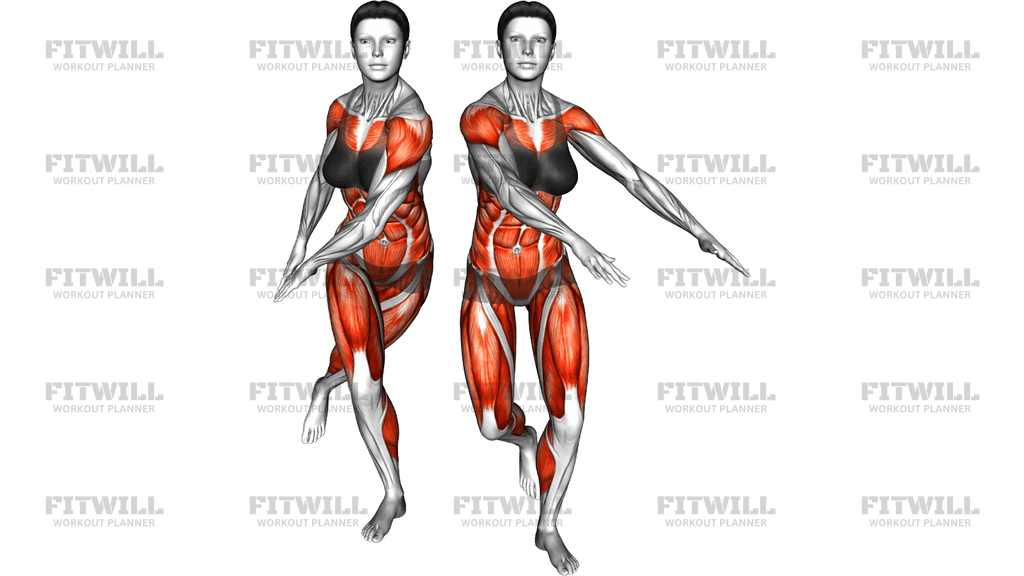
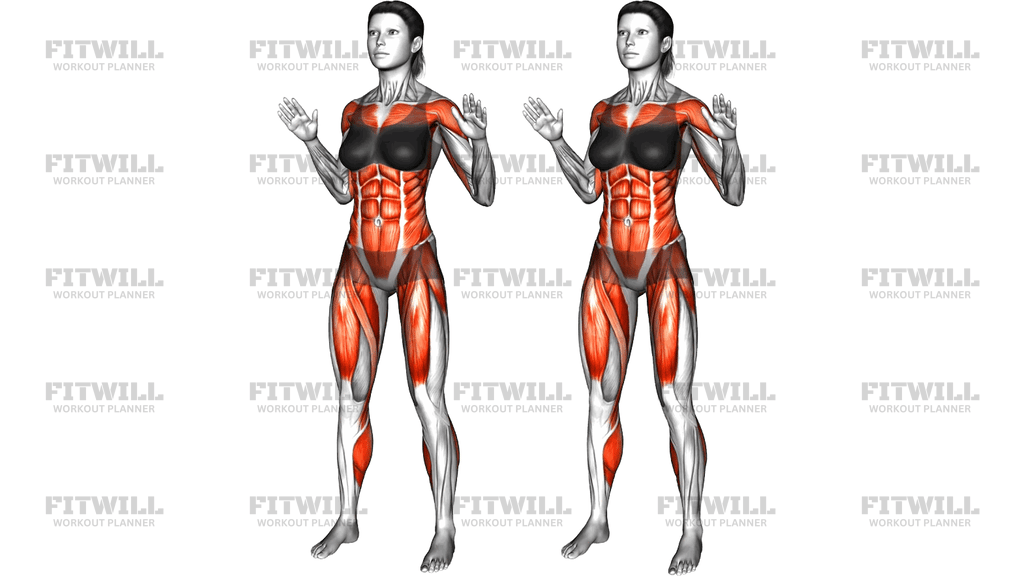
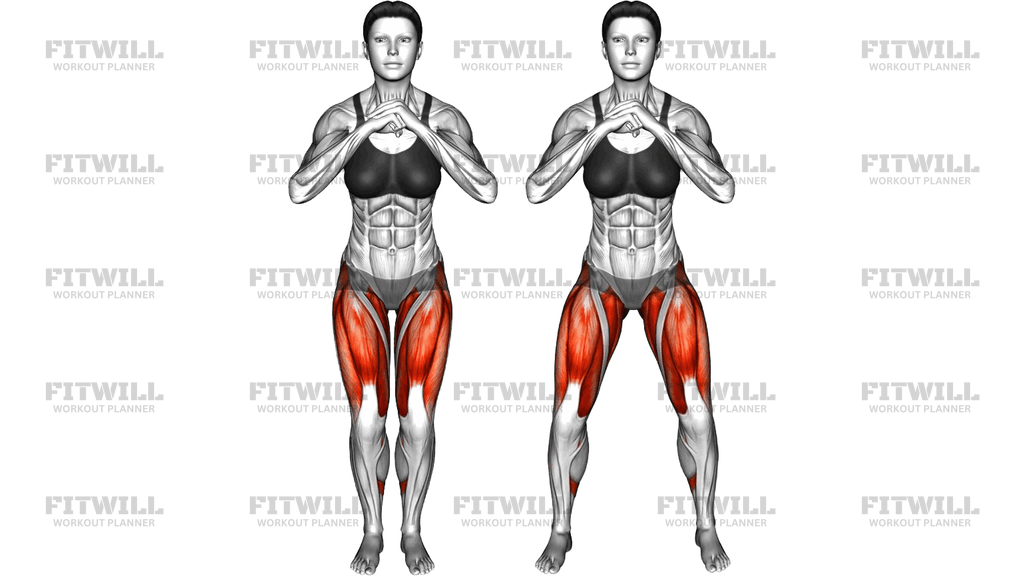
The primary work comes from the quadriceps of the loaded leg, which control the shallow squat on every shift. The glutes on the standing side stabilize the pelvis while the swinging leg moves, and the inner thigh muscles lengthen and shorten as the legs travel between the narrow and wide positions. Your core, particularly the obliques, works to keep the torso upright and centered while the lower body moves side to side, and the ankle stabilizers on the supporting foot manage the constant balance demand.
Setup matters more than it looks. A stance that is too narrow will make the pendulum swing feel wobbly, while one that is too wide turns the movement into alternating side lunges and removes the sweeping quality. Keep your feet roughly hip-width apart at the start, hold your hands together at chest height with elbows relaxed, and let the motion originate from the hips rather than from the shoulders. If your torso starts leaning or twisting, the swing is too fast or too wide for your current control.
To execute well, think of drawing a shallow arc with your hips instead of lifting your leg with effort. The working knee should track over the toes of the loaded foot and never collapse inward, and the swinging leg should stay relatively straight and light, gliding out to the side and back rather than slamming down. Move at a tempo you could sustain for thirty seconds or more; the exercise rewards rhythm and smoothness far more than speed.
Common use cases include dynamic warm-ups before lower-body training, active recovery between heavier sets, balance and hip-mobility work for older adults, and as a conditioning drill in circuit training. Since it is low impact, you can perform it on most surfaces without shoes stressing your joints, but a firm, non-slip floor or exercise mat gives the supporting foot the best grip. Anyone with recent knee, hip, or ankle injuries should start with a smaller range of motion and a slower tempo, and stop if the pendulum action produces pinching or pain rather than simple muscular effort.
[ Workout Log & Planner ]
Put your next workout in Fitwill
Keep your plan and training log ready when you are.


Instructions
- Stand tall with your feet about hip-width apart, toes pointing forward, and clasp your hands together at chest height with your elbows relaxed and down.
- Brace your core lightly, pull your shoulders back, and soften your knees so you are ready to move rather than locked out.
- Push your hips back and down into a shallow squat, keeping your chest lifted and your weight distributed across both feet.
- Shift your hips to the right so your weight stacks over your right foot while your left leg extends out to the side, toe lightly touching or hovering just above the floor.
- Keep the right knee tracking in line with the right toes as it accepts the load, and let the left leg sweep out like a pendulum with a relaxed, fairly straight knee.
- Sweep the left leg back through center, transferring your weight across both feet without rising all the way up, and immediately shift toward the left leg.
- Extend your right leg out to the side as your left knee bends and takes over the load, keeping the same shallow squat depth throughout.
- Continue alternating in a smooth side-to-side arc, exhaling as you shift and inhaling as you return through center.
- Aim for a controlled rhythm of one full swing per two seconds, and complete your desired number of repetitions on each side.
- To finish, bring your last swing back to center, rise out of the squat, and stand tall with your feet together before stepping away.
Tips & Tricks
- If the loaded knee drifts inward during the shift, narrow your squat depth slightly and consciously press the knee out over the little-toe side of the foot.
- Swinging the leg too hard is the most common fault; the leg should feel light and guided by the hip, not kicked out with force that pulls your torso off center.
- Keep your clasped hands at chest height rather than swinging your arms side to side; arm movement steals the work from your hips and core.
- If you wobble on the supporting foot, spread your toes and imagine gripping the floor, which wakes up the ankle stabilizers that this movement quietly trains.
- Avoid dropping into a deep lunge on each side. The Squat Side Pendulum Leg works best as a shallow, flowing squat where depth stays constant from side to side.
- Let your hips travel laterally while your shoulders stay level; if your torso tips toward the working leg, slow the tempo and reduce the swing width.
- Keep the swinging foot's toes relaxed and pointing slightly outward; a rigid, flexed foot usually means the leg is being lifted rather than swept.
- On carpet or slippery flooring, check your footing before starting, because the pendulum shift puts rotational force into the supporting foot.
- If one side feels noticeably tighter or weaker, perform an extra two or three swings toward that side to balance the workload.
Frequently Asked Questions
What muscles does the Squat Side Pendulum Leg work?
The quadriceps of the loaded leg do most of the squatting work, while the glutes stabilize the hip on the standing side. The inner thighs, obliques, and calf and ankle stabilizers contribute as you swing and control the side-to-side transfer.
Is the Squat Side Pendulum Leg suitable for beginners?
Yes, it is a low-impact bodyweight movement that beginners can learn quickly. Start with a shallow squat, a small side swing, and a slow tempo, then widen the range as your balance improves.
How deep should the squat be during the Squat Side Pendulum Leg?
A shallow quarter squat is enough, as long as the depth stays consistent on both sides. Going too deep turns the movement into alternating side lunges and makes the pendulum rhythm harder to maintain.
Should the swinging leg touch the floor?
The toe may lightly tap or brush the floor as the leg sweeps out, or it can hover just above it. The key is that the leg stays relaxed and light, with the loaded leg carrying essentially all of your weight.
Why do I keep losing my balance on the supporting foot?
Balance usually breaks down when the swing is too fast or the squat shifts the weight too far outside the supporting foot. Slow the tempo, shorten the swing, and keep your hips stacked directly over the loaded heel and mid-foot.
Can I use the Squat Side Pendulum Leg as a warm-up?
It works very well as a warm-up before squats, lunges, or lateral drills because it mobilizes the hips and activates the quads and glutes without heavy loading. Two or three sets of ten to fifteen swings per side is a typical dose.
How is the Squat Side Pendulum Leg different from a side lunge?
A side lunge steps into a wide stance and loads one leg through a deep bend, while the Squat Side Pendulum Leg stays in a narrow stance and sweeps the free leg out in a continuous arc. The pendulum version emphasizes rhythm, hip mobility, and weight transfer rather than loading a single deep rep.
How many repetitions should I do?
For warm-up or mobility purposes, 10 to 15 swings per side for two or three sets works well. In a circuit, 30 to 45 seconds of continuous swinging gives a mild conditioning effect in the legs and core.
Is it safe if I have knee problems?
Because the movement is low impact and uses only bodyweight, many people with mild knee discomfort tolerate it well with a shallow range. Keep the loaded knee tracking over the toes, stay at a comfortable depth, and stop if you feel pinching or sharp pain rather than muscular effort.