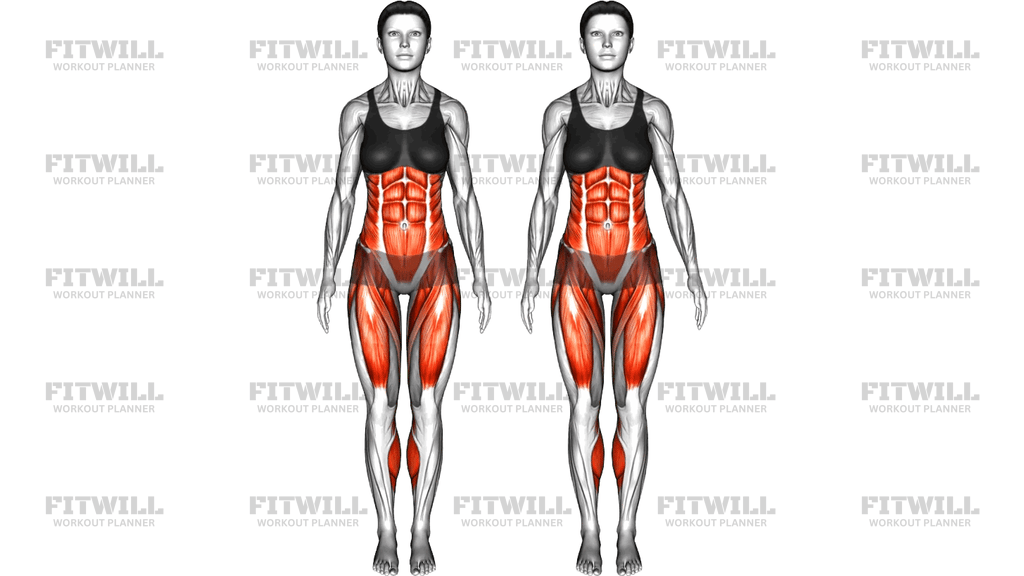
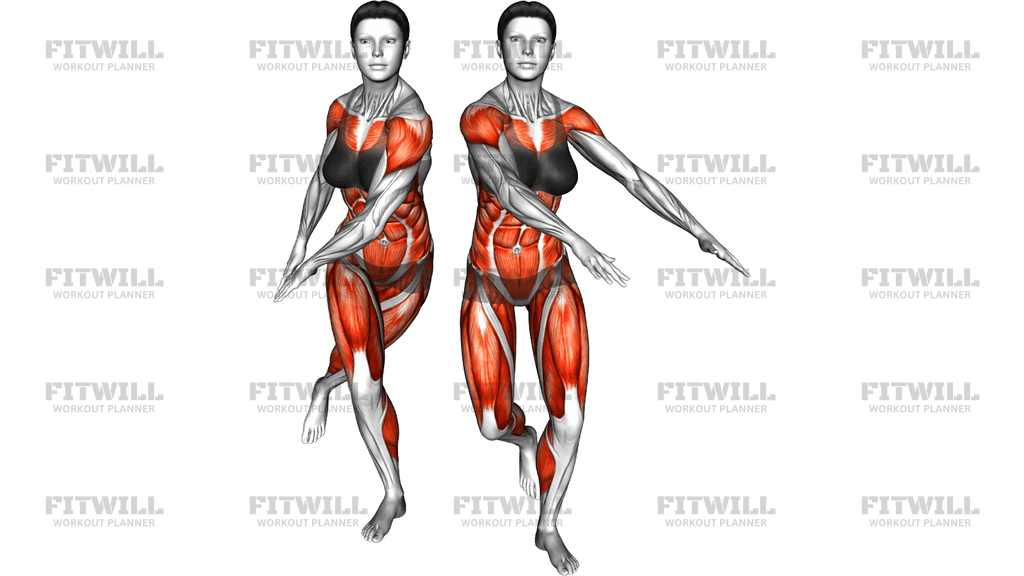
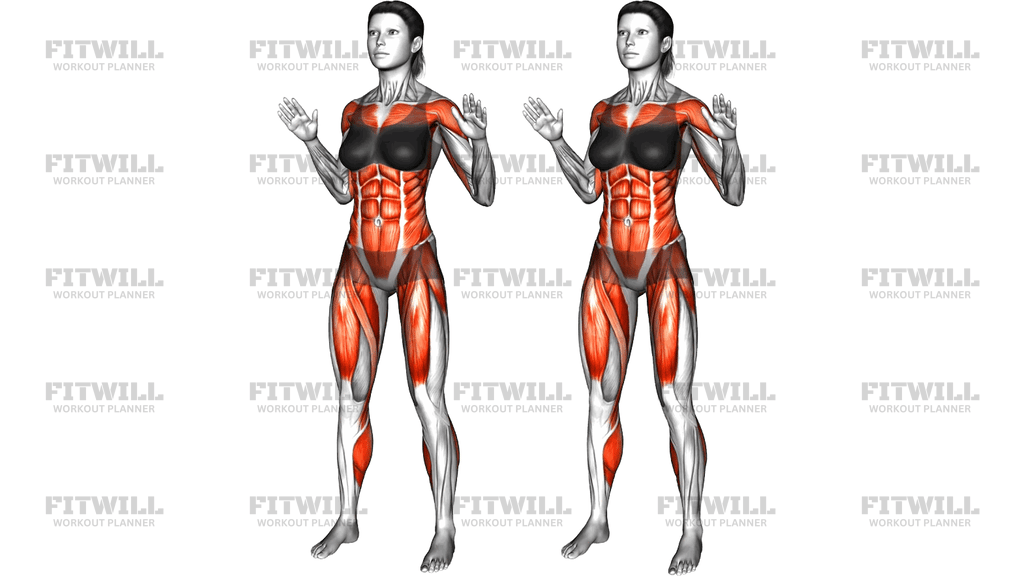
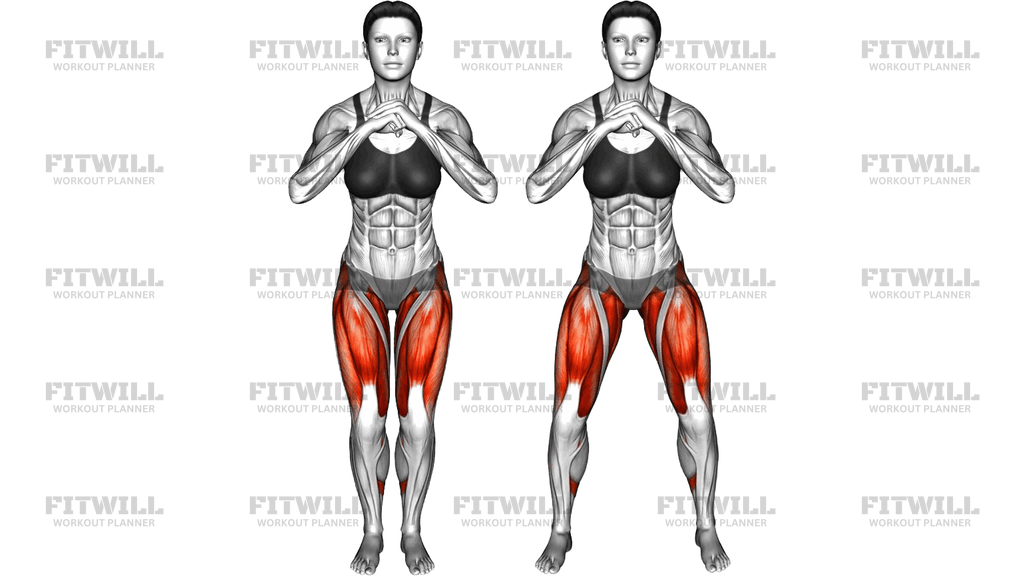
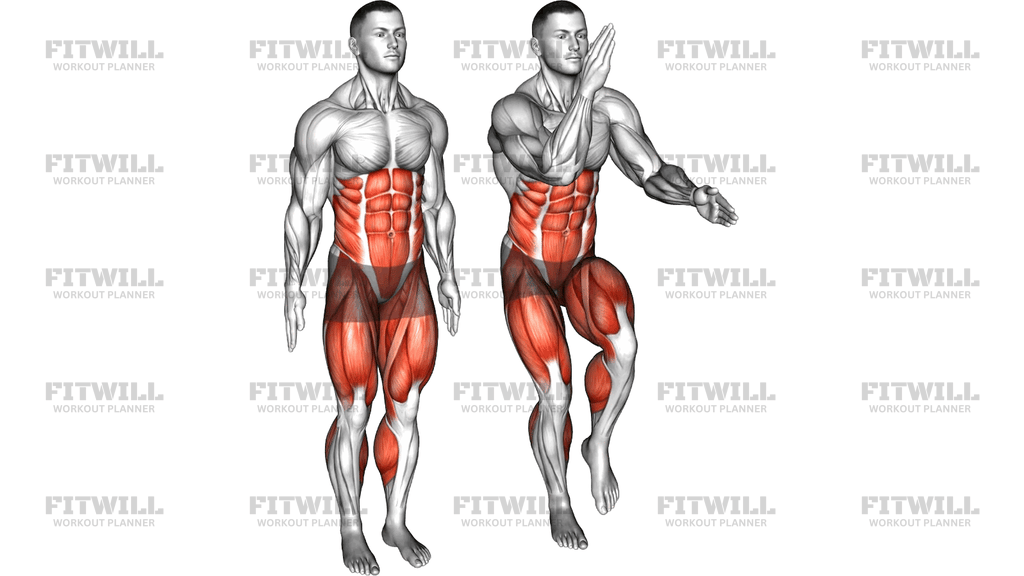
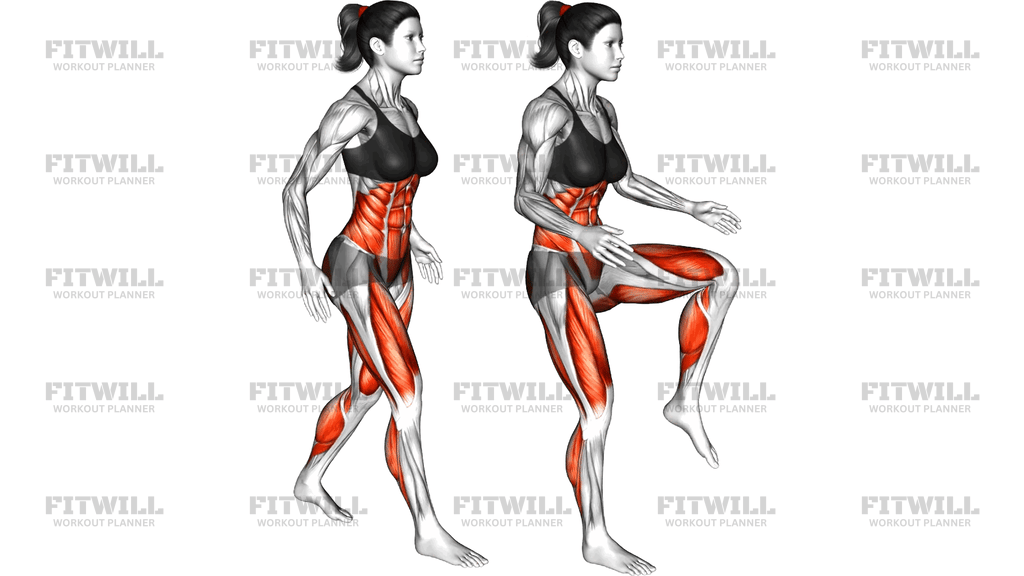
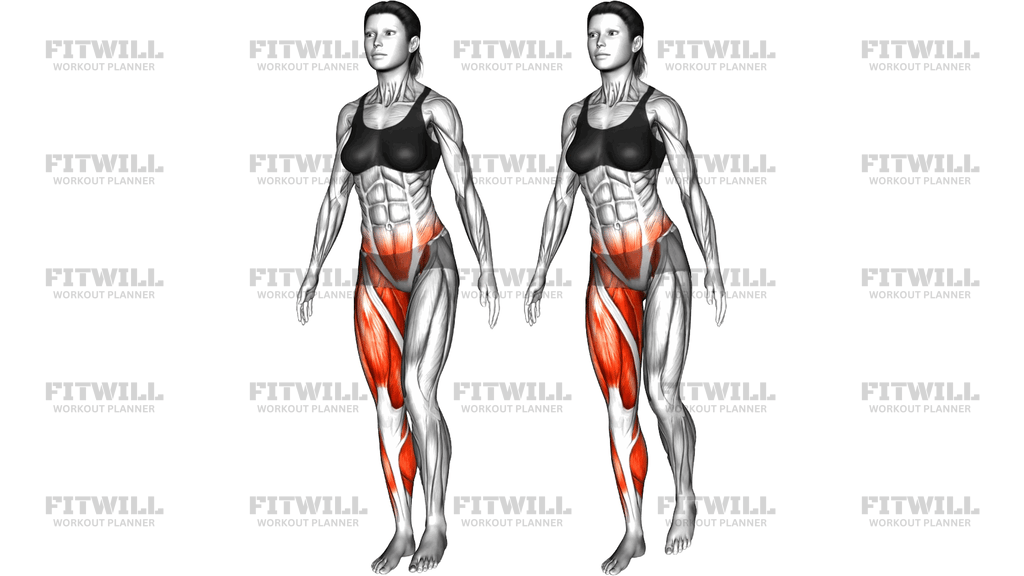
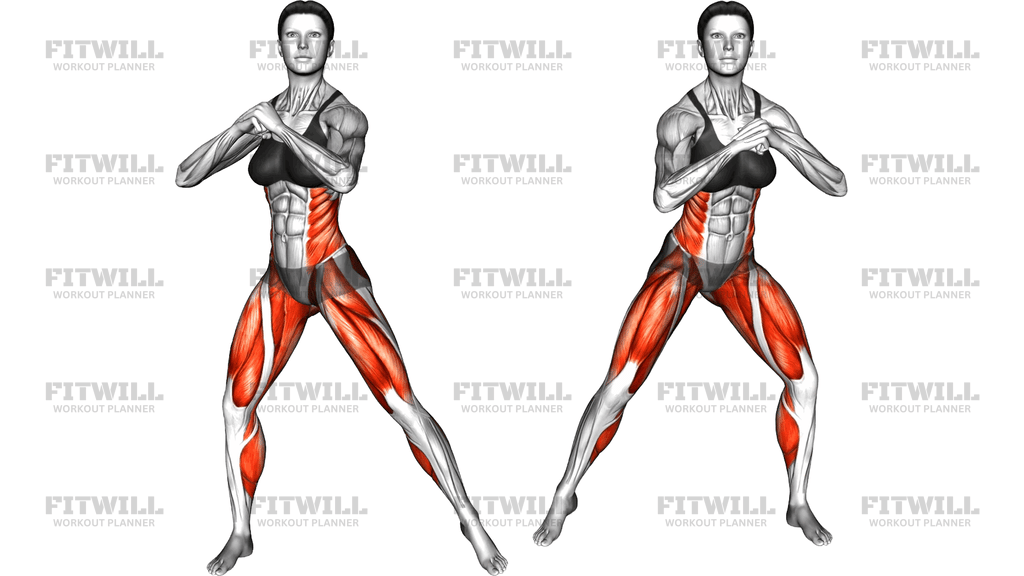
Isometric Slightly Pistol Squat
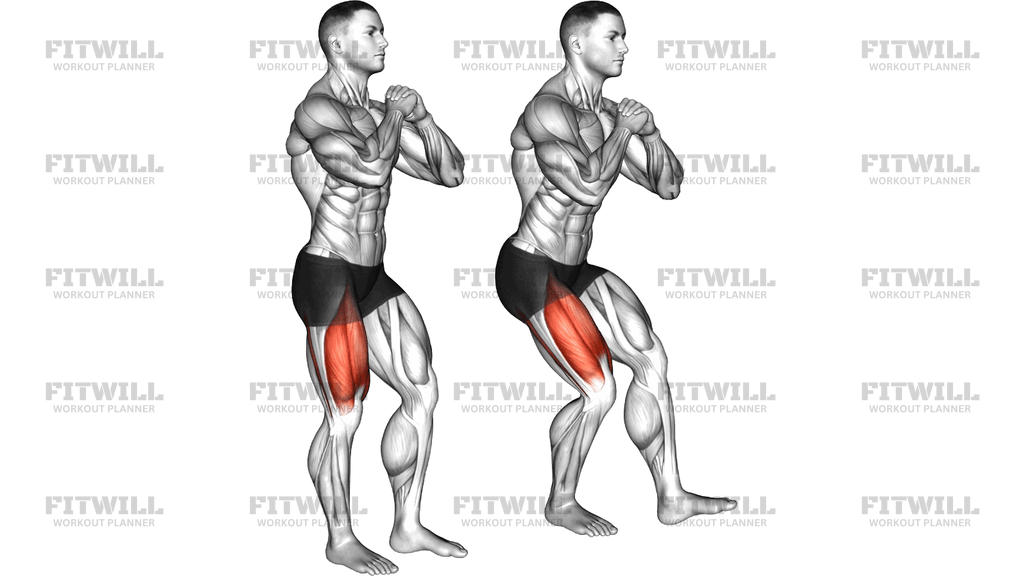
The Isometric Slightly Pistol Squat is a single-leg hold performed in a shallow pistol squat position: you balance on one leg, extend the other leg forward, and sit into a modest bend at the hip and knee, then hold that position under tension. Unlike a full pistol squat, which demands deep hip flexion and significant mobility, this version only takes you a short distance down, making it far more accessible while still loading the working leg heavily. The isometric component means the muscles contract without changing length, which builds strength and stability at that specific joint angle.
This exercise primarily targets the quadriceps of the standing leg, with strong contributions from the glutes, which hold your pelvis level, and the calf and ankle stabilizers, which keep you from wobbling side to side. The hip flexors of the raised leg work isometrically to keep that leg lifted and extended forward, and your core stays engaged throughout to hold your torso upright. Because the highlighted work falls on the thigh of the support leg, expect a burning quad contraction fairly quickly once you settle into the hold.
The hands are typically clasped together in front of the chest, which serves two purposes: it acts as a light counterbalance and keeps your attention on staying tall through the spine. Setup matters more than people expect. Your standing foot should be planted firmly with the weight spread across the whole foot, and the non-working leg needs to be held out front with the knee slightly bent so it does not drag your balance backward. If your setup is sloppy, most of your effort goes into fighting wobble instead of building leg strength.
This movement is useful for a few groups. It works well as a stepping stone toward full pistol squats, letting you accumulate time under tension in a one-leg stance before you can handle the deep range. It also fits into unilateral leg training for people who want to expose and correct side-to-side strength differences without equipment. Because it requires no gear and little space, it is a practical option for home workouts, warm-ups, or finishers on lower body days.
As for safety, the main concern is knee tracking. Keep the standing knee lined up over or slightly behind the toes, and never let it collapse inward. If you lose balance, step the free leg down immediately rather than twisting or hopping to save the rep. Start with short holds of ten to twenty seconds per side and progress the time before you progress the depth.
[ Workout Log & Planner ]
Put your next workout in Fitwill
Keep your plan and training log ready when you are.


Instructions
- Stand tall with your feet about hip-width apart and clasp your hands together at chest height with your elbows tucked in front of your body.
- Shift your weight fully onto one leg, pressing the foot flat into the floor so your weight spreads evenly across the heel, midfoot, and toes.
- Lift the opposite foot off the floor and extend that leg slightly forward, keeping the knee softly bent so the lower leg hangs relaxed in front of you.
- Brace your core and pull your shoulder blades gently back so your chest stays proud and your spine stays neutral.
- Push your hips back and bend the standing knee, lowering into a shallow squat on one leg, roughly a quarter to a third of the way down, with the knee tracking over the toes.
- Hold this end position isometrically, keeping the hips level and the free leg lifted in front of you without letting it drop toward the floor.
- Breathe steadily through the hold, inhaling through the nose and exhaling slowly rather than holding your breath.
- When the hold time is up, drive through the standing foot to rise back to a full stand with control, avoiding any sudden push or bounce.
- Lower the free leg, shake out both legs briefly, reset your balance, and repeat the hold on the other side.
Tips & Tricks
- If the standing knee drifts inward as you settle into the hold, think about actively spreading the floor with your foot, driving the big toe and outer heel down simultaneously.
- Holding your breath is the most common mistake in this position; it spikes tension briefly but causes you to shake and lose balance mid-hold, so keep the breathing rhythm slow and continuous.
- If the free leg drops toward the floor during the hold, your hip flexors are fatiguing before your quads, which is normal at first; shorten the hold duration rather than letting the leg hang.
- A slightly rounded or collapsing chest usually means the core is disengaged; reset with the hands clasped firmly at the sternum and imagine growing taller through the crown of your head.
- Aim to hold for time rather than chasing depth; a clean twenty-second hold at shallow depth builds more useful single-leg strength than a wobbly attempt at a lower position.
- If you cannot stop the wobbling, stand next to a wall or rack and place one fingertip against it for balance, reducing the support gradually over weeks.
- Do not lock the free knee completely straight; a soft bend in the raised leg keeps the hip flexors working and makes the position easier to sustain.
- Watch for hip drop on the side of the lifted leg, which signals weak glute involvement; squeeze the standing glute consciously to level the pelvis.
Frequently Asked Questions
What muscles does the Isometric Slightly Pistol Squat work?
The quadriceps of the standing leg do most of the work, supported by the glutes, which keep the hips level, and the calf and ankle stabilizers, which control balance. The hip flexors of the raised leg also hold isometric tension to keep that leg extended forward.
Why is this exercise isometric instead of a full pistol squat repetition?
Holding a shallow single-leg position builds strength and stability at a specific joint angle with less mobility and balance demand than full pistol squats. It is an effective way to load the quads heavily while you develop the control needed for the deeper range.
How low should I sit into the Isometric Slightly Pistol Squat?
Only a quarter to a third of the way down, which means a modest bend in the standing hip and knee. Going deeper increases the difficulty considerably, so earn that range gradually once you can hold the shallow position steadily.
Can beginners do the Isometric Slightly Pistol Squat?
Yes, and it is actually a beginner-friendly entry point to single-leg squatting. Start with ten to fifteen second holds and keep a fingertip on a wall for balance if needed, then remove the support as your steadiness improves.
How long should I hold each repetition?
Ten to twenty seconds per side is a good starting range, building toward thirty to forty seconds as the hold feels controlled. Once long holds become easy, increase the depth slightly instead of adding endless time.
My standing leg shakes badly during the hold. Is that a problem?
Some shaking is normal early on and usually reflects balance and stabilization limits rather than a form fault. Reduce the hold time, keep the depth shallow, and use light fingertip support until the shaking settles.
What should I do if I lose my balance mid-hold?
Step the lifted leg down immediately and stand up; never twist the standing knee or hop to recover the position. Losing a rep costs nothing, whereas forcing it risks a knee or ankle strain.
What can I use instead of the Isometric Slightly Pistol Squat if it is too hard?
Try a supported version holding a doorframe, rack, or suspension handle, or perform the same single-leg hold with your free heel tapping the floor. Both cut the balance demand while keeping the quad-dominant isometric work.
How does the Isometric Slightly Pistol Squat help me get a full pistol squat?
It trains the exact one-leg stance and knee tracking you need for the full movement while accumulating time under tension in the quadriceps and glutes. Once you can hold the shallow position comfortably for thirty seconds or more, you can progressively deepen the hold.
Is it safe for my knees?
Yes, when the standing knee tracks over the toes and does not cave inward, and when you keep the depth to a range you can hold steadily. If you have an existing knee issue, keep the angle shallow and stop if you feel sharp pain rather than muscular effort.