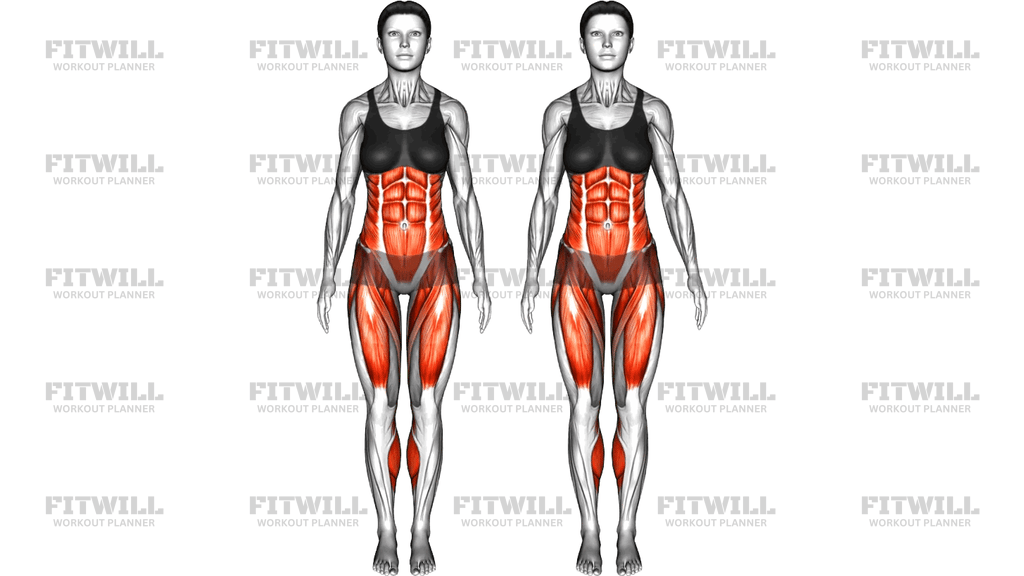
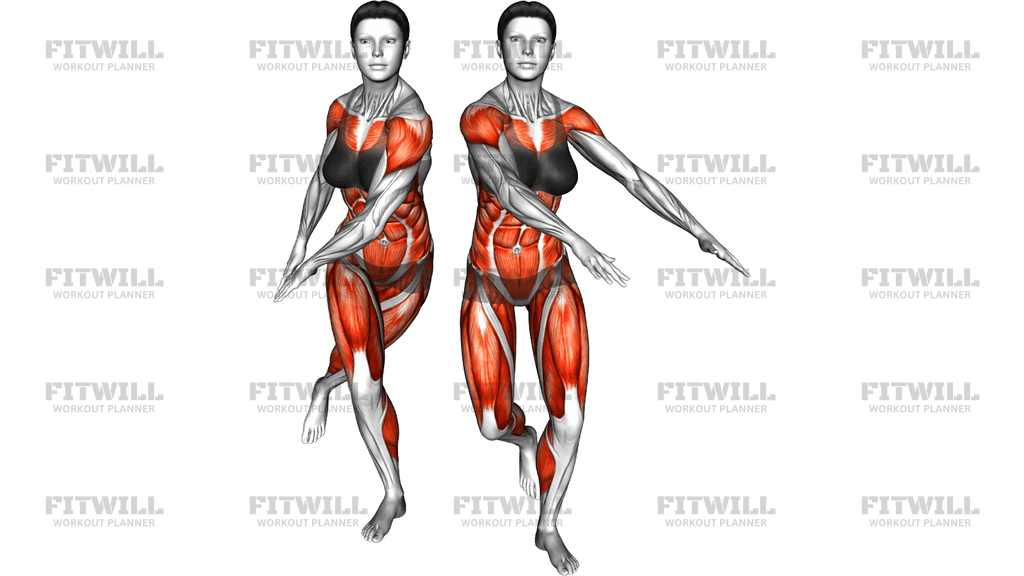
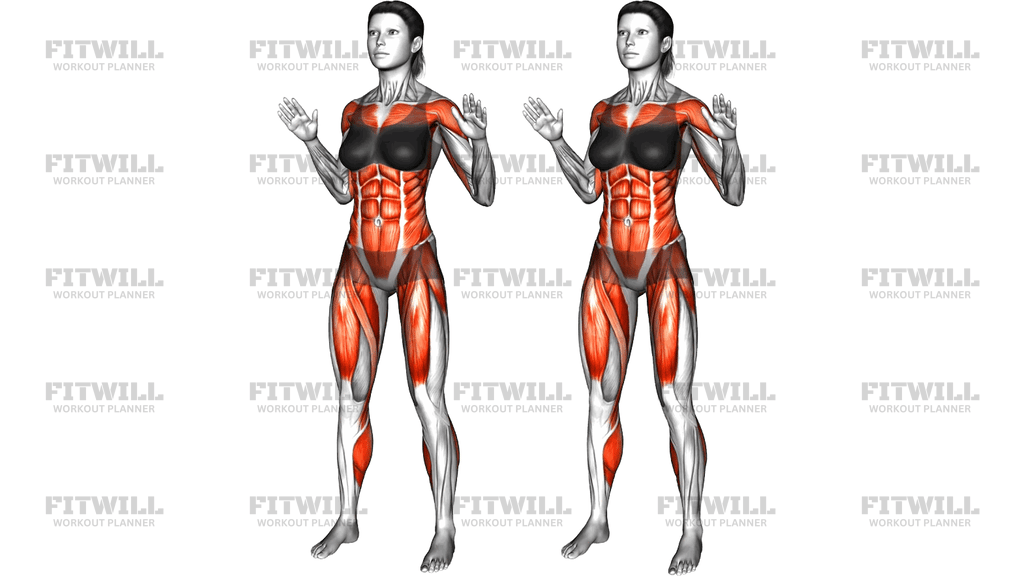
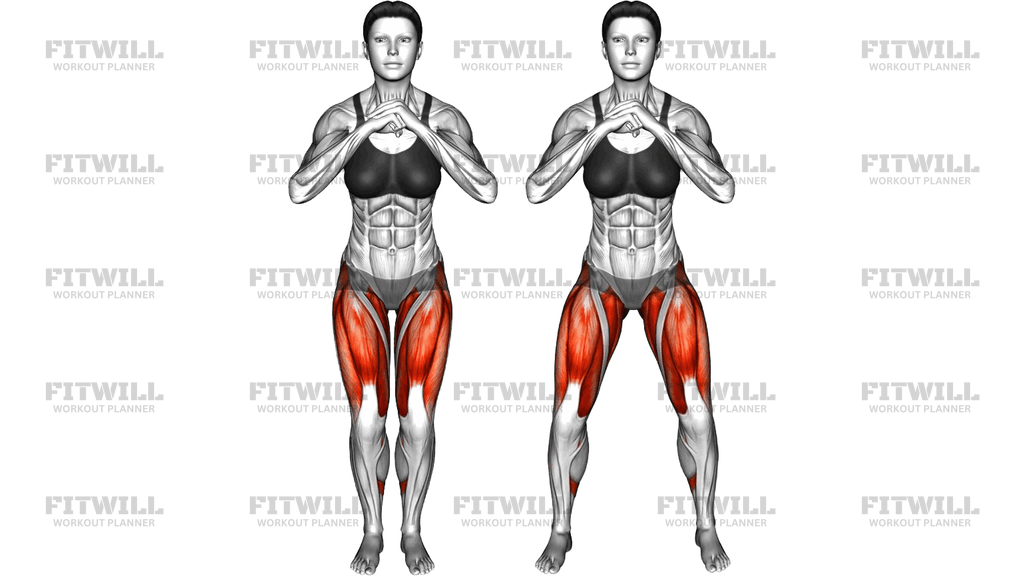
Bodyweight Bouncing Shift
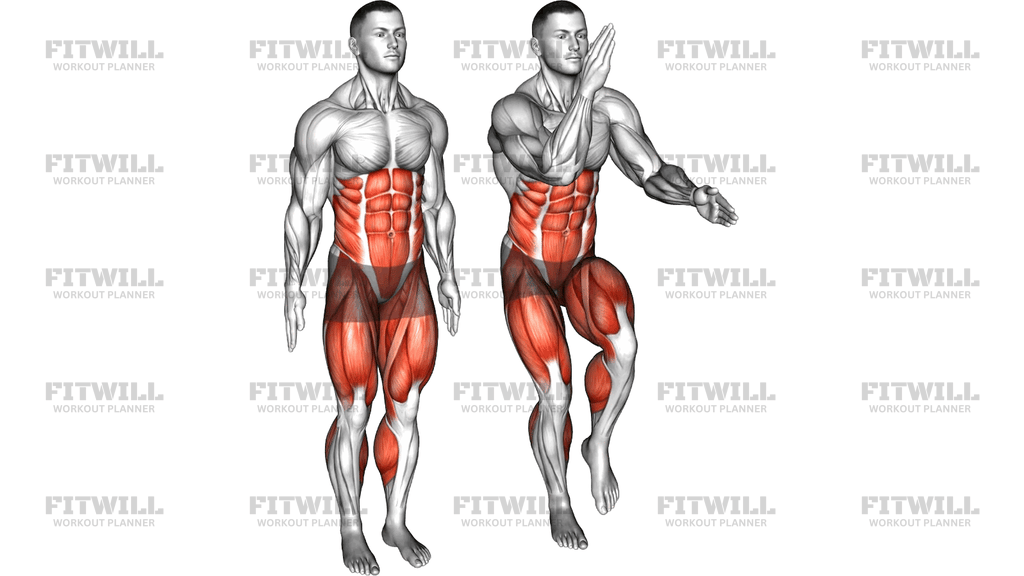
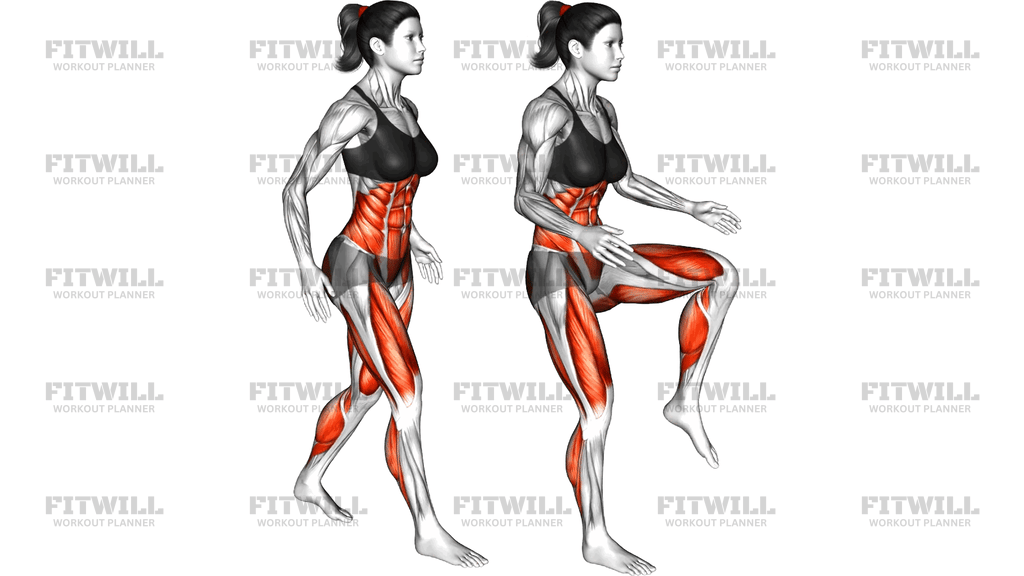
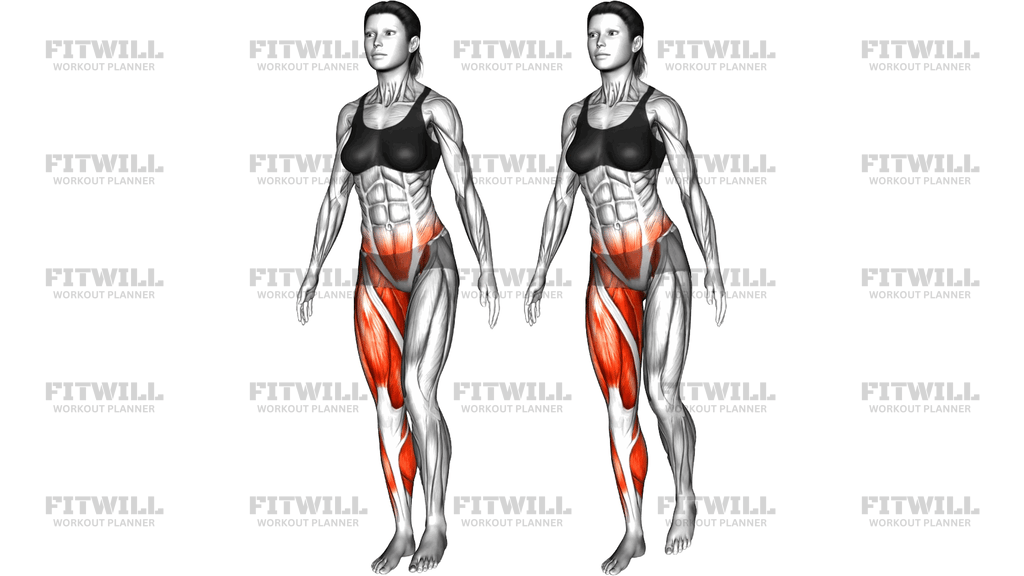
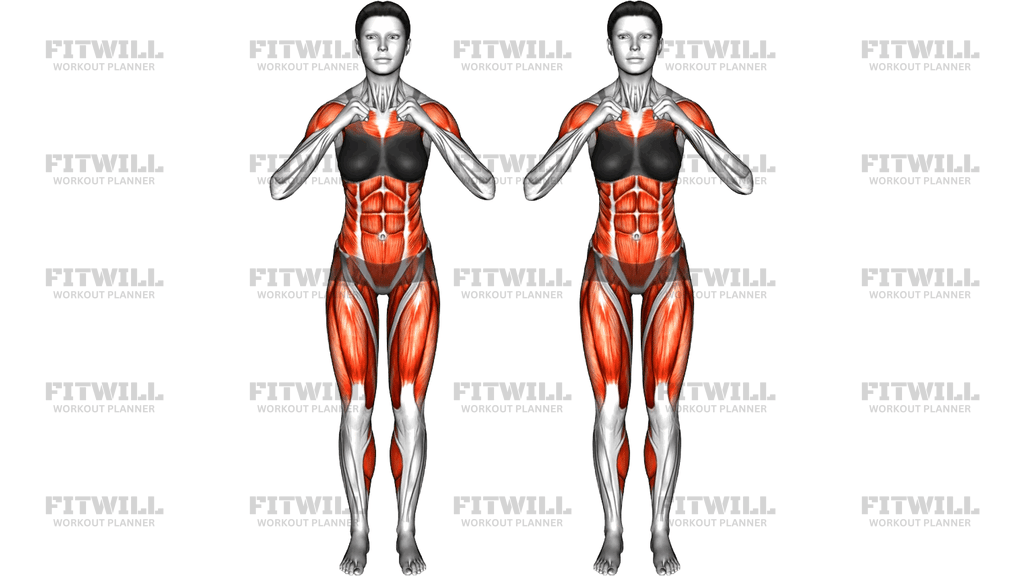
The Bodyweight Bouncing Shift is a rhythmic, wide-stance drill where you shift your weight from one leg to the other in a continuous, bouncy rhythm while staying low in a soft semi-squat. Your hands stay clasped in front of your chest for balance, and your feet remain planted the entire time — all the movement comes from your hips and knees. It looks simple, but performed with intent it becomes a demanding conditioner for the thighs, inner thighs, and hips while keeping your heart rate elevated.
This movement earns its place in warm-ups, circuit training, and general conditioning work. Because the feet never leave the floor, it is lower impact than jumping drills while still training lateral hip mobility, knee tracking, and the ability to absorb and redirect weight quickly. Athletes use it to groove the side-to-side weight transfer behind cutting and change-of-direction skills; general trainees use it as an active warm-up that wakes up the glutes and adductors before squats, lunges, or sport play.
The wide stance is not cosmetic — it is what loads the adductors and hip stabilizers through a long range. As you bounce your weight onto one leg, that leg's glutes and quads accept the load while the opposite leg reaches into a straight, stretched position and the inner thigh muscles lengthen under tension. Your core, especially the obliques, works to keep your torso upright and centered as your hips travel side to side.
Setup matters more than it seems. A stance roughly one and a half to two shoulder-widths wide, toes turned slightly out, and knees aligned over the feet keeps the movement comfortable for the knees and hips. Dropping too low too soon, or letting your knees collapse inward as you shift, are the most common ways this drill goes wrong. Start with a shallow bounce and a moderate tempo until the pattern feels smooth.
To execute well, sink into a comfortable quarter squat, clasp your hands at chest height, and bounce your hips rhythmically from center to left to center to right. Each shift should land with a soft, controlled catch rather than a hard drop. Keep your chest tall, your spine long, and your eyes forward. Breathe steadily throughout — this drill can sneak up on your conditioning quickly.
Practically, the Bodyweight Bouncing Shift fits anywhere you need a low-skill, high-yield lower body drill: as warm-up series of 20 to 40 seconds, as a conditioning station for 30 to 60 seconds, or as an active recovery movement between harder sets. Stay on a surface with some give, keep the bounce light at first, and stop if you feel any pinching in the hips or knees.
[ Workout Log & Planner ]
Put your next workout in Fitwill
Keep your plan and training log ready when you are.


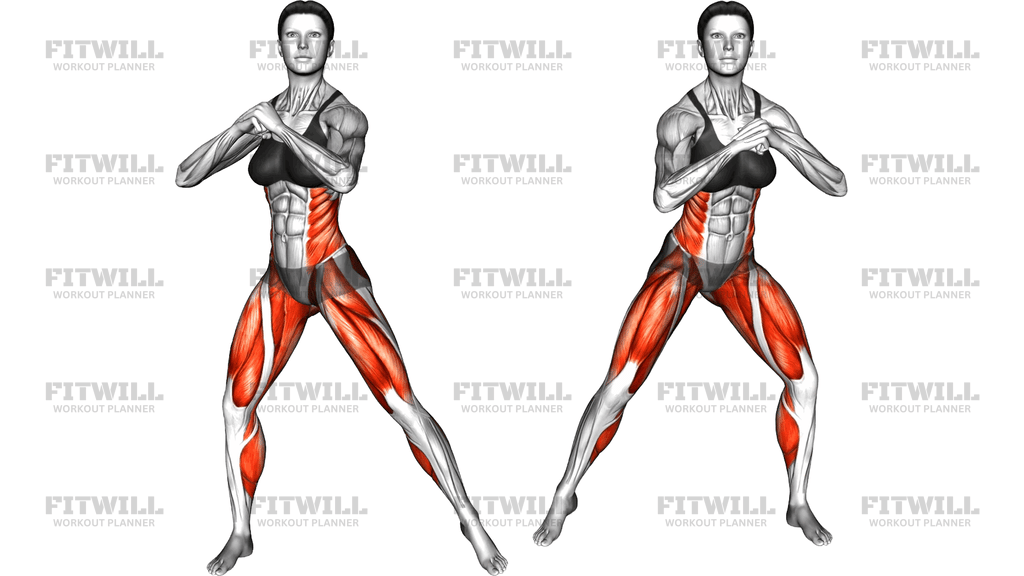
Instructions
- Stand with your feet roughly one and a half to two shoulder-widths apart, toes turned out slightly, and let your arms hang relaxed at your sides.
- Clasp your hands together in front of your chest with your elbows bent, and lower your hips into a comfortable quarter squat.
- Brace your core lightly, keep your chest tall, and shift your weight so it sits mostly over one leg while the other leg stays long and pressing into the floor.
- With a small, springy bounce, push your hips across to the opposite side so your weight transfers onto the other leg.
- Continue bouncing side to side in a smooth rhythm, passing through the middle briefly rather than pausing there.
- Keep both feet flat and planted the entire time — do not lift heels, pivot, or step.
- Keep the working knee stacked over the foot on the side you shift onto, and let the opposite leg straighten without locking the joint.
- Exhale in a steady rhythm as you bounce, inhaling naturally rather than holding your breath.
- Maintain an even tempo for your target time — usually 20 to 60 seconds — keeping the bounce shallow enough to stay in control.
- To finish, bounce back to center, settle into an even two-footed stance, and stand up slowly to reset.
Tips & Tricks
- If your knees pinch or drift inward on the wide stance, narrow your feet by a few inches and turn your toes out a bit more before adding speed.
- A common mistake is dropping the chest and folding forward as fatigue sets in — cue yourself to keep your clasped hands at sternum height and your shoulders stacked over your hips.
- Keep the bounce light and springy. If you are landing with a heavy thud on each shift, you are dropping your weight instead of transferring it, and your knees will pay for it.
- Your back heel on the stretching side will want to lift — press it down deliberately to keep the inner thigh working through a fuller range.
- Start with short intervals. The adductors are easy to overload with this drill, and a lingering soreness high in the inner thigh usually means you jumped the distance or duration too quickly.
- On softer flooring like thick carpet, widen your base slightly for stability; on a firm surface, stay a touch more moderate with your stance width.
- Use your arms as a counterweight — a slight drift of the clasped hands toward the leg you are loading helps the hips shift fully without extra strain.
- If balance is shaky at first, perform the shifts more slowly and with a smaller distance between sides before building the bounce back in.
- Treat this as a rhythm drill, not a race — an even, metronomic tempo trains hip control better than rushing side to side.
Frequently Asked Questions
What muscles does the Bodyweight Bouncing Shift work?
The main work comes from the quads and glutes of the leg you shift onto, with the adductors of the opposite leg lengthening under load each rep. The calves, hip stabilizers, and obliques work continuously to keep you balanced and upright.
Is the Bodyweight Bouncing Shift suitable for beginners?
Yes, as long as you start with a narrower stance, a shallow bounce, and shorter intervals. Beginners often benefit from doing it slowly first to learn the weight transfer before adding the bouncy rhythm.
How wide should my stance be for the Bodyweight Bouncing Shift?
Roughly one and a half to two shoulder-widths is a good starting point, with toes turned slightly out. If your knees or inner thighs complain, narrow the stance a few inches rather than forcing the widest position.
Why do my knees drift inward when I shift to one side?
This usually means the glutes and outer hip muscles on the working leg are not doing their job of stabilizing the knee. Slow the tempo, consciously push the knee out over the pinky toe, and strengthen the hips with side-lying or banded work if it persists.
Can I use the Bodyweight Bouncing Shift as a warm-up?
It works very well as a lower body warm-up because it raises your heart rate while taking the hips, knees, and ankles through active ranges. Keep it to 20 to 40 seconds of light bouncing before heavier leg training or sport.
What can I substitute if the wide stance bothers my hips?
Try a narrower stance with a smaller side-to-side shift, or switch to alternating side lunges with a shorter reach. Both train a similar lateral weight transfer with less end-range inner thigh stretch.
How long should I perform the Bodyweight Bouncing Shift?
For warm-ups, 20 to 40 seconds is plenty; for conditioning, work up to 30 to 60 second intervals. Because the adductors do unusual work here, extend duration gradually over weeks rather than in a single session.
Should my feet stay flat during the Bouncing Shift?
Yes, both feet stay planted and flat throughout — the movement comes entirely from your hips and knees. Lifting heels or pivoting the feet changes the drill and adds stress to the knees and ankles.
Is this exercise hard on the knees?
Not when done with controlled depth and good knee tracking over the toes. Problems usually come from dropping too low, bouncing too hard, or letting the knee collapse inward, so build depth and speed gradually.