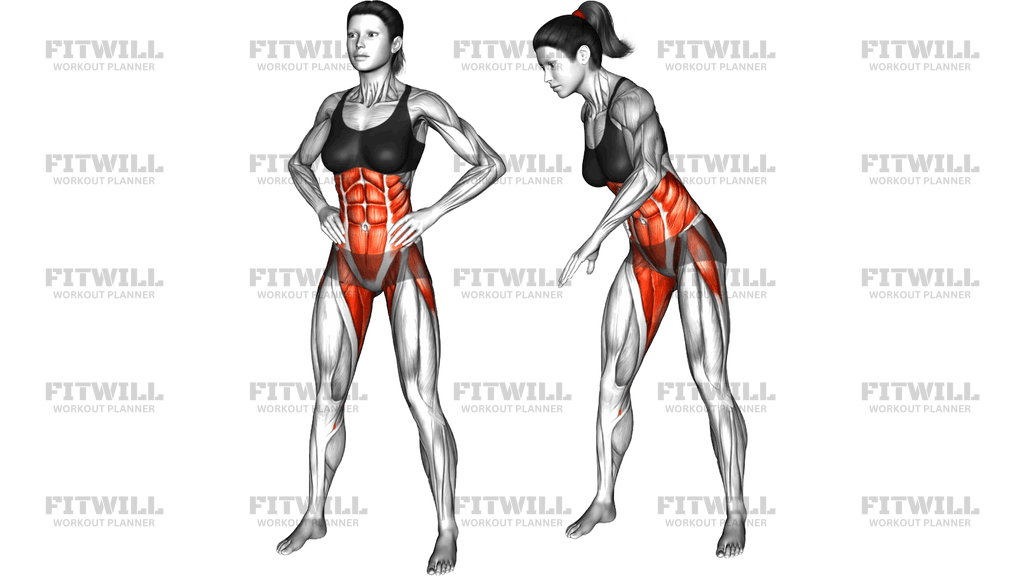
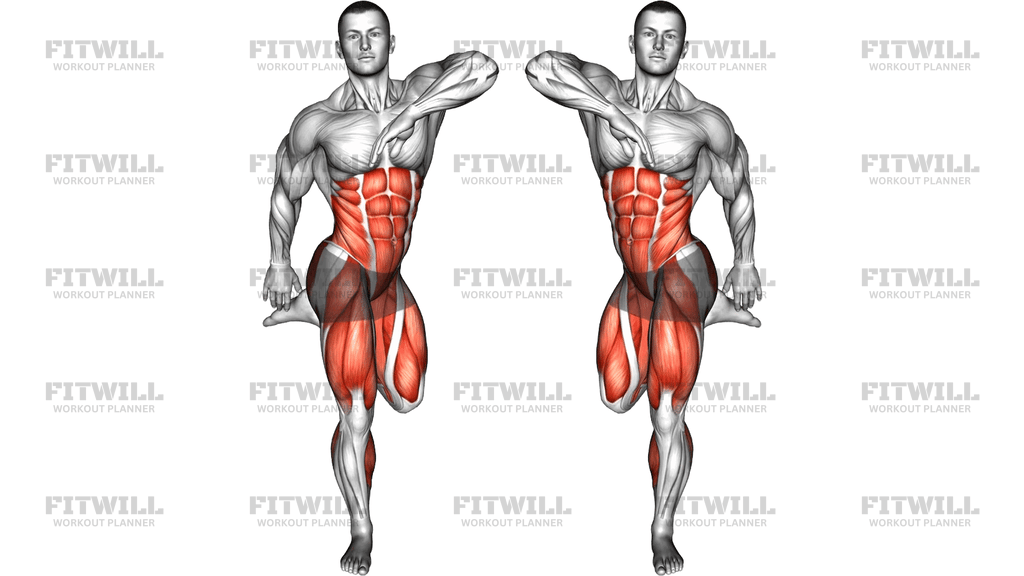
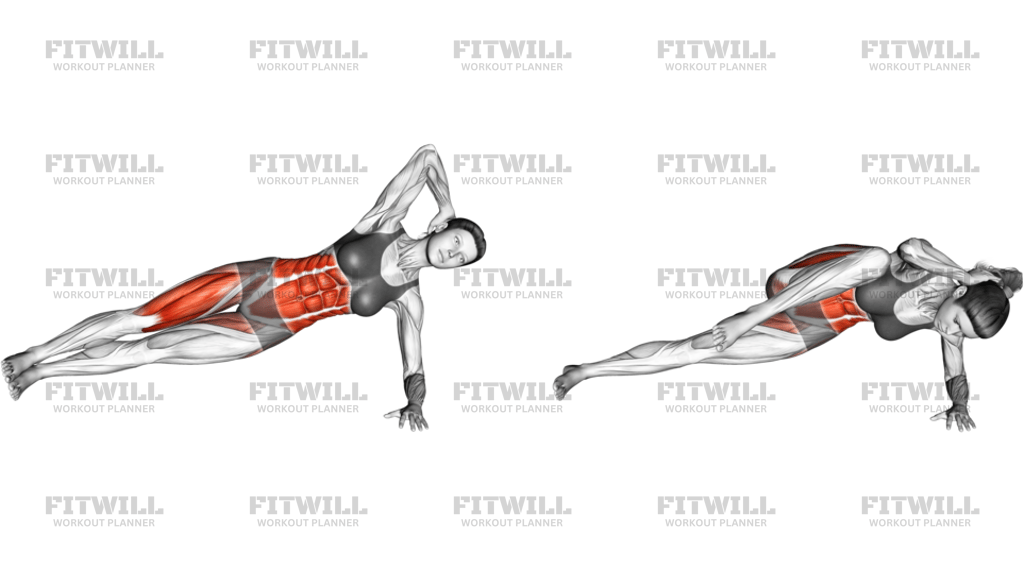
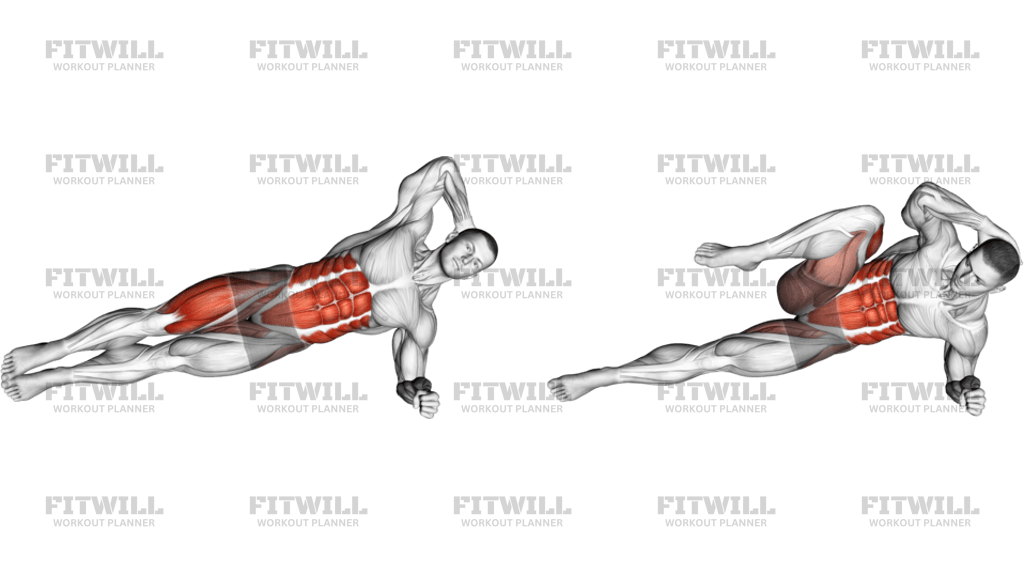
Alternate Front Step Knee Drive
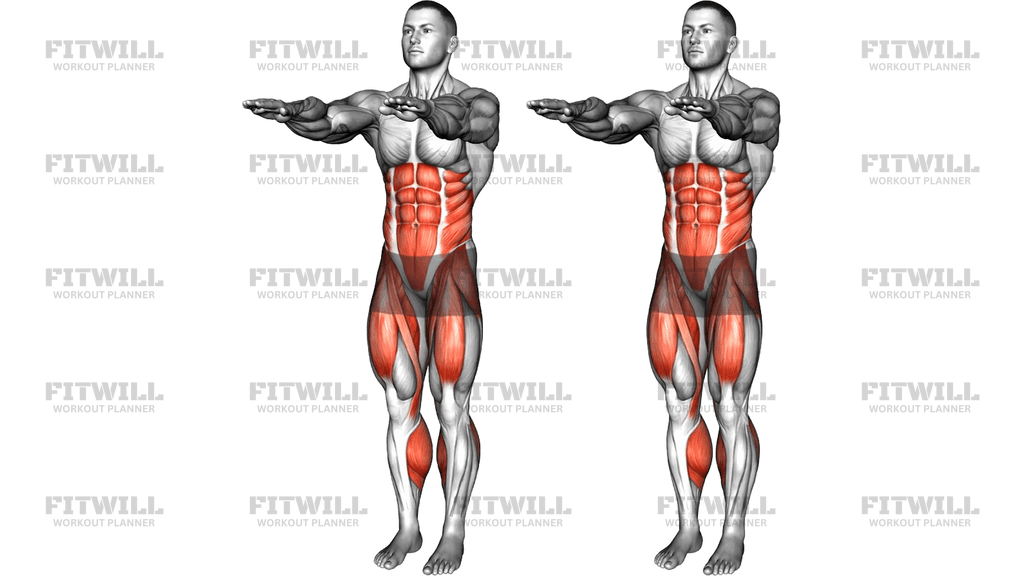
The Alternate Front Step Knee Drive is a standing body weight movement where you step one foot forward, then explosively pull the opposite knee up toward hip height while swinging the arms in a running-style pattern. You then step back or through, switch legs, and keep alternating in a steady rhythm. It looks simple, but it combines a single-leg balance challenge, a strong hip flexion drive, and an upright trunk that has to stay tall and controlled the entire time.
This movement earns its place in warm-ups, circuit training, and low-impact conditioning blocks. Because one foot is always cycling toward or onto the floor, it is gentler on the knees and ankles than high-impact knee raises or running in place, making it a good choice for beginners, people returning from time off, or anyone who wants to raise the heart rate without jumping. More experienced trainees can speed up the tempo or add a pause at the top of each knee drive to increase the demand.
The main work comes from the abs and hip flexors, which lift and control the knee, while the standing leg's glutes, quads, and calves stabilize the body over a single base of support. The obliques work to keep the torso from twisting as the arms counter-rotate, and the whole pattern reinforces the coordination used in walking, running, and climbing stairs. Because it is performed standing with no equipment, you can do it almost anywhere, from a hotel room to a gym floor.
Setup matters more than most people expect. A stance about hip-width apart, a tall chest, and a braced midsection give the knee drive a stable platform to rise from. If the torso leans back or the lower back arches as the knee comes up, the abs stop doing their job and the hips take over in a poor position. Thinking about driving the knee up rather than letting the chest fall toward it keeps the movement clean.
To execute it well, step forward with the left foot, press through that front foot, and drive the right knee up to roughly hip height while the left arm swings forward and the right arm swings back. Place the right foot down under control, reset your posture, and repeat with the opposite side. Move at a pace you can sustain without losing knee height or balance. Two or three rounds of thirty to forty five seconds works well as a warm-up finisher or a conditioning station.
The most common faults are rushing the reps, snapping the lower back into extension, and letting the knee drift inward as it rises. Slowing the tempo, exhaling as the knee drives up, and cueing the knee to travel straight ahead solve most of these issues. If balance is the limiting factor at first, stand near a wall or sturdy chair and use one fingertip for light support until single-leg control improves.
[ Workout Log & Planner ]
Put your next workout in Fitwill
Keep your plan and training log ready when you are.


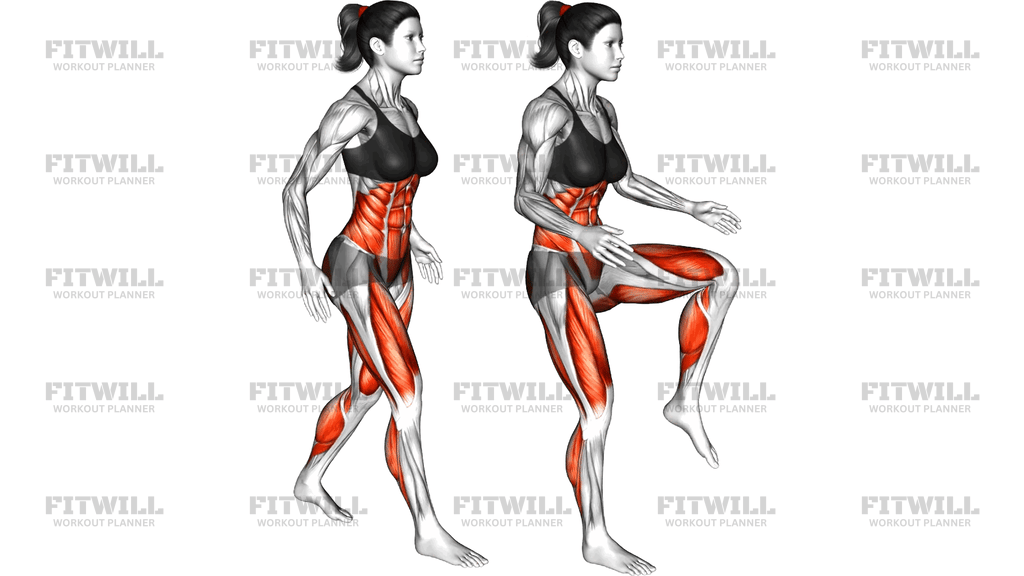
Instructions
- Stand tall with your feet hip-width apart, arms relaxed at your sides, and your gaze on a fixed point a few feet ahead.
- Take a moderate step forward with your left foot so your weight is split between a soft front leg and a back leg with the heel lifted.
- Brace your midsection lightly and keep your ribs stacked over your hips so your lower back stays neutral before you start moving.
- Press through the left foot and drive your right knee up toward hip height while swinging your left arm forward and your right arm back.
- Pause briefly at the top with the thigh roughly parallel to the floor and the standing leg tall, not bent into a deep squat.
- Lower the right foot back to the floor in a controlled manner and return to your split stance or step through to switch sides.
- Repeat the drive with the left knee while the right arm swings forward, continuing to alternate legs in a smooth rhythm.
- Exhale as each knee drives up and inhale as the foot lowers, keeping the breathing steady rather than holding your breath.
- Between sets, stand with both feet flat, shake out your arms, and reset your posture before starting the next round.
Tips & Tricks
- If your torso tips backward as the knee rises, your abs have stopped controlling the hip flexion—exhale hard at the top and think of pulling the ribs down toward the hips.
- Aim the rising knee straight ahead over your toes; if it cuts inward, slow the tempo and squeeze the glute of the standing leg to steady the hip.
- Keep the knee drive a lift, not a lean—your chest should stay tall rather than dropping toward the thigh to fake a higher knee.
- Drive the knee with the top of the thigh and lower abs rather than swinging the foot, which turns the rep into an uncontrolled leg flick.
- Keep the arms working: a deliberate opposite arm swing improves rhythm and helps counterbalance the rotation of the hips.
- Stay on the ball of the trailing foot so the transition between sides stays quick and quiet instead of landing flat and heavy.
- If you wobble on the standing leg, shorten the knee drive to shin height for a few sessions and rebuild height as your balance improves.
- Place your feet hip-width apart, not wide, at the start; a wide base makes it harder to step cleanly and encourages twisting through the lower back.
Frequently Asked Questions
What muscles does the Alternate Front Step Knee Drive work?
The abs and hip flexors do the main work of lifting the knee, while the glutes, quads, and calves of the standing leg stabilize your body. The obliques help keep your torso from rotating as your arms swing.
Is the Alternate Front Step Knee Drive suitable for beginners?
Yes, because one foot stays close to the floor there is no jumping or impact involved. Beginners can use a lower knee height or rest a fingertip on a wall for balance until the pattern feels stable.
How high should I drive my knee during the Alternate Front Step Knee Drive?
Aim for roughly hip height so the thigh is about parallel to the floor, but only as high as you can go without your lower back arching or your chest collapsing forward. Height can increase as control improves.
Why do my lower back and hips feel this more than my abs?
That usually means the torso is leaning back and the lower back is arching as the knee comes up. Brace your midsection, keep your ribs over your hips, and exhale as each knee drives up to bring the work back into the abs.
Can I use the Alternate Front Step Knee Drive as a warm-up?
It is an excellent warm-up because it raises the heart rate while mobilizing the hips and activating the core in a standing pattern. Two or three rounds of thirty seconds at a moderate tempo prepares you for running, lifting, or sport.
What can I substitute if I cannot balance on one leg?
Try a standing knee raise with both hands on a sturdy chair or wall for light support, or perform the drive with a smaller knee height and a slower tempo. Marching in place with a tall posture is another gentle entry point.
Should my arms swing during the Alternate Front Step Knee Drive?
Yes, the opposite arm and knee should move together, just like a running stride. The arm swing counterbalances the hips, keeps the torso facing forward, and makes the rhythm feel more natural.
How do I make the Alternate Front Step Knee Drive harder?
Increase the tempo, add a two-second pause with the knee at hip height, or hold light dumbbells at your sides. You can also lengthen each round to a full minute while keeping the knee height consistent.
Is it safe to do this exercise every day?
Because it is low impact and uses only your body weight, most people can perform it frequently without issue. If you feel any knee or hip discomfort, reduce the knee height and tempo and check that your knee tracks straight ahead.