Single Leg Stand
The Single Leg Stand is exactly what it sounds like: standing tall on one leg while the other is lifted clear of the floor, holding that position with control. It looks almost too simple to be an exercise, but the moment your weight shifts onto a single foot, your whole body has to reorganize. The standing leg's quads, calves, and the small muscles around the ankle work to keep you upright, while the hips and deep core fight to stop your pelvis from tipping sideways.
This movement is one of the best entry points into balance training. It is useful for nearly everyone — beginners building a stability foundation, older adults working on fall prevention, runners and field-sport players who spend time on one leg anyway, and lifters who want a steadier base for split squats, lunges, and single-leg deadlifts. Because it requires no equipment and almost no space, it fits easily into a warm-up, a cooldown, or a few spare minutes at home.
The setup matters more than most people expect. Your weight should sit over the middle of the standing foot — not dumped into the heel or collapsed onto the inner arch — with a soft but not bent knee and a tall spine. The lifted leg stays relaxed, knee bent slightly, rather than hooked behind the other ankle or swung forward for momentum. Where your gaze lands also matters: a fixed point at eye level gives your brain a stable reference and makes the hold dramatically easier.
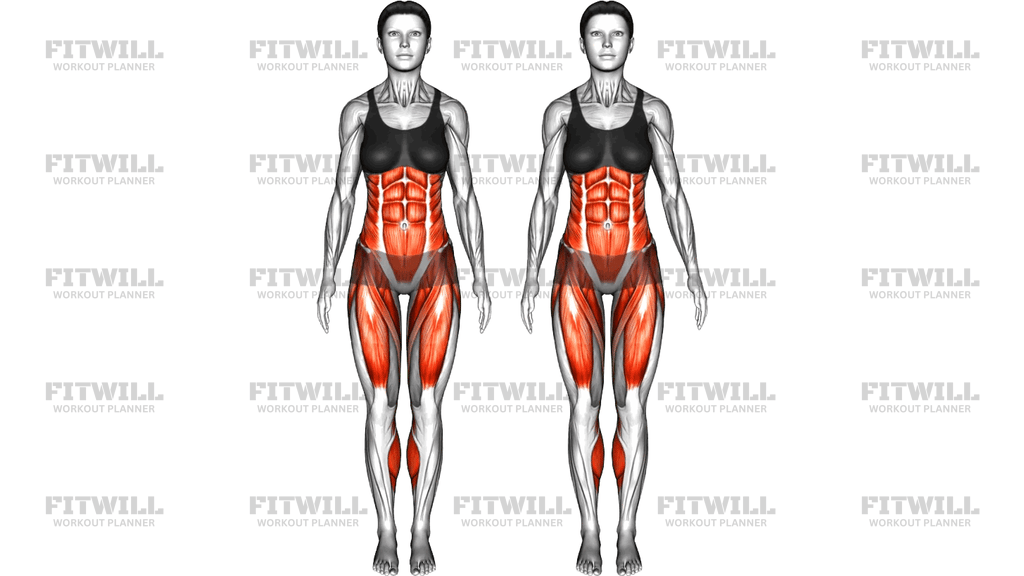
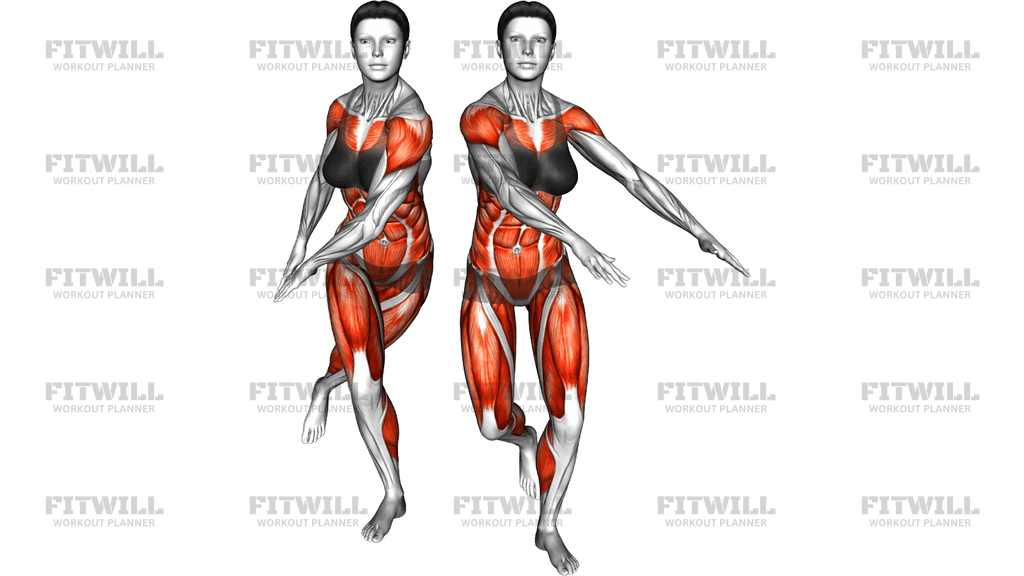
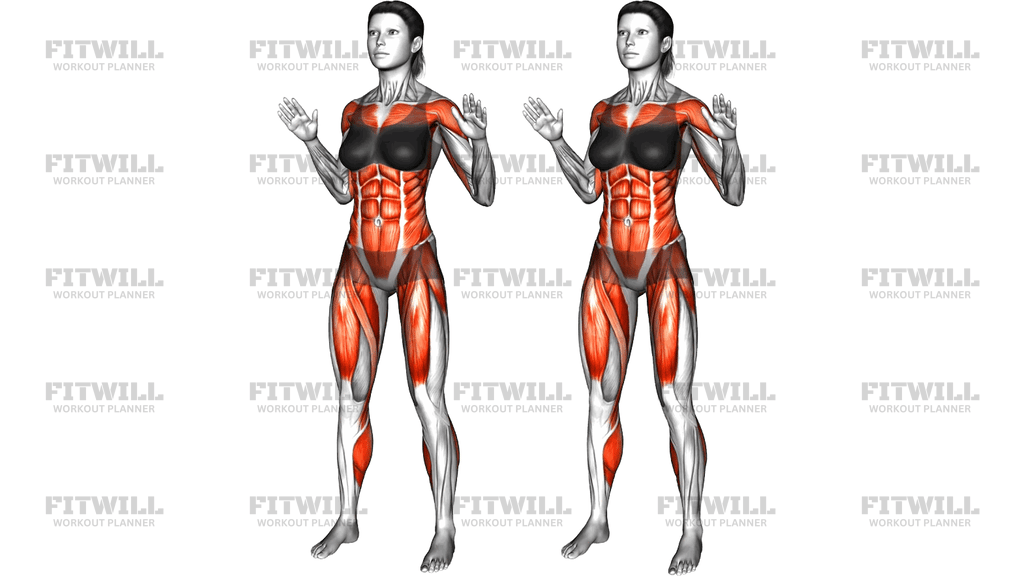
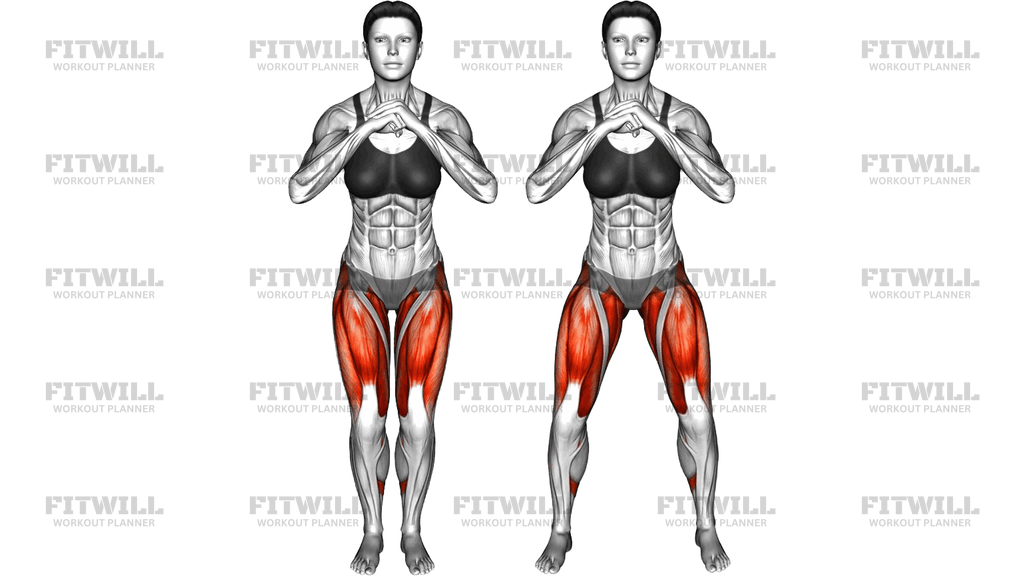
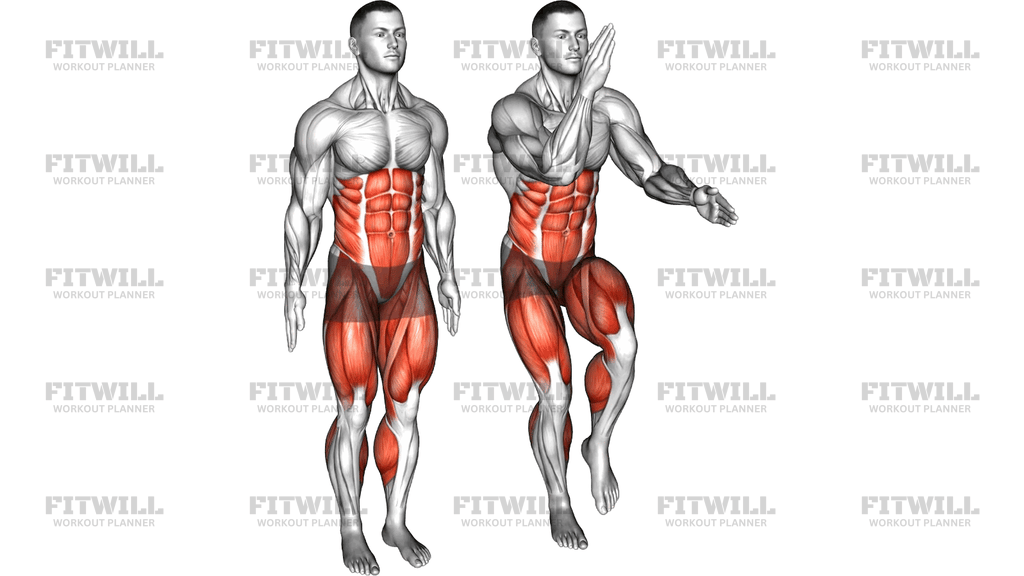
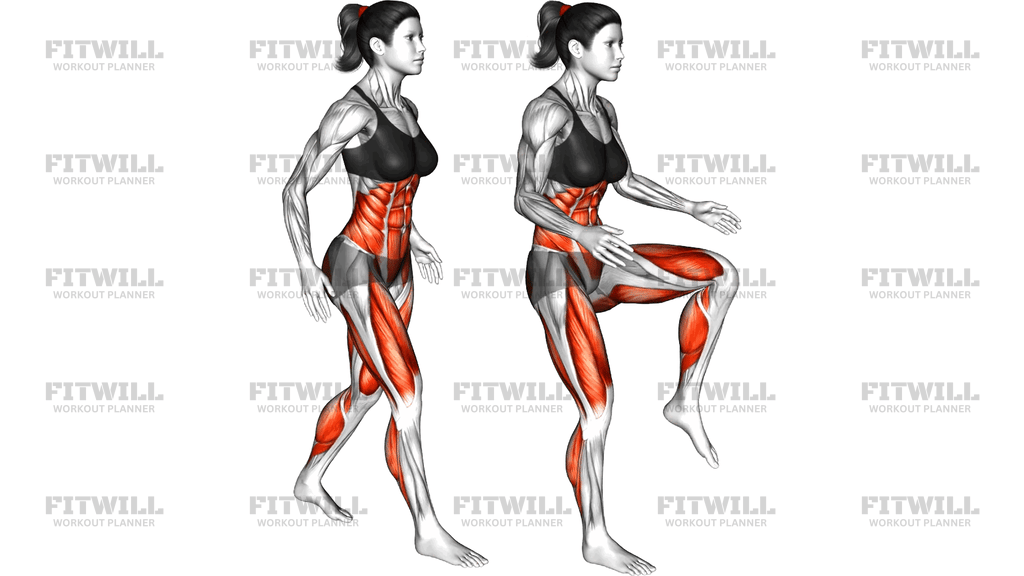
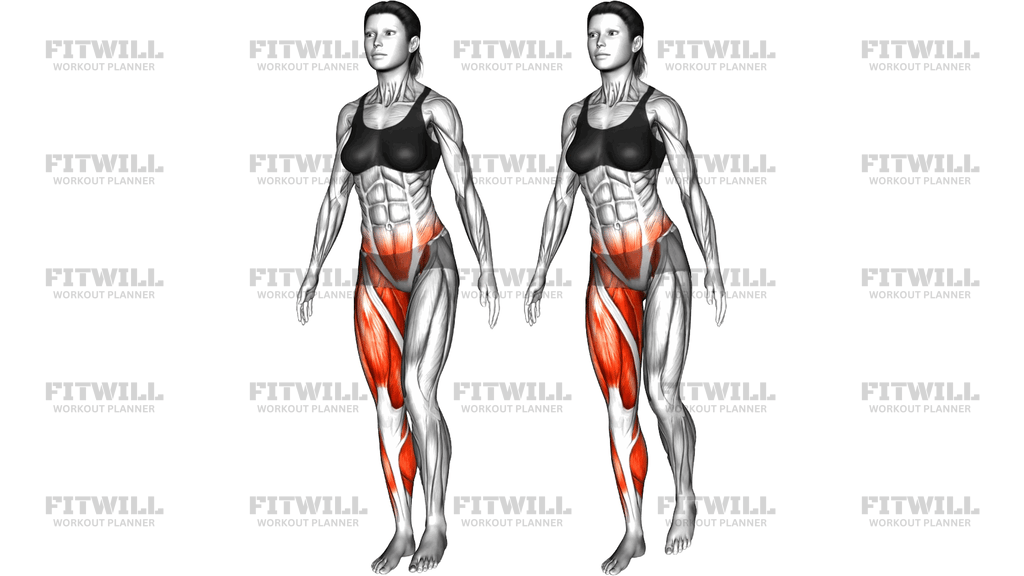
When performed well, the Single Leg Stand trains isometric strength in the quadriceps and calf muscles of the working leg, challenges the gluteus medius on the standing hip to keep the pelvis level, and forces the core to stabilize without you ever moving a limb through a range of motion. The highlighted areas in this exercise reflect that — the front of the thigh, the hip region, and the calf do most of the quiet, continuous work.
A common surprise for new trainees is how quickly the ankle and foot fatigue. That is normal and actually the point. Constant small corrections flow through the foot and lower leg, building the kind of joint stability that is hard to train with machines. Start with holds of 15–30 seconds per side, rest briefly, and repeat two or three rounds. As your control improves, progress by closing your eyes, standing on an unstable surface, or adding slow head turns — never by rushing the hold or letting your form collapse.
[ Workout Log & Planner ]
Put your next workout in Fitwill
Keep your plan and training log ready when you are.


Instructions
- Stand barefoot or in flat shoes with your feet roughly hip-width apart, arms relaxed at your sides, and pick a fixed point at eye level to focus on.
- Shift your weight slowly onto your right foot until it is fully loaded, keeping your weight spread across the whole foot with slight pressure into the big toe base.
- Lift your left foot off the floor by bending the knee, letting the raised leg hang relaxed a few inches above the ground rather than pressing it against the standing leg.
- Brace your abdominals lightly and stand tall, as if a string were pulling the crown of your head toward the ceiling.
- Keep the standing knee soft — straight enough to be efficient, bent enough that the leg is not locked back.
- Hold the position for 15–30 seconds, keeping the hips level; the pelvis should not drop on the lifted-leg side.
- Breathe steadily throughout the hold, avoiding the instinct to hold your breath when you start to wobble.
- Lower the left foot back down with control, take two or three breaths, and switch to standing on the left leg.
- Complete the same hold time on the other side, and repeat for two to three rounds per leg.
Tips & Tricks
- If you wobble hard in the first few seconds, you are probably rushing the weight shift — pause mid-transfer before the lifted foot actually leaves the floor.
- A collapsing arch is one of the most common faults here; press the ball of the big toe into the floor to keep the foot domed and the ankle stacked.
- Watch for the hip jutting sideways to cheat the balance. Keep the standing hip stacked directly over the ankle instead of leaning out over the leg.
- If your toes claw and grip constantly, relax the foot between micro-corrections — constant gripping fatigues the sole of the foot before the balance work is done.
- Dropping the pelvis on the lifted side means the standing hip's glutes are switching off; imagine both hip bones pointing straight ahead and level.
- Look at a fixed spot on the wall, not down at your feet. Looking down makes the hold noticeably harder and rounds the upper back.
- Once 30 seconds feels easy on both sides, close your eyes or fold your arms across your chest to remove visual and arm assistance rather than just counting longer.
- Do this drill before squats or lunges rather than after heavy leg work — a fatigued standing leg turns it into a shaking contest instead of a balance session.
- If one side is clearly wobblier, give the weaker side one extra set instead of skipping it or always starting with the strong leg.
Frequently Asked Questions
Which muscles does the Single Leg Stand actually work?
The quadriceps and calves of the standing leg work isometrically to hold you up, while the gluteus medius of the standing hip keeps the pelvis level. The deep core and small ankle muscles handle the constant balance corrections.
How long should I hold the Single Leg Stand?
Start with 15–30 seconds per side for two to three rounds. Once you can hold 30 seconds steadily with good form, progress by closing your eyes or standing on a folded mat rather than just holding longer.
Is the Single Leg Stand good for beginners?
Yes — it is one of the safest ways to start balance training because there is no load and the floor is right there if you lose position. Beginners can hover a hand against a wall or countertop and gradually rely on it less.
Why do my ankles shake so much during the Single Leg Stand?
Shaking means the small stabilizing muscles around the ankle and foot are being challenged, often for the first time in this exact way. It settles with consistent practice over a couple of weeks, and shaking at moderate effort is not a problem by itself.
Should the lifted leg be straight or bent?
Keep the knee slightly bent and the leg relaxed. Locking it straight or hooking the foot behind the standing ankle changes your balance strategy and can pull the pelvis out of position.
What is the most common mistake in the Single Leg Stand?
Letting the standing foot roll onto its inner arch and the hip push out sideways over the leg. Fix it by keeping weight across the whole foot, with firm pressure into the base of the big toe, and the hip stacked over the ankle.
Can I use the Single Leg Stand as a warm-up?
It works very well as a warm-up before lower-body strength sessions because it wakes up the feet, ankles, and hips without causing fatigue. Keep the holds short, around 15–20 seconds per side, before moving into your main lifts.
What can I do if I cannot balance at all without support?
Stand next to a wall or counter and place two or three fingertips on it for light assistance only. Reduce the contact over time — fingertips, then one finger, then hovering the hand — until you can hold the position unsupported.
How does the Single Leg Stand carry over to other exercises?
A steadier single-leg base directly improves lunges, split squats, step-ups, and single-leg deadlifts, all of which demand the same pelvic control. It also helps runners and hikers, whose sport is essentially repeated single-leg standing under load.
Is it safe to do the Single Leg Stand every day?
For most people, yes — it is a low-load drill and daily practice speeds up balance improvements. Skip it or shorten the holds if the standing ankle is sore, or if you have a foot, ankle, or inner-ear condition that your doctor has flagged.