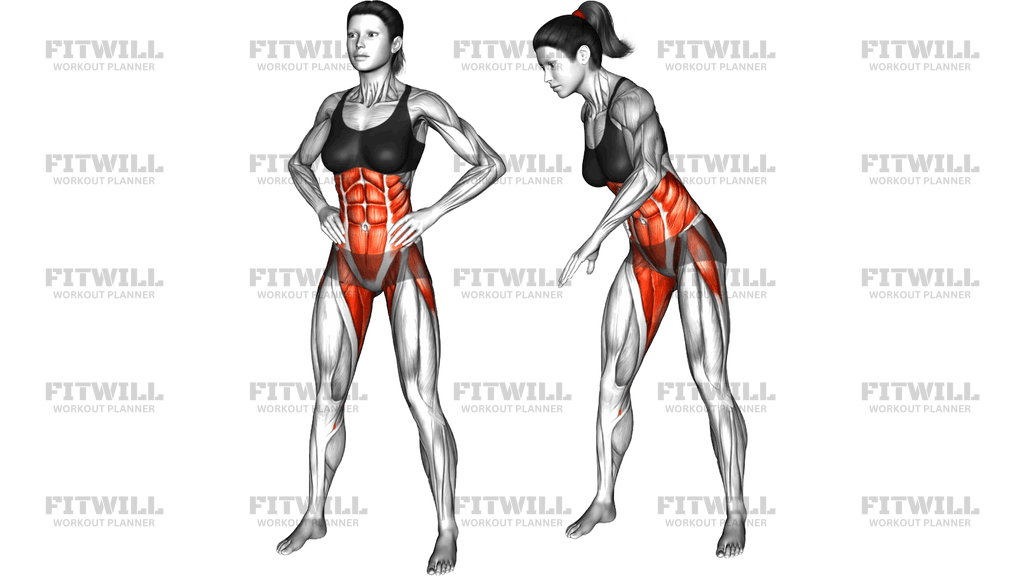
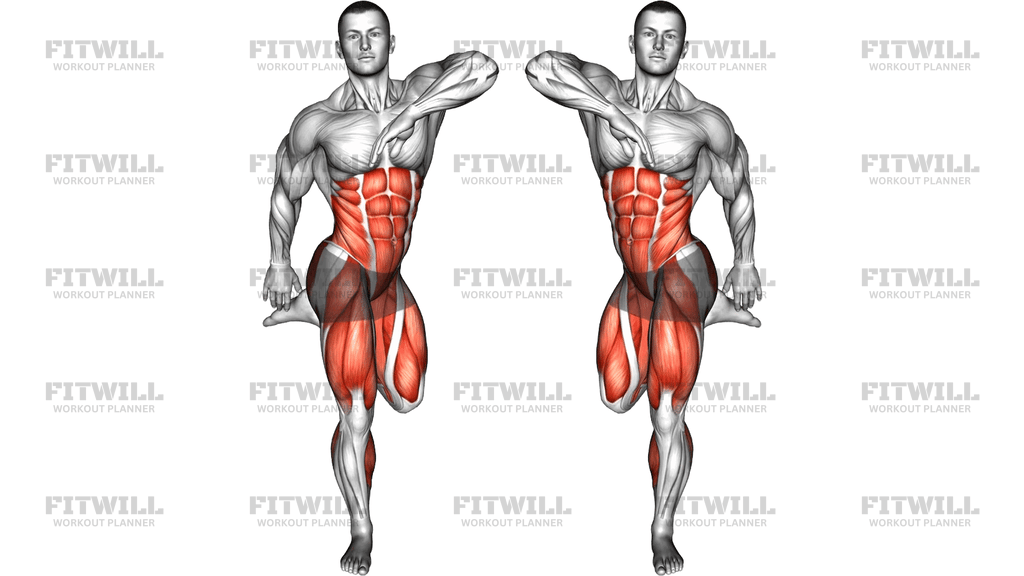
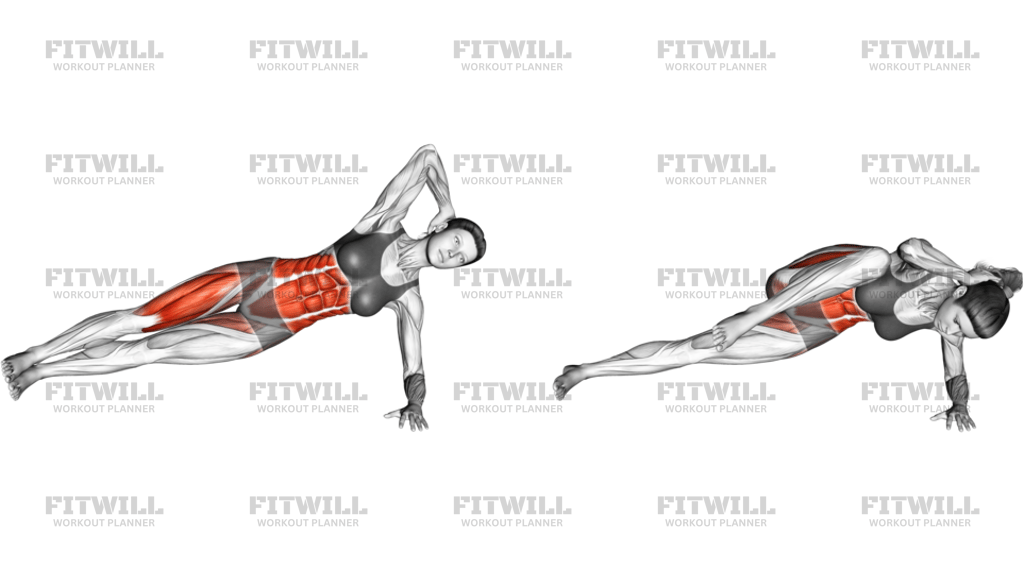
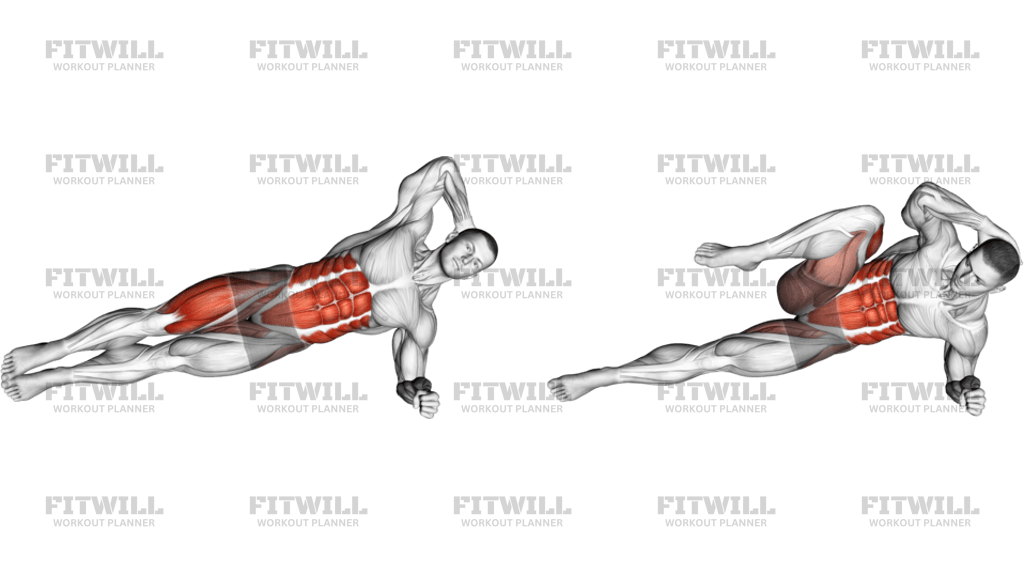
Stepback Opposite Crunch
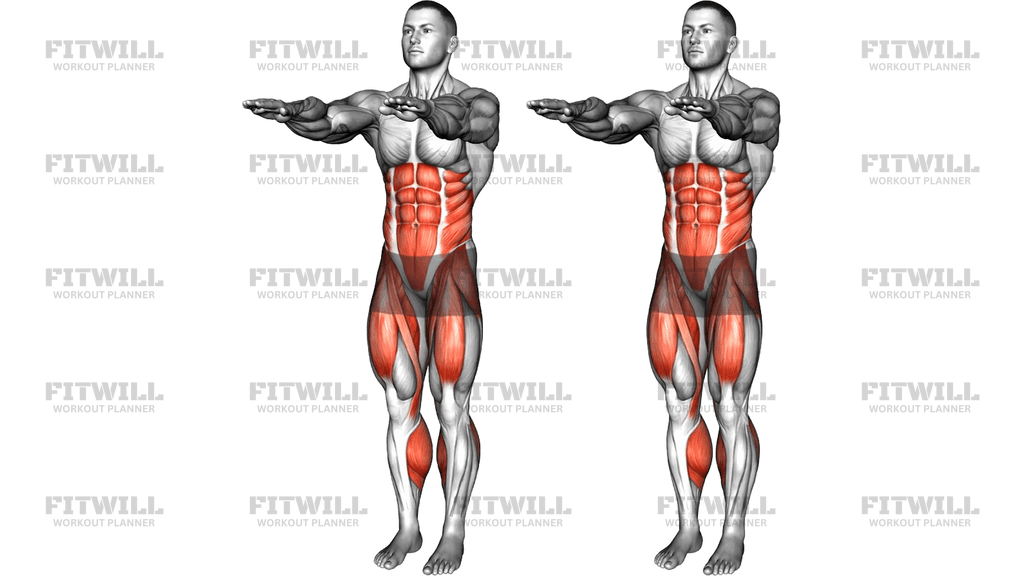
The Stepback Opposite Crunch is a standing bodyweight core exercise that combines a reverse step with a cross-body knee-and-elbow crunch. You start tall, step one foot straight back behind you, then drive that same knee forward and up while pulling your opposite elbow down to meet it. The result is a diagonal crunch performed on your feet, which makes your trunk work against gravity from a fully upright position instead of lying on the floor.
Because you remain standing, the movement trains the abs and obliques in a way that transfers well to real-world rotational and lifting patterns. The stepback adds a balance and coordination element: each rep requires you to load one leg, shift your weight, and stay controlled as the knee comes up. The standing leg's quads and glutes stabilize your body, while the hip flexors lift the knee and the rectus abdominis and obliques compress the torso toward it.
This is a practical choice for warm-ups, home workouts, and circuit training since it needs no equipment and very little space. It also suits anyone who finds floor crunches uncomfortable on the neck or lower back, because the spine stays stacked over the hips and the crunch comes from the ribcage moving toward the pelvis rather than the head pulling forward.
Setup matters more than it looks. Your stance should be about hip-width to start, your hands relaxed near your sides or in front of your chest, and your weight distributed evenly so the stepback is smooth rather than a stumble. If your base is too narrow or you rush the step, the crunch turns into a wild swing and the obliques lose their job.
To execute well, think of the elbow and knee as meeting at a point just in front of your lower ribs, not at your forehead. Exhale as they come together and feel the side of your waist shorten. Then return the foot to the floor with control before switching sides. Keep the movement deliberate; the crunch portion should take about one second up and one second down.
Common use cases include ab finishers, dynamic warm-ups before lower-body training, and low-impact conditioning intervals. The main safety points are simple: keep the standing knee soft rather than locked, avoid yanking your neck or shoulder toward the knee, and keep the stepping foot landing lightly. If balance is a challenge, stand near a wall or hold a sturdy support with one hand until the pattern feels natural.
[ Workout Log & Planner ]
Put your next workout in Fitwill
Keep your plan and training log ready when you are.


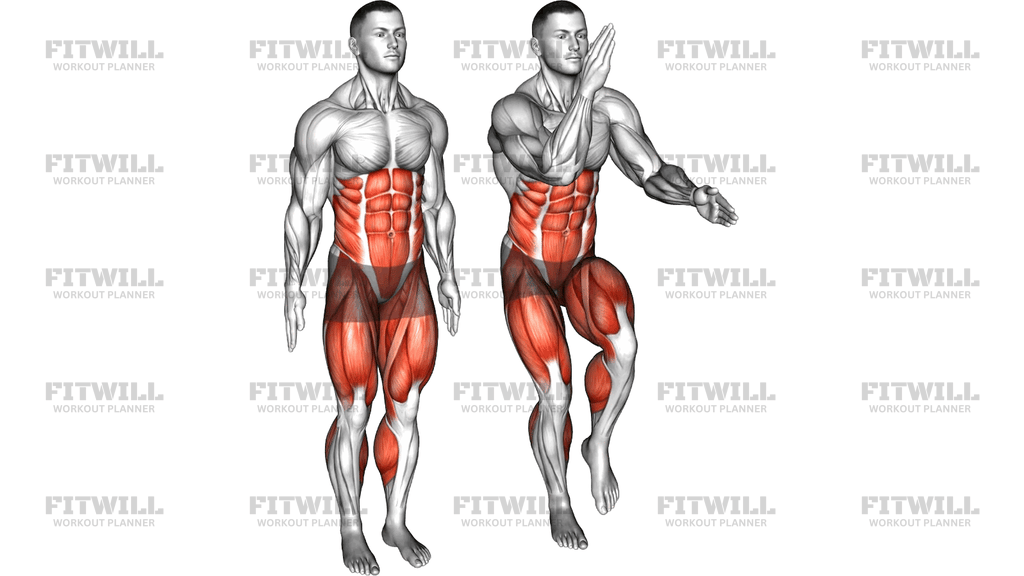
Instructions
- Stand tall with your feet hip-width apart, arms relaxed at your sides or hands raised in front of your chest, and your gaze forward.
- Brace your core lightly by drawing your lower ribs down and tightening your waist as if preparing for a light push to the stomach.
- Step your right foot straight back and lower it lightly to the ball of the foot, letting your left knee bend slightly while your torso stays upright.
- Push off the back foot to drive your right knee forward and up toward hip height or slightly above.
- At the same time, pull your left elbow down and across so it moves toward your raised right knee, letting your ribcage curl slightly downward and your right hand stay relaxed.
- Squeeze the side of your waist at the top, with the elbow and knee close together for a brief pause.
- Lower the right foot back to the floor under control and return to the tall standing stance, letting your arms come back to the start position.
- Exhale as the knee and elbow come together, inhale as you lower the foot back down.
- Repeat on the other side, driving the left knee up while the right elbow comes down, and continue alternating for the desired number of reps.
Tips & Tricks
- A frequent mistake is crunching toward the forehead instead of the knee, which shifts the work to the neck and front shoulders. Aim the elbow at a point near your lower ribs and let the waist do the shortening.
- If you find yourself wobbling on the stepback, widen your starting stance slightly and pause for a beat with the foot back before driving the knee up.
- Keep the standing knee slightly bent throughout. Locking it out makes balance harder and removes the glute and quad support you need when the knee drives up.
- The knee lift should come from the hip flexors, not from leaning your torso back. If your chest drops backward as the knee rises, shorten the lift to a height you can control.
- Do not let the hands fly around. Keep the non-working hand relaxed and still so the crunch comes from the trunk, not arm momentum.
- Land the stepping foot softly on the ball of the foot. Slamming it down on each rep turns a core drill into unnecessary joint pounding.
- Breathe out sharply as the elbow and knee meet. Holding your breath is common here and usually shows up as a stiff, half-range crunch.
- Slow the return phase down if you want more from the exercise. Lowering the foot over two to three seconds keeps tension on the abs instead of letting gravity take over.
- If you feel the movement only in your hip flexors, reduce the knee height and focus on pulling the ribcage toward the pelvis during the crunch portion.
Frequently Asked Questions
What muscles does the Stepback Opposite Crunch work?
The primary muscles are the abs, with the obliques working hard because of the cross-body elbow-to-knee path. The hip flexors lift the knee, and the quads and glutes of the standing leg stabilize you throughout.
Is the Stepback Opposite Crunch good for beginners?
Yes, it is a low-load bodyweight movement that beginners can learn quickly. If balance is an issue at first, stand next to a wall and touch it lightly with one hand while practicing the step and knee lift.
Why does the elbow go to the opposite knee instead of the same side?
The opposite-side crunch creates a diagonal, rotational pattern that engages the obliques on the side of the waist between the elbow and knee. Same-side crunches stay mostly in the sagittal plane and lose that rotational component.
How high should I raise my knee in the Stepback Opposite Crunch?
Aim for hip height or slightly above, as long as your torso stays upright and your lower back does not arch. Raising the knee higher than you can control usually causes the chest to lean back and the abs to lose tension.
Can I use the Stepback Opposite Crunch as a warm-up?
Yes, it works well as a dynamic warm-up before leg or core training because it raises the heart rate, mobilizes the hips, and primes the trunk. Use slower, controlled reps of about eight to ten per side.
What is the most common mistake in this exercise?
The most common mistake is rushing and swinging the elbow with arm momentum instead of curling the ribcage down. Another frequent error is leaning the torso backward as the knee comes up, which reduces the abdominal crunch.
What can I substitute if the balance is too difficult?
Try a standing opposite crunch without the stepback, lifting the knee straight from a normal stance while holding a wall or chair for support. Once that feels stable, add the stepback element back in.
How many reps and sets of the Stepback Opposite Crunch should I do?
For core endurance and coordination, two to three sets of ten to fifteen reps per side works well. Because it is bodyweight only, you can also add it to circuits for time, such as thirty-second intervals.
Is the Stepback Opposite Crunch safe for the lower back?
For most people it is a back-friendly alternative to floor crunches because the spine stays stacked over the hips and the movement comes from the ribcage, not the neck. Keep the crunch controlled and avoid twisting forcefully at the end range.