Clothespin Hold
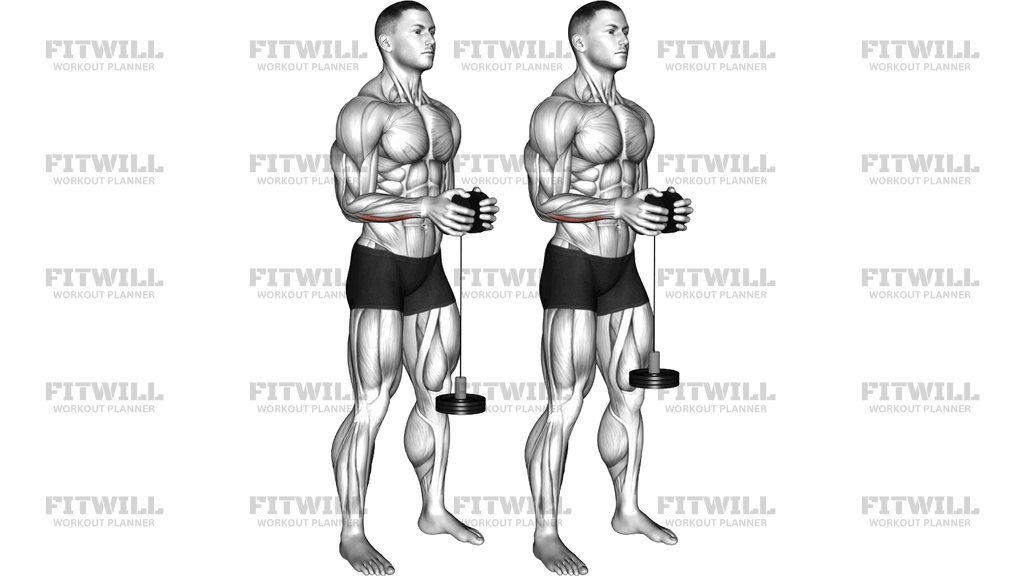
The Clothespin Hold is a simple isometric grip exercise performed with an ordinary spring-loaded clothespin or small clamp. You stand upright, hold the clothespin in one hand at your side, squeeze the two ends together with your fingers, and hold that closed position against the resistance of the spring. It looks almost trivial from the outside, but the sustained squeeze creates steady tension through the fingers, thumb, and forearm flexors, which is exactly what many lifters are missing in their grip training.
This movement is useful for anyone whose grip gives out before their larger muscles do. Climbers, martial artists, rock climbers, and people who train with barbells or kettlebells all benefit from dedicated grip work, and the Clothespin Hold is one of the lowest-friction ways to get it. Because the tool is small and the movement requires no setup, it also works well as a desk break, a rehabilitation-friendly squeeze drill, or a finishing pump at the end of a forearm session.
The primary work happens in the forearm flexors and the small intrinsic muscles of the hand that close the fingers against the thumb. The wrist and forearm stabilizers stay quietly active to keep the hand and wrist aligned while you hold, and because you are standing with the arm relaxed at your side, nothing else needs to compensate. That isolation is the point: the rest of your body contributes almost nothing, so all the effort stays where you want it.
Setup matters more than it seems. Hold the clothespin by its ends, not its sides, so your fingertips and thumb actually have to generate the closing force. Keep your wrist neutral and your shoulder relaxed; if you hike your shoulder or bend your wrist inward, you are borrowing tension from joints that should not be involved. The squeeze should come from the fingers pressing the ends together, and the spring provides a fixed, manageable resistance.
To execute well, close the clothespin fully and hold it shut for a set period of time rather than clicking it repeatedly. The full, sustained squeeze is what builds strength endurance in the grip. Breathe normally throughout, and switch hands to keep the workload even. If the spring feels too easy, hold for longer, use a firmer clamp, or move to a two-hand or multiple-clothespin variation.
A few practical points keep this safe and productive. Stop if you feel sharp pain in the finger joints or wrist, and avoid pressing your fingernails into the wood or plastic. Because the resistance is small, the temptation is to rush and flick the ends together with a wrist snap; resist that and let the fingers do the closing. Done consistently, the Clothespin Hold is a quiet, honest builder of hand strength that fits into almost any training day.
[ Workout Log & Planner ]
Put your next workout in Fitwill
Keep your plan and training log ready when you are.


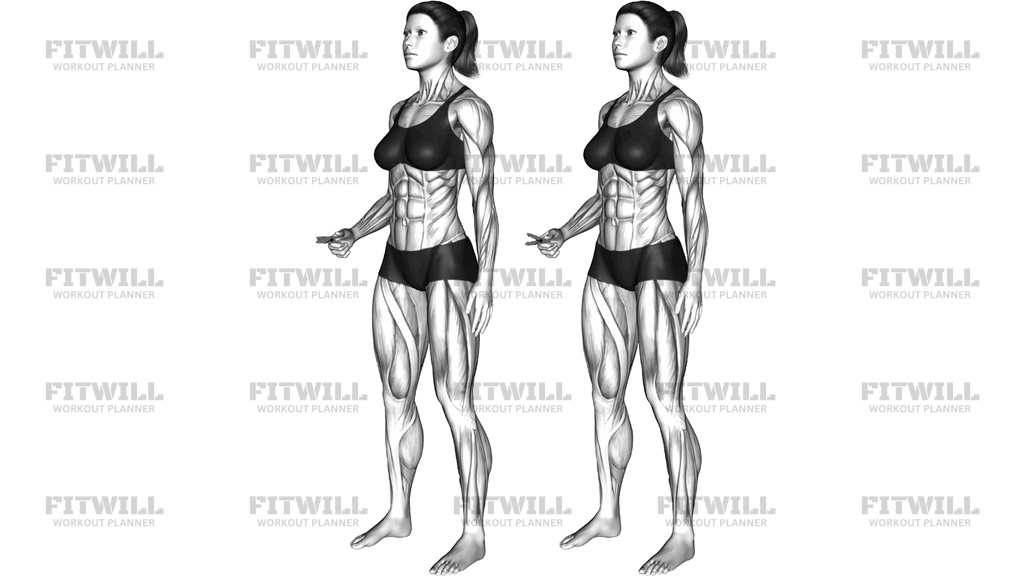
Instructions
- Stand upright with your feet about hip-width apart and your posture relaxed, holding a spring-loaded clothespin in one hand.
- Position the clothespin between your fingertips and thumb so the two ends face each other, with your arm hanging naturally at your side and your wrist in a neutral, straight line with your forearm.
- Take a normal breath and keep your shoulder down and loose; no other part of your body should be tense.
- Squeeze the two ends of the clothespin together with your fingers and thumb until they meet and the pin is fully closed.
- Hold the closed position isometrically, maintaining steady pressure with your fingertips for the target time, typically 10 to 30 seconds.
- Keep breathing smoothly and evenly while you hold; do not hold your breath during the squeeze.
- Release the pressure slowly and in control, letting the spring open the ends apart rather than letting them snap open violently.
- Complete the set on one hand, then switch the clothespin to your other hand and repeat for the same hold time.
- Reset your grip on the pin between sets so your fingertips sit on the ends, not the sides, before starting the next hold.
Tips & Tricks
- The most common mistake is squeezing with the sides of the fingers instead of the fingertips and thumb, which turns the hold into a sloppy pinch; reposition so the pads of your fingers press the ends together.
- Do not flick the ends closed with a wrist snap. If your wrist is moving, the clothespin is closing from momentum instead of finger strength, and your forearm flexors are missing the work.
- If your shoulder creeps up toward your ear during long holds, lower your arm slightly and take a breath to reset it before continuing.
- A spring that is too stiff makes you cheat with your whole arm, while one that is too easy gives no stimulus; pick a clothespin you can close fully and hold for at least ten seconds with honest effort.
- Time your holds instead of guessing. Grip endurance improves in small increments, and a simple timer makes progress visible.
- Keep your fingernails off the surfaces of the pin; pressing nails into the ends is uncomfortable and shifts pressure away from the finger pads.
- If your forearm starts burning before your grip does, you are likely tensing your whole forearm; consciously relax your wrist and let only the fingers work.
- Alternate hands between sets even if your dominant side feels stronger, so grip imbalance does not grow over time.
- For extra challenge without new equipment, hold the closed position longer or squeeze two clothespins in the same hand at once.
Frequently Asked Questions
What muscles does the Clothespin Hold work?
It primarily trains the grip and the forearm flexor muscles that close the fingers against the thumb. The small stabilizing muscles of the hand and wrist also stay active to keep the squeeze aligned.
Is the Clothespin Hold good for beginners?
Yes. The spring resistance is gentle and the movement is low-skill, so beginners can hold safely and simply reduce the hold time if their fingers fatigue quickly.
How long should I hold the clothespin closed?
Aim for 10 to 30 seconds per hold, resting briefly between reps. When you can hold comfortably beyond 30 seconds, increase the time or switch to a stiffer clamp.
Can I use the Clothespin Hold to improve my deadlift or pull-up grip?
It can help as a supplementary forearm and grip exercise, especially for fingertip strength and endurance. However, it is a light isometric tool, so pair it with heavier grip work like hangs or farmer carries for the best carryover.
Why does my wrist hurt when I do the Clothespin Hold?
This usually means the wrist is bending or snapping to help close the pin instead of staying neutral. Keep your wrist in a straight line with your forearm and let only your fingers and thumb generate the squeeze; if discomfort persists, stop and reduce the resistance.
Should I stand or sit while performing the Clothespin Hold?
Either works, since the arm at your side isolates the grip in both positions. Standing with a relaxed shoulder, as shown in the standard setup, keeps the movement consistent and makes it easy to switch hands.
Can I use a clamp instead of a clothespin?
Yes. A small spring clamp with a similar closing force is a direct substitute, and a slightly firmer clamp is a natural progression once clothespin holds feel easy.
How often can I train the Clothespin Hold?
Because the resistance is light, most people can train it three to five times per week. Just allow a day of recovery if your forearms or finger joints feel persistently sore.
Is it normal for my fingers to shake during a long hold?
Mild trembling near the end of a hold is a normal sign of fatigue in the finger muscles. If shaking starts immediately or is accompanied by joint pain, shorten the hold and build up gradually.