Sitting Isometric Peroneal Squeeze
The Sitting Isometric Peroneal Squeeze is a low-effort, high-precision exercise for the muscles along the outside of the lower leg, mainly the peroneus longus and peroneus brevis. You sit upright on a sturdy chair with both feet flat on the floor and produce a steady outward pressure through the outer edge of each foot without letting the feet actually move. Because nothing is lifting, swinging, or loading the ankle, all of the work goes straight into holding the foot firm against the ground.
This movement is especially useful for people rebuilding ankle stability after a lateral ankle sprain, since the peroneal muscles are the ones that resist rolling the ankle inward. It is also a good fit for runners and hikers who want better control on uneven ground, older adults working on balance, and anyone who spends long hours sitting and wants to keep the lower legs active without standing up. Because it is isometric and seated, it puts very little stress on the ankle joint itself, which makes it a common first step before progressing to resisted eversion exercises with a band.
The muscles targeted sit on the outer calf and their tendons run behind the outer ankle bone into the foot. When they contract, they evert the foot, meaning they tilt the sole slightly outward and support the arch. In this seated version, the floor acts as the resistance. The goal is not to roll the feet outward visibly, but to create a firm, controlled squeeze against the ground while the rest of the leg stays quiet.
Setup matters more than effort here. Sit tall with your feet flat, knees bent roughly to a right angle, and your weight evenly spread across each foot. If your hips are too low, your heels will drift back and your feet will lose full contact with the floor; if you slouch, it becomes harder to sense what the feet are actually doing. Keep the toes relaxed, since curling the toes hides the peroneal contraction and shifts work into the small muscles of the foot.
To perform the squeeze, press the outer border of each foot gently into the floor as if trying to lift the inner arch, then stop before the feet visibly roll or the heels lift. Hold that firm pressure for five to ten seconds while breathing normally, then release slowly and let the feet settle back to neutral. You should feel a band of tension along the outer lower leg, not sharp pain at the ankle or cramping in the toes.
As with any isometric hold, the point is quality of tension, not maximum force. Start with mild pressure and a few short holds, and build duration and intensity gradually. If you are recovering from an ankle injury, this exercise is often cleared early in rehabilitation, but it is still wise to confirm the timing and intensity with a physical therapist or healthcare provider.
[ Workout Log & Planner ]
Put your next workout in Fitwill
Keep your plan and training log ready when you are.


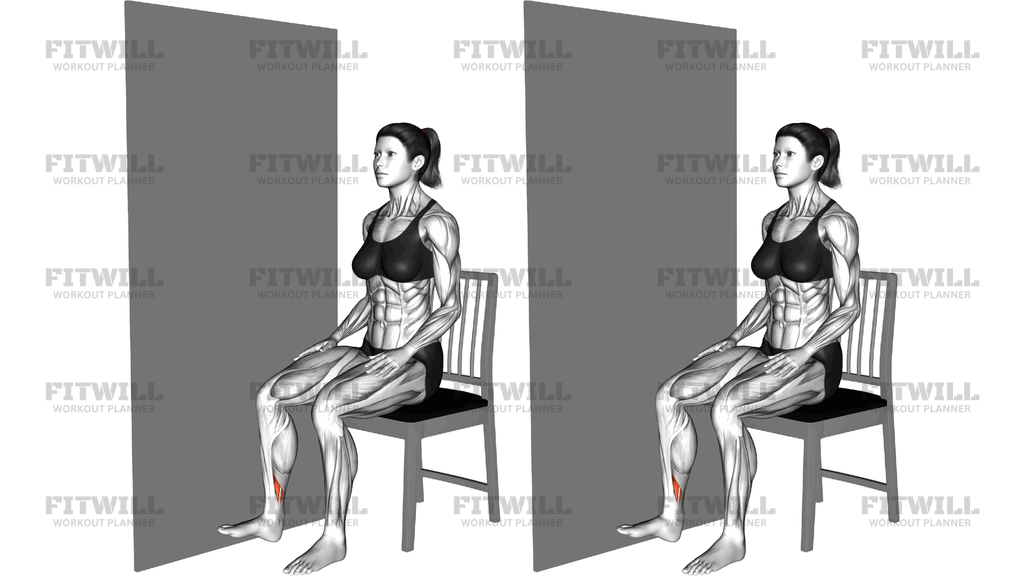
Instructions
- Sit upright on a sturdy chair with your back straight and your hands resting on your thighs.
- Place both feet flat on the floor, hip-width apart, with knees bent about ninety degrees and heels directly under or slightly behind the knees.
- Spread your weight evenly across each foot so the heel, the ball, and the outer edge all maintain contact with the floor.
- Relax your toes completely and keep your ankles in a neutral position before starting the hold.
- Exhale gently and press the outer border of each foot down into the floor, as if trying to lift the inner arches, without letting the feet visibly roll outward.
- Hold the outward squeeze firmly but comfortably for five to ten seconds, keeping the knees, hips, and torso still.
- Breathe steadily throughout the hold and avoid clenching your jaw, hands, or shoulders.
- Release the pressure slowly over two to three seconds and let both feet return to a flat, neutral position on the floor.
- Rest for a few seconds, then repeat for the desired number of holds, keeping the pressure consistent from rep to rep.
Tips & Tricks
- The most common mistake is rolling the whole foot outward so the inner edge lifts off the floor; if that happens, reduce the pressure until only the intent to evert remains and the foot stays flat.
- Curling or gripping with the toes is a sign the effort has shifted away from the peroneals; wiggle your toes briefly before each hold to reset them.
- If you cannot feel the outer lower leg working, slide your fingers along the outside of the calf just below the knee while you squeeze; you should feel the muscle firm up under your hand.
- Press only as hard as you can while keeping the heels and balls of the feet glued to the floor, since forcing maximum pressure tends to recruit the calves and flatten the whole foot.
- Keep both feet working together rather than letting one dominate; if one side feels weaker, give it an extra set or two of solo holds.
- Sitting too low on a soft couch makes the heels drift and blurs the foot position, so use a firm chair where your thighs are roughly parallel to the floor.
- Longer, moderate holds generally work better here than short maximal squeezes; aim for five to ten seconds and increase duration before you increase force.
- Stop the set if you feel a sharp pull behind the outer ankle bone, since that is a sign of too much pressure rather than productive muscle tension.
- Do the holds barefoot or in thin, flexible footwear at first; thick, cushioned soles make it hard to sense whether the foot is truly staying flat.
Frequently Asked Questions
Which muscles does the Sitting Isometric Peroneal Squeeze work?
The main muscles are the peroneus longus and peroneus brevis on the outer lower leg, which evert the foot and support the ankle and arch. The deeper stabilizers around the ankle assist as you hold the foot firm against the floor.
Why is the exercise done isometrically instead of moving the feet?
Holding a static squeeze trains the peroneals to resist ankle rolling without putting the joint through repeated motion, which is why it is often used early in ankle stability work. The floor provides resistance while the foot stays safely neutral.
How do I know if I am actually squeezing the peroneals and not just gripping my toes?
Place your fingers on the outer side of your lower leg during the hold; you should feel a firming along the outer calf while your toes stay loose. If your toes curl or your whole foot rolls outward, the pressure is too high or misdirected.
Is the Sitting Isometric Peroneal Squeeze suitable for beginners?
Yes, it is one of the most approachable lower leg exercises because it requires no equipment, no load, and only mild force. Beginners should start with light pressure, short five-second holds, and focus on keeping both feet flat.
How long should I hold each squeeze?
Start with five to ten seconds per hold and build toward fifteen to twenty seconds as control improves. Duration and consistency matter more than squeezing as hard as possible.
Can I do this exercise if my ankle feels stiff but not painful?
Generally yes, since the foot does not move and the load on the joint is minimal. If stiffness turns into sharp pain, swelling, or discomfort behind the outer ankle bone, reduce the pressure or pause and seek guidance from a professional.
What can I use instead of a chair?
Any firm, stable seat at a height that lets your feet rest flat with knees near ninety degrees works, such as a bench or the edge of a sturdy box. Avoid soft couches or seats that are so low your heels slide back.
How does this exercise help with balance?
Strong, responsive peroneals react quickly to keep the ankle from rolling inward on uneven surfaces. Training them isometrically improves your ability to hold the foot steady, which supports better single-leg balance and surer footing.
How many sets and reps should I do?
A typical starting point is two to three sets of eight to ten holds of five to ten seconds, with a short rest between reps. Increase hold length or sets gradually before increasing the pressure.
Should I work both feet at the same time or one at a time?
Doing both feet together is fine for learning the movement, but working one foot at a time makes it easier to notice and correct side-to-side differences. If one ankle feels less controlled, give it some extra focused holds.