Cable Step Up
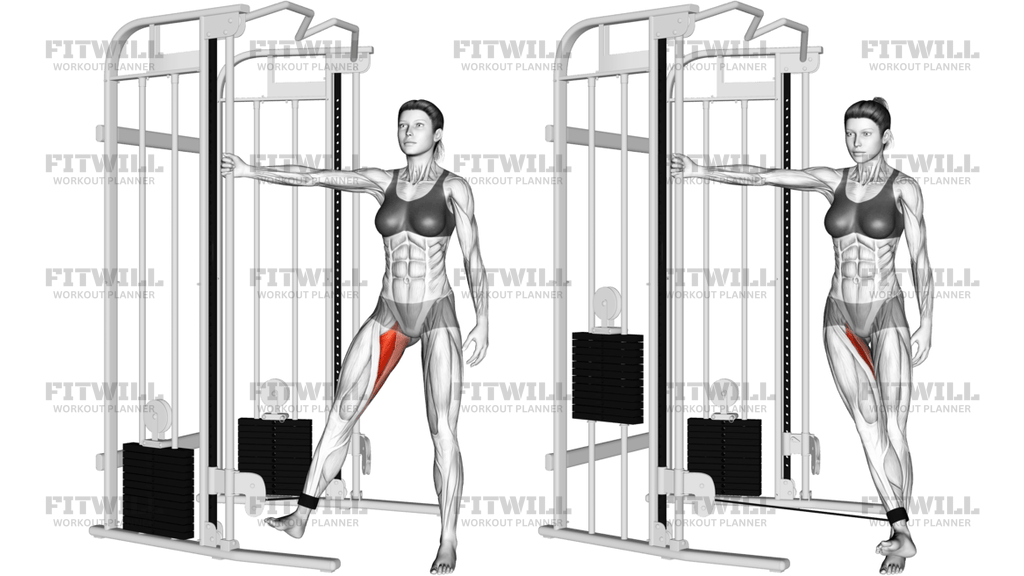
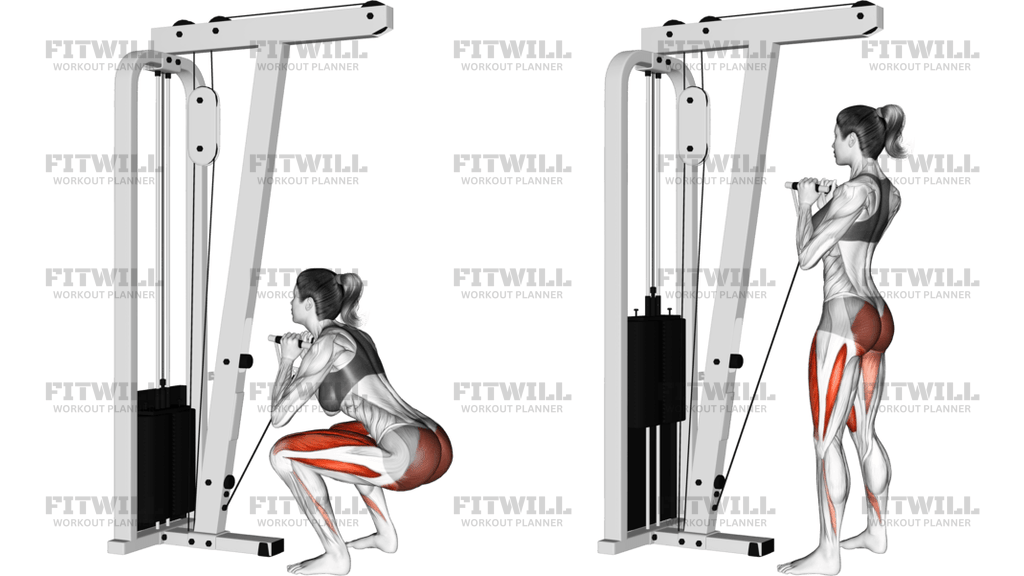
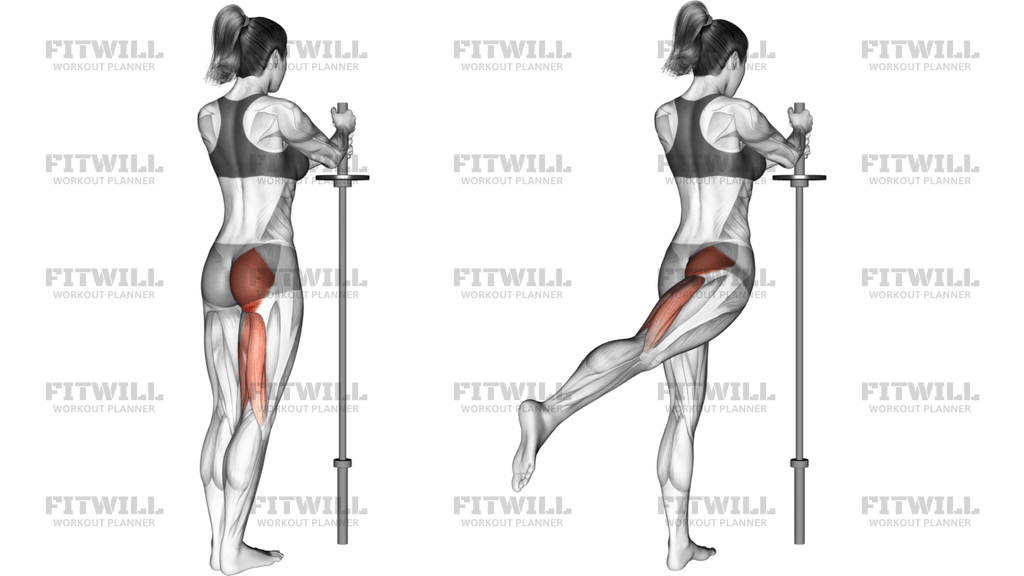
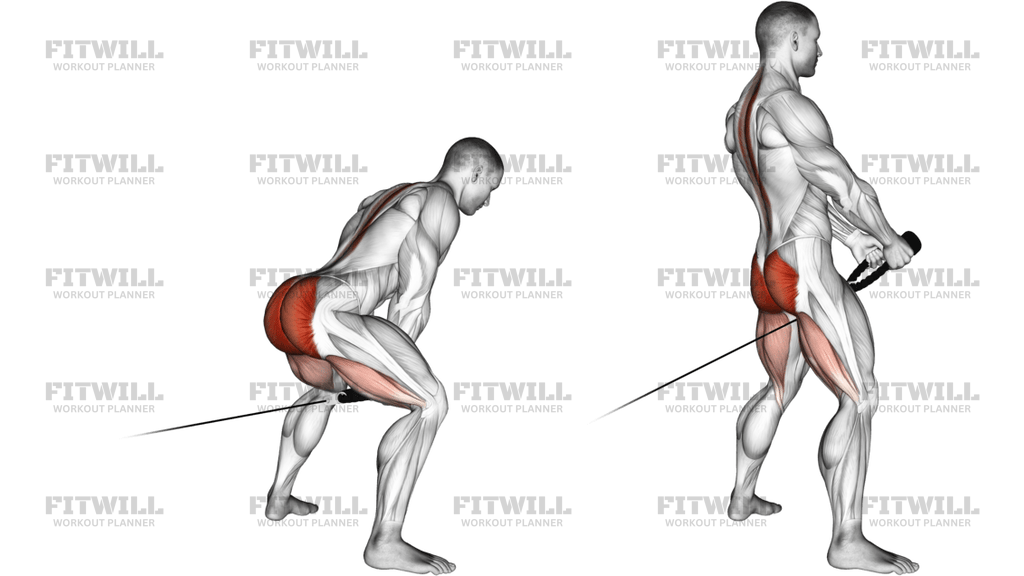
The Cable Step Up is a single-leg strength exercise performed by stepping up onto a sturdy step platform while holding a handle attached to the low pulley of a cable machine. The cable adds constant, smooth resistance through the entire range of motion, which is something dumbbells cannot do — the tension stays the same whether you are at the bottom of the step or fully standing on top. The highlighted areas in the movement are the glutes and quads of the working leg, with the calves contributing as you rise onto the top leg.
This movement suits a wide range of lifters. Beginners appreciate that the cable provides a light, adjustable starting load and something to hold for balance. More advanced trainees use it to load each leg independently, which exposes and eventually corrects side-to-side strength differences that squats and leg presses can hide. It is also a practical exercise for runners, hikers, and field-sport athletes, because stepping up is exactly the pattern those activities demand.
The primary work comes from the gluteus maximus and quadriceps of the top leg as they extend the hip and knee to lift your bodyweight plus the cable load. The gluteus medius on the standing leg works hard to keep your pelvis level, the hamstrings assist hip extension, and the calves engage as you finish tall on the platform. Because one leg does the lifting at a time, the demand on hip stabilizers is noticeably higher than in a two-legged squat.
Setup matters more here than in most step variations. The platform height should let your front knee reach roughly a 90-degree bend with your whole foot flat on the surface, and the pulley should be set to the lowest position so the cable pulls straight down beside your hand. A platform that is too high turns the step into a hip-flexor-assisted climb and rounds the lower back; a handle held too far from the body pulls you off balance.
To execute well, place one foot fully on the platform, keep your torso tall with a slight forward lean from the hips, and drive through the heel and mid-foot of the top leg until you are standing completely upright beside it. Avoid pushing off the trailing foot — that bottom leg is there for balance only. Lower yourself under control, letting the cable resist you on the way down rather than dropping back to the floor.
Use the Cable Step Up as a main lower-body lift on single-leg days, as an accessory after squats or deadlifts, or as a rehab-friendly reintroduction to loaded stepping after a layoff. Start with a light weight and moderate platform height, complete all reps on one leg before switching, and stop the set the moment your pelvis starts tilting or your balance drifts — clean repetitions beat wobbly ones every time.
[ Workout Log & Planner ]
Put your next workout in Fitwill
Keep your plan and training log ready when you are.


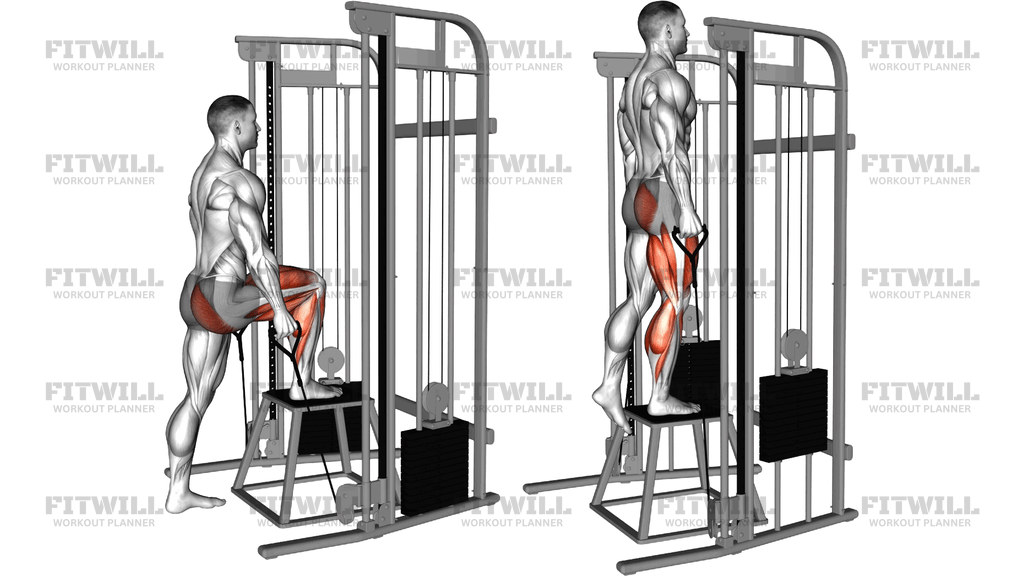
Instructions
- Attach a V-bar handle to the low pulley of a cable machine and set a stable step platform in front of it, high enough that your knee bends to about 90 degrees with your foot flat on top.
- Select the weight, then stand facing slightly toward the machine and grip the handle in one hand, letting your arm hang straight down at your side with the cable running alongside your leg.
- Place your working foot fully on the center of the platform so your whole foot is in contact, and keep your weight in that top leg from the first second.
- Brace your core, pull your shoulders back, and lean your torso forward slightly from the hips while keeping your chest up and your back neutral.
- Exhale and drive through the heel and mid-foot of the top leg, extending your hip and knee to rise up until you are standing fully upright on the platform beside it.
- At the top, finish tall with your hips fully extended and the trailing foot hovering near the platform, resisting any urge to lean back or let the cable pull you sideways.
- Inhale as you lower slowly, bending the top-leg knee and sitting your hips back until the trailing foot touches the floor with a soft landing.
- Keep light tension on the cable at the bottom rather than letting the stack slam down, then begin the next repetition immediately.
- Complete all planned reps on one leg, re-grip the handle with the other hand, and repeat on the opposite side.
- Reset your stance and brace before each set, and step off the platform deliberately rather than hopping down between reps.
Tips & Tricks
- The most common mistake is pushing off the back foot. That leg should contribute nothing but balance — if you feel your trailing toes driving into the floor, lighten the weight until the top leg can do the work alone.
- Do not choose a platform so high that you have to rise onto the ball of your top foot or hinge far forward to reach it. A knee angle near 90 degrees keeps the load on the glutes and quads instead of the hip flexors and lower back.
- If the cable pulls you toward the machine, you are standing too close or holding the handle away from your body. Keep the handle directly beside your hip so the resistance travels straight down your arm.
- Watch your pelvis in a mirror: a dropping hip on the free-leg side means the gluteus medius is failing. Reduce the load and focus on staying level before adding weight.
- Control the lowering phase for two to three seconds. The eccentric step-down is where much of the glute and quad development happens, and rushing it also invites knee-valgus collapse.
- Keep the working knee tracking over the middle of your foot. If it caves inward as you drive up, think about spreading the floor with your top foot and squeezing the outer hip.
- Alternate which hand holds the handle from set to set, or use a handle in each hand on dual-pulley machines, so one side of your torso does not always bear the asymmetrical load.
- Grip the handle loosely. A death grip on the handle shifts tension into your forearm and traps and makes the balance feel worse, not better.
- If your calf cramps at the top of the step, you are rising onto your toes. Finish each rep with the whole foot planted and your hips doing the final extension.
Frequently Asked Questions
What muscles does the Cable Step Up work?
The gluteus maximus and quadriceps of the stepping leg do most of the work, with the hamstrings assisting hip extension and the calves engaging as you finish standing tall. The gluteus medius and core stabilizers work isometrically to keep your pelvis and torso level on one leg.
How high should the step platform be for the Cable Step Up?
Choose a height that lets you place your whole foot flat with your knee bent to roughly 90 degrees at the bottom. If you have to rise onto your toes or lean far forward to step up, the platform is too high.
Is the Cable Step Up good for beginners?
Yes, provided the weight starts light and the platform is knee-height or slightly below. The cable handle gives beginners a light external balance reference, and the single stack allows very small load increments.
Why use a cable instead of dumbbells for step ups?
A low-pulley cable keeps tension constant through the whole rep, including the stretch position at the bottom where dumbbells offer the least resistance. It also frees your other hand and lets you load in small, precise jumps.
Should my trailing leg help push me up?
No — the trailing foot is for balance only. If you find yourself pushing off the floor, reduce the weight or lower the platform until the top leg can lift you by itself, otherwise the working glutes and quads are not challenged as intended.
My hip drops on the free-leg side. What should I do?
That is a gluteus medius stability issue, not a strength problem to push through. Lower the weight, slow the tempo, and rehearse keeping the pelvis level; add load back only when you can stay square for all repetitions.
Can I hold a handle in each hand?
Yes, if the machine has two low pulleys or you can run a cable safely across. Two handles balance the load on your torso, while a single handle more closely mimics carrying an asymmetric load and challenges your obliques slightly more.
How many reps and sets should I do?
For strength and muscle, 3 sets of 8 to 12 controlled reps per leg works well; for stability and endurance, go lighter for 12 to 15. Because balance is a limiting factor, favor crisp reps over grinding out extra ones.
Is the Cable Step Up safe for the knees?
For healthy knees it is generally a joint-friendly exercise because the foot stays planted and the shin angle is controlled. Keep the knee tracking over the toes, avoid letting it cave inward, and use a platform height that does not force a deep, uncomfortable bend.
What can I substitute if my gym has no step platform?
A stable bench, plyo box, or even a sturdy low stair works, as long as the surface cannot slide. Keep the same low-pulley cable setup and the same rule: whole foot on the surface, trailing leg for balance only.