Cable Standing Hip Extension (Version 3)
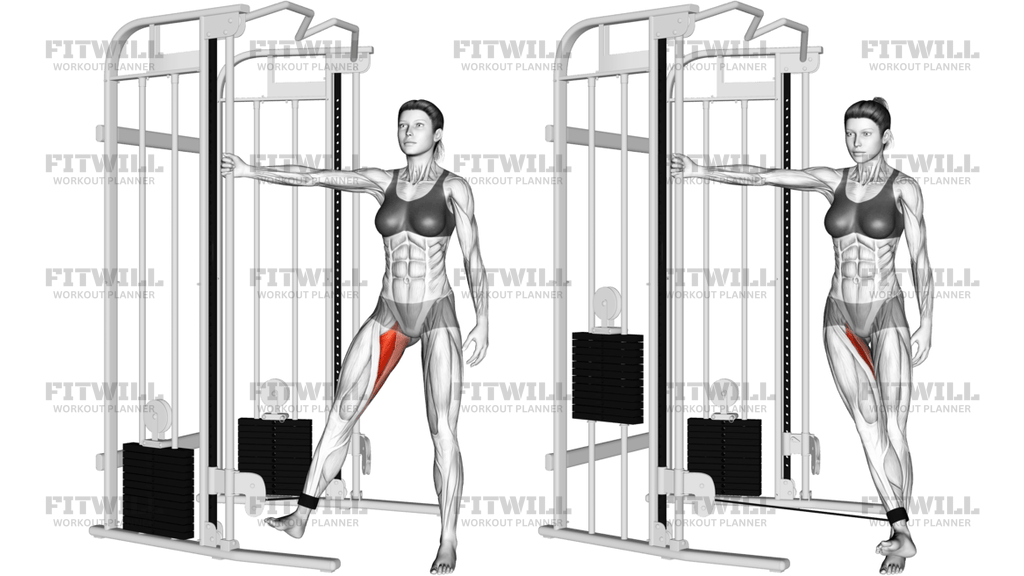
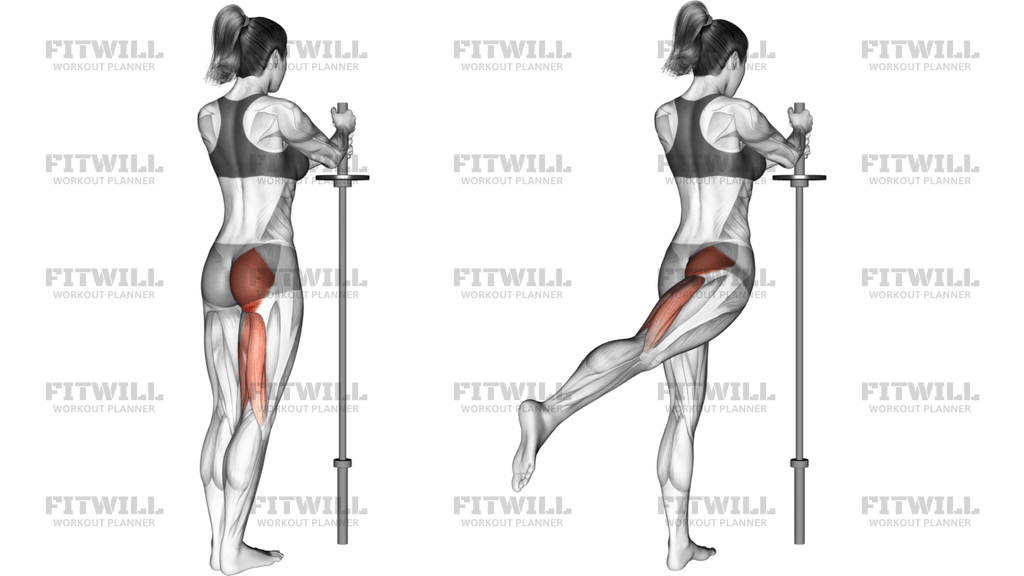
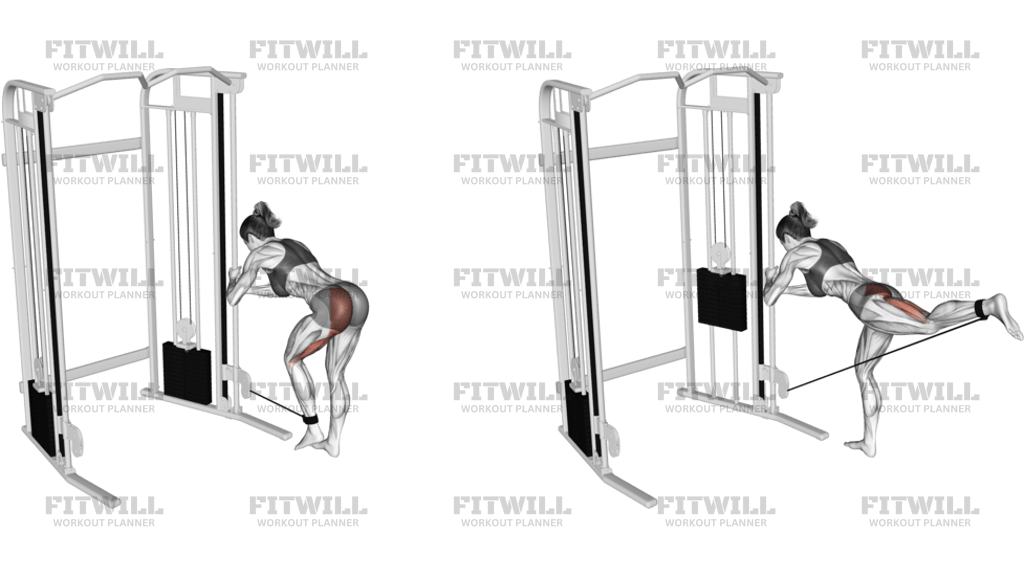
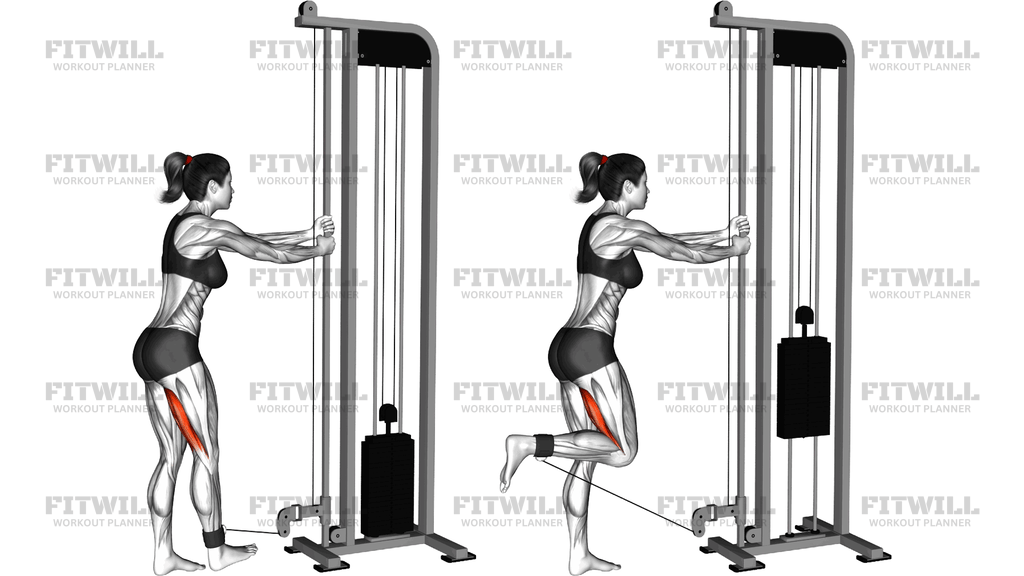
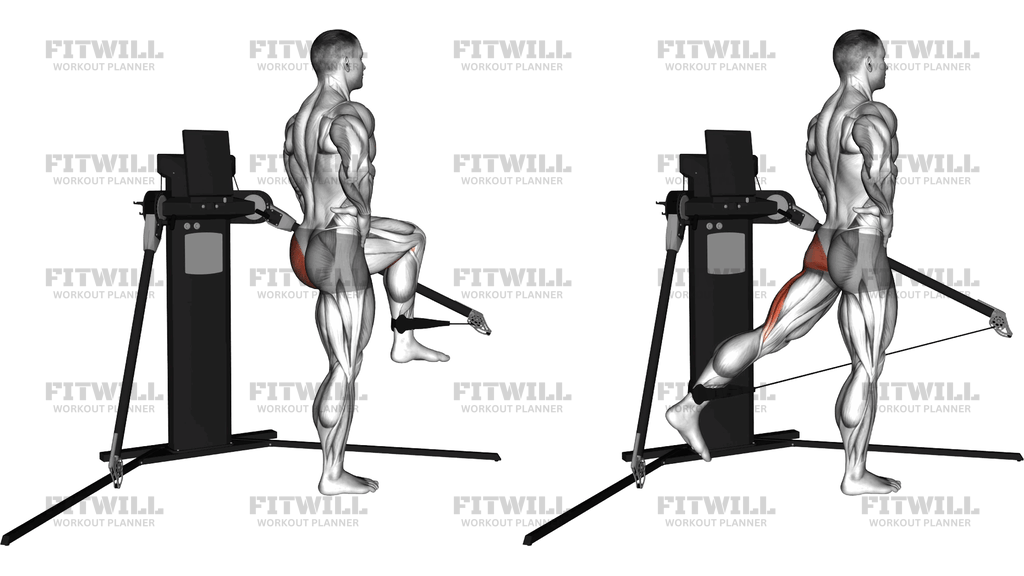
Cable Standing Hip Extension (Version 3) is a single-leg cable exercise performed standing next to a cable machine with an ankle strap secured around the working ankle and the cable running from a low pulley. You brace against the machine with your hands, keep your torso tall, and drive the working leg down and behind your body against the forward pull of the cable. The highlighted working area is the glutes, with the hamstrings assisting as the leg travels behind the hip.
This movement is a direct way to train hip extension in a standing position, which closely matches how the glutes work in walking, running, climbing, and sprinting. Because you are on one leg and holding a support, the exercise also challenges the stance-side hip and trunk to stay steady while the working leg moves. It suits lifters who want focused glute work without loading the spine, as well as people rehabilitating or strengthening the hip in a low-load, controlled setting.
The setup matters more than it looks. The strap should sit snugly around the ankle, the pulley should be at its lowest setting, and you should stand close enough to the machine that the cable pulls the leg slightly forward at the start. If you stand too far away, tension is lost at the back of the movement; if you lean forward excessively, the lower back and hamstrings start doing work that belongs to the glutes. A tall torso with a soft bend in the standing knee keeps the movement honest.
Execution is simple but easy to rush. From the start, with the working knee slightly forward and the cable under tension, sweep the leg back in an arc until the hip is fully extended and the leg is behind your body, then pause briefly and feel the glute contract before letting the leg travel forward under control. Avoid swinging, arching the lower back, or letting the torso collapse forward as the leg moves.
Practically, this exercise fits well as an accessory after squats, deadlifts, or lunges, or as a standalone glute-builder on machine-focused training days. Because each side works independently, it also helps expose and correct left-to-right differences in hip strength. Keep the load moderate, aim for clean repetitions, and progress by adding weight or reps only when the torso stays quiet and the leg path stays smooth.
[ Workout Log & Planner ]
Put your next workout in Fitwill
Keep your plan and training log ready when you are.


Instructions
- Set the pulley of the cable machine to its lowest position and attach an ankle strap around your working ankle, snug just above the ankle bone.
- Stand facing the machine with the strap-side leg closest to the pulley, feet close to the base so the cable pulls your working leg slightly forward.
- Grip the machine's frame or handles with both hands, step your weight onto the non-working leg, and allow a soft bend in the standing knee.
- Brace your abdominals, keep your chest up and shoulders back, and let the cable draw the working knee slightly forward to create starting tension.
- Exhale and sweep the working leg back and down in an arc, pushing through the heel until the hip is fully extended and the leg sits behind your body.
- Squeeze the glute hard at the back of the movement and hold the end position for a beat without arching your lower back.
- Inhale and let the leg travel forward slowly, resisting the cable's pull until the knee is back near the starting position with tension still on the strap.
- Complete all repetitions on one side, then reposition the strap and switch legs.
- Keep the range smooth throughout; if the torso pitches forward or the leg swings, reduce the weight before continuing.
Tips & Tricks
- The most common error is turning this into a lower-back extension: if your torso leans forward as the leg goes back, the weight is too heavy or you are chasing range instead of glute contraction.
- Keep the moving leg mostly straight with only a small knee bend; a heavily bent knee shortens the hamstrings' contribution and turns the motion into a knee-dominant kick.
- Stay close to the machine so the cable angle pulls the leg forward at the start — standing too far back removes tension exactly where the exercise should be hardest to control.
- Point your toes forward and keep the hips square; letting the pelvis rotate open lets the leg travel further but takes work away from the glute you are targeting.
- Think about sweeping the leg back like a pendulum rather than kicking it — a one-second back, one-second forward tempo keeps tension on the muscle and off the joint.
- If the strap slides or pinches, reposition it higher on the calf-ankle line and make sure it is snug before the set, not halfway through.
- Hold the support lightly with your fingertips rather than gripping and pulling; leaning on your arms can tilt the whole torso and alter the hip path.
- Since the working side and standing side swap roles between sets, do the weaker or tighter side first and match its reps with the stronger side.
Frequently Asked Questions
Which muscles does Cable Standing Hip Extension (Version 3) work?
The gluteus maximus is the prime mover, with the hamstrings assisting as the leg extends behind the hip. The standing leg and trunk work isometrically to keep you balanced.
Why does the cable pull my leg forward at the start of each rep?
That forward tension is intentional — it lengthens the glute before the rep and forces you to control the leg back into extension instead of dropping it. If the pull feels too strong, stand slightly closer to the machine or use less weight.
Is Cable Standing Hip Extension (Version 3) suitable for beginners?
Yes, it is one of the more beginner-friendly glute exercises because the cable provides a fixed, easy-to-modulate resistance and the machine offers something to hold for balance. Start with a light weight and focus on a smooth arc before adding load.
Should my working leg be straight or bent during the movement?
Keep it nearly straight with only a slight knee bend. A fully locked knee can be uncomfortable at the ankle strap, while a deeply bent knee shifts emphasis away from hip extension.
Why do I feel this in my lower back instead of my glutes?
That usually means the torso is pitching forward or the lower back is arching to chase extra range at the top. Brace your abdominals, keep your chest tall, shorten the range slightly, and squeeze the glute deliberately at the end position.
Can I do Cable Standing Hip Extension (Version 3) without a cable machine?
You can substitute a resistance band anchored low and looped around the ankle for a very similar resistance profile. Body-weight standing hip extensions also work, though the load is limited.
How close should I stand to the machine?
Stand close enough that the cable angle pulls the working leg slightly in front of your body at the start. If you drift too far back, tension fades at the end of the rep where the glute contraction should peak.
How many reps and sets should I use?
Two to four sets of 10 to 15 controlled reps per side works well for most people. Because the exercise is a single-joint movement, moderate loads and clean tempo generally beat heavy weight with swinging.
Is it safe for my knees?
The knee stays nearly straight and only the hip moves, so the joint is not loaded through a range the way it is in squats. Still, make sure the strap sits comfortably on the ankle and stop if you feel any pinching or joint pain rather than muscle effort.