Bodyweight Narrow Squat Lunge
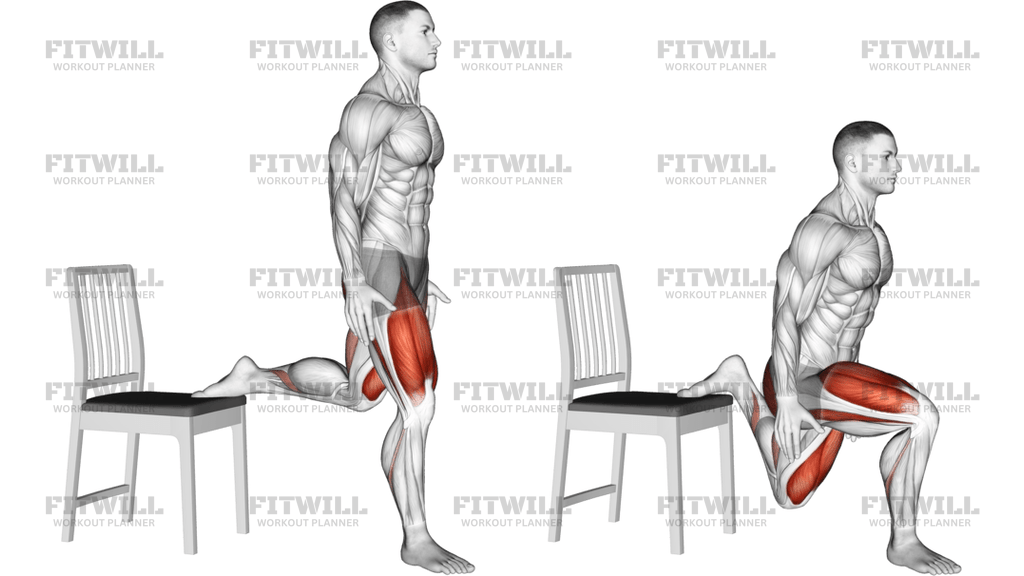
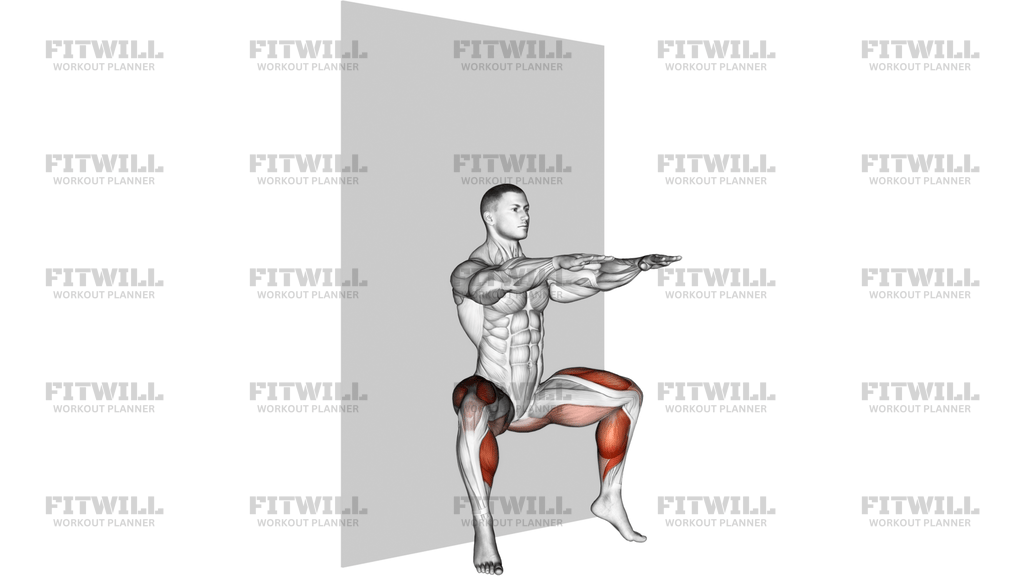
The Bodyweight Narrow Squat Lunge is a single-leg lower-body exercise performed from a tight, narrow split stance, with the front and rear feet kept close to the body's midline rather than spread into a long stride. Hands are clasped together at chest height for balance, and you lower straight down until both knees are deeply bent, then drive back up to standing. Because the stance is narrow, the front knee travels well forward over the foot, which places a strong, focused demand on the quadriceps of the front leg.
This movement is especially useful when you want to isolate the quads without loading a barbell or holding weights. The narrow path limits how much the hips can sit back, so the front thigh does most of the work, while the glutes and hamstrings assist on the way up. The rear leg stays active for support but carries less load than in a long-stride lunge, making the exercise feel closer to a single-leg squat than a traditional split squat.
Setup matters more here than in a standard lunge. With the feet so close together, there is less base of support, so balance becomes part of the challenge. Keeping your chest tall and your hands clasped in front of your chest gives you a counterweight to adjust with as you descend. If your torso tips forward or your feet drift apart, the narrow-stance character of the exercise is lost and the quads stop getting the focused work.
To execute it well, think of dropping straight down rather than stepping forward or back. Lower until your front knee is deeply bent and your rear knee approaches or lightly touches the floor, keeping the movement smooth and controlled. Press through the whole front foot as you stand back up, squeezing the front thigh at the top without locking the knee hard. Complete all repetitions on one side before switching legs, or alternate if that helps you keep balance.
You will see this exercise used in quad-focused bodyweight sessions, home workouts with no equipment, warm-up ramps before squatting, and burnout finishers at the end of a leg day. It is also a practical choice for people rehabbing back into single-leg training, since the narrow stance with the rear leg nearby offers more support than a true pistol squat while still training each leg on its own.
From a safety standpoint, the main watchpoints are the front knee and your lower back. Let the front knee travel in line with the foot rather than caving inward, and keep your torso upright enough that you feel the work in the thigh rather than straining the lower back. If balance is shaky at first, practice next to a wall or sturdy chair with one fingertip for support until the pattern feels stable.
[ Workout Log & Planner ]
Put your next workout in Fitwill
Keep your plan and training log ready when you are.


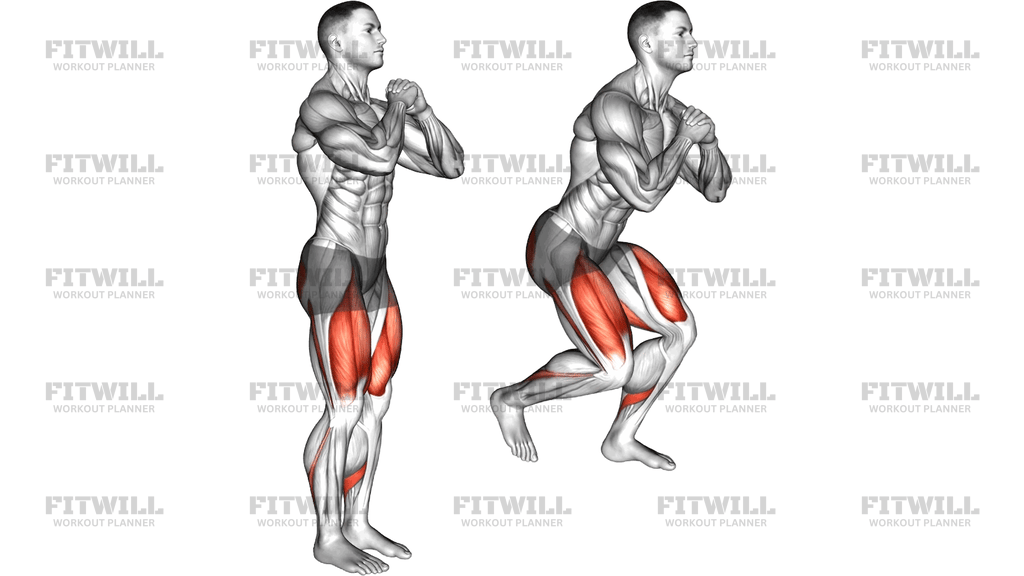
Instructions
- Stand tall with your feet close together, then slide one foot straight back a short distance so both feet stay narrow and near your midline, with the rear heel lifted.
- Clasp your hands together in front of your chest and hold your elbows down, keeping your chest up and eyes forward.
- Brace your core lightly and squeeze your glutes to set a stable, upright torso before you descend.
- Bend both knees and lower your hips straight down, letting the front knee travel forward over the foot while the rear knee bends behind you.
- Descend until your front knee is deeply bent and your rear knee is close to the floor, keeping your torso as vertical as you can.
- Pause briefly at the bottom without bouncing, then press through the entire front foot to drive your body back up.
- Stand fully upright, squeezing the front thigh at the top without slamming the knee into a hard lockout.
- Exhale as you lower down and inhale as you press back up, or breathe in on the way down and out on the effort upward, whichever feels steadier.
- Complete your target repetitions on one leg, then reset your stance and perform the same number on the other side.
Tips & Tricks
- If you lose balance, widen your focus to a fixed point on the floor a few feet ahead rather than looking down at your feet.
- A common mistake is stepping the rear foot too far back, which turns the exercise into a regular lunge and shifts work away from the front quad. Keep the split short and narrow.
- If your front knee caves inward as you descend, consciously drive it toward the outside of the foot, or slow the tempo down until you can control the path.
- Do not let your torso fold over your front thigh. If your chest drops, reduce the depth of the rep until you can stay upright.
- The rear leg should assist, not dominate. If you feel most of the work in the back leg, shift slightly more weight onto the front foot before descending.
- Touching the rear knee lightly to the floor is fine, but crashing into it is not. Lower with control so the landing is quiet.
- If the forward knee travel feels pinchy at the front of the ankle or knee, shorten the range slightly and build depth gradually over sessions.
- Hold a doorframe or wall with one fingertip if balance limits you. Reduce the support as soon as you can, since it removes part of the training effect.
- Keep the rear heel lifted naturally rather than forcing it down. Forcing it flat in this narrow stance will twist your rear hip and knee.
Frequently Asked Questions
What muscles does the Bodyweight Narrow Squat Lunge work?
The quadriceps of the front leg do most of the work because the narrow stance keeps your hips from sitting back. The glutes, hamstrings, inner thighs, and calves assist, and your core stays busy keeping your torso upright.
How is the Bodyweight Narrow Squat Lunge different from a regular lunge?
A regular lunge uses a long stride and more hip involvement, while the narrow version keeps both feet close to your midline with a short split. This drives the front knee further forward and shifts the emphasis toward the front thigh.
Is the Bodyweight Narrow Squat Lunge suitable for beginners?
Yes, provided you start with a comfortable depth and use a wall or chair for balance if needed. Beginners often find the balance harder than the strength demand, so shorter sets with slow tempo work well at first.
Should my front knee go past my toes in the Bodyweight Narrow Squat Lunge?
In this narrow stance, some forward knee travel is expected and is fine as long as the movement is pain-free and the knee tracks in line with the foot. If it feels uncomfortable, reduce the depth instead of forcing the range.
Why do I keep losing my balance during the narrow stance?
The narrow split gives you a small base of support, so small wobbles feel big. Keep your hands clasped at your chest, fix your eyes on a steady point ahead, and slow the descent, which usually settles the balance within a few sessions.
Can I do the Bodyweight Narrow Squat Lunge every day?
Because it is unloaded, many people tolerate it frequently, but your legs still need recovery to adapt. Two to four sessions per week with at least one rest day between harder leg workouts is a sensible starting point.
What can I use instead if the narrow stance bothers my knees?
Widen into a standard split squat or reverse lunge, which keeps the torso more upright with less forward knee travel. Box squats to a chair are another option that limits depth precisely.
How deep should I go in the Bodyweight Narrow Squat Lunge?
Aim to lower until your rear knee is close to the floor and your front thigh is close to parallel, as long as you can keep your chest tall and your knee tracking straight. Depth you cannot control is depth you should not use yet.
How do I make the Bodyweight Narrow Squat Lunge harder without equipment?
Slow the lowering phase to three or four seconds, add a pause at the bottom, or elevate the rear foot slightly to shift more load onto the front leg. Adding reps before adding difficulty keeps the pattern clean.
Should I keep the rear heel down or lifted?
Keep it lifted naturally. Because the stance is narrow and the split is short, the rear heel rising is part of the position, and forcing it flat can twist the rear hip and knee out of alignment.