Smith Donkey Calf Raise
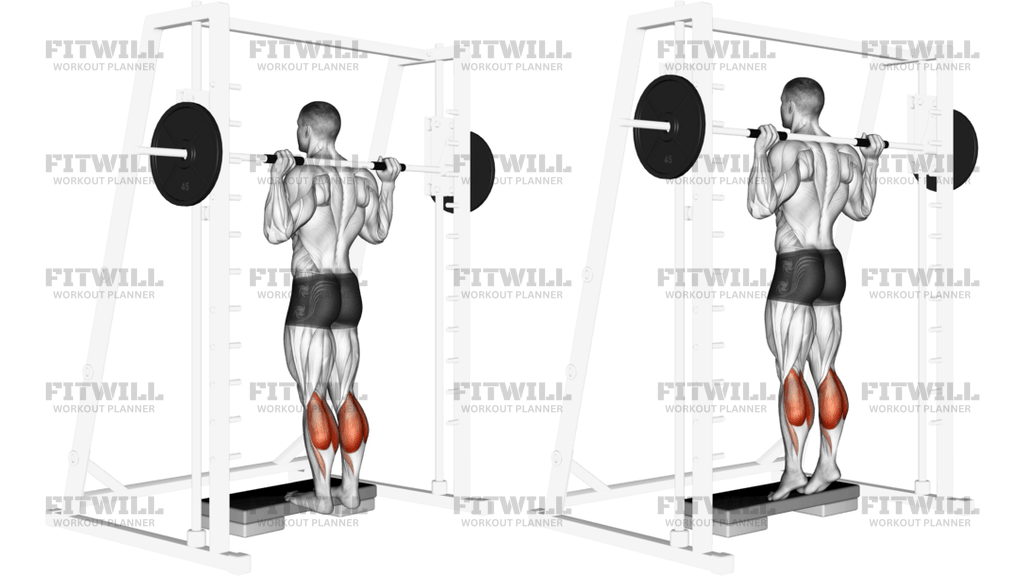
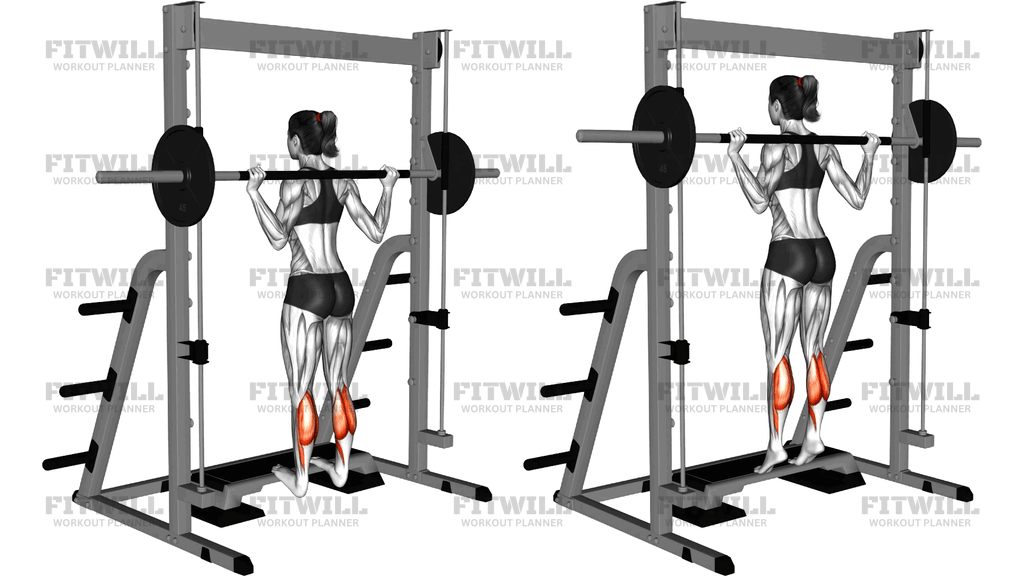
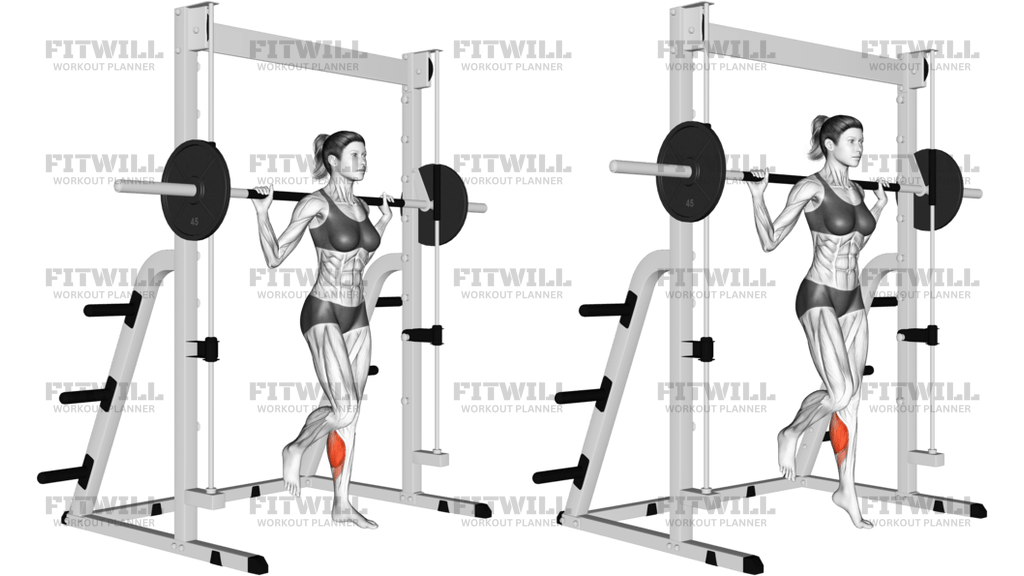
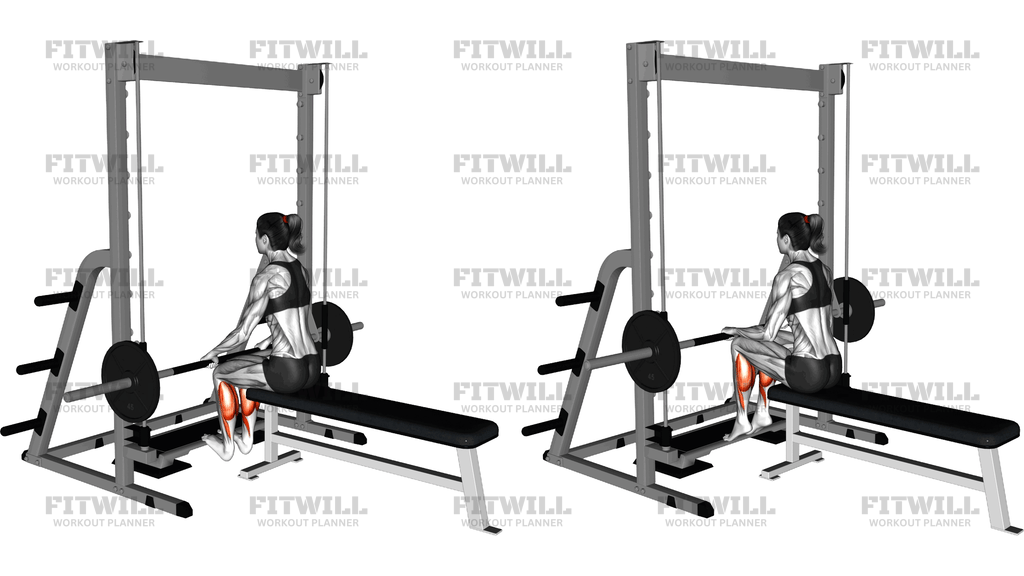
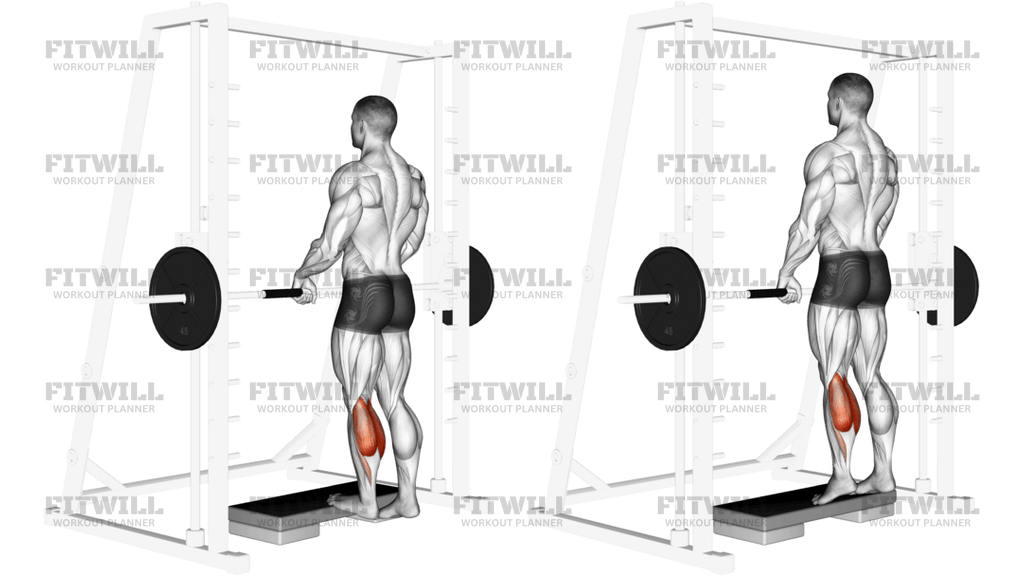
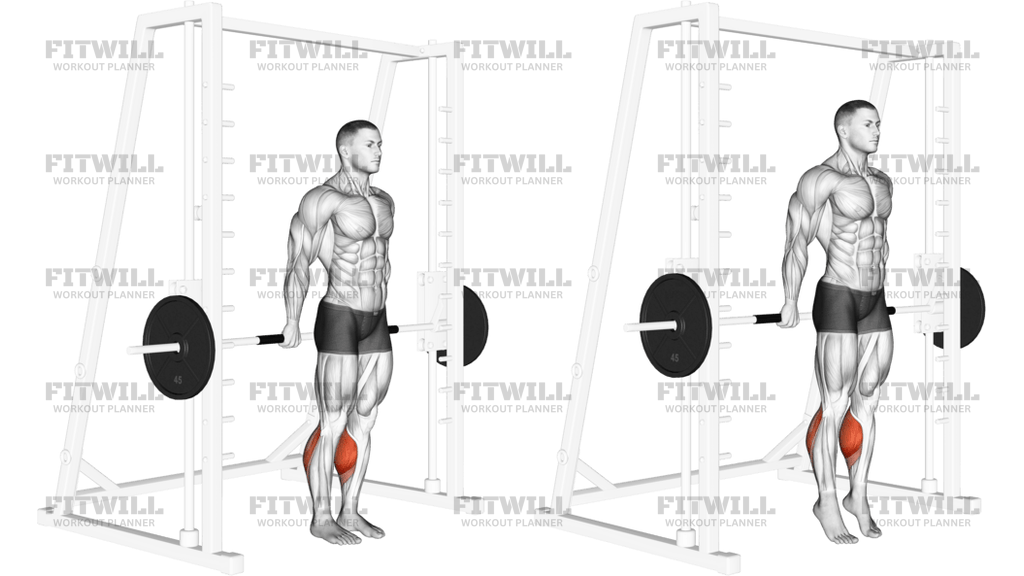
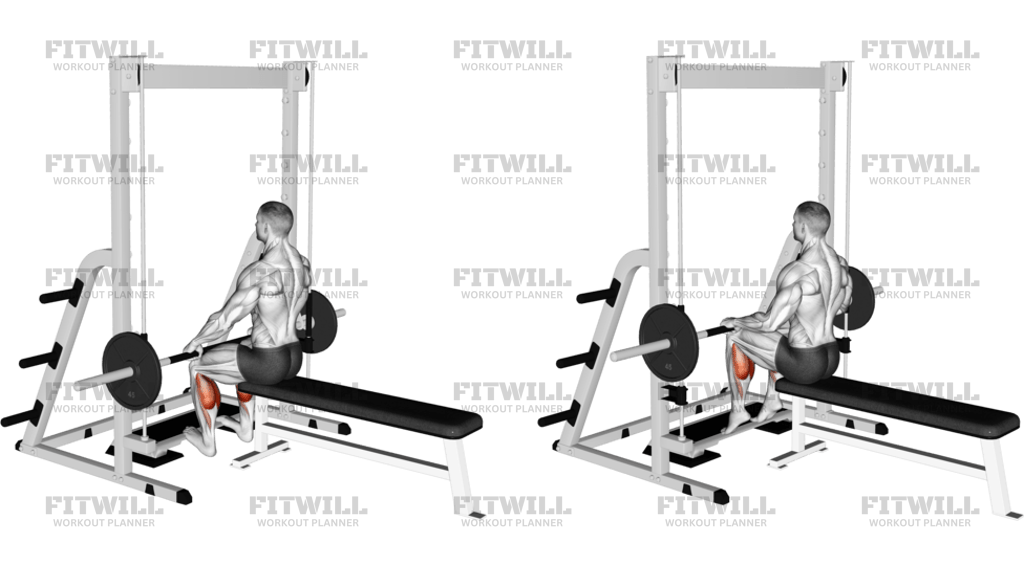
The Smith Donkey Calf Raise is a bent-over calf exercise performed inside a Smith machine, with the bar resting across your lower back and hips while you hinge forward and brace your hands on a flat bench. Your toes sit on a step platform or calf block with your heels free to drop below the level of your toes, which gives you a long stretch at the bottom and a full contraction at the top. The bent-over torso position is what separates the donkey variation from standing calf raises: it lengthens the gastrocnemius at the hip and places a strong, direct stretch through the calf that many lifters never feel with upright variations.
This movement suits intermediate to advanced lifters who want to load the calves heavily without the balance demands of a barbell donkey raise. Because the Smith machine bar travels on a fixed vertical path and the safety catches are right there, you can push close to failure without a spotter. It is also a smart option for people whose lower back gets irritated by standing calf machines, since the bench takes load off the spine's standing posture and lets you fold forward instead.
The main muscles working are the gastrocnemius and soleus, with the gastrocnemius taking on extra emphasis because the straight-knee, hip-hinged position puts it on stretch. Smaller muscles around the ankle and foot handle stabilization as you rise onto the balls of your feet. Setup matters more here than in most calf work: the bar needs to sit squarely on your hips or upper glutes, the bench needs to be close enough that your arms stay nearly straight, and the platform needs to be stable with your midfoot on it and heels hanging off.
To perform it well, keep your knees straight but not locked, lower your heels slowly until you feel a deep stretch, then drive up through your big toe and the ball of your foot as high as your ankle will allow. Pause briefly at the top and squeeze before descending under control. Bouncing out of the stretch is the most common fault and the fastest way to waste the exercise.
You will see this movement in hypertrophy-focused leg training, typically for higher reps and multiple sets, since calves respond well to volume, long ranges, and controlled tempos. Treat it like any heavy hinge-adjacent setup: unrack deliberately, keep the bar path steady, and rack the bar fully before stepping off the platform.
[ Workout Log & Planner ]
Put your next workout in Fitwill
Keep your plan and training log ready when you are.


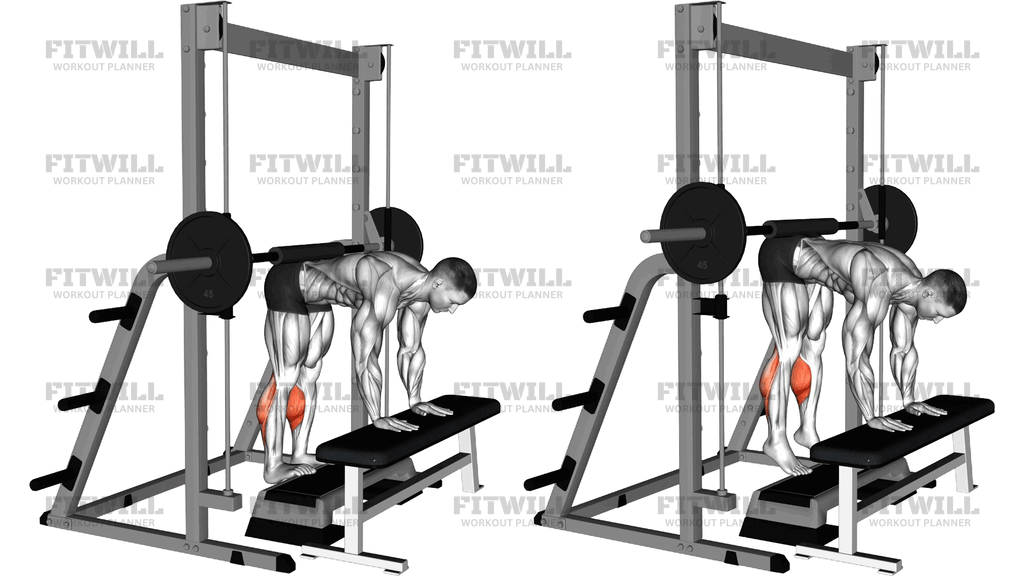
Instructions
- Set a flat bench in front of the Smith machine bar and place a step platform or calf block directly under the bar so your toes will land on it with room for your heels to hang off the edge.
- Set the Smith bar to roughly hip height, load your plates evenly on both sides, and duck under it so it rests across your upper glutes and lower back, not your spine.
- Grip the bench with both hands and walk your feet back until your arms are nearly straight and your body is hinged forward at the hips, legs angled back behind you.
- Position the balls of both feet on the edge of the platform, about hip-width apart, with your heels hanging off and your knees straight but not locked.
- Brace your trunk, straighten your arms, and unrack the bar by lifting it slightly, letting the stable position of your hands on the bench anchor your torso.
- Lower your heels down slowly until you feel a deep stretch through both calves, keeping your knees extended the whole time.
- Press up through the balls of your feet and toes as high as your ankles allow, pausing for a beat at the top to squeeze the calves.
- Breathe out as you rise and in as you lower, keeping each rep slow enough that momentum never takes over.
- Complete all reps, then re-rack the bar securely onto the safety catches before lifting your feet off the platform.
Tips & Tricks
- If the bar rolls toward your neck or shoulders as you hinge, it is sitting too high; re-rack and set it lower across your upper glutes and hips.
- Do not let your heels drop so fast that they bounce off the bottom; the stretch should be loaded and slow, which is where the gastrocnemius does most of its work in this variation.
- If your hands slide forward on the bench mid-set, the bench is too far away; move it closer so your arms stay stacked under your shoulders.
- Keep your knees fully extended throughout. Any bend shifts work toward the soleus and away from the gastrocnemius, which defeats the purpose of the donkey position.
- Try turning your toes slightly outward on some sets; a small foot-angle change lets you bias different portions of the calf without changing the load.
- Stop each rep at a full top contraction rather than grinding out partial hops; range matters more than extra reps on this movement.
- If the platform rocks, place it on a rubber mat or swap it for a dedicated calf block; an unstable surface under your toes ruins the set.
- Use collars on both sides of the Smith bar so plates cannot slide as the machine tilts under load.
- Start lighter than you think you need for the first session; the hinged position adds leverage to the load and the stretch feels heavier than a standing raise with the same weight.
Frequently Asked Questions
Which muscles does the Smith Donkey Calf Raise work?
The gastrocnemius is the primary muscle, with the soleus assisting. The hinged, straight-knee position puts the gastrocnemius on a long stretch, which is why many lifters feel this variation more than a standing raise.
Why is the torso bent over in the Donkey Calf Raise instead of standing upright?
Hinging forward at the hips lengthens the gastrocnemius from its upper attachment, increasing the stretch and the demand on the muscle through the same ankle range. The bench supports your hands so your back stays in a controlled hinge.
Is the Smith Donkey Calf Raise suitable for beginners?
It can be, but the setup takes some practice. A beginner should start with a light bar and practice unracking, hinging to the bench, and finding the edge of the platform before adding meaningful weight.
Where exactly should the Smith machine bar sit during this exercise?
Across your upper glutes and the top of your hips, similar to a barbell hip thrust placement. Sitting it on your lower spine is uncomfortable and makes the hinge harder to control.
How much of my heel should hang off the step platform?
Only the heel and a little of the arch, with the ball of the foot and toes firmly on the platform. Hanging too much off the edge reduces your stable base and makes the top of the rep feel sketchy.
What is the most common mistake with this movement?
Bouncing out of the bottom stretch. The deep heel drop is the point of the exercise, but it should be reached slowly and reversed under muscle control, not used as a springboard.
What can I use if my gym has no Smith machine available?
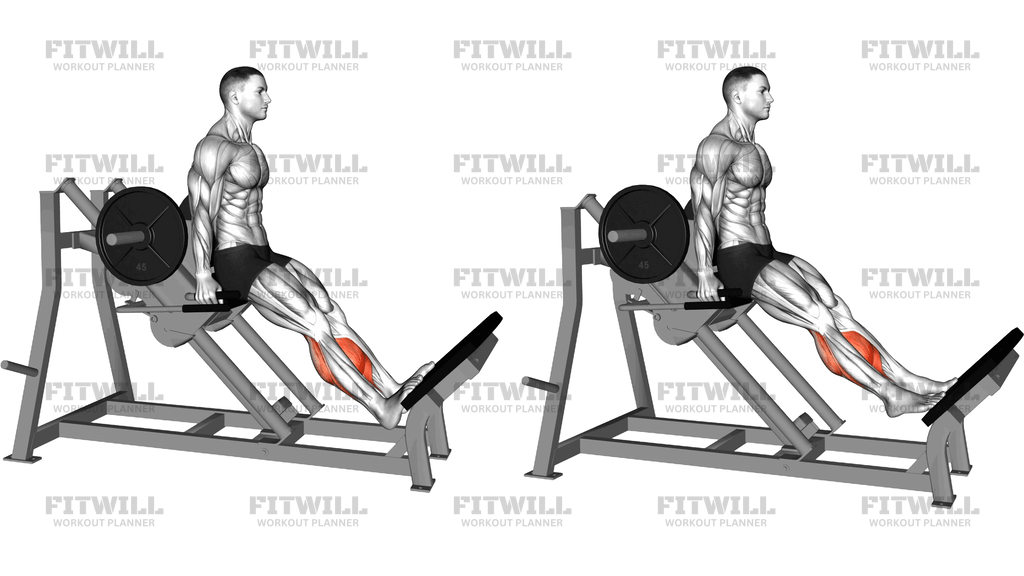
A donkey calf raise machine is the closest substitute. Otherwise, a partner can sit across your hips while you do the same hinged raise on a step, or you can use a hack squat or leg press with toes on the platform for a similar straight-knee calf stimulus.
How should I breathe during the Smith Donkey Calf Raise?
Exhale as you press up onto your toes and inhale as you lower your heels. Because you are hinged under a loaded bar, keep your trunk braced and avoid holding your breath through entire sets.
Is it safe to do this exercise without a spotter?
The fixed bar path and built-in safety catches make the Smith machine one of the safer ways to load this position. Still, rack the bar fully between sets and never step off the platform while the bar is unracked.
How many reps should I do for calf growth?
Calves generally respond well to higher-rep work, so sets of 10 to 20 with a full stretch and a top squeeze are a common choice. Rotate rep ranges over time rather than repeating the same number every session.