Smith Seated Calf Raise
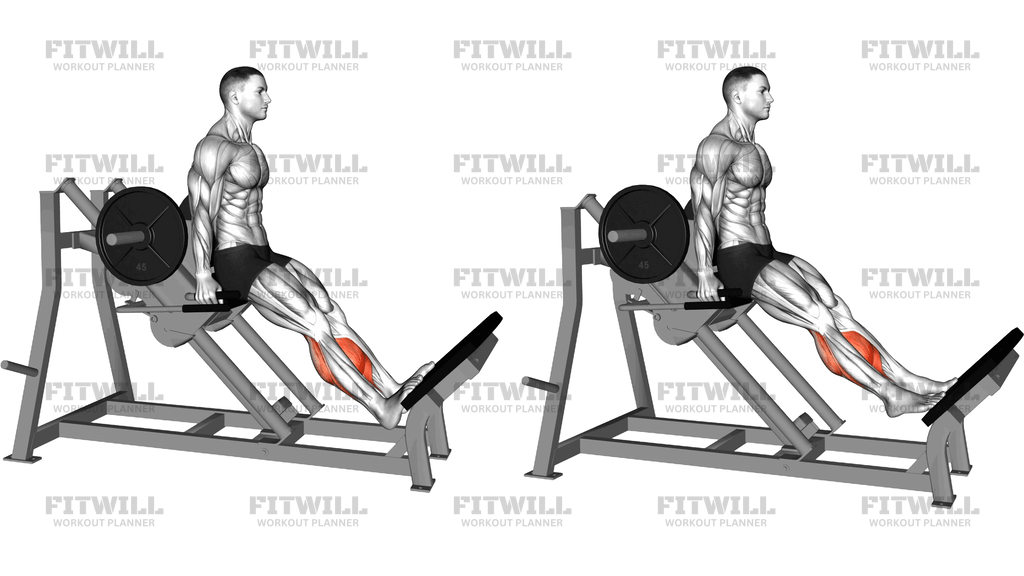
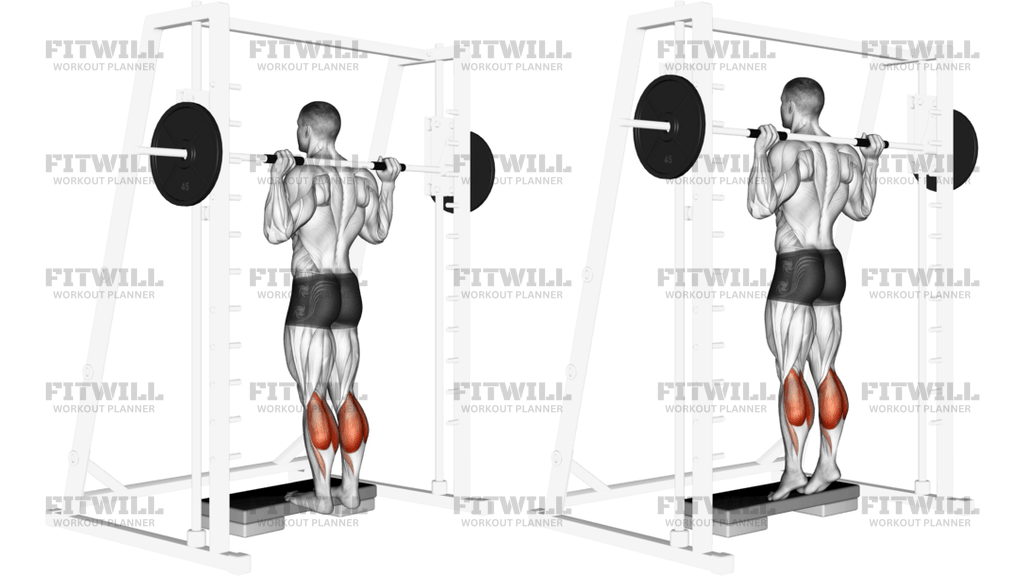
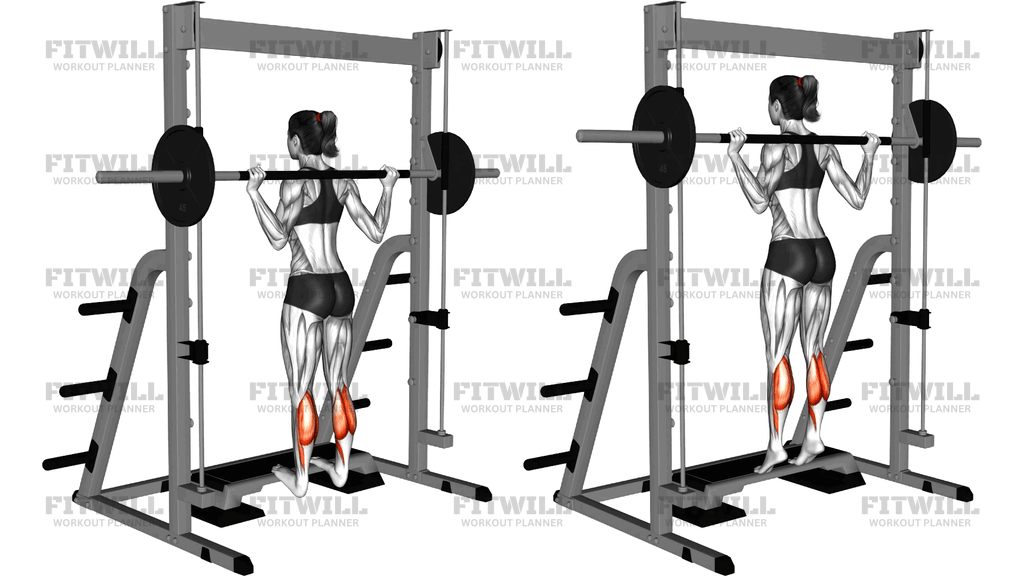
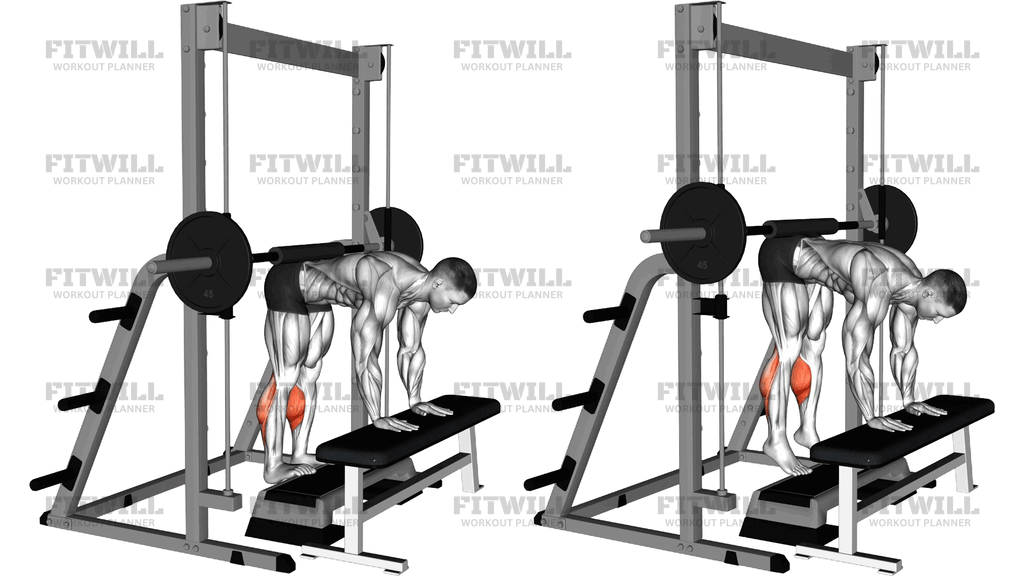
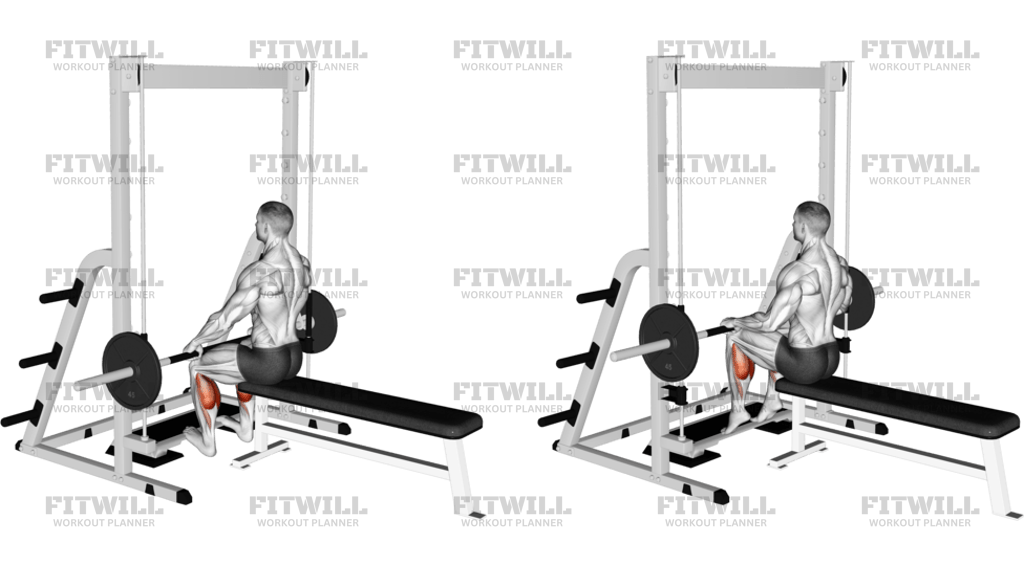
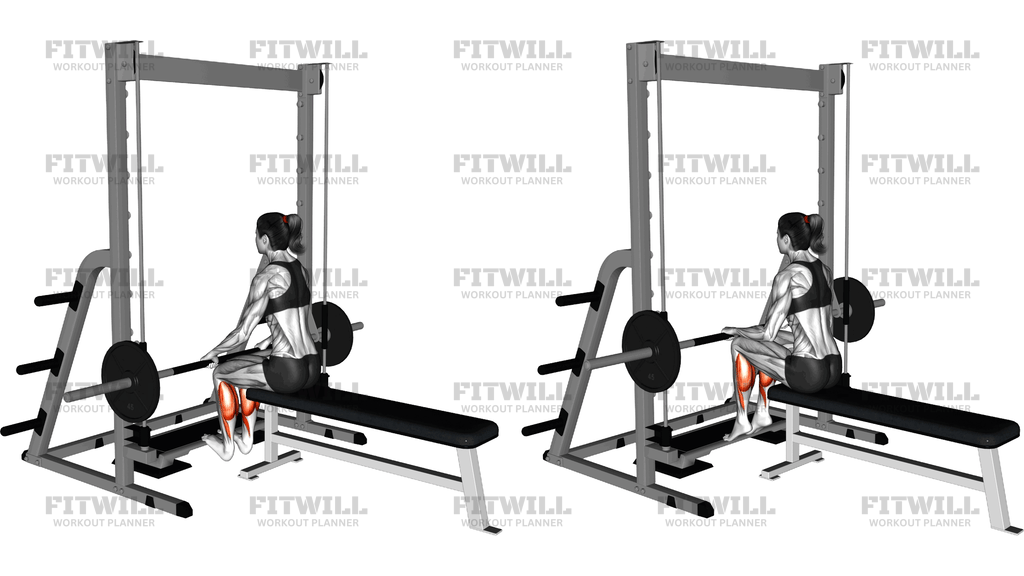
The Smith Seated Calf Raise is a focused lower-leg exercise performed by sitting on a flat bench inside a Smith machine with the bar resting on your lower thighs, just above the knees. The balls of your feet are placed on a raised platform or the machine's footplate so your heels can hang freely below the level of your toes. From there, you press through the balls of the feet to lift the bar, then lower the heels into a deep stretch and repeat. Because the Smith machine bar travels on a fixed vertical path and can be hooked at any height, it is one of the safest and most convenient ways to load this movement heavily.
Sitting down changes what this exercise trains. With the knees bent to roughly ninety degrees, the gastrocnemius — the two-headed calf muscle that crosses both the knee and ankle — is placed on slack and contributes less. The workload shifts to the soleus, the flat muscle underneath it that handles most of your steady-state walking, standing, and running endurance. For people whose calves have stalled on standing variations, or who want complete lower-leg development, this bent-knee version is the missing piece rather than a redundant one.
The setup is where most of the value is earned. The bar must sit snugly on the thighs — not floating above them and not pressing into the kneecaps — and the feet need a stable, elevated surface that lets the heels drop well below the toes at the bottom. Many lifters also place a folded mat or bar pad across the thighs to spread the load and keep the bar from digging in as the weight gets heavier. Feet positioned straight ahead keep the emphasis even across the calf; turning the toes out or in shifts stress toward the outer and inner portions of the muscle, though the difference is modest.
Execution comes down to full range and control. Each rep should start from a complete heel stretch below the platform, drive up onto the balls of the feet as high as the ankles allow, and pause briefly at the top before lowering slowly. Calves respond poorly to short, bouncy reps, and the fixed bar path of the Smith machine makes bouncing easy to fall into — so deliberate tempo matters more here than it does in most free-weight work.
This exercise suits a wide range of lifters. Beginners appreciate the guided path and easy safety catches, while experienced lifters use it to push high volumes and heavy loads without balance demands getting in the way. Because the knees are bent and supported, it is also gentler on the lower body joints than many standing calf variations. The main safety points are simple: set the bar height correctly before loading, keep the bar secured on the thighs for every rep, never let the heels slam at the bottom, and rotate or unlock the Smith bar only when the set is finished and the heels are raised.
[ Workout Log & Planner ]
Put your next workout in Fitwill
Keep your plan and training log ready when you are.


Instructions
- Position a flat bench lengthwise inside the Smith machine so that when you sit on it, your lower legs hang just in front of the machine's footplate or a low calf block.
- Set the Smith bar height so it rests across your lower thighs, a couple of inches above the kneecaps, while you are seated; add weight plates before sitting down if needed.
- Sit tall on the bench and place the balls of both feet on the edge of the platform, about hip-width apart, with heels hanging off and free to drop.
- Roll the bar onto your thighs so it sits firmly over the lower quadriceps just above the knees, and steady it with both hands; slide a bar pad or folded mat underneath if the pressure is uncomfortable.
- Keeping your torso upright and your knees bent at roughly ninety degrees, engage your core lightly so your torso does not round as the load presses down.
- Press through the balls of your feet and drive your heels up as high as your ankles will rise, keeping your knees still so the movement happens only at the ankle joints.
- Pause for a beat at the top with the calves fully contracted and the bar steady over the thighs.
- Lower your heels in a slow, controlled manner until they drop below the level of the platform and you feel a complete stretch through the calves.
- Breathe out as you press up and inhale as you lower your heels, keeping a steady rhythm throughout the set.
- After your final rep, raise your heels, hook the Smith bar back onto the safety catches, and only then slide your legs out from under it.
Tips & Tricks
- Check the bar height before you load weight — if you have to hunch forward or shrug your shoulders to settle it onto your thighs, the bench or bar is set too high.
- A bar pad or a folded towel across the thighs makes a real difference once you're past bodyweight-level loads; without one, the bare bar tends to dig into the quadriceps and distract you from the calves.
- If your heels drift forward off the platform mid-set, you're letting the load push you — shift your feet back so more of the forefoot sits on the surface before continuing.
- Count a two-second lower on every rep. The fixed Smith bar path makes it tempting to bounce the heels off the bottom, and bouncing removes most of the tension from the soleus.
- Keep your hands on the bar and your knees tracking over your toes; pushing on your knees or rocking your torso turns a calf isolation into a full-body shove.
- Point your toes straight ahead for most of your work, and save toes-turned-out or toes-turned-in foot angles for occasional extra variety rather than every session.
- Because the knees stay bent, this exercise leans on the soleus, which responds well to higher reps — sets of twelve to twenty usually produce better results than low-rep grinding.
- If your calves cramp on the first few sessions, ease off the range slightly and build up; the fully stretched bottom position is intense for untrained soleus tissue.
- Make sure the Smith bar's safety catches are set low enough to catch the weight if your heels give out at the bottom, so you can bail safely mid-rep.
Frequently Asked Questions
Which muscles does the Smith Seated Calf Raise work?
The bent-knee position places the main emphasis on the soleus, with the gastrocnemius assisting. Together these make up the calves, which is why the exercise is used alongside standing calf raises for complete lower-leg development.
Why is the Smith Seated Calf Raise done with bent knees instead of standing?
The gastrocnemius crosses the knee joint, so bending the knees to about ninety degrees puts it on slack and shifts the load to the soleus underneath. This targets a muscle that standing calf variations train much less directly.
Is the Smith Seated Calf Raise suitable for beginners?
Yes. The bar moves on a fixed vertical path, the seated position removes any balance demand, and the Smith bar can be hooked onto its catches at any point, which makes it one of the safer loaded calf exercises to learn.
Where exactly should the Smith bar sit during the seated calf raise?
The bar should rest on the lower thighs, a couple of inches above the kneecaps, staying in contact with the legs for every rep. Placing it on or pressing into the knees is uncomfortable and puts unnecessary stress on the knee joint.
How high should my heels go at the top of each rep?
Rise as high as your ankles will comfortably lift, coming fully onto the balls of the feet, and hold that position for a brief pause. Cutting the top range short is one of the most common reasons calves stop progressing.
What is the most common mistake with this exercise?
Bouncing the heels off the bottom position and using the thighs or torso to jerk the bar up. The fixed bar path of the Smith machine makes this easy to do, so a slow two-second lower and a still torso are worth deliberately practicing.
Should I use a bar pad for the Smith Seated Calf Raise?
Once the load gets beyond light weight, yes. A bar pad or folded towel spread across both thighs distributes the pressure and lets you focus on the calves instead of the bar digging into your legs.
What can I use instead if my gym has no Smith machine?
A seated calf raise machine is the closest substitute, and a dumbbell or plate held on the thighs while seated on a bench with a block under the feet works well too. The key is keeping the knees bent and the heels free to hang below the toes.
How do I safely finish a set of the Smith Seated Calf Raise?
On the last rep, keep your heels raised, rotate the bar to hook it back on the safety catches, and only then slide your legs out from under it. Never unlock or rack the bar while your heels are dropping.
Can my feet be turned outward or inward on the platform?
Yes, turning the toes slightly out or in shifts a little more emphasis toward the outer or inner part of the calf. It is a fine occasional variation, but toes pointing straight ahead should make up most of your volume.