Kettlebell Decline Fly
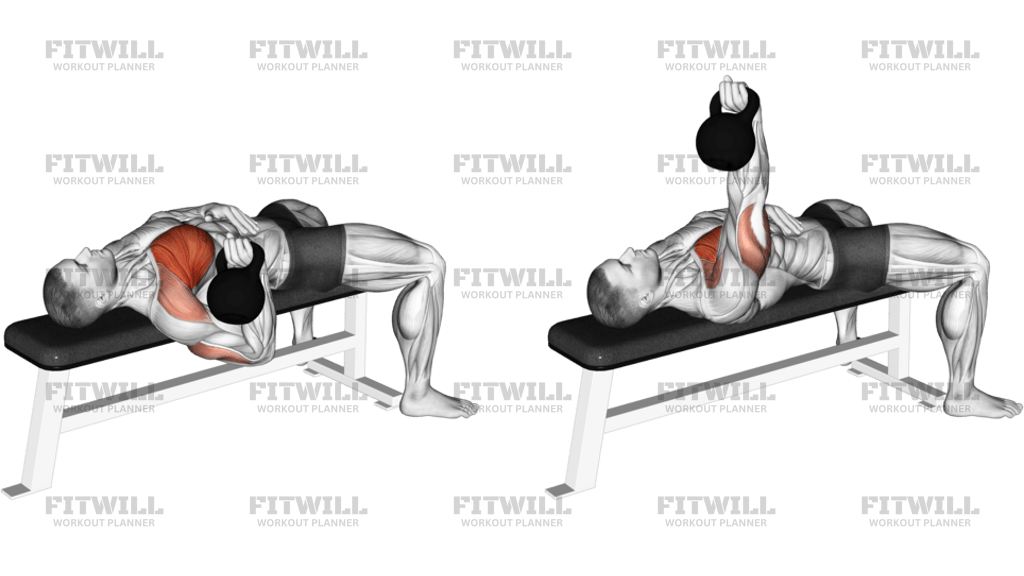
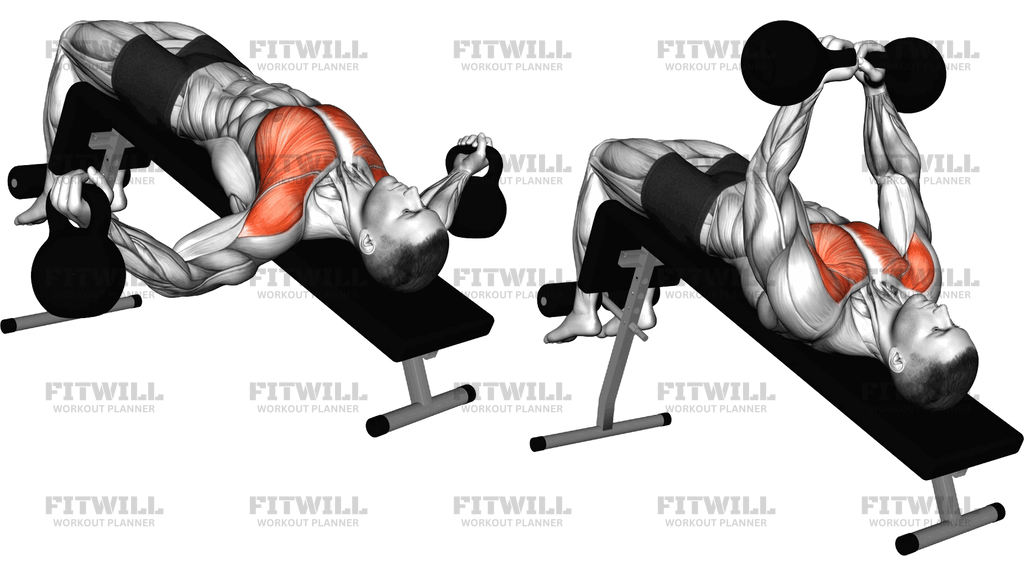
The Kettlebell Decline Fly is a chest isolation movement performed lying face-up on a decline bench, with your head lower than your hips and your legs secured under the ankle pads. You hold a kettlebell in each hand and sweep your arms from a wide, slightly bent position up and together over your chest, then lower them back out under control. Because of the declined angle, the emphasis shifts toward the lower portion of the chest, an area that flat presses and flies hit less directly.
This exercise suits lifters who already have some pressing experience and want to add focused volume for the sternal head of the pectoralis major. It also works well as a finisher after heavier decline presses or dips, when the chest is pre-fatigued and lighter, precisely guided movements deliver the remaining stimulus. The kettlebell setup adds a small challenge that dumbbells do not: the handle sits above the bell, so your grip and wrist position need a bit more attention to keep the load balanced.
The decline position matters for two reasons. First, it changes the line of pull so the arms travel upward toward the hips rather than straight out from the shoulders, which biases the lower chest fibers. Second, because your legs are anchored and your torso is tilted downward, your body is fixed in place, so any twisting or heaving shows up immediately. That makes honest weights and controlled tempo essential.
To execute it well, keep a soft, consistent bend in your elbows throughout the entire arc — think of your arms as two pieces of pipe hinged at the shoulder, not at the elbow. Lower the kettlebells out to the sides until you feel a comfortable stretch across the chest, then squeeze them back up along that same wide path until they nearly touch above your lower chest. The bell should hang behind the handle, so keep your knuckles stacked over your wrist rather than letting the hand kink backward.
The most common mistakes are going too heavy, dropping the elbows into a pressing motion, and letting the kettlebells drift toward your head or hips as you fatigue. A moderate weight, a deliberate two- to three-second lowering phase, and eyes on the ceiling directly above your chest will keep the movement clean. Set the kettlebells down by hinging them toward your hips first, or better, have a partner hand them to you once you are set on the bench — getting into and out of the declined position with weights in hand is the riskiest part of the whole exercise.
[ Workout Log & Planner ]
Put your next workout in Fitwill
Keep your plan and training log ready when you are.


Instructions
- Set a decline bench to roughly 20-40 degrees and hook your feet or ankles securely under the pads at the raised end.
- Ask a partner to hand you a kettlebell in each hand, or set them within arm's reach and pick them up once your back is on the pad.
- Lie back so your head is lower than your hips, press your shoulders into the bench, and hold the kettlebells directly above your lower chest with palms facing each other and a soft bend in both elbows.
- Brace your core lightly and keep your upper back and glutes in contact with the pad for the whole set.
- Inhale as you lower the kettlebells out to the sides in a wide arc, keeping the elbow angle fixed, until you feel a stretch across your lower chest.
- Exhale and sweep the kettlebells back up along the same arc, leading with your elbows and squeezing your chest as the bells come together above your lower chest.
- Pause briefly at the top with the bells close together, but do not let them clash or clang.
- Lower each repetition over two to three seconds instead of letting gravity pull the weights down.
- After your final rep, bring both kettlebells toward your hips, sit up carefully, and set them on the floor before unhooking your legs.
Tips & Tricks
- Because the handle sits on top of the bell, grip it in the corner of your palm and keep your wrist neutral — a bent-back wrist is the most common failure point with kettlebells in this position.
- If your elbows keep straightening as you lower, the weight is too heavy; the bend in your elbows should be identical at the top and at the stretch.
- Aim the arc so the kettlebells travel above your lower chest and toward your hips, not above your face — drifting toward your head signals that you are losing the decline angle advantage.
- Stop the descent at the point where your shoulders start to lift off the pad; forcing a deeper stretch does not improve the exercise and strains the shoulder capsule.
- Keep your feet actively hooked under the pads. If your hips slide down the bench mid-set, reset and reduce the weight rather than muscling through.
- Think 'hug a barrel' instead of 'press up' — pressing turns the fly into a triceps-dominant move and removes tension from the chest.
- Lightly pinch your shoulder blades together and down before the first rep; letting the shoulders roll forward at the bottom is a frequent cause of front-shoulder discomfort on declined work.
- Use this as a finishing movement after decline presses rather than as your first chest exercise; the kettlebells are awkward to position when fresh strength is needed for heavy loading.
- If no partner is available to hand you the weights, use a lighter pair than you think you need, because getting two kettlebells into position on a decline bench is harder than the set itself.
Frequently Asked Questions
What muscles does the Kettlebell Decline Fly work?
The primary muscle is the lower chest, specifically the sternal head of the pectoralis major. The front shoulders assist, and the biceps and forearms work isometrically to hold and stabilize the kettlebells.
Why use kettlebells instead of dumbbells for a decline fly?
Kettlebells shift the center of mass below and behind the handle, which changes the balance point slightly and demands more wrist control. Some lifters also find the compact handle more comfortable when the arms sweep together at the top.
Is the Kettlebell Decline Fly suitable for beginners?
It can be, but only with light weights and a stable bench, because getting into and out of the declined position with weights in hand takes practice. Beginners often progress faster starting with flat or incline flies and adding the decline angle once their shoulder control is solid.
How far down should I lower the kettlebells during the fly?
Lower them until you feel a clear stretch across the lower chest and your upper arms reach roughly chest level. Going deeper usually makes the shoulders roll forward and the elbows drop, which takes tension off the pecs.
Why do my elbows want to bend more as I lower the weight?
That is a pressing pattern sneaking in, usually because the load is too heavy to control through the wide arc. Reduce the weight and treat your elbow angle as fixed from the first rep to the last.
Can I do the Kettlebell Decline Fly without a partner handing me the weights?
Yes. Place both kettlebells within reach of the bench, sit into position, hook your feet, then take them one at a time. To finish, bring the bells toward your hips, sit up, and set them down before unhooking your legs.
What bench angle works best for this exercise?
A decline of about 20 to 40 degrees hits the lower chest well without making the setup awkward. Steeper angles increase shoulder-end stretch demands and are better reserved for lifters with healthy, mobile shoulders.
What can I substitute if I do not have a decline bench?
You can perform a Kettlebell Floor Fly with your hips elevated on a stable surface to mimic the decline, or use a cable crossover set low-to-high, which draws a similar upward line across the lower chest.
How heavy should I go on the Kettlebell Decline Fly?
Choose a weight you can lower for two to three seconds and bring together without the bells drifting toward your head. Flies reward moderate loads and full control far more than heavy weights moved with momentum.
Is the Kettlebell Decline Fly safe for the shoulders?
Generally yes when the elbow bend stays constant, the descent stops at a comfortable stretch, and the shoulder blades stay pinned to the bench. If you have a history of shoulder irritation, reduce the depth and range first and stop if you feel pinching rather than muscle stretch.