Kettlebell Sit Up
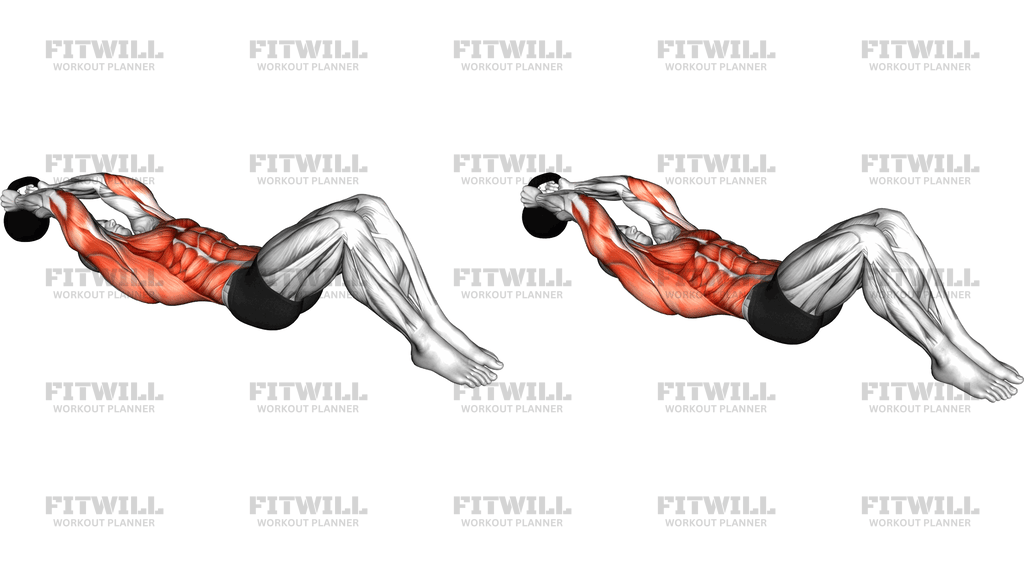
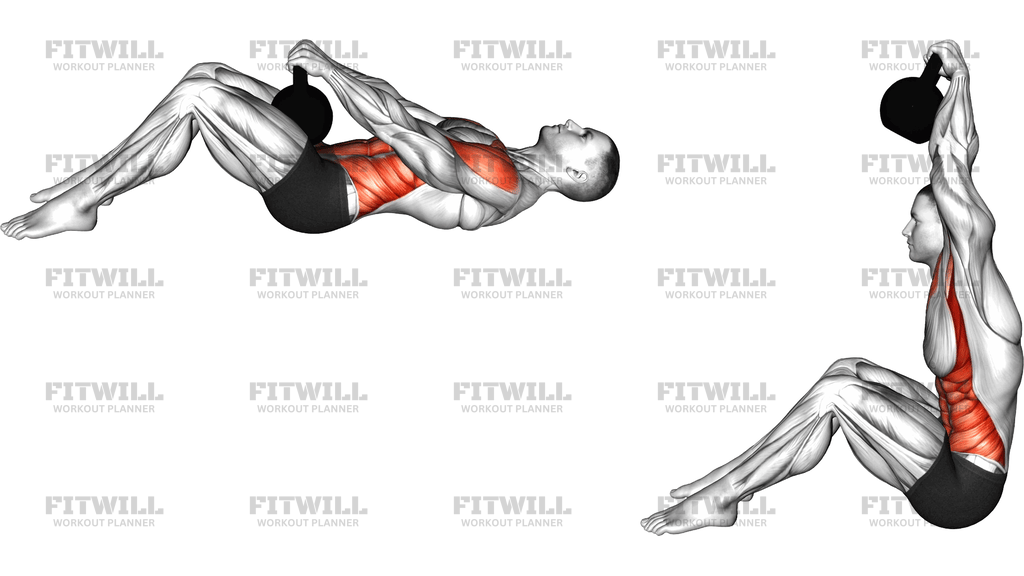
The Kettlebell Sit Up is a weighted sit-up performed while holding a kettlebell at your chest, finishing with the bell pressed straight overhead as you reach the seated position. It takes the familiar crunch-and-raise pattern and adds a load plus an overhead finish, so your abs not only curl your torso up but also stabilize while your shoulders press the weight toward the ceiling. The illustration shows the two key positions: lying on your back with knees bent and the kettlebell held with both hands near the chest, and the top position with hips still bent, torso upright, and arms locked overhead.
This movement is useful for almost anyone who wants more from their core work than bodyweight crunches can offer. The added load lets you progress the sit-up the way you would any other lift, which matters because the abdominal muscles respond to progressive overload just like your arms or legs. It is a common pick in kettlebell circuits, martial arts and grappling conditioning, and general strength programs where overhead control and trunk strength overlap.
The main muscles working are the rectus abdominis, which flexes the spine as you rise, along with the deep core and hip flexors, which anchor and lift the torso. Once the kettlebell travels overhead, the shoulders and triceps finish the press while the abs and obliques work hard to keep your ribs stacked over your pelvis. Holding weight overhead at the top of a sit-up is exactly what separates this from a standard sit-up: the trunk has to resist side-bending and extension while the arms work.
Setup details matter here. Feet flat on the floor with knees bent shortens the hip flexors slightly and gives your torso a stable base, and holding the kettlebell by its horns or at the sides of the handle keeps the bell from rolling toward your face on the way down. A mat under your lower back and tailbone makes the movement far more comfortable and lets you focus on the rep instead of the floor.
To execute it well, think of the press and the sit-up as one continuous drive rather than two separate jobs. Exhale as you curl up and press, keep the bell travelling in a straight vertical line over your shoulders, and sit tall at the top with arms fully extended and biceps beside your ears. Lower under control, bringing the kettlebell back to your chest before your shoulder blades touch, so the weight never free-falls toward your neck or face. If the bell wobbles overhead or your lower back arches hard on the way down, the load is too heavy or the pace is too fast.
[ Workout Log & Planner ]
Put your next workout in Fitwill
Keep your plan and training log ready when you are.


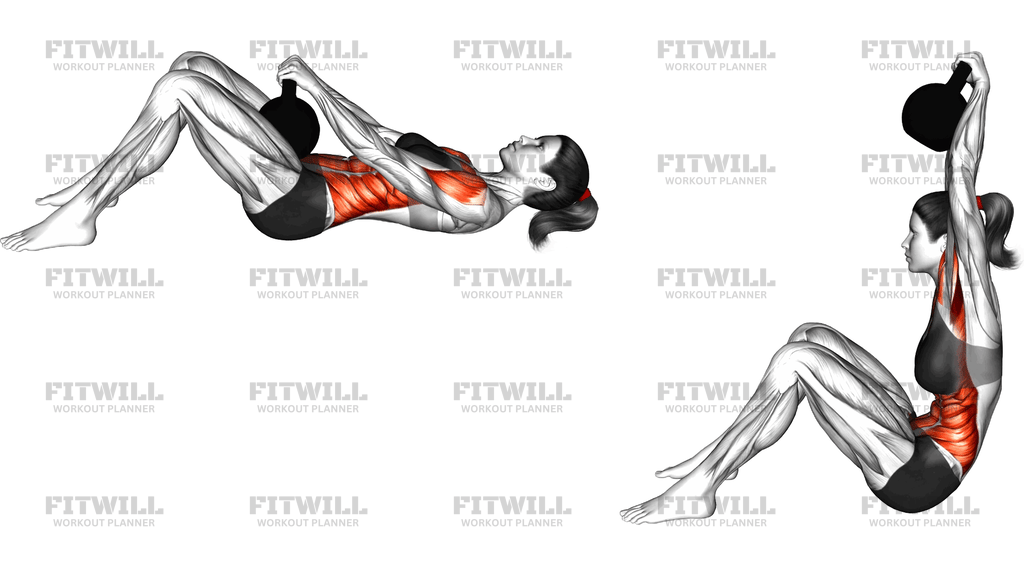
Instructions
- Lie on your back on an exercise mat with your knees bent about 90 degrees and both feet flat on the floor.
- Hold a kettlebell by the horns or the sides of the handle with both hands and rest it against the front of your chest, elbows bent and tucked in.
- Point your knuckles or the bell toward the ceiling and brace your abdominal muscles as if bracing for a light punch to the stomach.
- Exhale and curl your head, shoulders, and upper back off the floor, keeping the kettlebell close to your chest through the first half of the movement.
- As your torso passes roughly 45 degrees, start pressing the kettlebell straight up so the press finishes at the same time your torso reaches upright.
- Lock out at the top: sit tall with a neutral spine, arms fully extended overhead, and the bell stacked directly over your shoulders, not drifting behind your head.
- Reverse the order on the way down: lower the kettlebell back to your chest first, then roll your spine down one segment at a time until your shoulder blades touch the mat.
- Inhale at the bottom, re-brace, and reset your hips and feet if they have shifted before starting the next rep.
- Keep your neck relaxed and your gaze following the kettlebell rather than jutting your chin toward your knees.
Tips & Tricks
- The most common mistake is letting the kettlebell drift behind your head at the top, which turns the finish into a shoulder-straining pullover; cue yourself to stack the bell over your wrists, shoulders, and hips in one vertical line.
- Do not lower the kettlebell and your torso at the same speed on the descent; bring the bell to your chest before your shoulder blades reach the floor so the weight never accelerates toward your face.
- If your lower back arches and your tailbone digs into the mat as you sit up, slow the first third of the rep and think about tucking your pelvis slightly before your shoulders leave the ground.
- Elbows flaring wide while the bell sits on your chest makes the first curl weaker; keep your elbows tucked and the kettlebell resting against your sternum until the press begins.
- Choose a bell you could comfortably overhead press for about eight reps; a weight that taxes your shoulders more than your abs turns this into a pressing exercise with a sit-up attached.
- Pulling with your arms to yank your torso up defeats the purpose; the arms press, the abs lift, and if you feel yourself rowing the bell toward your knees, drop the weight.
- Keep your feet planted and knees pointing up instead of letting the knees fall outward, since a stable base stops the whole torso from rotating as the bell goes overhead.
- Rep quality beats rep count here; eight controlled reps with a locked-out top position build more trunk strength than twenty bouncing reps.
Frequently Asked Questions
Which muscles does the Kettlebell Sit Up work the most?
The rectus abdominis of the front abs does most of the lifting, supported by the deep core and hip flexors. Once the bell goes overhead, the front shoulders and triceps press while the abs and obliques stabilize your torso.
Should I press the kettlebell overhead or keep it at my chest the whole time?
In the version shown, the press is part of the lift: the bell stays at your chest through the first half of the sit-up and travels straight overhead as you finish sitting up. This adds a shoulder press and an anti-extension challenge to the top position.
How do I hold the kettlebell during the Kettlebell Sit Up?
Grip the horns or the sides of the handle with both hands and rest the bell against your chest with elbows tucked. This grip keeps the bell from rotating or rolling toward your face when you lower down.
Is the Kettlebell Sit Up safe for beginners?
Yes, if you start light and control the descent. Beginners who struggle with the overhead press portion can start with a lighter bell or practice bodyweight sit-ups until the curl-and-press sequence feels coordinated.
Why do my shoulders tire before my abs during Kettlebell Sit Ups?
That usually means the kettlebell is too heavy for your pressing strength, or the bell is drifting behind your head instead of staying stacked over your shoulders. Use a lighter bell and cue a straight vertical press over your chest.
What can I use instead of a kettlebell for this exercise?
A single dumbbell held vertically at the chest or a medicine ball works well as a substitute. The key is holding the weight with both hands close to your torso so you can press it overhead at the top.
Should my feet be flat on the floor or anchored during the Kettlebell Sit Up?
Keep your feet flat on the floor with knees bent, as this gives you a stable base and relies on your abs rather than momentum. Anchoring your feet shifts more work to the hip flexors and makes the reps easier to cheat.
How heavy should the kettlebell be for this movement?
Pick a weight you can press overhead smoothly for all your planned reps while keeping the bell stacked over your shoulders. If your form breaks down on the descent or the bell wobbles at lockout, go lighter.
How should I breathe during the Kettlebell Sit Up?
Inhale and brace at the bottom, then exhale as you curl up and press the bell overhead. Inhale again at the top or during the controlled lowering phase before the next rep.
Can I do Kettlebell Sit Ups every day?
Your abs are worked hard by this loaded variation, so treat it like any weighted exercise and allow at least a day of recovery between heavier sessions. Lighter, technique-focused sets can be done more often without issue.