Dumbbell Incline Alternate Neutral Grip Reverse
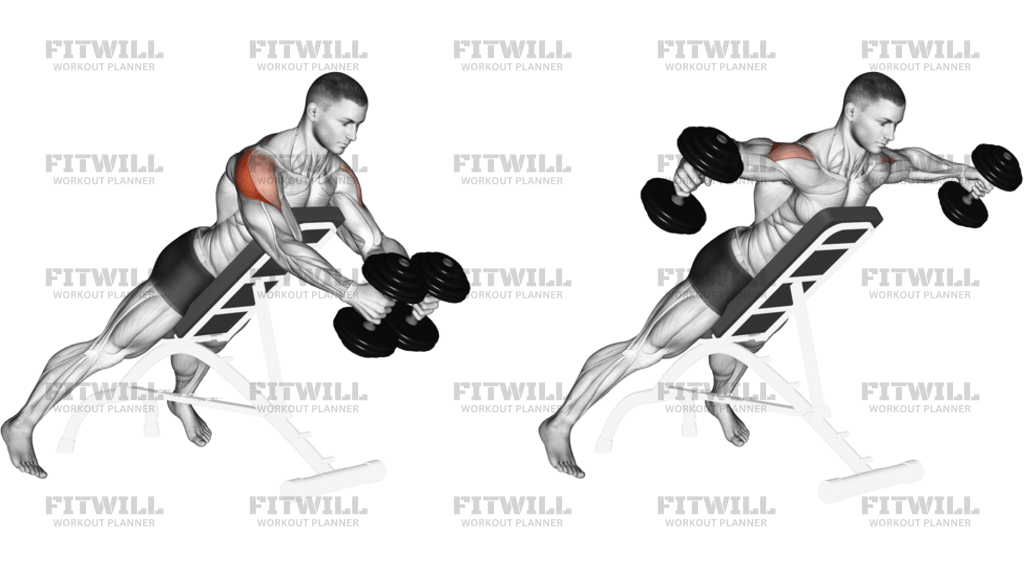
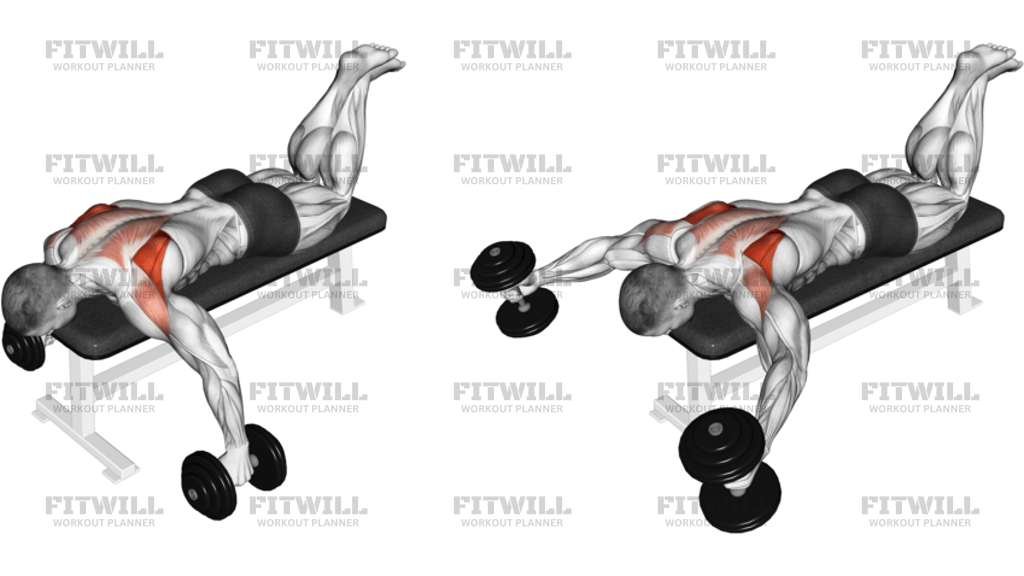
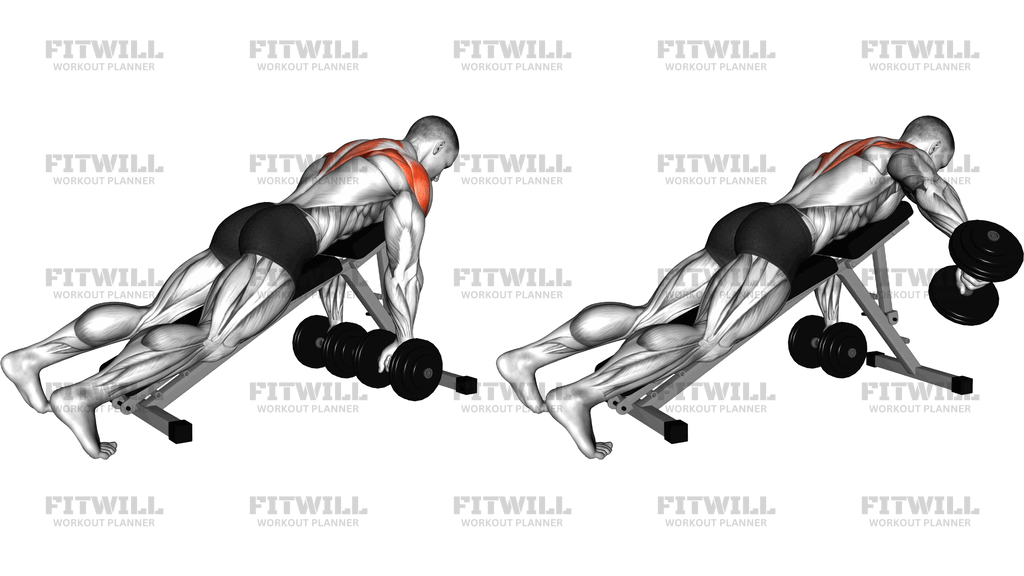
The Dumbbell Incline Alternate Neutral Grip Reverse is a chest-supported rear delt raise performed lying face down on an incline bench. You hold a dumbbell in each hand with a neutral grip, palms facing each other, and raise one arm out to the side at a time while the other stays hanging. Because the bench supports your torso, your lower back and legs are largely taken out of the equation, which forces the rear shoulders and upper back to do the work on their own.
This is one of the cleanest ways to isolate the rear deltoids. Most people's rear delts lag behind their front and side delts simply because pressing and overhead work dominate most programs. If your shoulders look rounded forward, or your pressing has stalled because the back of your shoulder cannot stabilize the joint, this movement is a direct answer. The chest-supported setup also makes it a good fit for anyone who feels rear delt work in their lower back when doing bent-over variations.
The neutral grip matters here. With your palms facing each other rather than down toward the floor, your shoulder sits in a slightly more comfortable rotational position, and the emphasis shifts toward the rear delt itself rather than being shared heavily with the traps and rhomboids. The alternate rhythm also lets you focus on one side at a time, which helps expose and fix side-to-side differences in strength or control.
Execution is simple but easy to get wrong. Lie chest-down on an incline bench set to a moderate angle, let the dumbbells hang straight down from your shoulders, and raise one arm up and out to the side until it is roughly level with your torso, keeping a soft bend in the elbow. Lower it under control, then repeat with the other arm. The arc should feel like a wide sweeping motion, not a row toward your hip.
You will see this exercise used as an accessory movement on shoulder or pull days, as a pre-fatigue tool before rows or pulls, and as a high-rep finisher for the rear delts. Because the bench removes momentum from the equation, moderate weights with strict tempo produce better results than swinging heavy dumbbells.
The main safety point is keeping your neck neutral and your chest in contact with the bench throughout. If you have to lift your head and chest to get the dumbbell up, the weight is too heavy or you are drifting into a row. Keep the movement in the shoulder, and let the bench do its job of pinning your torso in place.
[ Workout Log & Planner ]
Put your next workout in Fitwill
Keep your plan and training log ready when you are.


Instructions
- Set an incline bench to a moderate angle, roughly 30 to 45 degrees, and place a dumbbell of the same weight on each side of the bench within easy reach.
- Lie face down on the bench with your chest and upper abdomen in full contact with the pad, feet on the floor behind you, and the top of the bench at or just below your shoulder line.
- Pick up both dumbbells and let your arms hang straight down from your shoulders with a neutral grip, palms facing each other and a slight bend in each elbow.
- Draw your shoulder blades back and down slightly, brace your core, and rest your forehead lightly toward the top of the bench so your neck stays in line with your spine.
- Keeping the elbow nearly straight, raise one dumbbell out to the side in a wide arc until your arm is level with or slightly above your torso, leading with the elbow rather than the hand.
- Pause briefly at the top and squeeze the back of your shoulder, then lower the dumbbell on a slow two to three count until your arm hangs fully down again.
- Repeat the same arc with the opposite arm; that is one full rep of the alternation.
- Exhale as you raise the dumbbell and inhale as you lower it, keeping your breathing steady and your chest glued to the bench.
- Complete all reps on the alternating pattern, then set both dumbbells on the floor before standing up from the bench.
Tips & Tricks
- If your chest peels off the bench as the dumbbell goes up, the weight is too heavy. This exercise exposes ego lifting faster than almost any other shoulder movement.
- Raise the dumbbell out to the side, not back toward your hip. Once the dumbbell drifts behind your torso toward your lats, you have turned the raise into a row and the rear delt stops being the target.
- Keep the elbow bend constant. Straightening the arm at the top or bending it more as you fatigue changes the leverage and lets other muscles take over.
- A common error is shrugging the working shoulder toward your ear as the dumbbell rises. If you feel the top of your traps burning instead of the back of your shoulder, consciously press the shoulder blade down before each rep.
- Do not crane your neck up to watch your arm. Keep your forehead resting lightly toward the bench pad; looking up rounds the upper back and shortens the range you can work through.
- The alternate pattern lets the resting side recover, so use it when your form breaks down during bilateral reverse raises rather than simply dropping weight.
- Grip the dumbbells loosely. Squeezing the handles hard recruits the forearms and front of the shoulder and can pull your focus away from the rear delt contraction.
- Use a deliberate pause at the top. The rear delt responds poorly to bounce and momentum, and the chest-supported position gives you no excuse to rush the tempo.
- If your shoulder pinches at the top of the arc, lower the dumbbell slightly below shoulder height and work within that shorter arc rather than forcing full elevation.
Frequently Asked Questions
What muscles does the Dumbbell Incline Alternate Neutral Grip Reverse work?
The rear deltoids are the primary movers, with the rhomboids and mid traps assisting as the shoulder blade moves. Because the chest is supported, the lower back contributes almost nothing compared to bent-over rear delt raises.
Why use a neutral grip instead of palms-down on this exercise?
The neutral grip, palms facing each other, places the shoulder in a more natural rotation and tends to feel smoother at the top of the arc. Lifters with cranky shoulders often find this version more comfortable than the pronated-grip reverse raise.
What angle should the incline bench be set to?
A moderate incline of roughly 30 to 45 degrees works for most people. A steeper angle starts to turn the movement into more of a side raise angle, while a flat angle makes it harder to keep the bench supporting your chest and shoulders.
Is the Dumbbell Incline Alternate Neutral Grip Reverse good for beginners?
Yes, because the bench removes the balance and lower back demands of bent-over rear delt work. Beginners should start with very light dumbbells and learn the wide, elbow-led arc before adding load.
Why does one arm at a time make a difference here?
Alternating arms lets you concentrate fully on each rep and reveals if one rear delt is stronger or better controlled than the other. You can then add reps or weight on the weaker side to even things out.
I feel this in my traps instead of my rear delts. What am I doing wrong?
You are most likely shrugging as you lift, or pulling the dumbbell back toward your hip instead of out to the side. Keep the shoulder blade pressed down and think about leading the arc with your elbow at shoulder height.
How heavy should the dumbbells be for this movement?
Lighter than you expect. Most lifters handle far less than their side raise or row weights here, often in the range of 5 to 20 pounds per hand, because the rear delt is a small muscle and the bench eliminates momentum.
What can I substitute if I do not have an incline bench?
A chest-supported reverse raise on a flat bench with your upper chest draped over the edge, or a seated reverse fly on a bench, covers the same pattern. The incline version is simply the most stable and comfortable option.
Is it safe for the shoulders if I have had impingement issues?
The neutral grip and supported torso make this one of the friendlier rear delt options, but stop if you feel pinching and shorten the arc to pain-free range. Check with a qualified professional before adding it to your routine if you have a current shoulder problem.