Hanging Toes To Bar
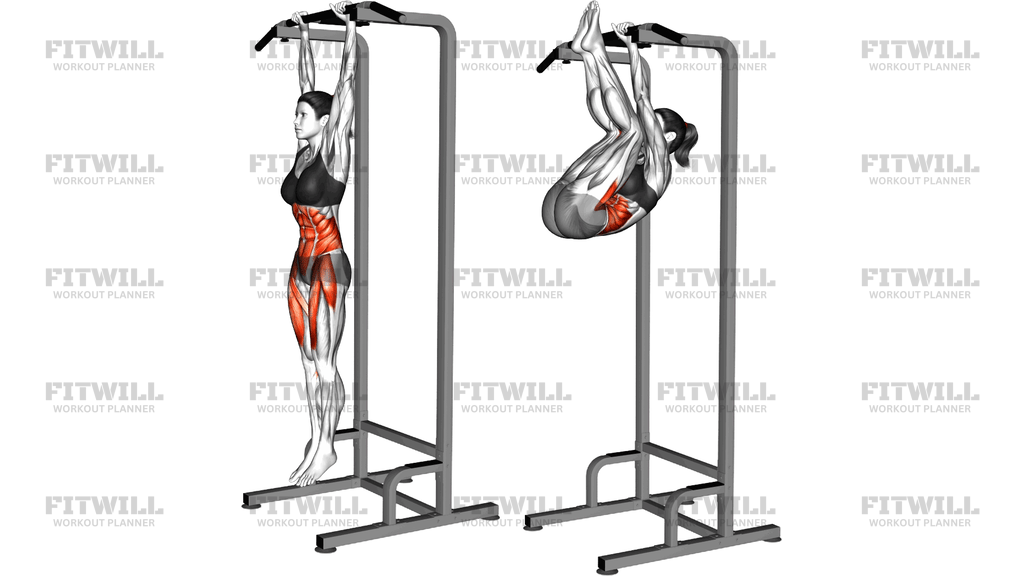
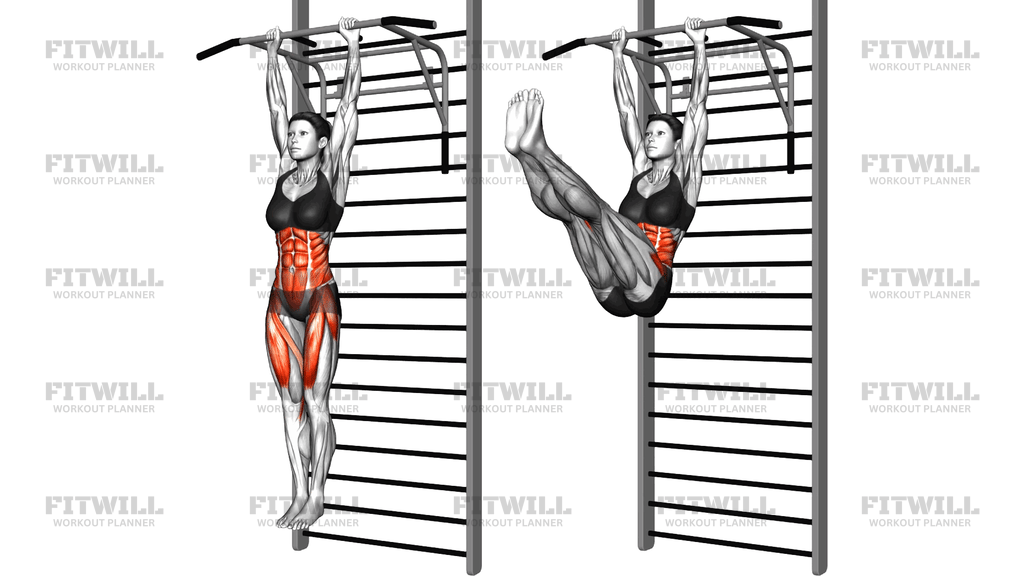
Hanging Toes To Bar is one of the most demanding bodyweight core exercises you can do on a pull-up bar. You hang from the bar with an overhand grip, arms fully extended, then raise your straight legs up until your toes touch or clear the bar, before lowering back down under control. Because your entire body weight hangs from your hands, every rep challenges your abs, hip flexors, lats, and grip at the same time, which is why it shows up constantly in calisthenics, CrossFit, and gymnastics-style conditioning.
The main work comes from the lower and middle portions of the rectus abdominis as they curl the pelvis up toward the ribcage, supported strongly by the hip flexors, which lift the legs through the first half of the range. Your lats and upper back stay engaged to keep your torso from swinging, and your forearms and grip hold you on the bar for the whole set. It is a genuinely full-core movement, not just a leg raise with extra steps.
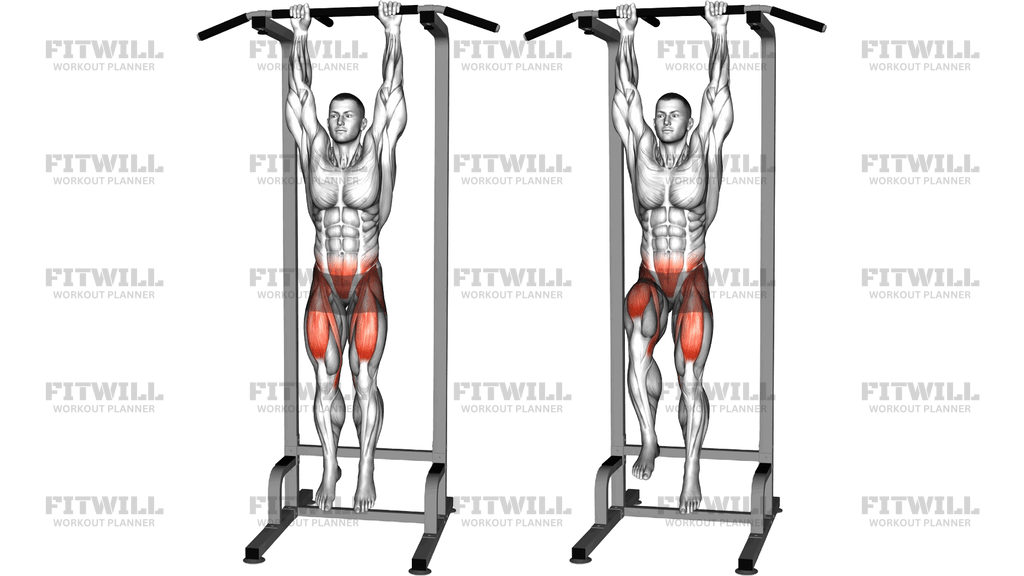
This exercise suits intermediate to advanced trainees who can already hang comfortably for 30 seconds or more and can perform controlled hanging knee or leg raises. If you are a climber, gymnast, obstacle racer, or martial artist, it directly transfers to the pike-ups, hip lifts, and body control those sports demand. For general lifters it is an efficient way to load the abs heavily without equipment beyond a sturdy bar.
Setup matters more here than in most ab work. Grip the bar roughly shoulder-width with your palms facing forward, and hang with active shoulders rather than dead-hanging with loose joints. Your body should start still, legs together and pointed slightly forward, with no swinging. A stable start position means your abs, not momentum, produce every rep.
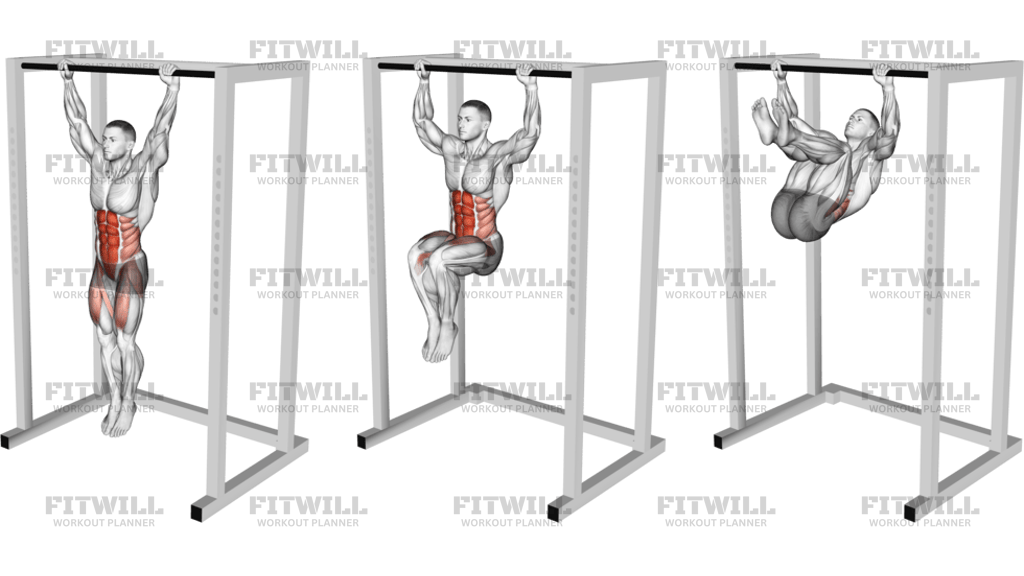
To execute well, think of the movement as a pelvic curl followed by a leg lift: pull your pubic bone up toward your sternum as your legs rise, rather than simply folding at the hips. Raise your straight legs until your toes make contact with the bar, then lower slowly, resisting on the way down until your body is vertical again. The descent is where most of the strength is built, so never just drop your legs.
Practically, treat this as a skill as much as a strength exercise. Learn it fresh, before your grip is fried, and start with sets of 3-5 clean reps rather than grinding out sloppy ones. If you cannot touch the bar with straight legs yet, raise your legs as high as you can with a flat, controlled pelvis, or train knee raises first. Avoid swinging and kipping until strict control is established, and stop the set when your lower back starts to arch or your shoulders slump.
[ Workout Log & Planner ]
Put your next workout in Fitwill
Keep your plan and training log ready when you are.


Instructions
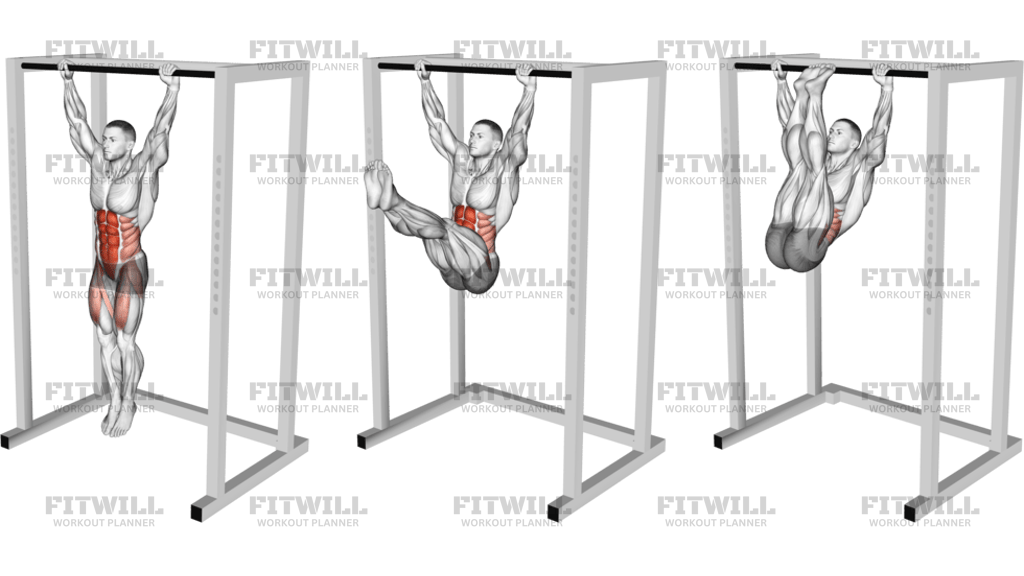
- Stand under a sturdy pull-up bar and reach up to grip it with an overhand grip, hands about shoulder-width apart.
- Hang with your arms fully extended, then pull your shoulders down away from your ears so your lats engage and your shoulder joints feel stable rather than loose.
- Bring your legs together, point your feet slightly forward, and let your body settle until all swinging stops.
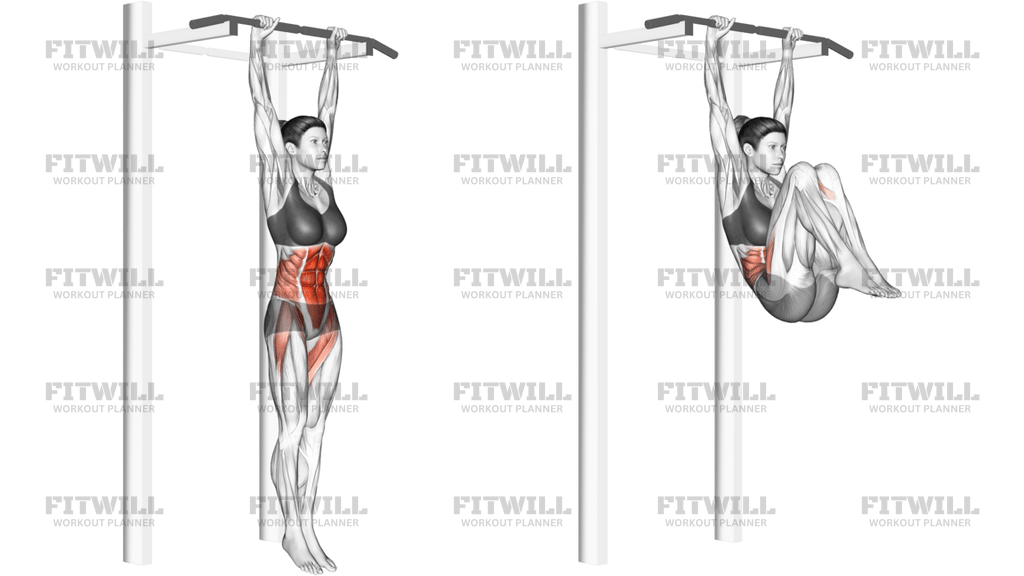
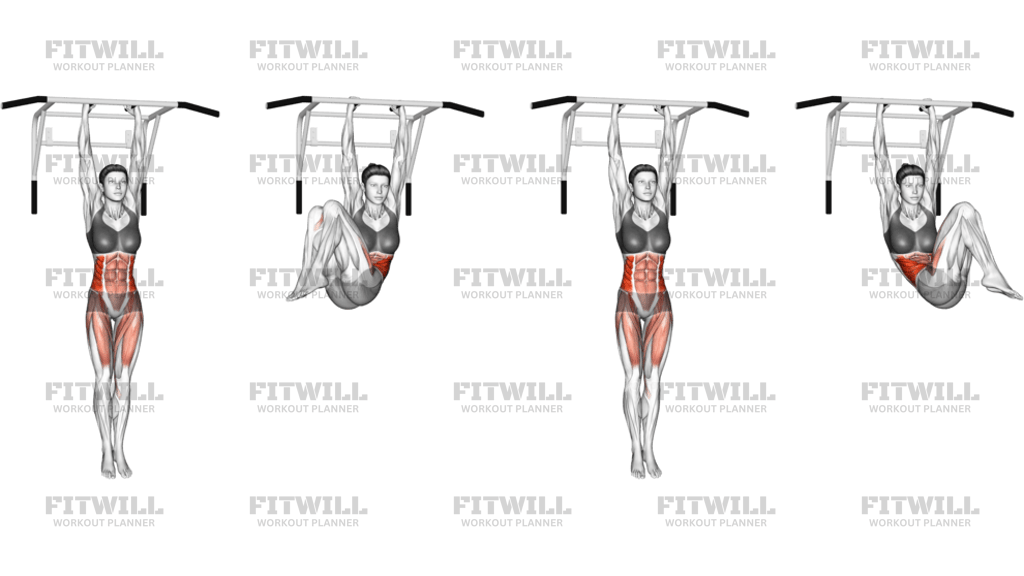
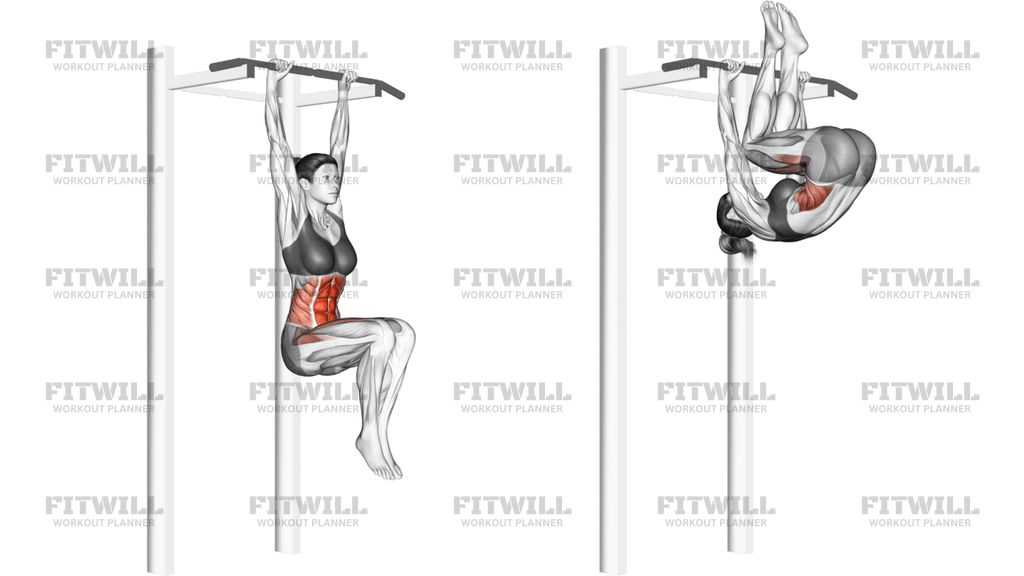
- Brace your abs and exhale as you raise your straight legs forward and up, leading the motion by curling your pelvis under toward your ribs.
- Continue lifting until your toes touch the bar, allowing your hips to fold and your body to form a compressed V over the top of the movement.
- Pause briefly at the bar, keeping your legs straight and together rather than letting the knees bend.
- Inhale as you lower your legs slowly and deliberately, fighting gravity instead of dropping, until your body returns to a still vertical hang.
- Reset your shoulder position and grip at the bottom, let any sway settle, then begin the next rep.
- Keep your breathing rhythmic throughout: exhale on the way up, inhale on the way down, never holding your breath through a full rep.
Tips & Tricks
- The most common fault is folding only at the hips, which turns the rep into a straight-leg raise that stops short of the bar. Fix it by deliberately tucking your pelvis first, then letting the legs follow.
- If you swing on the way up, you are usually starting the rep too fast or lowering too quickly. Cut your reps in half and slow the descent to a 2-3 second count.
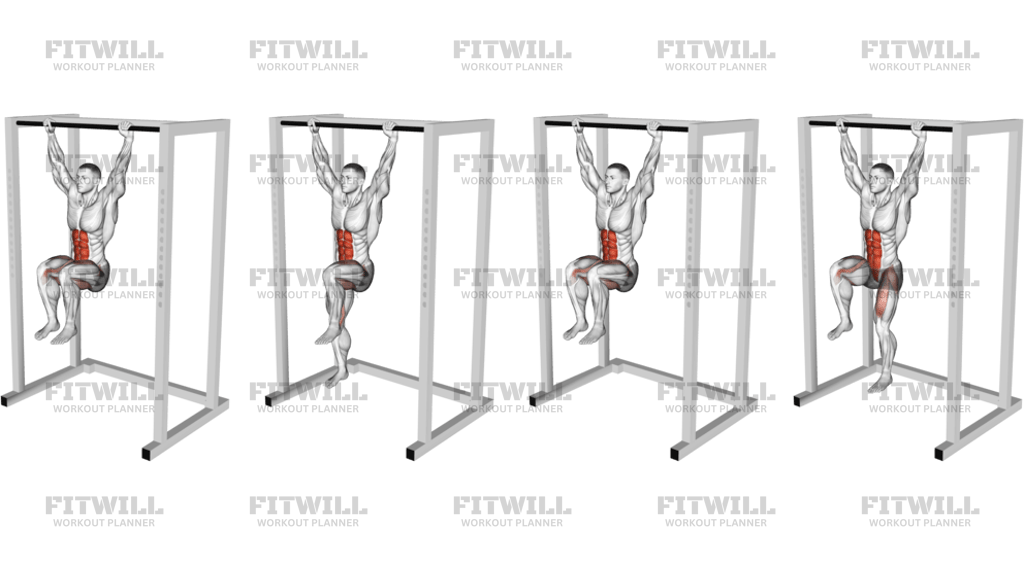
- Bent knees are a subtle cheat: they shorten the lever and hide weak lower abs. If your knees keep bending, switch to hanging knee raises until straight-leg control improves.
- Chalk or a firm full grip protects the set more than anything else. A thumbless grip or sweaty palms will end the set long before your abs do.
- Keep your shoulders pulled down the entire time. Letting your torso sink into a dead hang mid-set shifts stress onto the shoulder joints and makes contact with the bar harder.
- Pointing your toes and keeping the legs fully together makes the lever longer and the rep cleaner, and it gives you a clear target line straight to the bar.
- If your ribcage flares and your lower back arches as you lower, you are descending past your current control. Stop the rep a few degrees above a full hang and shorten the range temporarily.
- Do this exercise early in your session. Attempting it after fatiguing pulling or grip work usually produces half-reps and swinging.
- Filming yourself from the side reveals whether you actually touch the bar or are stopping a hand's width short, a gap that is hard to feel from inside the movement.
Frequently Asked Questions
Which muscles do Hanging Toes To Bar work the most?
The rectus abdominis, especially the lower portion, does the pelvic curl, while the hip flexors lift the legs. Your lats, shoulders, forearms, and grip work isometrically to hold you stable on the bar.
Are Hanging Toes To Bar too hard for beginners?
Usually yes as a strict straight-leg version, but the progression path is simple: start with hanging knee raises, then straight-leg raises to hip height, then raise the target until you can touch the bar. Being able to hang for 30-45 seconds is a good prerequisite.
Why can I raise my legs high but not touch the bar?
Touching the bar requires curling the pelvis toward the ribs at the end of the lift, not just flexing the hips. Practice initiating each rep with a deliberate pelvic tuck and slow the descent so you own the last part of the range.
Should my knees stay locked out during Hanging Toes To Bar?
Yes, straight legs keep the rep honest and load the abs through a longer lever. If you cannot keep them straight with control, the exercise is currently too advanced and knee raises are the better choice.
How do I stop swinging when I hang from the bar?
Start each rep from a completely still hang with shoulders pulled down, lift at moderate speed, and lower for 2-3 seconds. Letting your body fully settle between reps is what separates strict Hanging Toes To Bar from momentum-driven reps.
My grip gives out before my abs, what should I do?
Use chalk, wrap your thumb fully around the bar, and train the movement early in the session before grip fatigue builds. Lifting straps are not a good solution here since you may need to release quickly.
What can I substitute for Hanging Toes To Bar if I have no bar?
Lying straight-leg raises, reverse crunches on a bench, and Captain's chair leg raises all train the same lower-ab and hip-flexor pattern. None load the grip and lats the same way, so add separate hanging work when you can.
How many reps and sets of Hanging Toes To Bar should I do?
Three to five sets of 3-8 strict reps is plenty for most people, since quality drops off fast. Add reps only when every rep touches the bar without swinging or bending the knees.
Is it safe to do Hanging Toes To Bar with lower back issues?
The combination of hip flexor loading and spinal flexion under load can aggravate some backs, so anyone with a history of back problems should get clearance from a qualified professional first. If the exercise is approved, keep the range pain-free and avoid bouncing at the bottom.