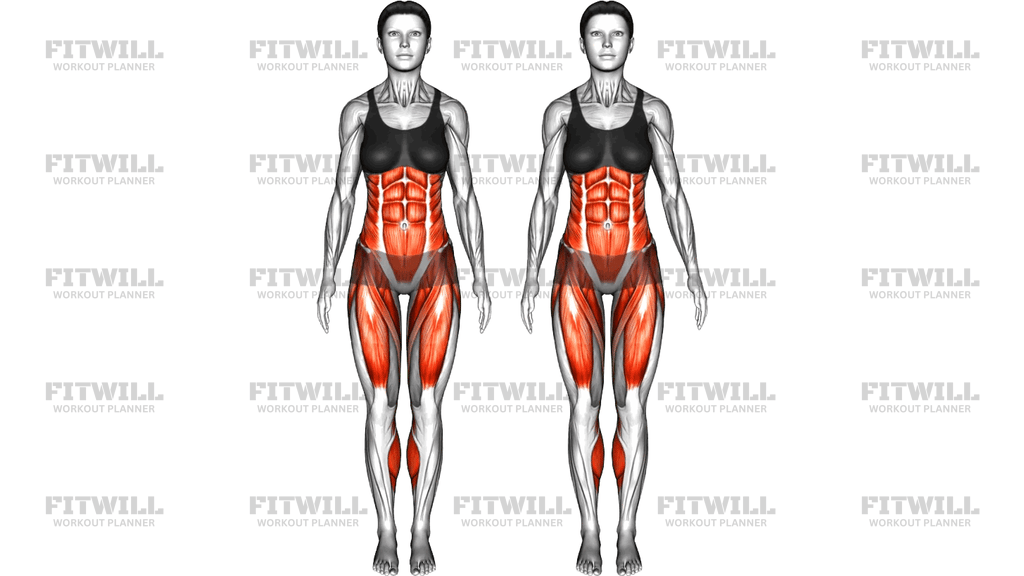
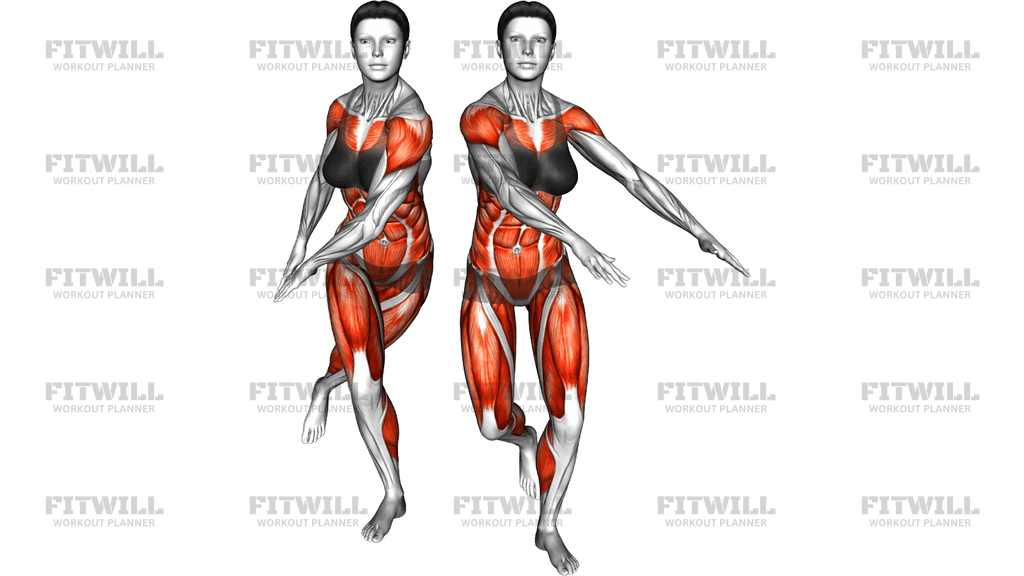
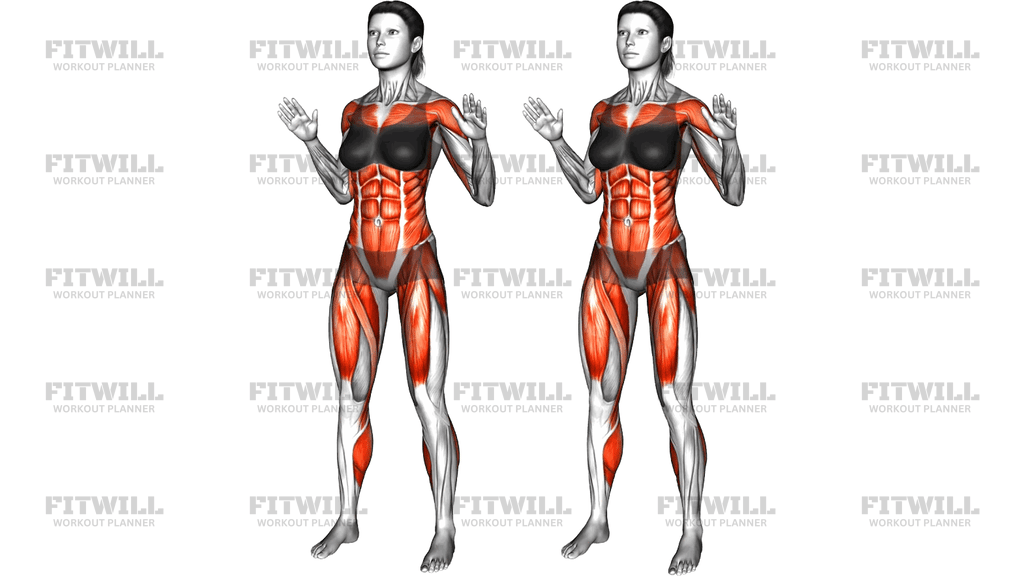
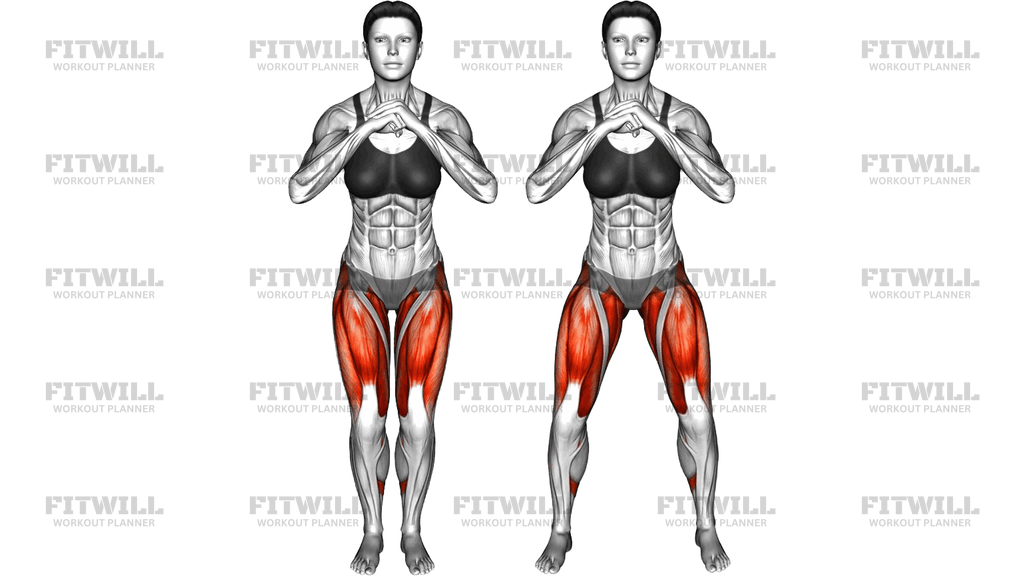
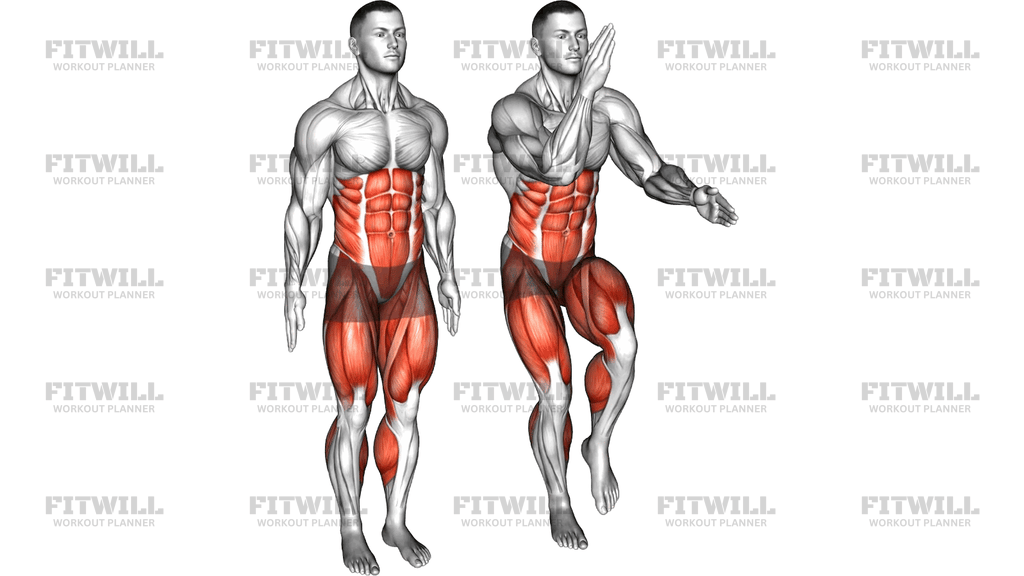
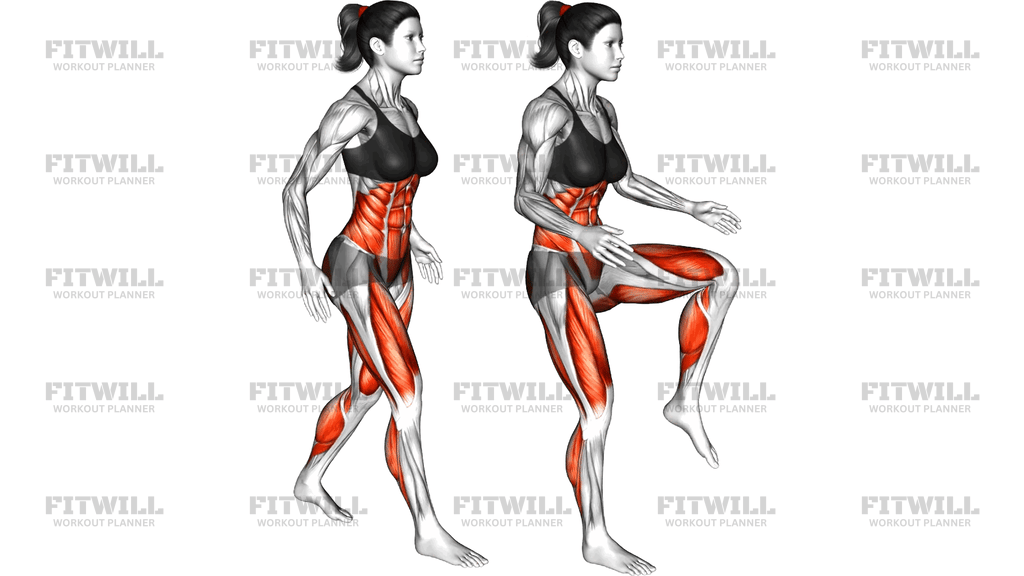
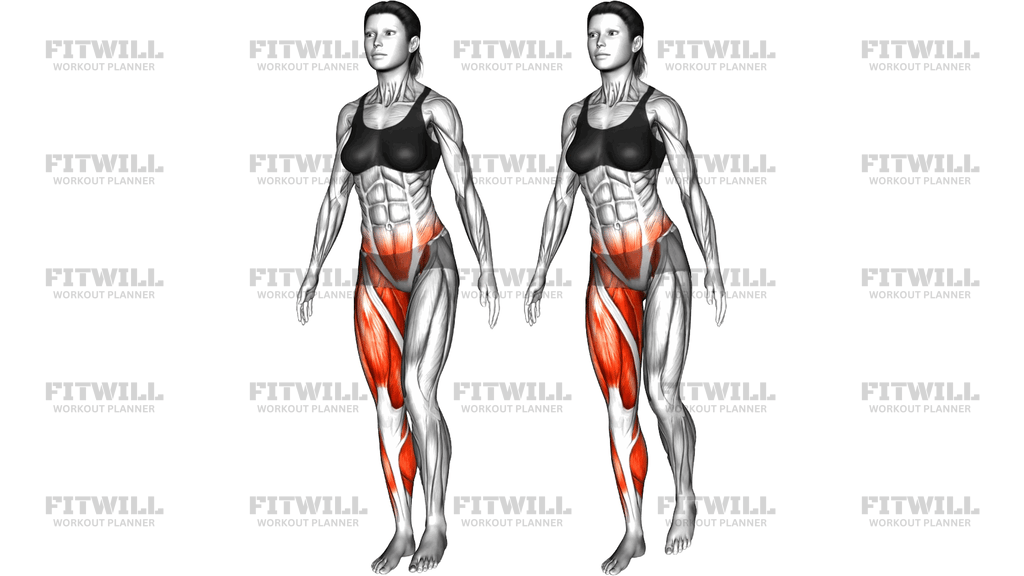
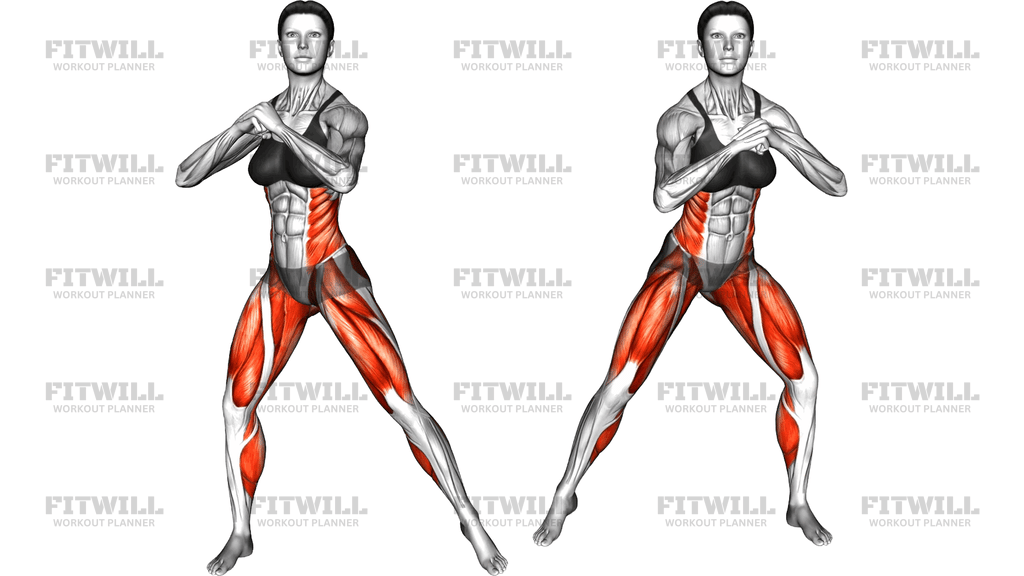
Semitandem Squat
The Semitandem Squat is a body weight squat variation performed with the feet in a staggered, semi-aligned position: one foot sits slightly ahead of the other, with the heel of the front foot roughly beside the arch or toe of the back foot rather than directly in line as in a lunge. This narrow, offset base shrinks your support area and forces the hips, knees, and ankles to work harder to keep you balanced while you sit down and stand back up. The hands are clasped together in front of the chest, which helps counterbalance the torso as you lower.
Because the stance is narrower than a normal squat, the demand shifts toward the quadriceps on the front leg while the glutes and inner thighs stabilize the pelvis against side-to-side sway. The ankle stabilizers and calves are quietly doing a lot of work here too, keeping the stacked joints aligned over a smaller footprint. It sits somewhere between a conventional squat and a split squat: you still load both legs, but the front leg takes on more of the work and the balance requirement is noticeably higher.
This movement is especially useful for older adults, people returning from lower-body injuries, and anyone building a base for single-leg work. The semitandem position is a classic balance test posture, so training the squat in this stance doubles as fall-prevention and hip-stability work. It also serves as a stepping stone: if a full split squat feels too demanding but a regular squat no longer challenges your balance, this is the natural middle ground.
Setup matters more than in a standard squat because the offset stance changes everything about how force travels through your joints. Keep your weight distributed across the whole front foot, let the torso lean forward slightly from the hips as you descend, and let both knees travel forward over their respective toes rather than collapsing inward. The back leg provides support and steering, but it should not take over the lift.
The main technical points are staying tall through the chest, keeping the front heel glued to the floor, and descending with control rather than dropping into the bottom. Expect your balance, not your leg strength, to be the limiting factor at first. Start with a shallow range, master the wobble, and only lower as far as you can do so smoothly. If you feel unsteady, practice near a wall or counter so you can touch it with a fingertip for reassurance without leaning on it.
Fitwill
Log Workouts, Track Progress & Build Strength.
Achieve more with Fitwill: explore over 9600 exercises with images and videos, access built-in and custom workouts, perfect for both gym and home sessions, and see real results.
Start your journey. Download today!




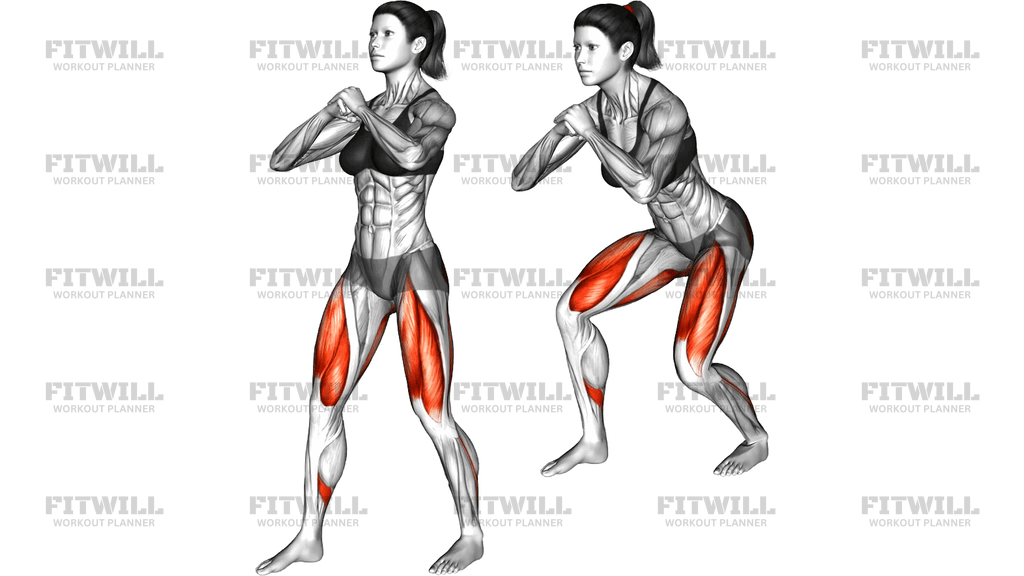
Instructions
- Stand with one foot placed slightly in front of the other, so the heel of your front foot sits beside the arch of your back foot, leaving a small gap of a few inches between the feet.
- Keep both feet flat on the floor and angle them forward or very slightly outward, with your weight spread evenly across each foot.
- Clasp your hands together in front of your chest and brace your abdominals as if bracing for a light push to the stomach.
- Lift your chest and look straight ahead, then shift a little more of your weight onto the front leg while keeping both feet planted.
- Push your hips back and bend both knees to lower into a squat, letting your torso lean forward slightly from the hips while the front heel stays firmly down.
- Descend until your thighs reach a comfortable depth, ideally with the front thigh approaching parallel to the floor, and both knees tracking over their toes.
- Drive through the floor, especially through the front foot, to stand back up until your legs are straight and hips are fully extended.
- Exhale as you rise and inhale as you lower, keeping your breathing steady throughout the set.
- Complete all repetitions on one side, then switch the stance so the other foot is in front and repeat.
Tips & Tricks
- If you sway side to side, widen the gap between your feet by an inch or two before increasing depth; a true semitandem stance is narrow, but balance comes first.
- The most common mistake is turning this into a lunge by stepping the feet too far apart, which shifts work to the back leg; the feet should nearly share a line, not form a long stride.
- Watch the front knee: if it drifts inward toward the big toe side, consciously press the knee out over the little toe as you descend.
- Keep the back heel down if you can; rising onto the back toe is a sign your weight has shifted too far forward onto the front leg.
- Holding your hands at chest height gives you a counterweight; letting them drop to your sides makes the narrow stance feel twice as tippy.
- Start with a shallow descent for the first set and only add depth once you can reach that depth without your torso twisting.
- Practice beside a wall or sturdy counter and hover a fingertip over it rather than gripping it, so the support stays there for genuine loss of balance only.
- Do all reps on one side before switching; alternating feet every rep makes it easy to lose count and shortchanges the balance adaptation on each stance.
- If your front ankle feels pinched at the bottom, shorten the range rather than lifting the heel, and work on ankle mobility separately.
Frequently Asked Questions
What muscles does the Semitandem Squat work?
The quadriceps of the front leg do most of the work, supported by the glutes and hamstrings as you rise. The inner thighs, calves, and deep core stabilize your pelvis and ankles in the narrow, offset stance.
How is the Semitandem Squat different from a regular squat?
Your feet are offset and nearly aligned instead of hip-width apart, which shrinks your base of support. This makes the front leg work harder and turns the squat into a balance exercise as well as a strength one.
How far apart should my feet be in the semitandem stance?
Place the heel of your front foot next to the arch of your back foot, with only a few inches separating them. The feet are close enough to challenge balance but not stacked directly in line like a tightrope walk.
Is the Semitandem Squat good for beginners?
Yes, as long as the depth is kept shallow at first. Beginners often find the balance demand harder than the strength demand, so practicing near a wall and progressing the range gradually makes it very approachable.
Why do I wobble so much during this exercise?
The offset, narrow stance reduces your base of support, so small corrections from the hips, ankles, and core become visible wobbles. This is the intended training effect and usually settles within a few sessions as stabilizers adapt.
Should the back leg contribute to the movement?
It provides support and helps control the descent, but the front leg should carry most of the load. If the back leg feels like it is doing the lifting, your feet are probably staggered too far apart.
Can I substitute the Semitandem Squat with a split squat?
A split squat is a reasonable substitute but places a much longer stride between the feet and loads the front leg more heavily. The Semitandem Squat is better suited when balance and stability are the priority.
How deep should I squat in this stance?
Lower only as far as you can keep the front heel down and both knees tracking over the toes without twisting. For many people that is well above parallel at first, and depth can grow as control improves.
Is it safe for older adults or people with knee concerns?
The stance resembles positions used in balance and fall-prevention training, and the body weight load is gentle on the joints. Still, anyone with knee pain or significant balance limitations should work within a pain-free range and consult a qualified professional first.
How many repetitions should I do?
Start with 8 to 12 controlled repetitions per side for two or three sets. Because the balance demand is high, prioritize smooth, steady reps over pushing to fatigue.