Suspender Assisted Shoulder Abduction Walk
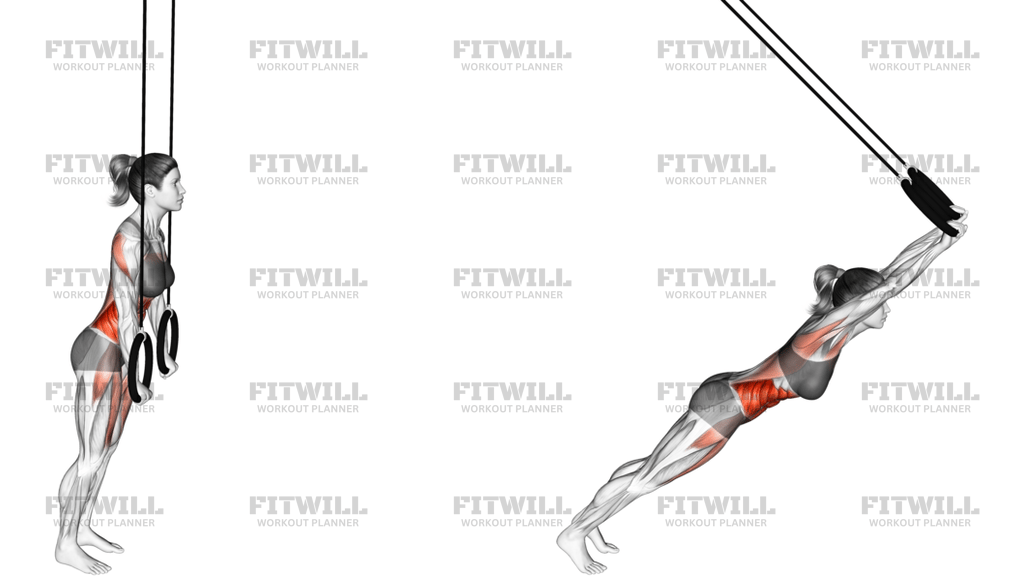
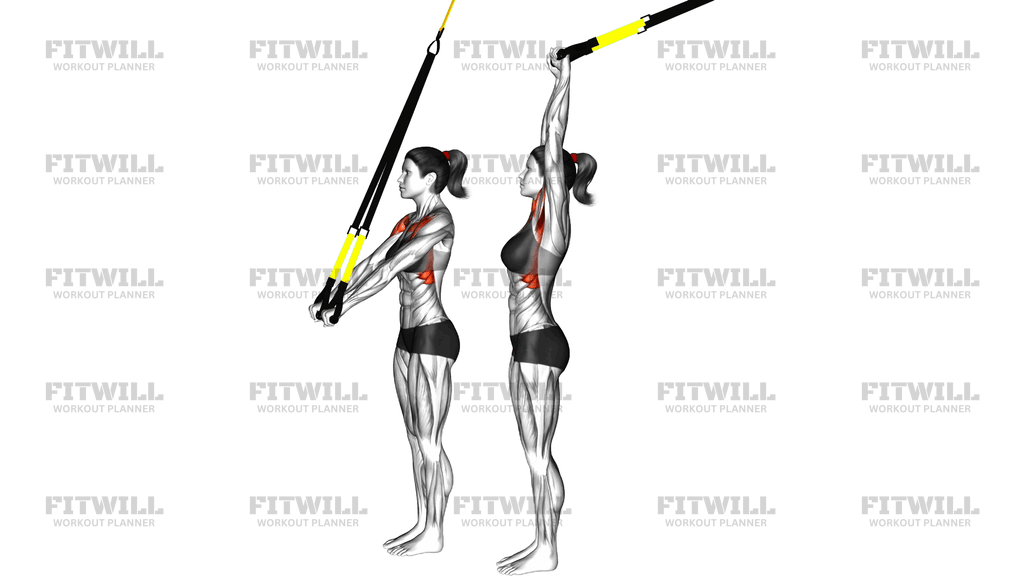
The Suspender Assisted Shoulder Abduction Walk is a suspension trainer movement in which you hold the handles with straight arms and raise them from a low position in front of your body all the way overhead, letting the straps carry part of your arm weight as you go. Because the suspension trainer is anchored above you and stays taut through the entire arc, it removes a meaningful portion of the load that free-weight or cable shoulder raises would place on the shoulder joint. The "walk" in the name refers to the way you adjust the challenge: stepping your feet toward the anchor increases the strap support, while stepping back increases how much work your shoulders have to do.
This exercise is especially useful for people rebuilding overhead shoulder capacity, beginners who find dumbbell raises uncomfortable, and anyone who wants a smooth, guided path for the arms without the jerkiness of a machine. It is also a solid warm-up drill before pressing work, because it takes the shoulders through a full overhead range under light, adjustable tension. The highlighted working areas are the front and side of the shoulders along with the chest, which stretches and assists as the arms travel overhead.
Setup matters more here than in most shoulder raises. The anchor point must be directly overhead or slightly in front of you, the straps set to a length that keeps tension from the very bottom of the movement, and your body positioned so the straps pull in line with your arms rather than dragging you forward or backward. If the straps hang slack at the start, the first half of the rep gets no assistance; if you stand too close, you collapse into the straps instead of moving your own arms.
To execute it well, keep your elbows straight but not locked, ribs down, and glutes lightly engaged so your torso does not arch as the arms rise. Sweep the handles up in a wide arc until they are directly overhead, pause briefly at the top, then lower on a slow count back to hip height. The straps should stay taut from start to finish, and your wrists should stay neutral rather than bent backward. Two to three sets of ten to fifteen slow reps covers most uses, whether as a warm-up or as a standalone shoulder drill on lower-load training days.
[ Workout Log & Planner ]
Put your next workout in Fitwill
Keep your plan and training log ready when you are.


Instructions
- Anchor the suspension trainer to a secure overhead point and adjust the straps so the handles hang at roughly hip height when your arms hang straight down.
- Grip the handles with a neutral grip, palms facing each other, and step your feet back until the straps are taut with your arms resting low in front of your hips.
- Set your stance about hip-width apart, soften the knees slightly, brace the abs, and tuck the ribs so your lower back is not already arched.
- Begin the rep by sweeping both straight arms out and up in a wide arc, letting the straps support part of the arm weight as they travel.
- Continue raising until the handles are directly overhead and the arms finish in line with your ears, wrists staying straight and elbows staying long.
- Pause for one breath at the top without shrugging the shoulders up toward the ears.
- Lower the arms back down the same wide arc on a slow three-count, keeping tension in the straps the entire way.
- Exhale as the arms rise overhead and inhale as they lower back to the start.
- If the movement feels too heavy or shaky, walk your feet a step toward the anchor for more strap support; if it feels too easy, step back to load the shoulders more.
- Complete the set, then release the handles one at a time and let the straps settle before stepping away.
Tips & Tricks
- The most common mistake is bending the elbows halfway up, which turns the abduction arc into a press. If your elbows bend, lighten the assistance by walking toward the anchor and start again with straight arms.
- Watch for the ribs flaring and the lower back arching as the arms pass head height. Brace the abs before the first rep and keep the brace through the top position.
- Do not let the shoulders creep up toward the ears at the top. Think about reaching long through the hands instead of lifting the traps.
- Slack straps at the bottom defeat the whole point of the assistance. Recheck your distance from the anchor before each set so tension exists from the first inch of the arc.
- Keep the wrists neutral. Bending the hands backward at the top shifts stress into the forearms and wrists rather than the shoulders.
- Move slower than feels necessary. This exercise works through control of the arc, and rushing the lowering phase is where most people lose the benefit.
- If one side rises before the other, slow down and lead with the weaker arm so both handles reach the top together.
- Use it as a warm-up before overhead pressing days with high reps and generous strap support, or as the main shoulder drill on easier days with the feet stepped further back.
Frequently Asked Questions
Which muscles does the Suspender Assisted Shoulder Abduction Walk work?
The front and side of the shoulders do most of the lifting, with the chest assisting and stretching as the arms travel overhead. The upper back and core stabilize the torso while the arms move through the arc.
What does the "walk" part of the Suspender Assisted Shoulder Abduction Walk mean?
It refers to stepping your feet toward or away from the anchor point to change how much the straps assist you. Stepping closer gives more support, and stepping back makes the shoulders handle more of the load.
Is the Suspender Assisted Shoulder Abduction Walk good for beginners?
Yes, it is one of the more beginner-friendly overhead shoulder drills because the suspension trainer takes part of the arm weight and guides the arc. Beginners should start close to the anchor with a generous amount of strap support.
How far should I stand from the anchor during the Suspender Assisted Shoulder Abduction Walk?
Stand far enough back that the straps are already taut with your arms hanging low in front of your hips. If the handles hang slack at the start, take a half step back until you feel light tension before the first rep.
Should my elbows stay straight during the Suspender Assisted Shoulder Abduction Walk?
Yes, keep the elbows long and nearly straight throughout, without locking them hard. Bending the elbows changes the movement into a press and shifts work away from the shoulder abduction pattern.
Can I use the Suspender Assisted Shoulder Abduction Walk as a warm-up?
It works well as a warm-up before pressing or overhead work because it moves the shoulders through a full range under light, adjustable tension. Use higher reps and more strap support in that case.
What is a good substitute if I do not have a suspension trainer?
Light dumbbell or band front raises and side raises train a similar pattern, though they lack the built-in assistance. A resistance band anchored low, held in both hands and swept overhead, is the closest substitute.
Why do my lower back and ribs feel involved during this exercise?
That usually means the torso is arching to help the arms finish overhead. Reset the brace, tuck the ribs down, and reduce the range slightly until you can keep the trunk still through the top.
How many reps and sets of the Suspender Assisted Shoulder Abduction Walk should I do?
Two to three sets of ten to fifteen slow, controlled reps suits most purposes. For a warm-up, one or two lighter sets with plenty of strap support is enough.