Suspension Crunch
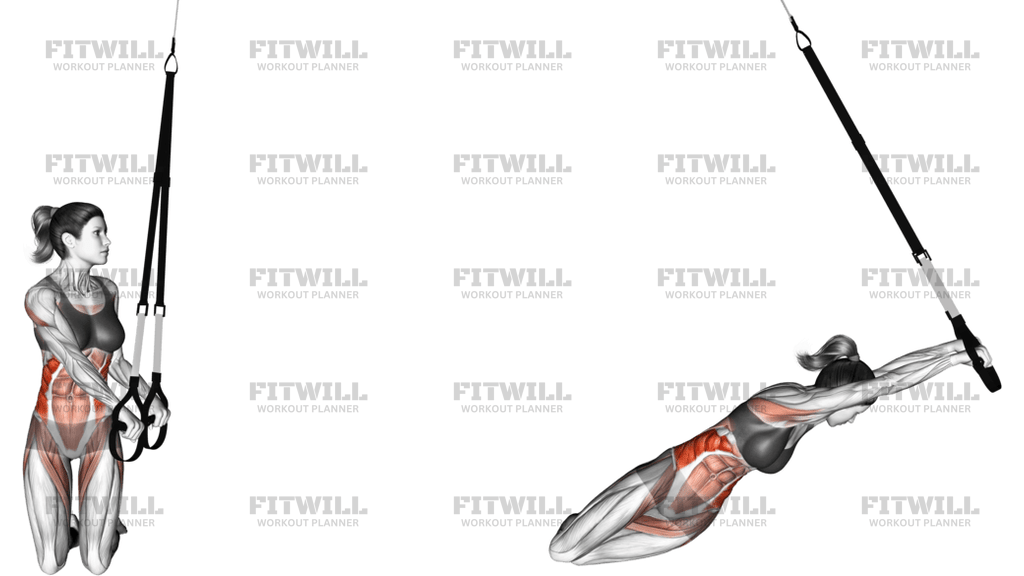
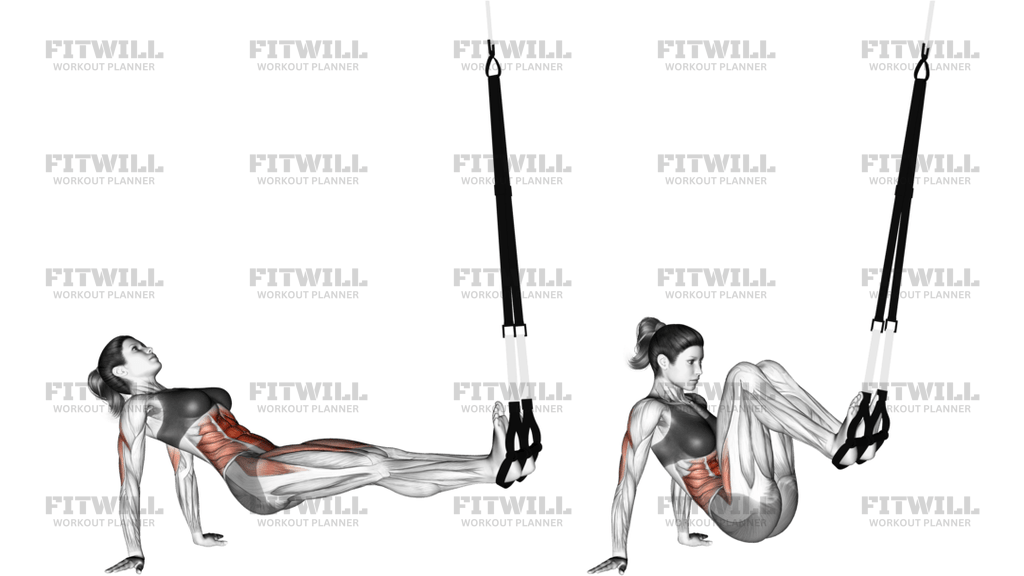
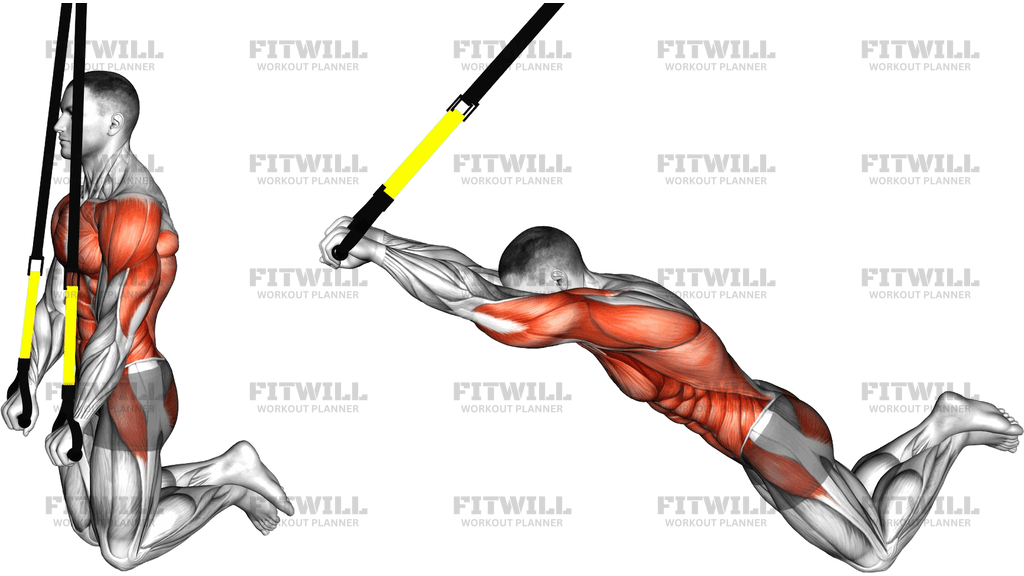
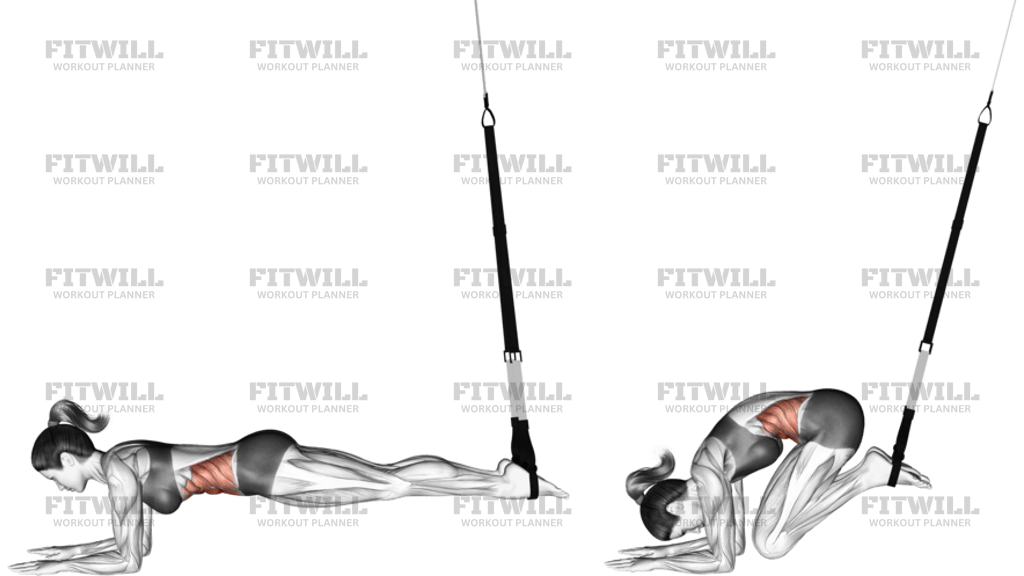
Suspension Crunch is a suspended core drill that starts in a forearm plank with the feet supported in straps and finishes with the knees pulled in under the torso. It trains the abs to shorten hard while the shoulders and hips stay organized against an unstable base. That combination makes it useful for core strength, body control, and learning how to keep the trunk quiet while the legs move.
The main emphasis is on the rectus abdominis, with the obliques and hip flexors helping the knees travel in without the pelvis dumping forward. In practice, the exercise asks you to hold a firm plank first and then create the crunch by curling the lower body toward the rib cage. If the plank is soft at the start, the rep usually turns into a swing instead of a controlled abdominal contraction.
Setup matters more here than on a floor crunch because strap length and body angle change the difficulty immediately. A longer strap or a high hip start reduces tension, while a tight plank with the shoulders stacked over the elbows makes the core work harder from the first inch of the rep. The goal is not to chase height or speed; it is to keep the spine organized while the knees travel forward under control.
During each rep, press the forearms into the floor, tuck the pelvis slightly, and pull both knees toward the chest as the feet glide forward in the straps. Finish the crunch by shortening the abs, not by throwing the hips up or kicking the legs in. Lower the legs back to a straight plank slowly, stop the swing before the next rep, and breathe in on the return so each rep starts from a stable brace.
Suspension Crunch works well in accessory core work, athletic conditioning blocks, or as a tougher bodyweight substitute when a standard crunch is too easy. It is also a good test of control for anyone who needs stronger anti-extension strength and cleaner hip-spine coordination. Keep the range honest, because the best reps are the ones that look almost quiet from start to finish rather than the ones that move the farthest.
Fitwill
Log Workouts, Track Progress & Build Strength.
Achieve more with Fitwill: explore over 9600 exercises with images and videos, access built-in and custom workouts, perfect for both gym and home sessions, and see real results.
Start your journey. Download today!




Instructions
- Set the suspension straps so you can hold a straight forearm plank with your feet in the loops and your elbows under your shoulders.
- Place both forearms flat on the floor, then slide your feet into the straps with your toes pointing down and your legs fully supported.
- Walk your body out until you are long from head to heels, with your shoulders stacked over your elbows and your hips level.
- Squeeze your glutes and brace your midsection before the first rep so your lower back does not sag.
- Pull both knees toward your chest by drawing them forward under your torso and letting the straps travel with your feet.
- Keep the crunch coming from your abs and pelvis, not from a big kick, a bounce, or a sudden hip pop.
- Pause briefly when the knees are tucked in and the abs are shortened, then reverse the movement under control.
- Extend your legs back to a long plank slowly, stopping the swing before you start the next repetition.
- Exhale as you tuck in, inhale as you return, and reset the plank if your shoulders, hips, or neck start to drift out of position.
Tips & Tricks
- Shorten the straps if you cannot hold a clean plank before the first tuck; a better start position is more useful than a bigger range.
- Keep your elbows under your shoulders so the plank base stays solid and the work stays in the trunk instead of the front delts.
- Think about curling the pelvis toward the ribs, not just sliding the knees forward, to keep the abs doing the real work.
- If the hips rise sharply at the start, reduce the tuck range and finish the rep before the lower back takes over.
- Press the forearms down into the floor to reduce wobble through the shoulders and make the suspension feel more controlled.
- Move slowly on the way out; the return phase is where people usually lose tension and let the straps swing.
- Keep the neck neutral and look slightly ahead of your hands instead of craning upward when the knees come in.
- Use a brief pause in the tucked position if you want more abdominal tension without adding load or speed.
Frequently Asked Questions
What muscles does Suspension Crunch work most?
The main target is the rectus abdominis, with the obliques and hip flexors helping the knees draw in while you keep the plank stable.
Is Suspension Crunch the same as a suspension knee tuck?
In many gyms, yes. This version starts in a forearm plank with the feet in straps and finishes with the knees tucked under the torso.
How should my elbows and shoulders be set up for Suspension Crunch?
Keep your elbows under your shoulders and your forearms planted firmly on the floor. If your shoulders drift forward, the plank gets shaky and the crunch turns into a swing.
Why do my hips jump up when I do Suspension Crunch?
That usually means the straps are too long, the range is too big, or the tuck is being driven by momentum instead of the abs. Shorten the straps and make the return slower.
Can beginners do Suspension Crunch?
Yes, if they can hold a solid forearm plank first. Start with a small knee tuck and a slow return before trying bigger reps.
Should I feel Suspension Crunch in my lower back?
No. You may feel some work in the hips and shoulders, but the lower back should not pinch or take over the movement.
How do I stop the straps from swinging between reps?
Finish each rep with a controlled return to plank and pause long enough to kill the swing before you tuck again.
What can I use instead of Suspension Crunch?
A slider knee tuck, suspension mountain climber, or stability-ball knee tuck can give a similar core challenge if you need a different setup.