Ring Rollout
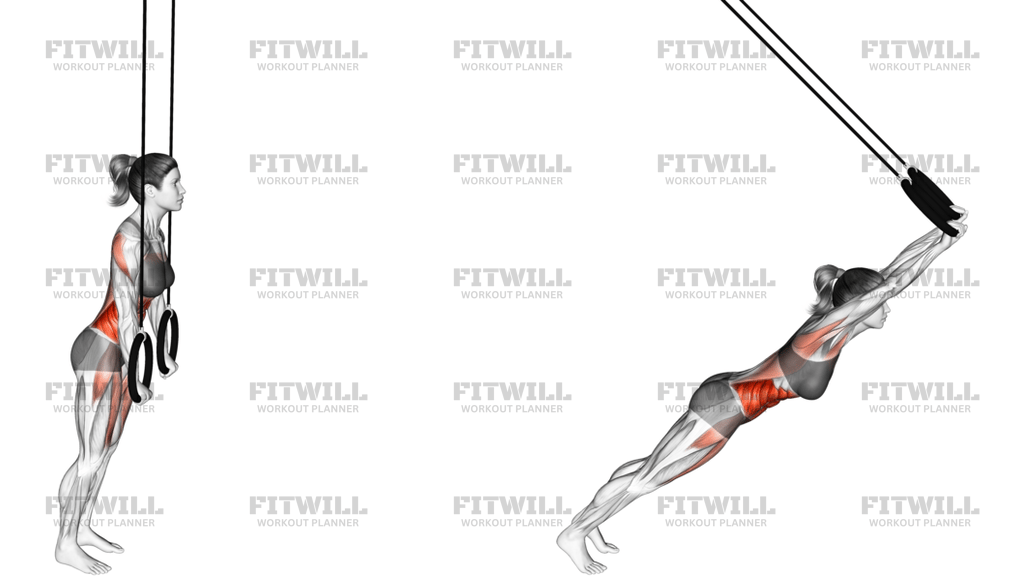
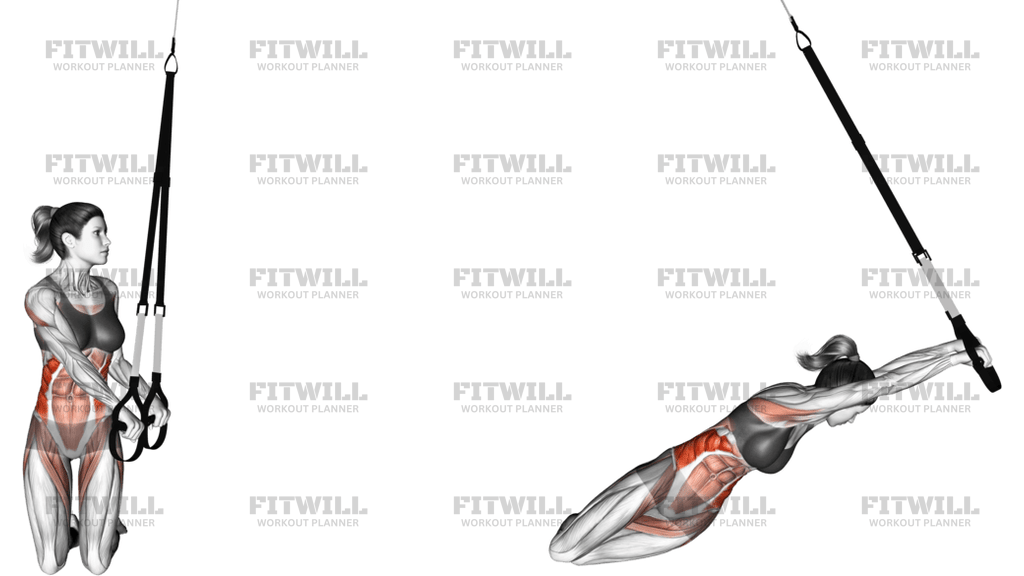
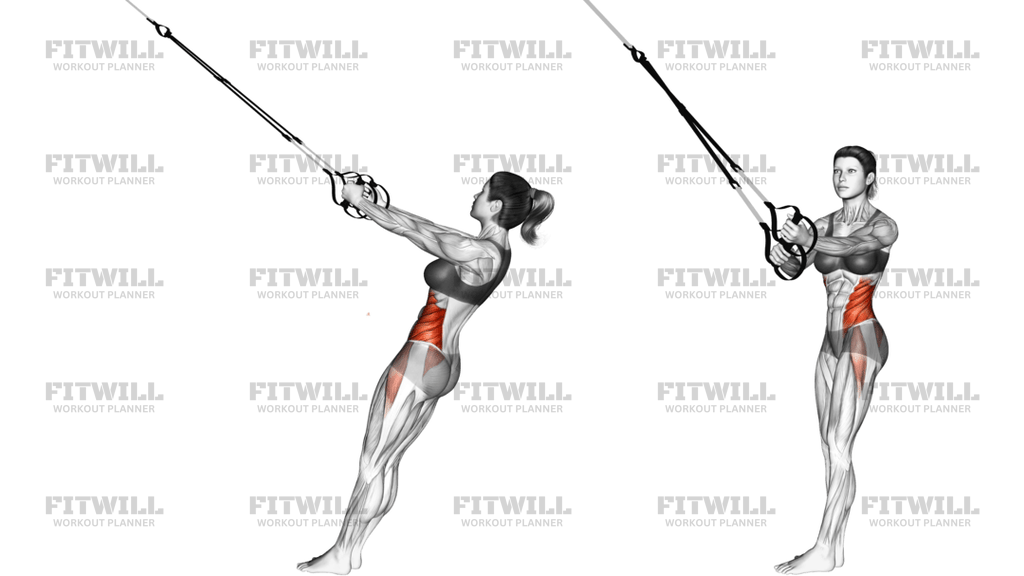
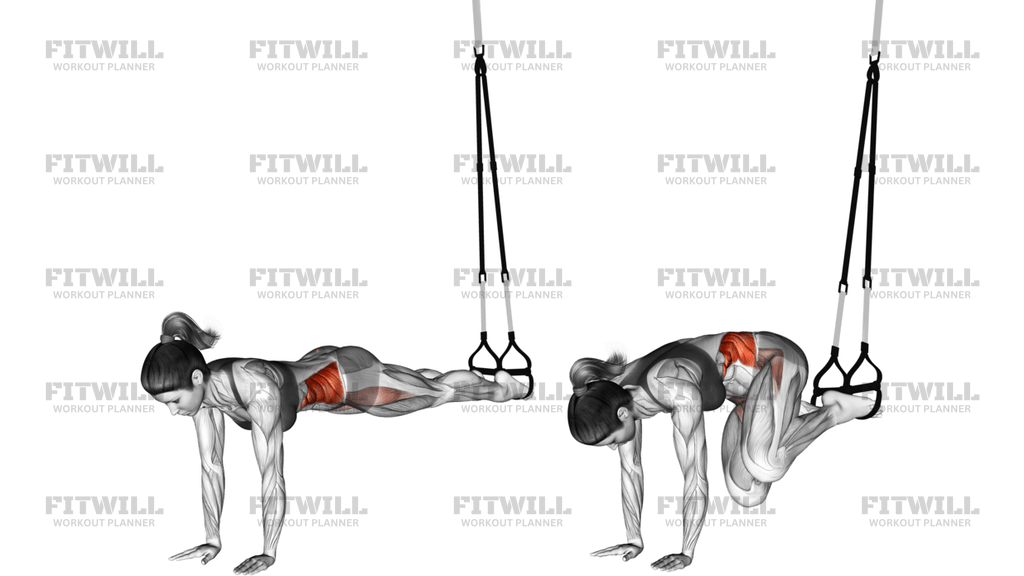
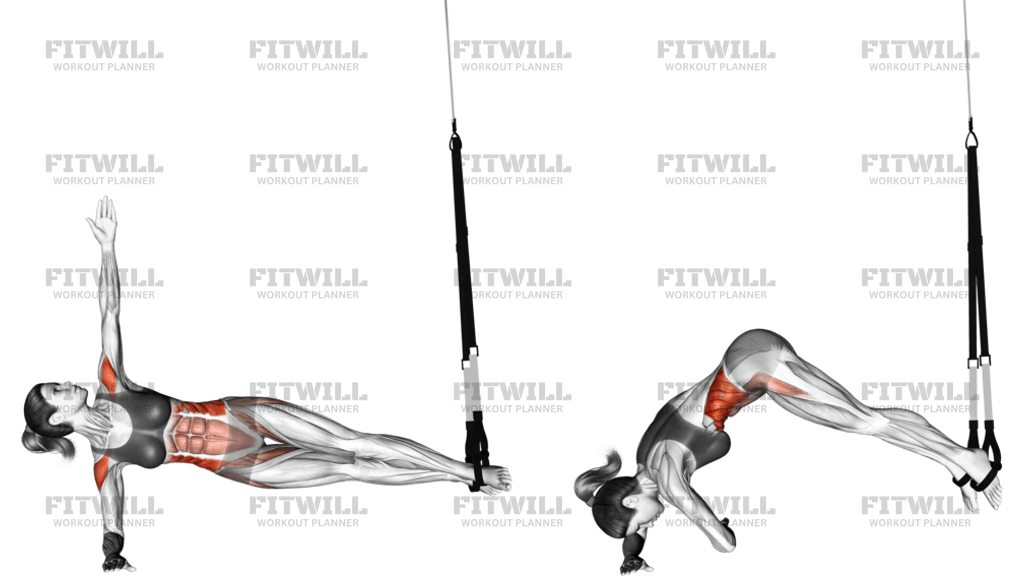
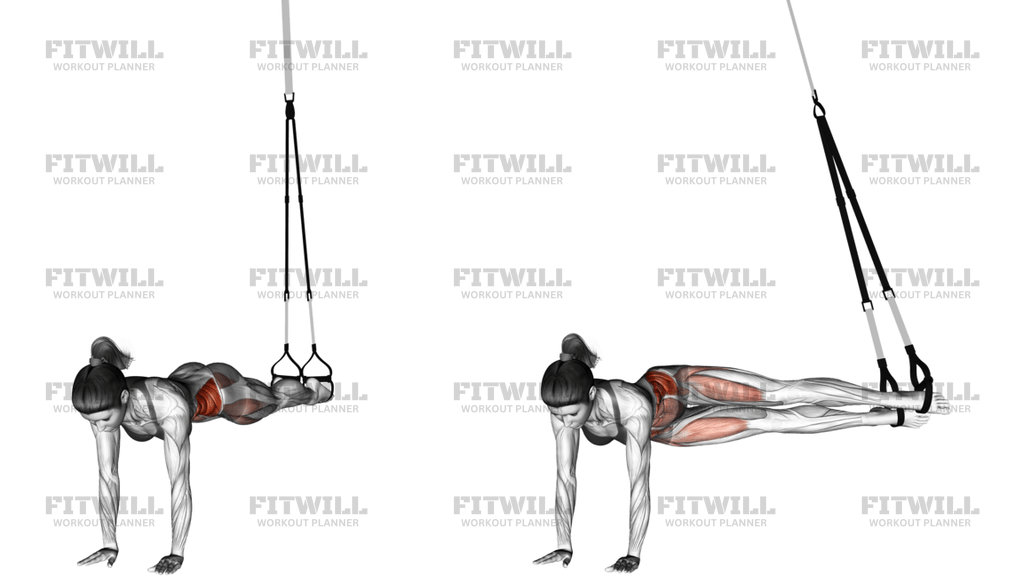
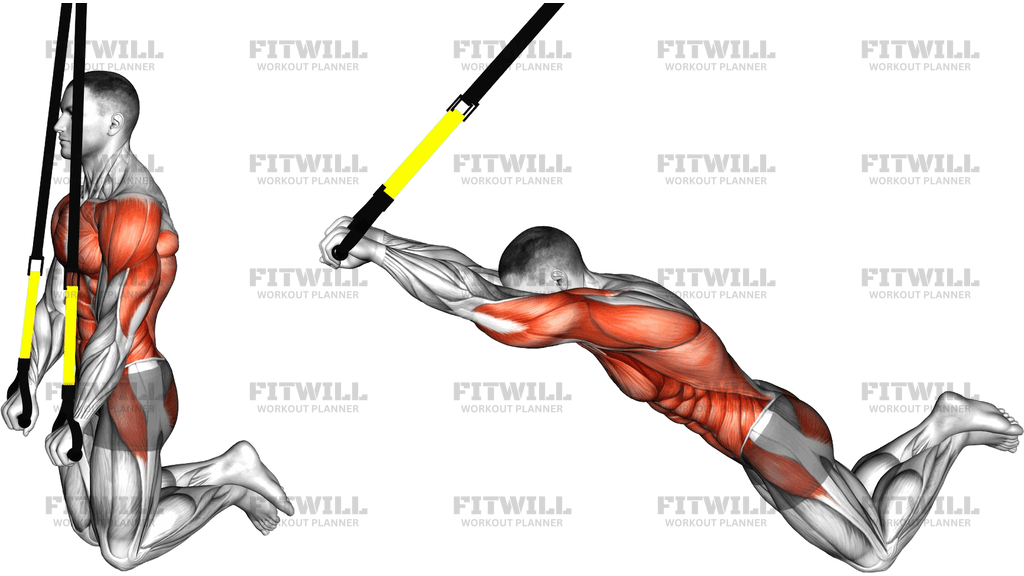
Ring Rollout is a suspension-based core exercise performed from a standing lean with the hands in rings or handles. It builds anti-extension strength, trunk control, and shoulder stability by asking you to keep a straight line from head to heels while the arms travel forward and the body inclines away from the anchor. The movement looks simple, but it becomes demanding quickly because the longer the body angle gets, the more the abs, obliques, and deep core have to resist the pull into an arched lower back.
The primary emphasis is on the obliques, with the rectus abdominis, transverse abdominis, and spinal erectors helping you keep the torso braced and the pelvis controlled. Because the exercise is done on unstable suspension straps, the shoulders and lats also have to stay active so the handles do not drift or twist. That instability is useful: it exposes side-to-side collapse, rib flare, and hip sag much faster than a fixed implement would.
A good setup starts with the anchor point and the body angle. Stand facing the anchor, hold the rings or handles with neutral wrists, and walk your feet back until the straps are taut. Soften the knees, set the feet about hip-width apart, and lean into a long plank line from the ankles through the head. Before you roll forward, stack the ribs over the pelvis and lightly tuck the tailbone so the lower back stays long rather than compressed.
During the rollout, let the hands travel forward overhead while the whole body moves as one rigid unit. The chest should not dive while the hips stay behind it, and the low back should not soften to chase more range. Go only as far as you can keep the trunk braced and the shoulders active, then pull the handles back toward the shoulders to return under control. Exhale as you reach out, then inhale or reset at the top without losing body tension.
This is a strong accessory for core sessions, upper-body days, or any program that needs better trunk stiffness under moving support. It is also easy to scale: walk the feet closer to the anchor, reduce the rollout range, or keep a small knee bend if you need more control. Stop the set when the first sign of fatigue is rib flare, hip drop, or shoulder shrugging.
[ Workout Log & Planner ]
Put your next workout in Fitwill
Keep your plan and training log ready when you are.


Instructions
- Stand facing the anchor and hold the rings or handles with neutral wrists.
- Walk your feet back until the straps are taut, then set your feet hip-width apart.
- Soften the knees and lean into a long plank line from head to heels.
- Stack your ribs over your pelvis and lightly tuck the tailbone to keep the lower back long.
- Brace your abs and keep the shoulders active before the first rollout.
- Roll the handles forward overhead while the body stays rigid from shoulders to ankles.
- Stop when the hips start to sag, the ribs flare, or the shoulders lose tension.
- Pull the handles back toward the shoulders to return, then reset before the next rep.
- Repeat for the planned number of repetitions.
Tips & Tricks
- Shorten the lever by walking closer to the anchor if you cannot keep the ribs stacked over the pelvis.
- Keep pressure through the heels and the outer edges of the feet so the body does not twist.
- Think about moving the handles away from you, not dropping the chest toward the floor.
- If the shoulders shrug, the rollout is probably too long or the straps are too far in front of you.
- Keep the elbows nearly straight, but do not lock them hard at the top.
- Exhale as the handles travel farther forward so the rib cage does not flare.
- A smaller rollout with a straight body line is better than a deeper reach with lumbar extension.
- End the set as soon as the hips start to sag or one side of the body starts to lead.
Frequently Asked Questions
What muscle does Ring Rollout target most?
The obliques are the main target, with the rectus abdominis and deep core muscles helping keep the torso rigid.
Is Ring Rollout mainly an ab exercise or a shoulder exercise?
It is mainly a core exercise, but the shoulders and lats have to stay active to control the rings or handles.
How do I know if I am too far from the anchor?
If you cannot keep your ribs down and your hips level, walk a little closer to the anchor and shorten the body angle.
Should my elbows stay bent during the rollout?
Keep them nearly straight so the core does the work, but do not force a hard elbow lockout.
Can beginners do Ring Rollout?
Yes, if they keep the straps closer, use a smaller range, and stop before the lower back starts to arch.
Why do I feel this in my lower back?
Usually the rollout is too long or the ribs are flaring, which shifts tension away from the abs and into the lumbar spine.
What is the easiest regression for this movement?
Stand closer to the anchor and keep a small knee bend so you can hold a rigid body line.
How is this different from a wheel rollout?
The suspension straps add more instability, so you have to control side-to-side movement as well as forward reach.