Box Jump Drop 2 Foot Land Diagonal Jump
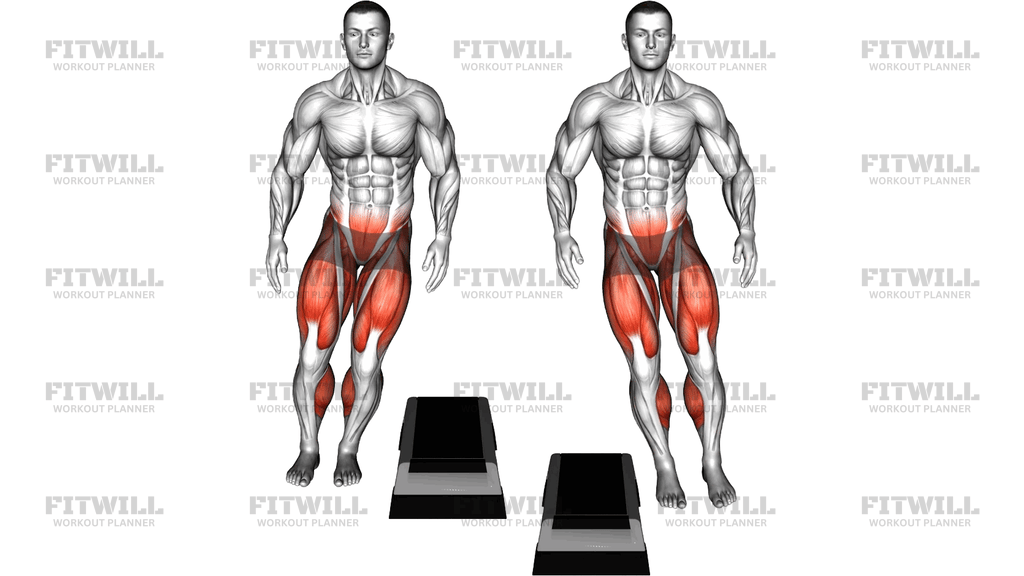
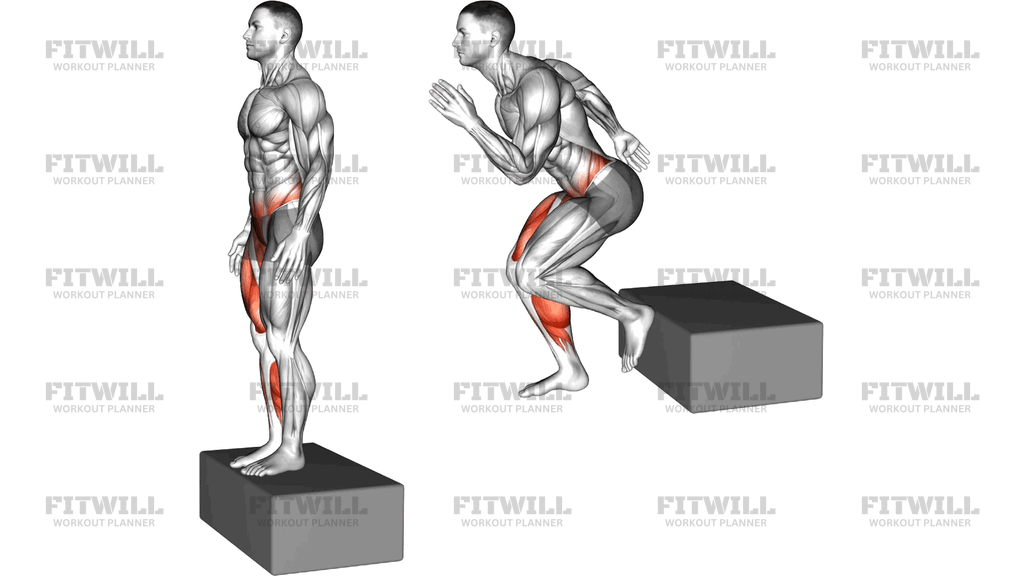
The Box Jump Drop 2 Foot Land Diagonal Jump is a reactive plyometric drill that combines a drop landing with an immediate change of direction. You start standing on a low box or step, step off rather than jump off, absorb the landing on both feet at the same time, and then explode straight into a jump aimed diagonally to one side. The whole sequence teaches your legs to accept force quickly and reuse it, which is exactly what sports like basketball, soccer, tennis, and volleyball demand over and over during a game.
The critical distinction in this movement is the drop itself. You step off the box instead of leaping off it, so the height of the drop comes purely from gravity. This keeps the landing impact manageable and lets you focus on the part that matters most: striking the ground with both feet together, bending through the hips, knees, and ankles in sync, and leaving the floor again with minimal time spent in contact. If the ground time stretches out, the drill turns into two separate exercises instead of one elastic chain.
The diagonal component is what separates this from a standard depth jump. Instead of rebounding straight up, you redirect your energy sideways at roughly a 45-degree angle. That angle forces your quads, glutes, and calves to decelerate in one plane and accelerate in another, loading the hip stabilizers and ankle stabilizers far more than a vertical jump would. It also trains the torso to stay stacked over the legs during a cut or defensive shuffle, which is where many athletes lose position or leak power.
Athletes use this drill in the strength and power phase of training, usually early in a session when the nervous system is fresh. It works well as a lead-in to sprinting or lifting, or as a small dose of reactive work two to three times per week. Beginners should start with a very low box, around 12 inches or less, and master the two-foot landing first before adding the diagonal rebound at full intent.
Safety comes down to surface and honesty about readiness. Use a stable, non-slip box on a firm surface such as rubber gym flooring, never a wobbly stack of plates or a slippery court. Land with knees tracking over the toes, chest over the knees, and weight spread across the whole foot rather than dumping into the toes or collapsing inward. If you cannot stick the landing quietly and balanced before rebounding, reduce the box height or practice the drop landing on its own until you can.
[ Workout Log & Planner ]
Put your next workout in Fitwill
Keep your plan and training log ready when you are.


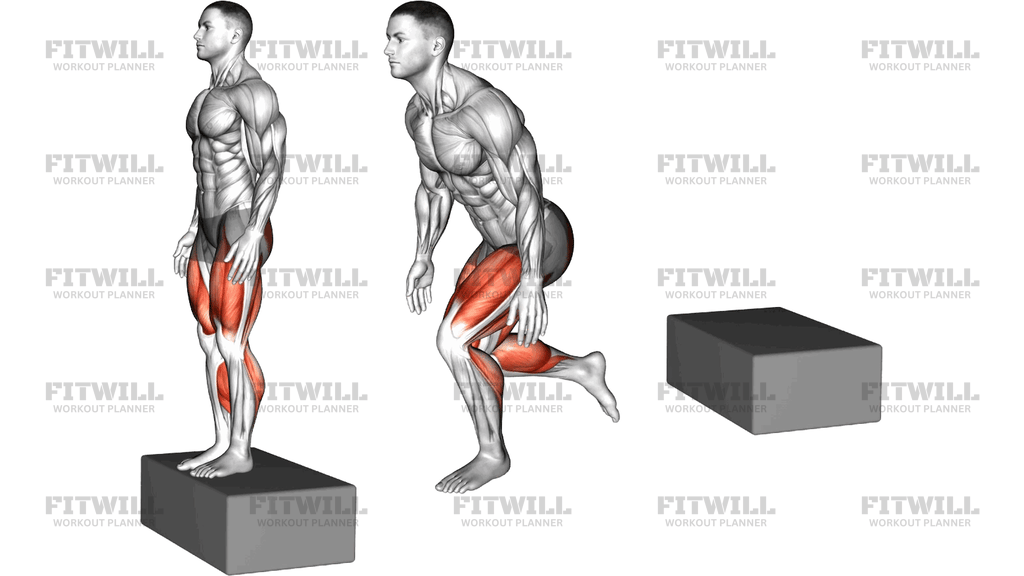
Instructions
- Set up a stable plyo box or step platform, roughly 12 to 20 inches high, on a firm non-slip surface with clear space open diagonally in front of you.
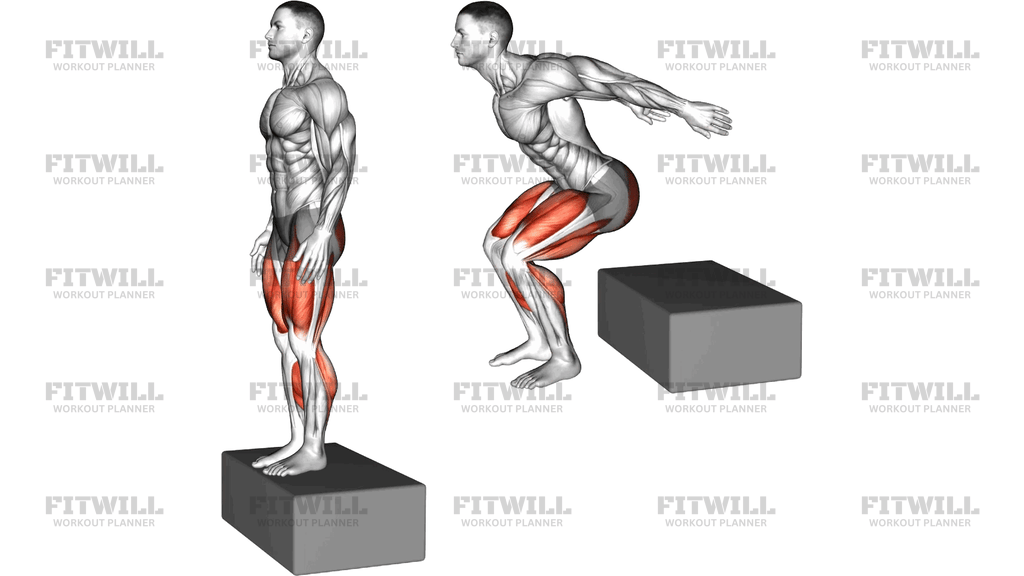
- Stand on top of the box with both feet fully planted near the front edge, toes just behind the edge, arms relaxed at your sides.
- Brace your core lightly, keep your chest tall, and fix your eyes on a spot on the floor about 45 degrees to one side of your landing zone.
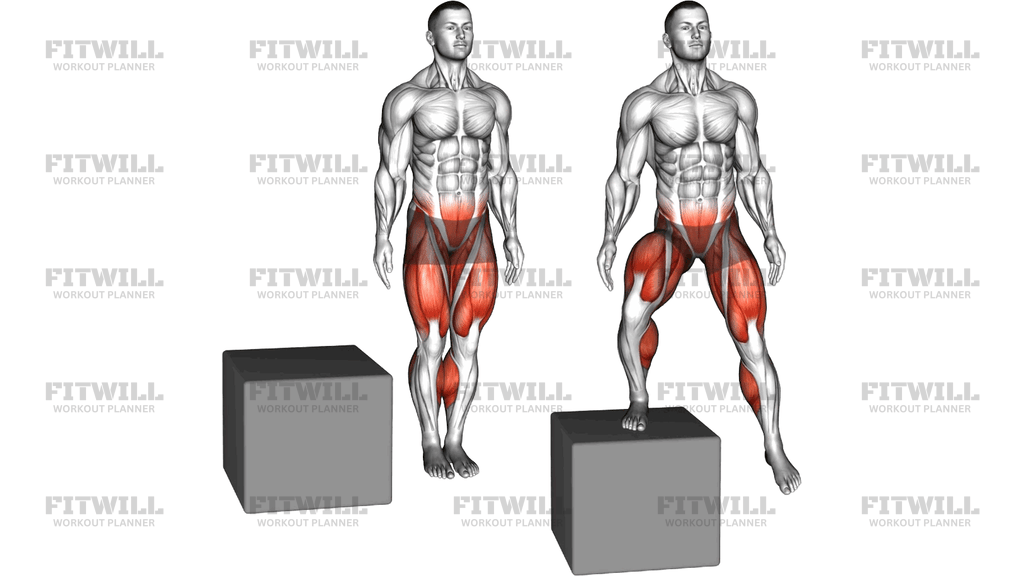
- Step off the box with one foot, letting gravity bring you down rather than pushing or jumping off, and bring your trailing foot down so both feet meet the floor at the same time.
- Absorb the landing on both feet by sinking into a quarter squat, pushing your hips back, and letting your knees bend over your toes while your arms swing back behind you.
- Without pausing, drive through the floor with both legs and jump diagonally toward your target side, swinging your arms up and across to help redirect your momentum.
- Land from the diagonal jump on both feet with soft knees and quiet contact, holding the landing for a beat to demonstrate control.
- Exhale as you rebound into the diagonal jump, and inhale during the reset between reps.
- Step back onto the box, reset your stance and focus, and repeat the sequence, alternating the diagonal direction each set or each rep as planned.
Tips & Tricks
- The most common mistake is jumping off the box instead of stepping off. A jump adds height and impact you did not plan for and makes the two-foot landing much harder to time.
- If your knees cave inward when you land, think about spreading the floor with your feet and keeping your pinky toes visible over the inside of your knees.
- A loud, slapping landing means you are stiff or out of position. Aim for a quiet, springy contact where the heel settles under you as the hips absorb the drop.
- Keep the ground contact short once you are competent. Landing and sitting in the quarter squat for two seconds before jumping turns this into two drills and kills the elastic effect.
- Do not look down at your feet during the drop. Pick your diagonal target before you step off so your head and chest stay up and your body organizes around your eyes.
- Lower the box before you lower your effort. A 12-inch drop with a crisp diagonal rebound beats a 24-inch drop with a mushy landing every time.
- Alternate the diagonal direction across reps so you do not build a strong side and a lazy side, especially if your sport cuts both ways.
- Place this drill early in your workout, before heavy lifting or long conditioning, because reactive landing mechanics degrade quickly when you are fatigued.
- If you feel impact in your shins or knees rather than your muscles, check that you are landing mid-foot with your whole foot contacting the floor, not on the balls of your feet alone.
Frequently Asked Questions
What muscles does the Box Jump Drop 2 Foot Land Diagonal Jump work?
The quadriceps and glutes do most of the work absorbing the drop and driving the diagonal jump, with the calves and hamstrings assisting the rebound. The hip and ankle stabilizers are heavily involved because you decelerate downward and re-accelerate sideways.
How high should the box be for the Box Jump Drop 2 Foot Land Diagonal Jump?
Start at 12 inches or lower if you are new to plyometrics, and only progress toward 20 inches once you can land quietly on both feet and rebound with control. Height is less important than landing quality and short ground contact.
Why step off the box instead of jumping off it?
Stepping off keeps the drop height fixed and the impact predictable, so the emphasis stays on the landing and the diagonal rebound. Jumping off adds extra downward force and shifts focus away from the reactive portion of the drill.
Is the Box Jump Drop 2 Foot Land Diagonal Jump suitable for beginners?
Beginners can do it with a very low step, but it is smarter to first practice a simple box drop with a stuck two-foot landing. Once that landing is quiet and balanced, add the diagonal jump at moderate effort.
How is this different from a regular depth jump?
A depth jump rebounds vertically, while this drill redirects the rebound diagonally to one side. The change of direction adds a cutting element, challenging lateral deceleration and hip stability in a way a vertical rebound does not.
How many reps and sets should I do?
Two to four sets of three to five reps per side works well, with full recovery between sets. Because this is a nervous-system drill, stop the set as soon as your landings get loud or your rebound loses snap.
What is the most common mistake in this exercise?
The most common mistake is letting the ground contact drag, landing and pausing in the squat before jumping. Other frequent errors are jumping off the box, knees collapsing inward on the landing, and failing to bring both feet down at the same time.
What can I substitute if I do not have a plyo box?
Any stable, low platform works, such as a sturdy step or a low, fixed bench. If nothing solid is available, a broad two-foot jump followed by a diagonal jump trains a similar pattern without the drop.
How far should the diagonal jump travel?
Aim for roughly 45 degrees off your facing direction and as far as you can jump while landing softly on both feet. Distance should come from leg drive, not from leaning your torso sideways.
When should I avoid this drill?
Skip it if your knees, ankles, or Achilles are irritated, or if you are training on a hard, unforgiving surface. It is also best avoided late in a fatiguing workout, when landing mechanics break down and injury risk rises.