Lying Neck Extension
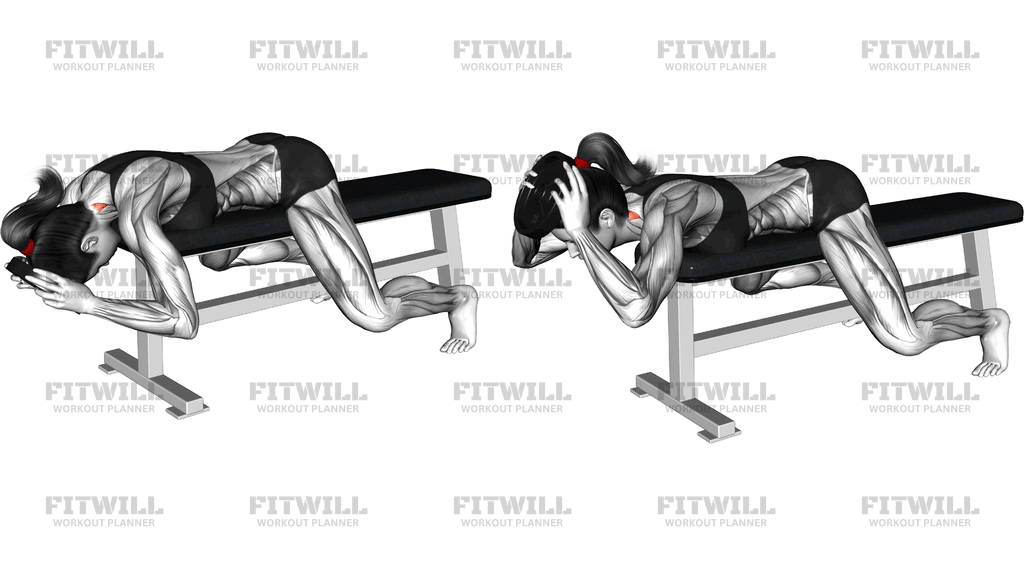
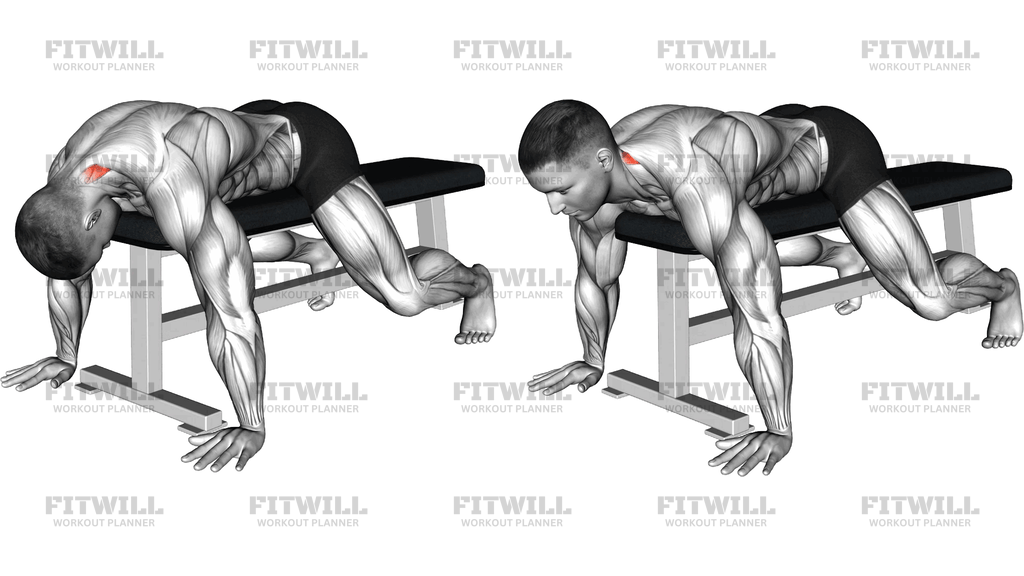
The Lying Neck Extension is a bodyweight neck exercise performed face down on a flat bench, with your upper chest and shoulders supported on the pad and your head hanging freely past the edge. From that dangling start position, you lift your head by extending the neck until your face looks forward or slightly upward, then lower it back down under control. Because the only resistance is the weight of your own head, the movement is easy to scale by adjusting speed, range, and repetitions.
This exercise targets the muscles on the back and sides of the neck that extend the head, including the upper trapezius and the levator scapulae, with supporting work from the deeper cervical extensors. The prone position matters more than it looks: lying chest-down on the bench means you cannot lean or shrug your torso to help the head up, so the neck muscles do the job on their own. The palms-down hand position on the floor gives you stability without pulling on the neck or assisting the lift.
The Lying Neck Extension is a good fit for people building general neck strength, contact-sport athletes who want more resilient necks, and office workers whose heads spend long hours tipped forward over screens. Because extension is usually the weakest direction of neck movement compared with flexion and rotation, it is worth training deliberately rather than assuming it gets covered by pressing or rowing work.
Setup quality determines whether this feels like a clean neck exercise or a awkward shoulder exercise. Position yourself so the bench pad sits under your upper chest and the front of your shoulders, keep your knees on the floor with one knee slightly drawn up for balance, and let the head hang with the chin tucked toward the chest before every rep. If your head is too far onto the bench you lose range; too far off the edge and the lever arm becomes unnecessarily long for a first attempt.
Execution should stay smooth and quiet. Think of leading with the crown of the head, sweeping the face up toward the floor in front of you rather than jerking the chin out, and pausing briefly at the top before lowering slowly. Two or three sets of ten to fifteen controlled reps is a sensible starting volume, and the movement pairs naturally with lying neck flexion to balance the front and back of the neck.
Treat this like a precision exercise, not a test of toughness. The neck responds better to frequent, moderate work than to occasional max efforts, and any sharp pain, dizziness, or tingling is a signal to stop and reassess range, speed, or setup before continuing.
[ Workout Log & Planner ]
Put your next workout in Fitwill
Keep your plan and training log ready when you are.


Instructions
- Lie face down on a flat bench with the pad supporting your upper chest and the fronts of your shoulders, so your head and neck hang past the end of the bench.
- Place your palms flat on the floor with arms nearly straight, and rest one knee slightly forward on the ground so your body feels stable and square.
- Let your head hang down at the start, chin tucked toward the chest and the back of the neck lengthened.
- Brace your midsection lightly and keep your shoulders relaxed away from your ears so the lift comes from the neck, not a shrug.
- Exhale and raise your head by extending the neck, leading with the crown of the head and keeping the face level rather than twisting to one side.
- Continue until your head is level with your spine or slightly above it, and hold the top position for a brief pause.
- Inhale and lower your head slowly back to the hanging start position, resisting gravity on the way down instead of dropping it.
- Complete your repetitions, then sit up from the bench carefully and roll or turn your head gently to reset before the next set.
Tips & Tricks
- If your shoulders creep up toward your ears during the lift, you are shrugging instead of extending the neck; set the shoulders down first and think of the movement starting at the base of the skull.
- A common mistake is lifting the head by pushing off with one hand on the floor; keep your hand contact passive so the neck muscles, not the arms, control the rep.
- Keep the nose pointing straight down at the bottom of every rep. Turning the face sideways as you get tired turns the exercise into a rotation and changes which muscles work.
- The head hanging fully vertical is a long lever for beginners. Starting with the head slightly higher on the bench, a smaller range, shortens the lever until control improves.
- Avoid tucking the chin fully and then yanking it upward at speed; the crown of the head should lead a smooth arc, which keeps the stress on the neck extensors rather than the joints.
- Do not hold your breath. Exhaling as the head rises and inhaling as it lowers keeps tension in the neck from spiking.
- Stop the top position when the head is level with or a little above your spine; cranking the neck into a hard arch at the end range is where most discomfort in this exercise starts.
- If the bench pad presses uncomfortably into your chest, shift slightly so more of the pad sits under the shoulders and less under the ribs.
- Keep the hips low and one knee on the floor for balance; lifting the legs or shifting the torso turns this into a back-extension exercise and steals stability from the neck.
Frequently Asked Questions
What muscles does the Lying Neck Extension work?
It primarily trains the neck extensors on the back and sides of the neck, including the upper trapezius and levator scapulae, with the deeper cervical extensors stabilizing throughout. The highlighted area in the movement is the upper neck region where these muscles attach.
Why is the exercise done face down on a bench instead of standing?
The prone position fixes your torso so it cannot lean or shrug to assist, and gravity pulls directly on the hanging head. That makes the resistance honest and consistent from rep to rep.
Is the Lying Neck Extension safe for beginners?
Yes, because the only load is the weight of the head, but beginners should use a moderate range and slow tempo rather than chasing extra extension. Starting with ten to twelve smooth reps is plenty while you learn the movement.
How far should I lift my head at the top?
Aim to bring your head level with your spine, or slightly above if that feels comfortable. Extending hard into a full arch at the end range adds stress to the cervical joints without adding much training benefit.
Should I keep my hands on the floor or place them behind my back?
Hands flat on the floor provide balance and safety without assisting the lift. Placing hands behind the back removes the stabilizing contact and makes the exercise harder, which is a reasonable progression only once control is solid.
My shoulders shrug up every rep. How do I fix it?
Set your shoulders down away from your ears before each rep and consciously keep them there while the head moves. If shrugging persists, reduce the range so you are not reaching for extra height the shoulders are trying to provide.
Can I substitute the Lying Neck Extension with another exercise?
Four-point kneeling neck extensions or seated neck extensions against light resistance train a similar pattern. The bench version is unique in that the torso is fully supported, which makes it one of the easiest places to learn the movement cleanly.
How often should I train this exercise?
Neck muscles generally tolerate and respond well to frequent, moderate work, so two to three sessions per week is a practical approach. Keep volume modest and let soreness guide how quickly you add reps.
When should I skip this exercise?
Avoid it if you have an acute neck injury, recent whiplash, or if the movement produces sharp pain, dizziness, or tingling into the arms. In those situations, get clearance from a qualified professional before loading the neck in any direction.
Should I pair the Lying Neck Extension with another neck exercise?
Yes, pairing it with a lying neck flexion on the same bench balances the front and back of the neck. Training extension alone can create an imbalance over time.