Weighted Lying Neck Extension
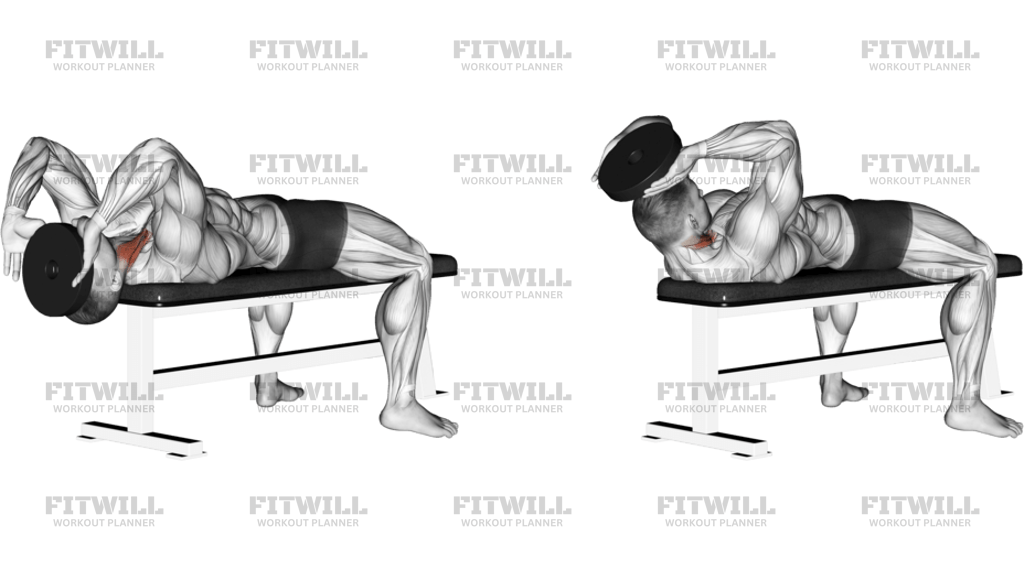
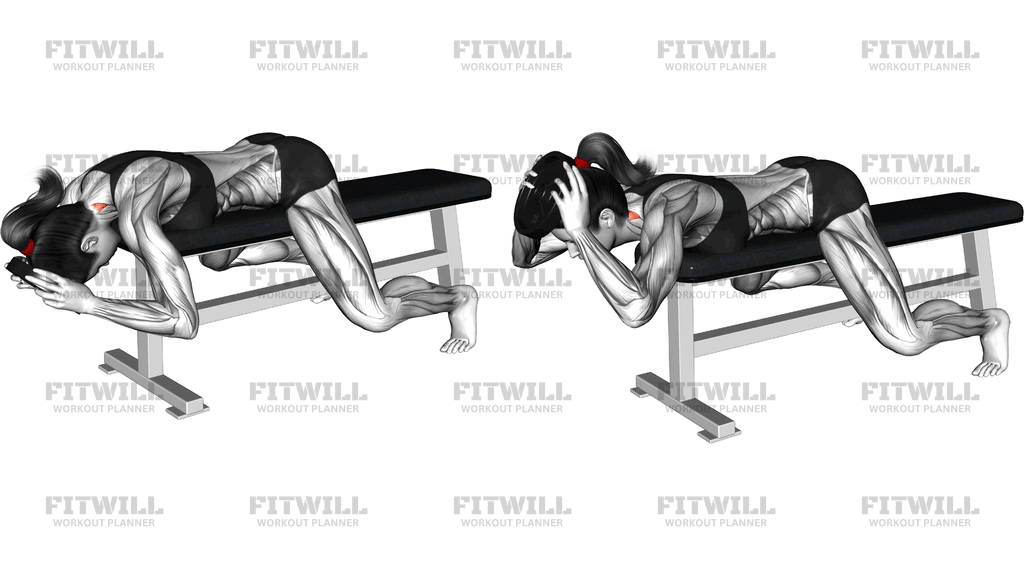
Weighted Lying Neck Extension is a direct strength exercise for the muscles on the back of the neck. You lie face down along a flat bench with your head and upper shoulders hanging past the end, rest a weight plate on the back of your head, and lift your head by extending the neck against that resistance. Because the head hangs freely at the start, the neck extensors work through a full, unhurried range from a flexed position up to neutral or slightly beyond.
This movement is most useful for people who want a stronger, more resilient neck: contact-sport athletes such as wrestlers, rugby and football players, boxers and MMA fighters, plus anyone whose training or daily posture leaves the back of the neck underworked. The main effort comes from the neck extensors running from the base of the skull down the cervical spine, with the upper traps assisting as the head lifts. The torso stays supported and still throughout, so the work stays isolated to the neck rather than turning into a shrug or a back extension.
The setup matters more here than in most exercises. Your chest and upper ribs should rest firmly on the bench so the only moving joint is the neck itself, and the plate should sit flat on the back of the head, not on the neck or shoulders. Your hands hold the plate in place and steady it, but they should not press it into your head or help lift it. If your body position drifts on the bench, the weight slides, or your shoulders creep up toward your ears, the load stops being a clean neck stimulus.
Execution should feel slow and deliberate. Let the head sink down toward the floor until you feel a mild stretch along the back of the neck, then lift by drawing the back of the head up and back until your neck reaches a straight line with your spine or a small extension past it. Pause briefly at the top, lower the head under control, and breathe steadily the whole time. The neck responds better to moderate loads and strict tempo than to heavy, jerky reps, so treat this like a precision movement rather than a max-effort lift.
In practice, Weighted Lying Neck Extension usually appears in short accessory blocks at the end of a training session, often paired with a weighted neck flexion to balance the front and back of the neck. Most lifters do two to four sets of eight to fifteen controlled reps with a light plate, increasing the load only when the current weight feels easy at that tempo. Stop the set if you feel tingling, dizziness, or sharp pain, and never sacrifice range or control to add plates.
[ Workout Log & Planner ]
Put your next workout in Fitwill
Keep your plan and training log ready when you are.


Instructions
- Place a flat bench in a clear area and lie face down on it so your chest and upper torso are fully supported and your head and the top of your shoulders extend past the end of the bench.
- Bend your arms and place a light weight plate flat against the back of your head, holding it steady with both hands, one on each side of the plate.
- Settle your body so your hips, ribs, and shoulders stay in contact with the bench, and relax your upper traps down away from your ears.
- Inhale, then let your head lower slowly toward the floor until the back of your neck reaches a mild stretch; this is your starting position.
- Exhale and extend your neck by lifting the back of your head upward, keeping the plate level and your hands supporting rather than pushing it.
- Continue until your neck forms a straight line with your upper back, or slightly past it, and squeeze the back of your neck for a one-count pause.
- Lower your head back down over two to three slow counts until the stretch position is reached again.
- Keep breathing steadily on every rep instead of holding your breath, and keep your shoulders and torso glued to the bench.
- Complete your planned reps, then sit up carefully, remove the plate first, and give the neck a few seconds of easy movement before your next set.
- Add weight only when you can complete all reps with strict tempo, full control, and no shoulder shrugging.
Tips & Tricks
- Start with a very light plate, around 1.25 to 2.5 kg, even if you are strong elsewhere; the neck needs a lower entry load than most body parts.
- The most common mistake is turning the lift into a shrug. If your shoulders rise off the bench toward your ears, drop the weight slightly and consciously keep the upper traps relaxed while only the head moves.
- Do not let your hands do the lifting. If your arms extend and press the plate up, the neck extensors stop working; keep the elbows bent and the hands only stabilizing the plate.
- Stop the range at a straight neck or just past it. Cranking the head high toward the ceiling with a plate loaded puts the cervical spine into unnecessary end-range compression.
- If the plate slides around because of your hair or a sweaty head, place a small towel between the plate and your head for grip and comfort.
- Keep the movement purely sagittal: the face should travel toward the floor and straight back up, not rotate or tilt sideways, which shifts load onto smaller neck structures.
- If your lower back feels the exercise, slide slightly further up the bench so more of your torso is supported and the spine stays neutral.
- Pair this with a weighted lying neck flexion on your back in the same session so the front and back of the neck stay balanced.
- Use a slower lowering phase than lifting phase; most of the strength benefit for the neck comes from controlling the head on the way down.
Frequently Asked Questions
Which muscles does Weighted Lying Neck Extension work?
It primarily targets the neck extensors along the back of the cervical spine, with the upper traps assisting as the head lifts. The rest of the body stays supported on the bench, so the demand stays almost entirely on the neck.
How much weight should I use for Weighted Lying Neck Extension?
Begin with a light plate between 1.25 and 2.5 kg and only progress when you can complete all reps with a slow lowering phase and no shoulder shrugging. The neck tolerates heavy loading poorly, so gradual increases are the sensible approach.
Is Weighted Lying Neck Extension safe for beginners?
Beginners can do it, but it is wise to start with the bodyweight version, letting the head rise and lower with no plate, to learn the range and control first. Once that feels smooth for twelve to fifteen reps, add the lightest available plate.
Why do I lie face down on the bench instead of standing or sitting?
Lying prone with the torso supported isolates the neck as the only moving area and lets the head hang below the bench line, giving the extensors a loaded stretch at the start of each rep. Standing versions require more balance and make it easier to cheat with the torso.
How far should I extend my neck at the top of the rep?
Lift until your neck lines up with your upper back or extends slightly past it, then pause. Going much higher under load pushes the cervical spine into end-range compression for no extra muscle benefit.
What is the most common mistake with Weighted Lying Neck Extension?
Shrugging the shoulders and pushing the plate with the hands are the two biggest ones. Both take work away from the neck extensors, so keep the shoulders relaxed on the bench and the elbows bent with the hands only steadying the plate.
Can I do Weighted Lying Neck Extension without a bench?
Yes, you can lie face down on a mat or the edge of a bed with your head past the edge, as long as your chest and ribs are firmly supported and the plate can rest level on the back of your head. The bench is simply the most stable and repeatable setup.
Should I balance Weighted Lying Neck Extension with another exercise?
Yes, most coaches pair it with a weighted lying neck flexion performed on your back, since the front and back of the neck should be trained together. This keeps the musculature around the cervical spine balanced rather than overdeveloped on one side.
When should I avoid this exercise?
Skip it if you have an acute neck injury, recent cervical trauma, or feel tingling, numbness, or dizziness during the movement, and consult a qualified professional before loading the neck in those cases. Neck training should never be pushed through sharp pain.