Bodyweight Box Squat
The Bodyweight Box Squat is a squat variation where you lower yourself onto a sturdy box, bench, or step behind you instead of squatting freely. You stand facing away from the box with feet roughly shoulder-width apart, reach your hips back, and sit down onto the surface with control before standing back up. The box gives you a fixed depth target, which makes it one of the most reliable ways to learn what a proper squat should feel like.
This movement is especially valuable for beginners who struggle with depth, balance, or the habit of letting their knees drift forward. Because the box forces you to load the hips and sit back rather than drop straight down, it teaches the hip hinge pattern that carries over to barbell squats, deadlifts, and everyday movements like getting out of a chair. It is also a solid choice for older trainees, people returning from time off, or anyone rebuilding squat mechanics without external load.
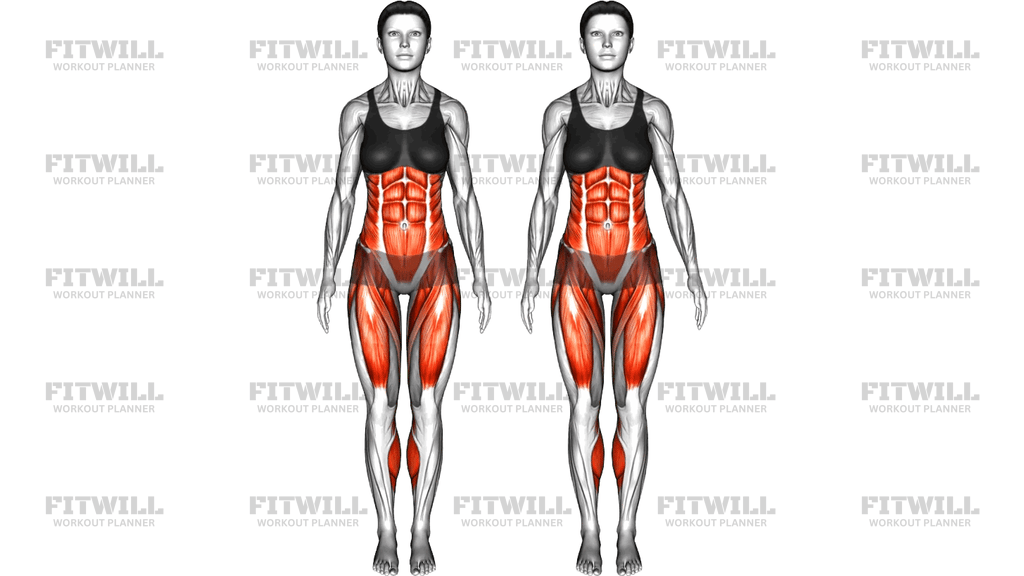
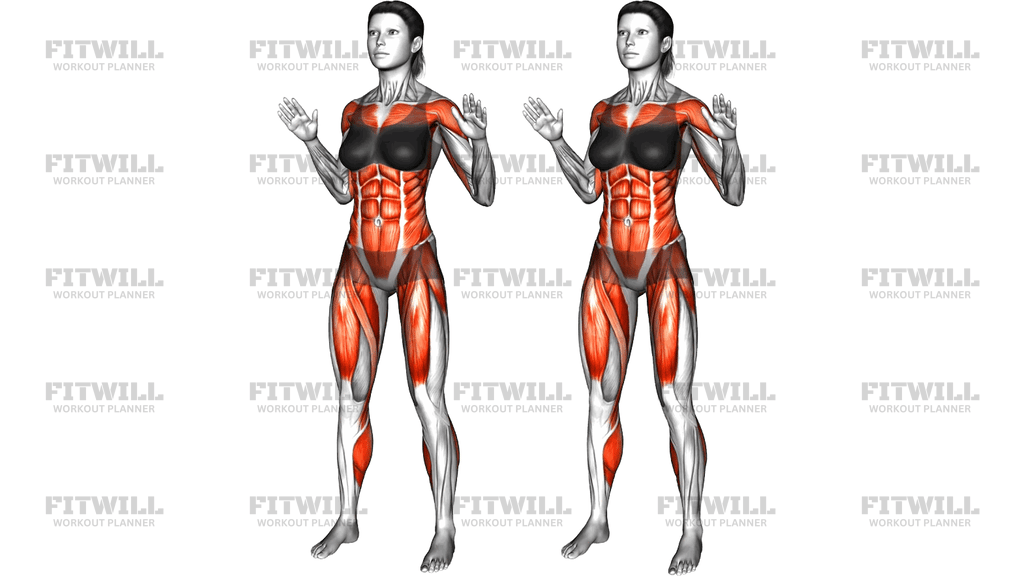
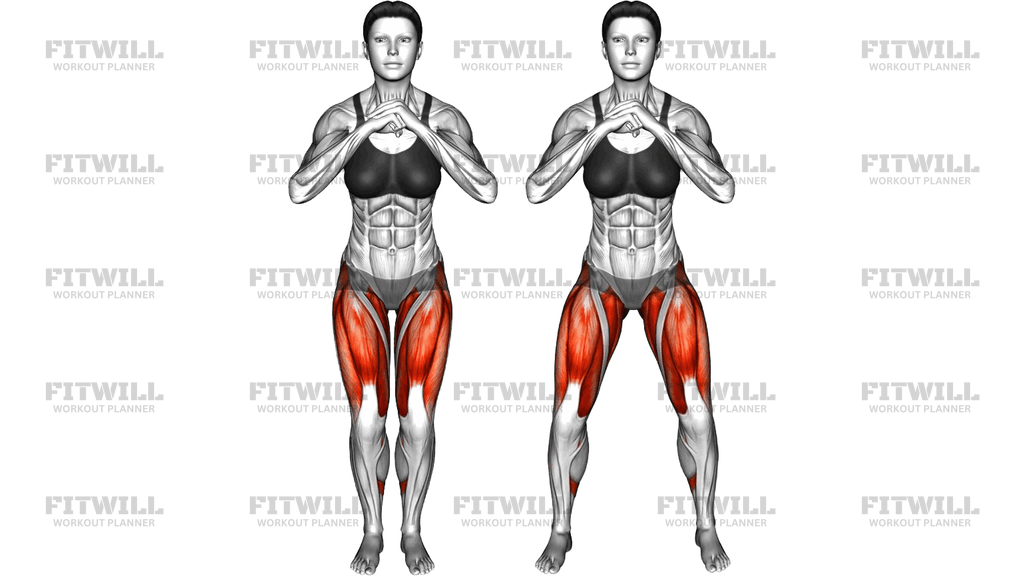
The main muscles worked are the quadriceps and glutes, with the hamstrings assisting as you lower and the core stabilizing your torso throughout. The brief pause on the box removes the stretch reflex you would normally get at the bottom of a free squat, so the muscles have to generate force from a dead stop on the way up. That makes each rep slightly harder than it looks and builds strength through the exact position where most people are weakest.
Setup matters more than it seems. The height of the box determines how deep you go, so pick one where your thighs end up parallel to the floor or slightly above it when seated. Position it close enough behind you that your hips travel back onto it in a straight line, not forward onto your toes. If the box is too far away you will lean excessively; too close and you will bump it before your hips are loaded.
To perform it well, keep your chest up and your weight spread across the whole foot as you push the hips back and reach for the box. Touch down softly rather than collapsing onto the seat, keep tension in your legs even while seated, then drive through the floor to stand tall. Avoid the temptation to rock forward or use momentum to get up; the whole point is controlled, deliberate movement.
In practice, the Bodyweight Box Squat works well as a warm-up before weighted squats, as the main lower-body movement in a beginner routine, or as a teaching drill in higher-rep sets when refining technique. Because it requires no load and only a stable surface, it fits easily into home workouts and travel training alike.
[ Workout Log & Planner ]
Put your next workout in Fitwill
Keep your plan and training log ready when you are.


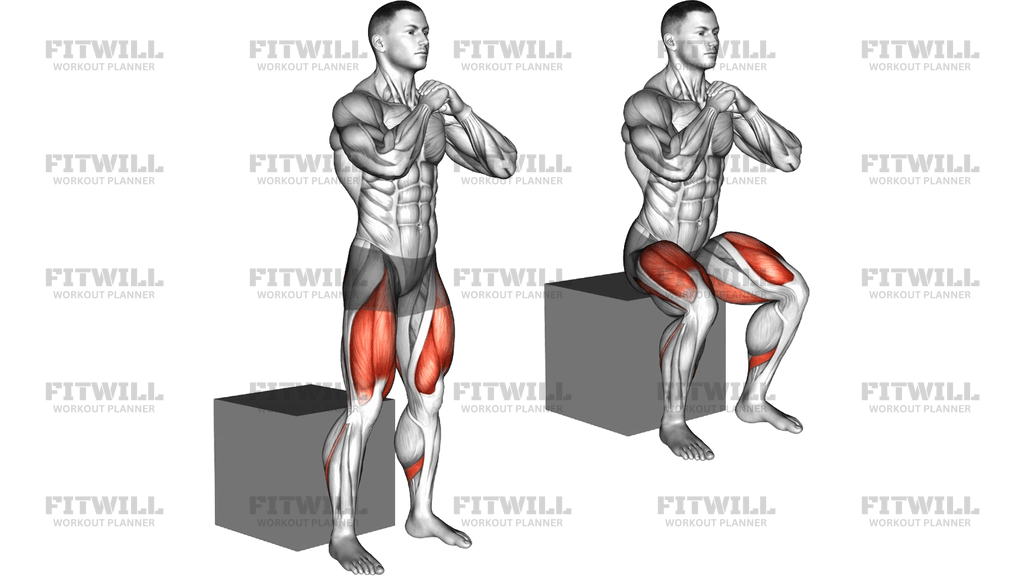
Instructions
- Place a sturdy box, bench, or step behind you at roughly knee height, low enough that your thighs sit parallel to the floor when you are seated.
- Stand facing away from the box with your feet shoulder-width apart, toes turned out slightly, and position yourself about half a foot in front of the box so your hips can travel straight back onto it.
- Clasp your hands together at chest height and raise your elbows slightly forward to help counterbalance your torso.
- Brace your core, lift your chest, and shift your weight onto your whole foot with a slight bias toward the heels.
- Push your hips back and down toward the box, letting your knees bend and track over your toes while your torso leans forward a little.
- Touch down on the box softly with your glutes, keeping your legs under tension instead of fully relaxing into the seat.
- Pause for a moment on the box, then drive your feet into the floor and push your hips forward to stand back up to a full lockout.
- Exhale as you lower onto the box and breathe in at the top of each rep, or simply keep a steady breathing rhythm without holding your breath.
- Reset your stance and brace between reps if your position drifts, then repeat for your target number of repetitions.
Tips & Tricks
- If you keep plopping onto the box, the seat is probably too high or you are losing tension on the way down; lower the height slightly and slow the last few inches of the descent.
- Knees caving inward is the most common fault here — think about spreading the floor with your feet or imagine pushing your knees out over your pinky toes as you sit back.
- Do not rock forward to stand up. If you have to launch off the box with momentum, pause a beat longer while seated and drive straight up through your heels.
- Your shins should stay fairly vertical on this movement. If your knees shoot far past your toes, you are squatting down instead of sitting back — cue yourself to reach your glutes for the box first.
- Adjust box height before adding reps. A box that lets you hit parallel with an upright torso is worth more than a lower one that forces you to round your lower back.
- Keep some pressure on the box with your glutes but not your full weight. Fully unloading into the seat turns the rep into a sit-up-and-stand and defeats the purpose of the exercise.
- Warm up with a few partial-range reps to a higher surface if your hips feel tight, then progress to the full box as they open up.
- Film yourself from the side once in a while — the box makes it easy to check whether your hips travel back in a straight line or you are drifting forward onto your toes.
Frequently Asked Questions
What muscles does the Bodyweight Box Squat work?
The quadriceps and glutes do most of the work, with the hamstrings helping control the descent and the core stabilizing your torso. The brief pause on the box makes the quads and glutes work harder from a dead stop on the way up.
How high should the box be for the Bodyweight Box Squat?
Start with a surface around knee height so your thighs are parallel to the floor when seated. If that feels too deep or pulls you forward, start slightly higher and lower the box as your mobility improves.
Is the Bodyweight Box Squat good for beginners?
Yes, it is one of the best beginner squat progressions because the box sets a consistent depth target and teaches you to sit back with your hips instead of dropping your knees forward.
Should I fully relax when I sit on the box?
No. Keep light tension in your legs and only touch down briefly with your glutes. Fully unloading and then bouncing up turns the rep into a momentum-driven stand rather than a strength movement.
Why do my knees cave in during the Bodyweight Box Squat?
Weak or under-cued glutes are the usual culprit. Deliberately push your knees out over your toes as you descend, and if it persists, add dedicated glute work like glute bridges to your routine.
How is the Bodyweight Box Squat different from a regular bodyweight squat?
The box gives you a fixed depth, reinforces sitting back at the hips, and eliminates the stretch rebound at the bottom. That makes it easier to control depth and harder to cheat with momentum.
What can I use if I do not have a box or bench?
Any stable, knee-height surface works — a sturdy chair, a stair-step platform, or a low plyometric box. Just make sure it will not slide or tip when you sit back onto it.
How many reps of the Bodyweight Box Squat should I do?
For learning the pattern, do 2 to 3 sets of 8 to 15 slow, controlled reps. As it becomes easy, progress to deeper boxes, slower tempos, or added load rather than endlessly adding reps.
Is it safe for people with knee discomfort?
Sitting back onto a box often feels more comfortable than free squats because it keeps the shins vertical and reduces forward knee travel. Stay within a pain-free range and choose a box height you can control comfortably.