Dumbbell Incline Twisted Fly
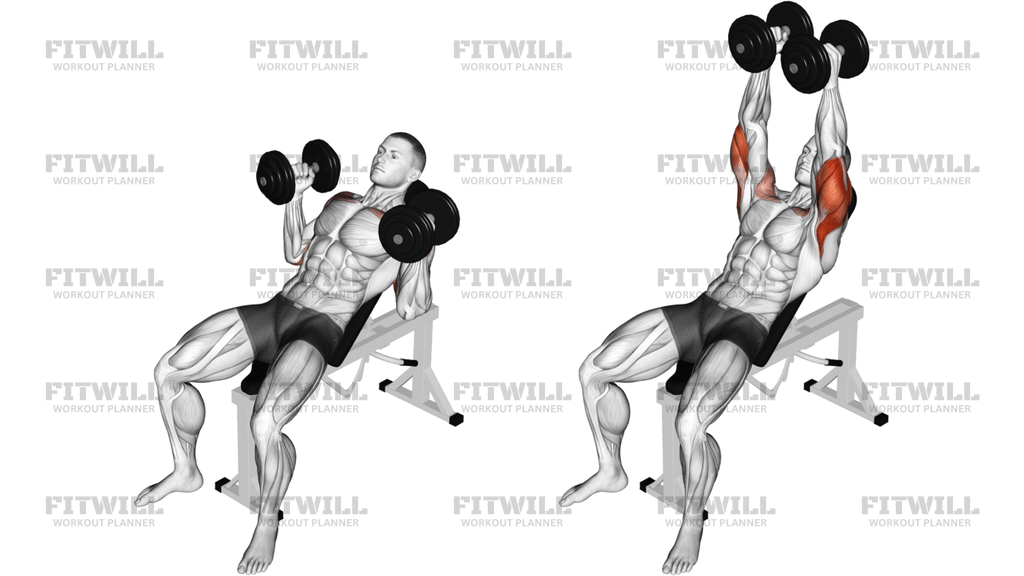
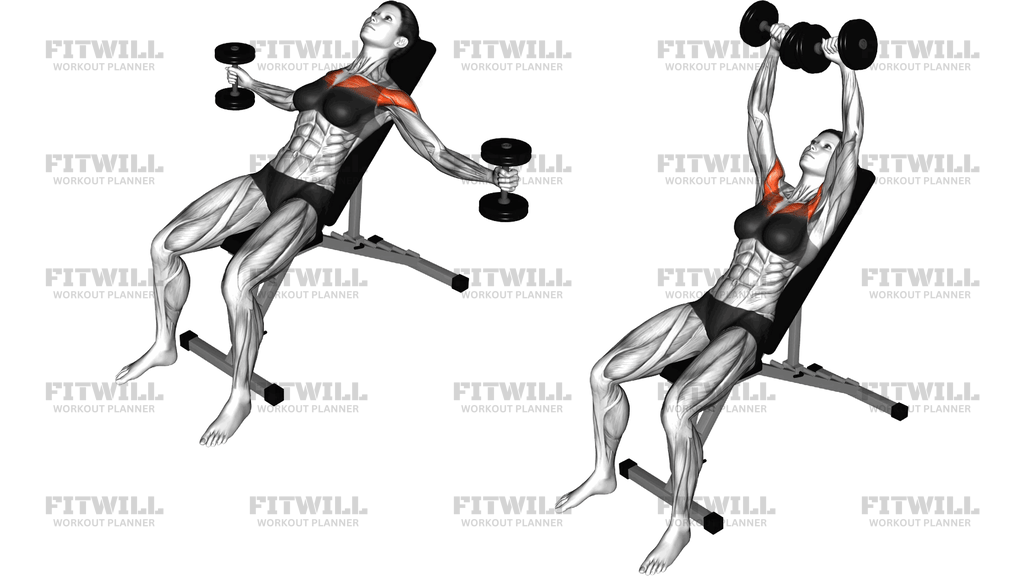
The Dumbbell Incline Twisted Fly is a chest isolation exercise performed on an incline bench, usually set between 30 and 45 degrees. You lie back with a dumbbell in each hand, open your arms out wide to the sides, and sweep them up in an arc above your chest while rotating your wrists on the way up. The twist is what separates this from a standard incline fly: your palms start facing forward at the stretched position and rotate inward so they face each other when your arms come together overhead.
Because the bench is angled upward, the emphasis lands on the clavicular head of the pectoralis major — the upper chest fibers that run up toward the collarbone — while the front delts assist through the arc. The rotation adds a pronounced squeeze at the top that a fixed-grip fly cannot match, which is why many lifters use this movement as a finisher after presses when the chest is already fatigued and a mind-muscle squeeze matters more than heavy load.
Setup matters more here than in most pressing work. With no back support aligned correctly and no bench angle matched to your torso, the front shoulders take over and the upper chest loses its share of the work. Keep your head, upper back, and glutes in contact with the pad, plant your feet flat on the floor, and hold the dumbbells directly above your upper chest before you begin the descent.
Execution should feel like a wide hug rather than a press. Lower the dumbbells along a wide, controlled arc until you feel a stretch across the upper chest, keeping a soft, fixed bend in the elbows the entire time. Then reverse the arc, rotating your wrists as you rise so the dumbbells finish close together above you, handles nearly touching. The elbows stay below the line of your wrists throughout — when the elbows drift up toward your ears, the shoulder joint takes stress it does not need.
This exercise suits intermediate lifters who already own a solid press and want to build upper chest shape and a stronger contraction, as well as anyone whose upper chest lags behind the rest of their chest. Because the movement works in the stretch position with a rotating wrist, use lighter dumbbells than you would for incline presses or standard flies — typically 50 to 70 percent of your fly weight — and keep the reps higher, in the 10 to 15 range.
The main safety point is controlling the stretch. The shoulder is most vulnerable at the bottom of a fly, especially with an incline angle pulling the arms behind the torso line. Stop the descent when you feel a comfortable pec stretch rather than chasing the dumbbells toward the floor, and never bounce out of the bottom. If your wrists rotate painfully or your shoulders pinch, reduce the weight and the range before adjusting anything else.
[ Workout Log & Planner ]
Put your next workout in Fitwill
Keep your plan and training log ready when you are.


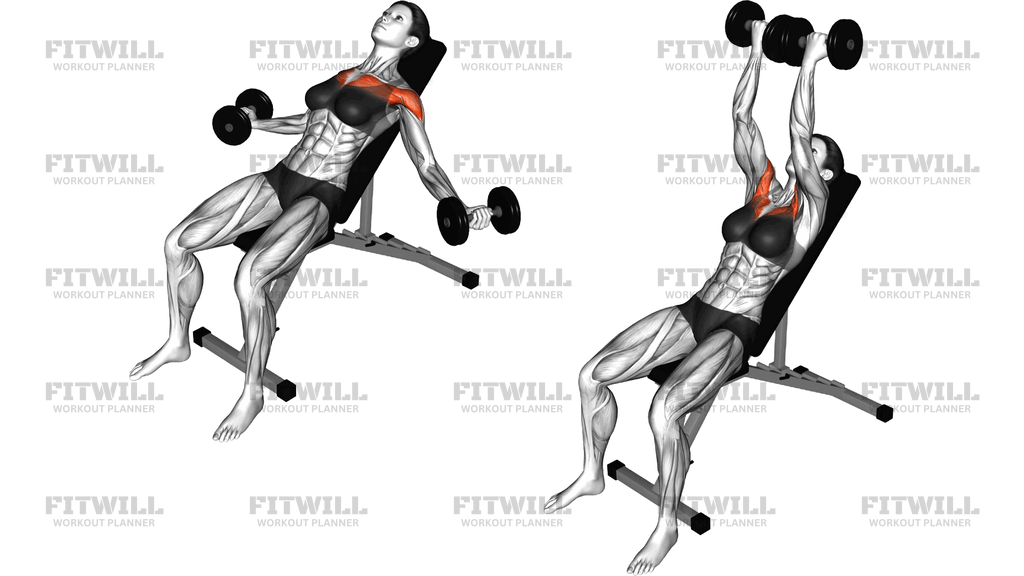
Instructions
- Set an incline bench to roughly 30-45 degrees and sit on it with a dumbbell in each hand, resting them on your thighs.
- Kick the dumbbells back one at a time as you lie down, letting your head, upper back, and glutes stay against the pad with your feet flat on the floor.
- Press both dumbbells straight up over your upper chest and turn your palms to face forward, with a slight bend fixed in your elbows.
- Brace your core lightly and pull your shoulder blades down and together so they stay pinned to the bench.
- Inhale and lower the dumbbells out to the sides in a wide arc, keeping the elbows slightly below wrist level until you feel a stretch across the upper chest.
- Exhale and sweep the dumbbells back up along the same arc, rotating your wrists as you rise so your palms end up facing each other with the handles nearly touching overhead.
- Pause for a beat in the top position and squeeze the upper chest before starting the next rep.
- Keep the elbow bend constant throughout — do not straighten or bend the arms as you move, which would turn the fly into a press.
- On your final rep, let the elbows bend and guide the dumbbells back toward your torso, then sit up and lower them to the floor with control.
Tips & Tricks
- The most common mistake is turning this into a press by bending and straightening the elbows — the arc should come entirely from the shoulder joints, with the elbow angle locked in from start to finish.
- Going too heavy is the fastest way to lose this exercise. If the dumbbells drift behind the line of your torso at the bottom, drop the weight and shorten the stretch.
- Rotate the wrists during the rise, not at the bottom. Starting the twist too early shortens the pec stretch, which is where most of the upper chest stimulus comes from.
- If your front shoulders burn before your chest does, lower the bench angle slightly — steeper angles shift more work to the deltoids.
- Keep your lower back from arching off the bench. If it does, your torso is sliding down the pad; brace your abs and reposition your hips before continuing.
- Think of the top squeeze as bringing your upper arms toward each other, not the dumbbells. Chasing the handles together with shrugged shoulders recruits the traps instead of the chest.
- Stop the descent at the point of a mild pec stretch rather than a fixed depth. Your arm length and shoulder flexibility set your range, not the floor.
- Dropping the dumbbells from the top position strains the shoulders and is hard on the bench. Always bring them to your torso and sit up before setting them down.
Frequently Asked Questions
Which muscles does the Dumbbell Incline Twisted Fly work?
The primary target is the upper chest, specifically the clavicular head of the pectoralis major. The front delts assist through the arc, and the rotation at the top adds an extra contraction cue for the chest fibers.
Why twist the wrists during a fly at all?
The rotation lets the dumbbells come closer together overhead, which increases the squeeze at the end of the rep. A standard fly with a fixed grip ends when the dumbbells meet, often leaving the top portion of the contraction undertrained.
What bench angle should I use for the Dumbbell Incline Twisted Fly?
Between 30 and 45 degrees works for most lifters. Lower angles shift work toward the mid chest, while steeper angles increase front delt involvement and turn the movement closer to a shoulder exercise.
Is this exercise suitable for beginners?
Beginners are usually better served by a standard incline fly or incline press first, since adding wrist rotation while controlling a stretched position takes some coordination. Once the fly pattern feels stable, adding the twist with light dumbbells is a natural progression.
How heavy should I go on the Dumbbell Incline Twisted Fly?
Use noticeably less weight than you would for incline presses or regular flies — the rotating wrist and deep stretch position demand more control. Most lifters get the best results with 10-15 controlled reps per set.
My shoulders feel pinched at the bottom of the movement. What should I change?
Reduce the weight, shorten the descent so the stretch stays comfortable, and make sure your elbows stay below wrist level. If pinching continues, try a slightly lower bench angle, and stop the exercise if discomfort persists.
Should my elbows be straight or bent during the twist?
Keep a soft, constant bend of roughly 10-20 degrees in the elbows for the entire set. Fully straight arms put unnecessary strain on the elbow joints, and bending further turns the movement into a press.
What can I substitute if I don't have an incline bench?
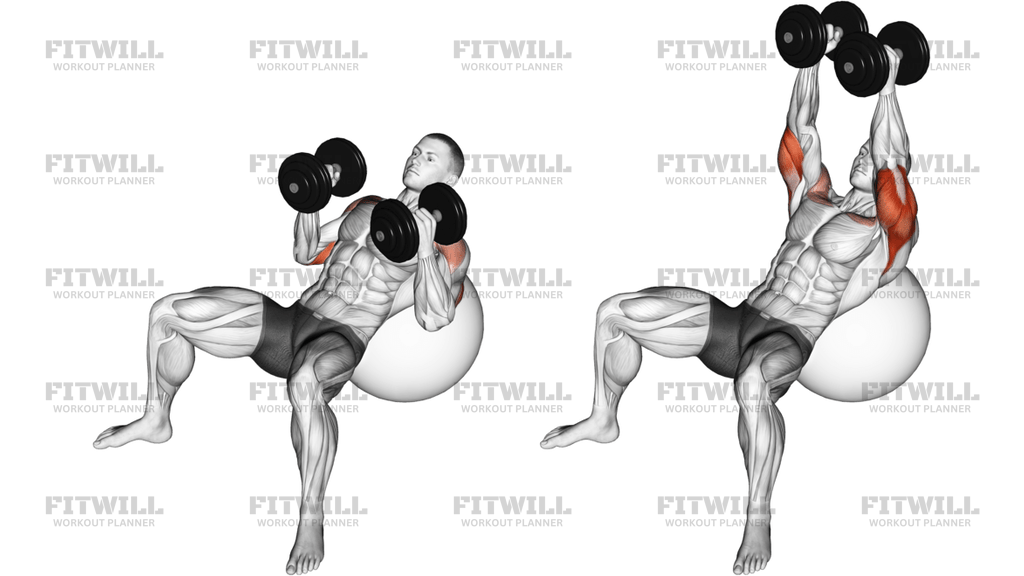
You can perform the same twisting fly pattern on a stability ball, or use a low-incline cable fly from a slight recline. The key details to preserve are the upward torso angle, the wide arc, and the wrist rotation into a top squeeze.
Where should this exercise go in my workout?
It works best after your main pressing movements, when you can focus on the squeeze without needing heavy loads. Pair it with one or two sets of higher reps as a chest finisher rather than as your primary strength builder.