Dumbbell Lying One Arm Rear Lateral Raise
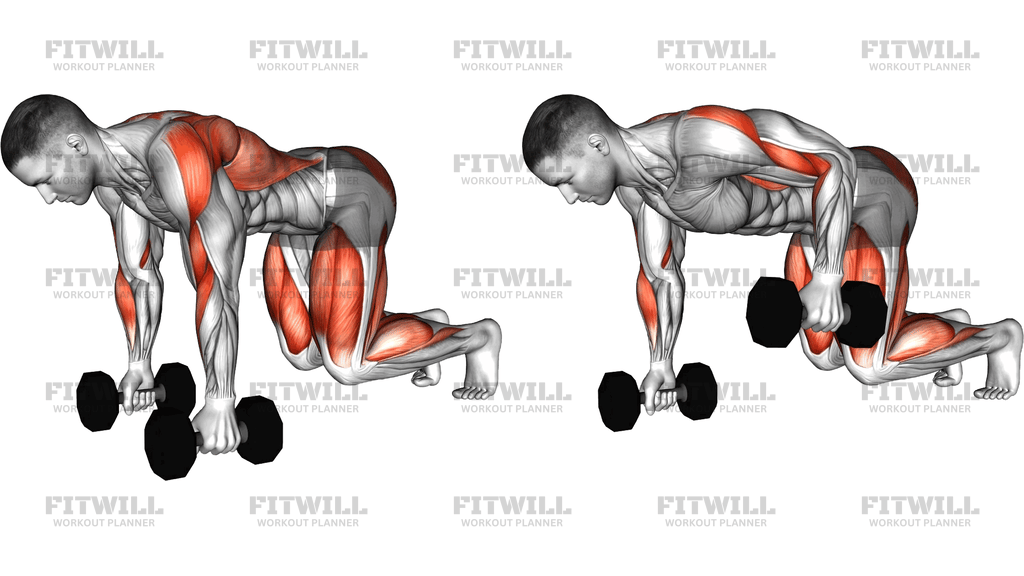
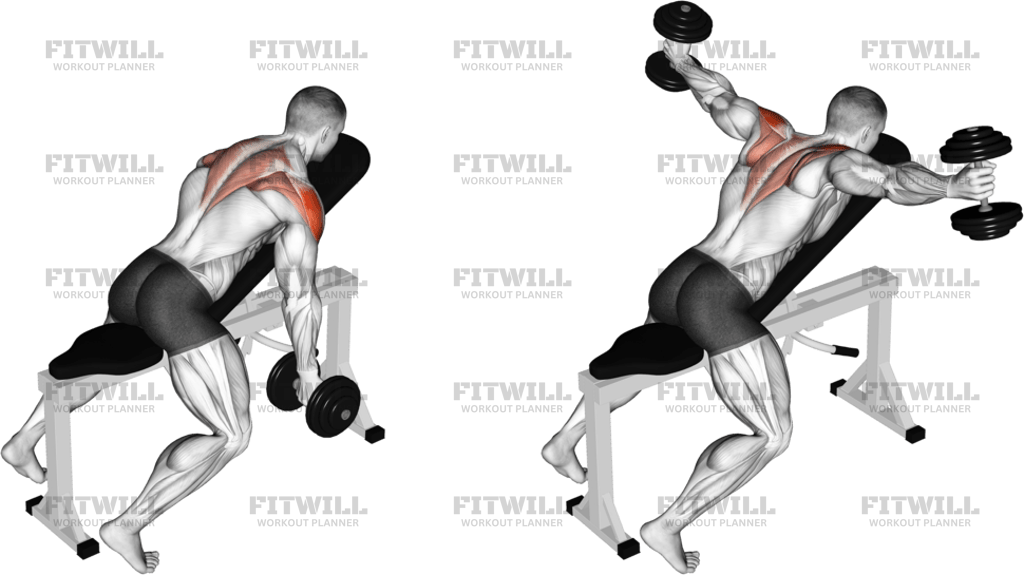
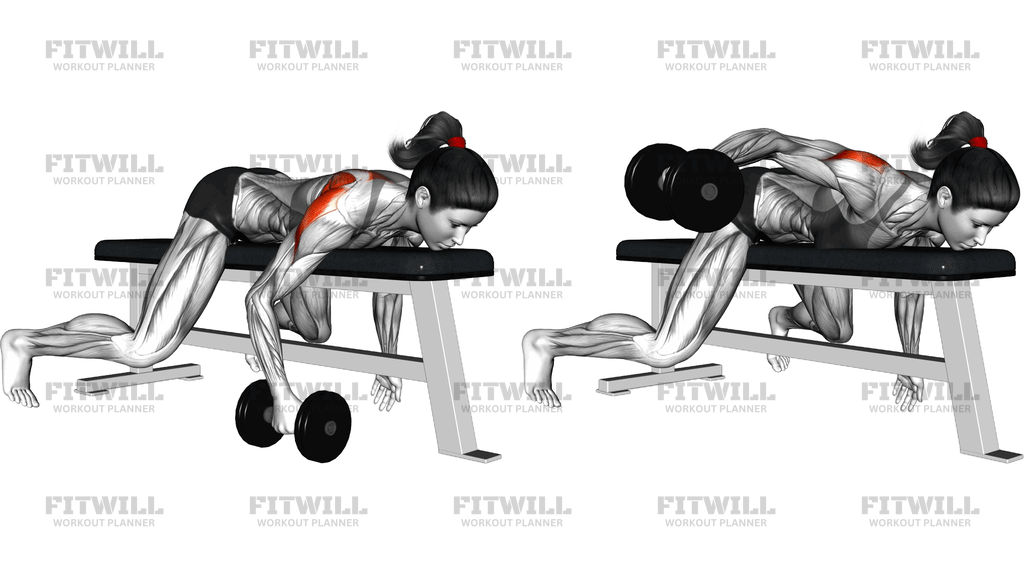
The Dumbbell Lying One Arm Rear Lateral Raise is a single-arm shoulder isolation exercise performed face down on a flat bench. You lie prone with one knee braced on the bench for stability, let the working arm hang straight down holding a dumbbell, and sweep the weight out to the side in a wide arc until your upper arm is roughly level with your torso. Because the bench takes your lower back and momentum largely out of the equation, the rear deltoid has to do the work on its own terms.
This movement targets the posterior deltoid, the often underdeveloped rear portion of the shoulder, with support from the middle and lower traps, the rhomboids, and the rotator cuff muscles that steer the upper arm as it lifts. The one-arm setup also lets you work each side separately, which is useful for spotting and correcting left-to-right differences in shoulder strength and size, something very common in people who favor one side in pressing or carrying work.
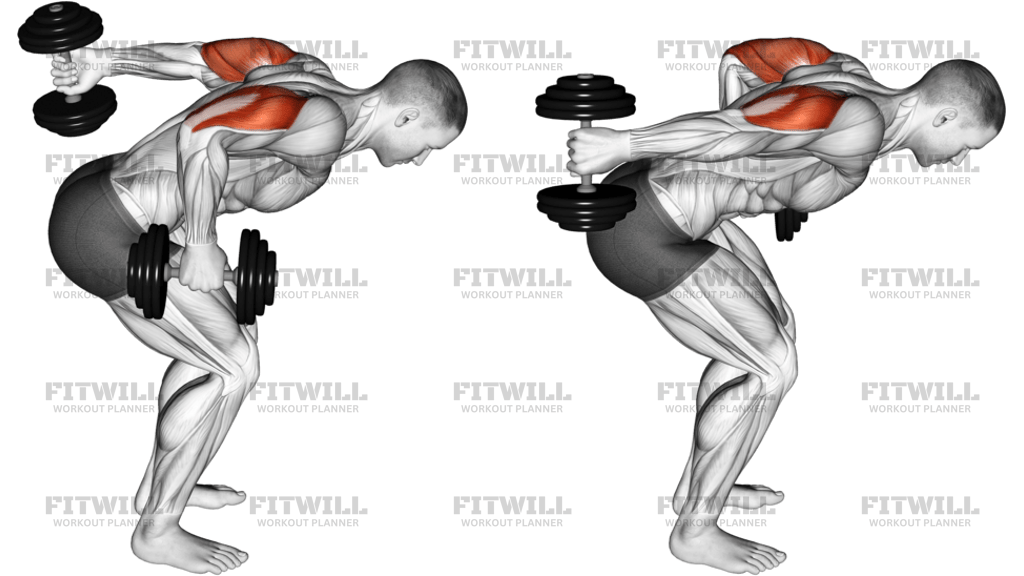
The prone position on the bench is what makes this exercise worth learning. When you stand and bend over to do a traditional rear lateral raise, fatigue in the lower back often ends the set before the shoulders are challenged. Lying chest-down on the bench removes that limitation entirely, so you can focus completely on moving the arm through a clean arc with a controlled tempo. The lifted, extended rear leg and the braced knee create a stable three-point base that keeps your torso from rolling as the weight moves.
Execution is simple but detail-sensitive. Keep your neck relaxed and your face down or turned slightly to the free side, hold the dumbbell with a neutral grip, and raise it with a soft elbow bend, leading with the elbow rather than the hand. Stop when the upper arm reaches shoulder height or slightly below, pause briefly, and lower the weight on a slow count. Swinging the dumbbell or jerking the torso upward are the usual signs that the load is too heavy.
This exercise fits well into any pull or upper body day as an accessory movement, typically for two to four sets of ten to fifteen repetitions per arm. It pairs naturally with pressing exercises, which emphasize the front of the shoulder and leave the rear deltoids lagging if never trained directly. Since it uses only a bench and one dumbbell, it is easy to set up in a busy gym or a minimal home setup, and the single-arm format makes it simple to progress one side at a time without a partner.
[ Workout Log & Planner ]
Put your next workout in Fitwill
Keep your plan and training log ready when you are.


Instructions
- Place a dumbbell on the floor next to a flat bench, then lie face down along the bench so your chest and stomach are supported and your head rests just past the top edge, facing down.
- Slide one knee up onto the bench near your hip to brace your torso, and extend your other leg straight back behind you with the toes on the floor for a stable three-point base.
- Pick up the dumbbell with the arm on the same side as your extended leg, and let it hang straight down from your shoulder with a neutral, relaxed grip.
- Rest your free hand lightly on the bench or let it hang toward the floor to help keep your torso square.
- Brace your abdominal muscles gently so your ribs stay in contact with the bench, and keep your neck relaxed rather than craning it up.
- With a slight bend in your elbow, raise the dumbbell out to the side in a wide arc, leading with the elbow instead of the hand.
- Stop when your upper arm is level with your back or just short of it, and hold that top position for a beat without shrugging toward your ear.
- Lower the dumbbell slowly back to the hanging start position, resisting the weight on the way down rather than letting it drop.
- Exhale as you raise the dumbbell and inhale as you lower it, keeping your breathing steady through the set.
- Complete all repetitions on one side, then switch your knee and leg positions and work the other arm.
Tips & Tricks
- The most common mistake is turning this into a torso rotation: if your chest peels off the bench as the dumbbell rises, the weight is too heavy or you are rushing. Fix it by slowing the tempo down to about two seconds up and three seconds down.
- Do not let your shoulder blade shrug up toward your ear at the top of the rep. Think of pressing the braced side of your ribcage into the bench so the arm moves independently.
- Keep the elbow bend fixed throughout the set. If the arm straightens and bends repeatedly, the triceps and momentum start doing the work the rear deltoid should be handling.
- Start with a lighter dumbbell than you would use for a standing lateral raise. The prone position removes momentum, so the rear deltoid gets far less help than you expect.
- If your extended rear leg feels unstable, push the ball of that foot firmly into the floor and squeeze the glute on that side; this anchors your hips and stops the torso from tipping.
- Aim the arc slightly out and back rather than straight out in front, which lines the movement up with how the rear deltoid fibers actually run.
- Turn your face toward the free-hand side instead of lifting your chin, so your neck stays in line with your spine for the whole set.
- If you feel the work shifting into your upper traps, reduce the range by a few degrees at the top and focus on leading the lift with the elbow, not the wrist.
Frequently Asked Questions
Which muscles does the Dumbbell Lying One Arm Rear Lateral Raise work?
The primary muscle is the posterior deltoid at the back of the shoulder. The middle and lower traps, rhomboids, and rotator cuff muscles assist as the arm sweeps out to the side.
Why lie on a bench instead of doing a bent-over rear lateral raise?
Lying chest-down on the bench removes the lower back fatigue that usually cuts bent-over sets short. It also blocks torso swing, forcing the rear deltoid to lift the dumbbell on its own.
How should the free arm be positioned during the Dumbbell Lying One Arm Rear Lateral Raise?
Let the non-working arm hang toward the floor alongside the bench or rest the hand lightly on the bench edge. Its only job is to help keep your torso square, so keep it relaxed.
How high should I raise the dumbbell at the top of the movement?
Raise it until your upper arm is roughly level with your torso, or just short of that point. Going higher usually shifts work into the traps and can pinch the shoulder.
Is this exercise suitable for beginners?
Yes, as long as beginners start light, since the prone position offers no momentum to hide behind. Practicing the arc with a very light dumbbell for a couple of sessions builds the movement pattern quickly.
Why does one knee rest on the bench in this setup?
The braced knee, along with the chest on the bench and the extended rear leg on the floor, forms a stable base that stops your torso from rolling as the dumbbell travels out to the side.
What can I use instead of the Dumbbell Lying One Arm Rear Lateral Raise?
A reverse cable crossover or a bent-over dumbbell rear lateral raise trains the same area. The lying version is the better choice when you want the bench to lock your torso in place.
How many sets and reps should I do?
Two to four sets of ten to fifteen repetitions per arm works well, using a weight you can lower slowly on every rep. Rest briefly between arms since each side gets a natural breather while the other works.
Is it normal to feel this exercise in the upper back as well as the shoulder?
Yes, some involvement from the traps and rhomboids is expected as the shoulder blade moves with the arm. If you only feel the upper traps, lighten the weight and lead with the elbow instead of the hand.
What should I do if my shoulder pinches during this movement?
Slightly reduce the range at the top, keep the elbow bend soft, and check that you are not shrugging. If discomfort continues, stop the exercise and have a qualified professional assess the shoulder before continuing.