Dumbbell Rear Lunge To Single Arm Shoulders Press
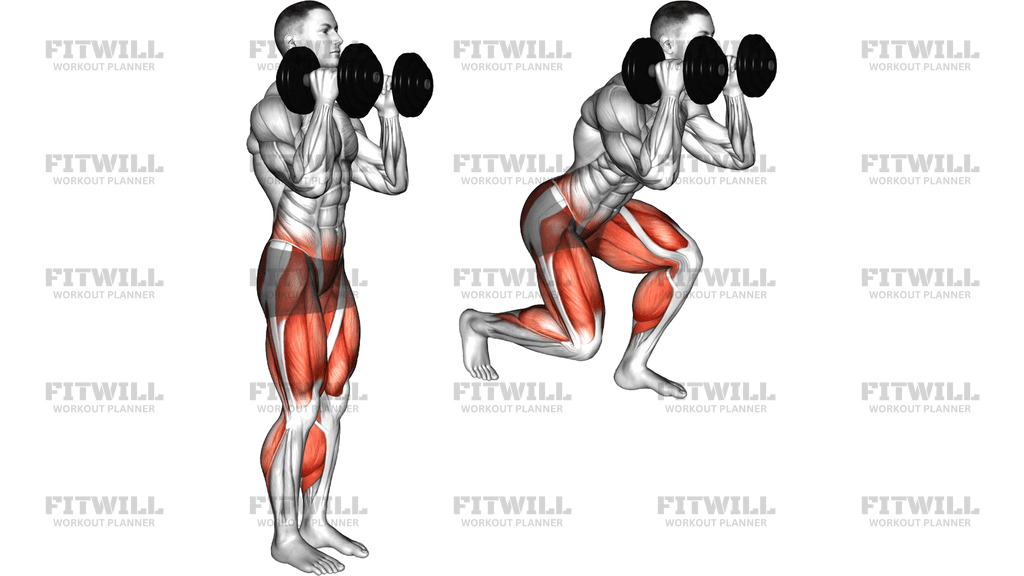
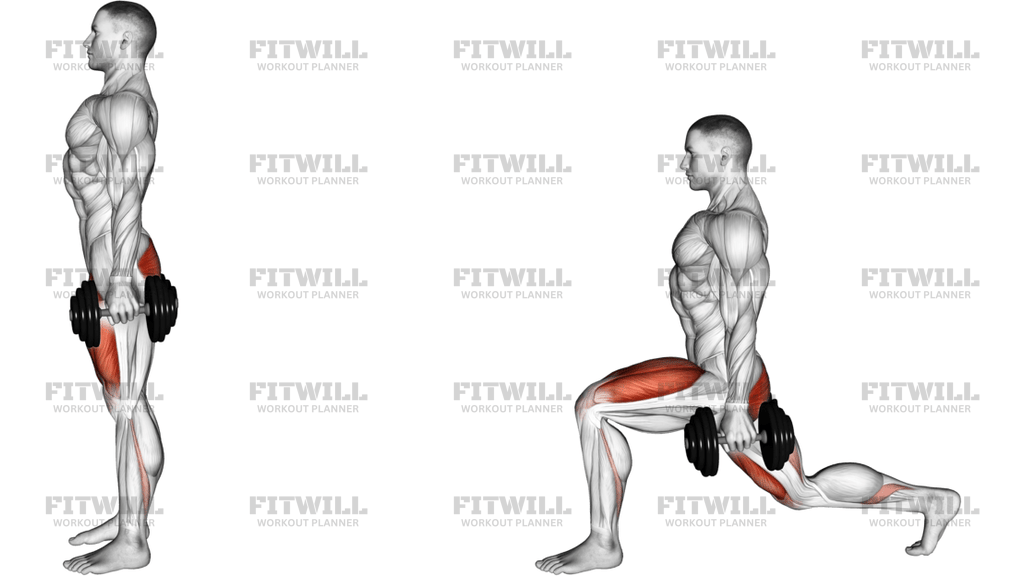
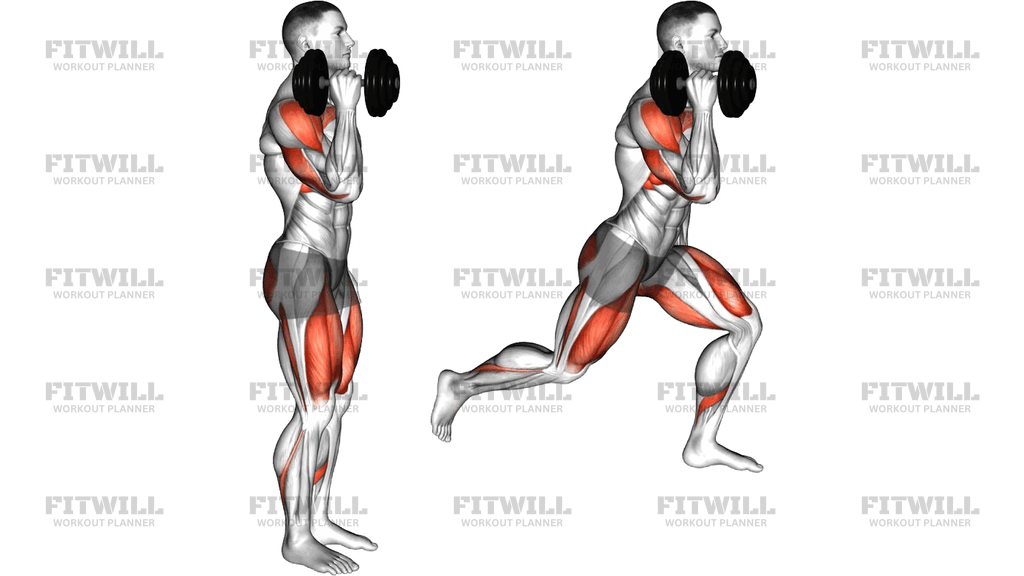
The Dumbbell Rear Lunge To Single Arm Shoulders Press is a compound movement that links two demanding patterns into one rep: a reverse lunge followed by an overhead press with one arm. You hold a dumbbell in each hand at shoulder height, step one leg back into a rear lunge, drive through the front foot to stand tall, and then press one dumbbell straight overhead before lowering it back to the shoulder and repeating on the next rep with the opposite arm and leg. Because the lower body and upper body work is chained together, each rep costs more effort than either exercise alone.
This combination suits lifters who want more from limited training time. Instead of programming reverse lunges and overhead presses separately, you get both in a single rep, which makes the movement a good fit for full-body sessions, circuit training, or conditioning blocks where you want strength and heart rate work at the same time. It is also a practical pattern for general athleticism, since stepping back, standing up, and reaching overhead with load mirrors how the body moves in everyday life and in sport.
The muscles involved span a wide area. The front leg's quads and glutes do most of the work during the lunge and the drive back to standing, with the hamstrings and calves assisting. The single-arm press loads the shoulder, triceps, and upper traps, while the core has to brace hard to keep your torso upright with weight on one side only. That asymmetry is one of the best features of the exercise: the obliques and deep core muscles work to stop you from leaning or rotating as you press.
Setup matters because the rack position and your stance set the tone for everything that follows. Hold the dumbbells at your shoulders with elbows tucked rather than flared, keep your feet hip-width apart, and pick a forward gaze point at eye level. If the weights sit too far forward or your elbows drift up, your lower back takes strain before the set even starts. Step back far enough that your front shin stays close to vertical and your front knee tracks over the middle of your foot, not past your toes.
Execution quality comes from sequencing. Lunge first, stand fully, then press. Trying to press while still rising from the lunge turns the movement into a sloppy push-press and shifts load onto your spine. At the top of the press, the dumbbell should finish directly over your shoulder with your bicep near your ear, not drifted forward in front of your head. Lower the dumbbell under control back to the shoulder before starting the next lunge.
Common use cases include at-home dumbbell training, gym finishers, and unilateral strength work for lifters who want to address side-to-side differences in leg strength and shoulder stability. Start with weights you could press for ten to twelve strict reps, since the legs will usually outlast the shoulders on this movement. If your balance or overhead range is limited, master the reverse lunge and the single-arm press separately before combining them.
[ Workout Log & Planner ]
Put your next workout in Fitwill
Keep your plan and training log ready when you are.


Instructions
- Stand tall with a dumbbell in each hand, resting the ends of the weights on the front of your shoulders with elbows pointing down and close to your ribs.
- Set your feet hip-width apart, brace your abdominals as if preparing for a light push to the stomach, and fix your gaze on a point straight ahead.
- Shift your weight onto one leg, then step the opposite leg straight back onto the ball of that foot, letting the back heel rise.
- Lower your back knee toward the floor until it hovers just above the ground and your front thigh is roughly parallel to it, keeping your torso upright.
- Press through the whole front foot, especially the heel and mid-foot, to drive back up to a full standing position with both feet hip-width apart.
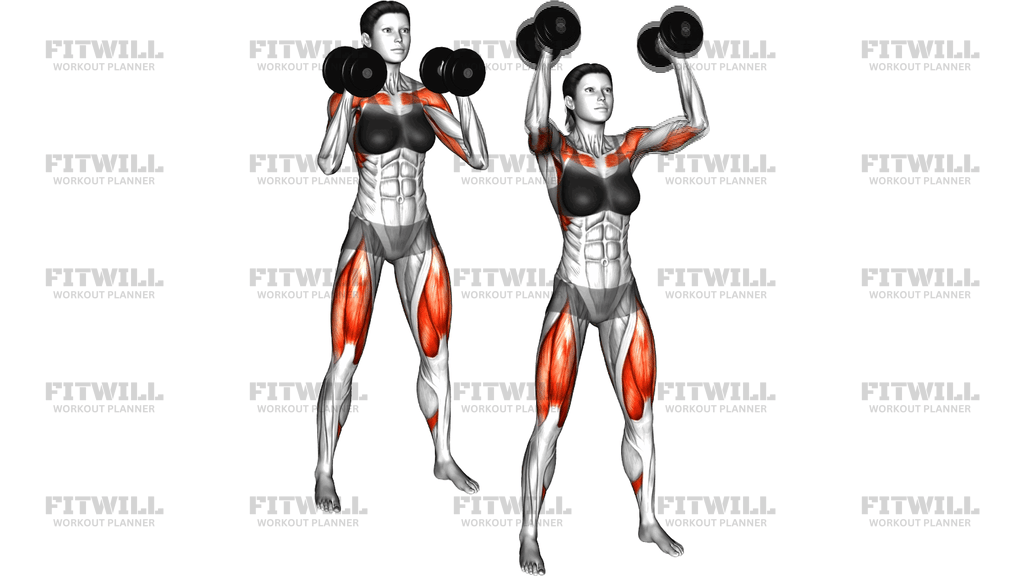
- Once standing, press one dumbbell straight up until your arm is fully extended and the weight is stacked over your shoulder, palm facing forward or slightly inward.
- Lower the dumbbell under control back to your shoulder, keeping the elbow tracking up rather than flaring out to the side.
- Exhale as you drive out of the lunge and press the dumbbell up; inhale as you lower the weight and step back into the next rep.
- On the following rep, step back with the other leg and press with the opposite arm, alternating sides each rep.
- Reset your stance and brace between reps if your balance wobbles, and rack the dumbbells down at your hips when the set is finished rather than dropping them from shoulder height.
Tips & Tricks
- Most people try to press while still climbing out of the lunge. Finish the stand-up completely, take a beat, then press — the movement should feel like two clean actions linked together.
- If your torso pitches forward during the lunge, your back step is probably too short. Lengthen the step until your front shin sits close to vertical.
- Keep the non-pressing dumbbell parked firmly at the shoulder. Letting it drift forward or drop down pulls your ribcage into an arch and strains the lower back.
- A common error is letting the front knee cave inward as you drive up. Think about spreading the floor with your front foot and keep the knee tracking over the second toe.
- Use a lighter dumbbell on the pressing arm than you would for a standard overhead press. The lunge fatigue and one-sided load make the same weight feel heavier by mid-set.
- Squeeze the glute of the back leg as you step back. This stabilizes the rear hip and stops the back knee from twisting inward at the bottom.
- If your wrist bends backward at the top of the press, turn your palm slightly inward so the dumbbell sits across the base of your palm rather than in your fingers.
- Alternate the pressing arm with the stepping leg each rep so both sides accumulate equal work — leading always with the same side hides imbalances.
- Slow the lowering phase of the lunge down rather than dropping into it. A controlled two-count descent keeps your balance sharp and protects the front knee.
Frequently Asked Questions
Which muscles does the Dumbbell Rear Lunge To Single Arm Shoulders Press work the most?
The front leg's quads and glutes handle the bulk of the lunge and the drive back to standing. The pressing arm targets the shoulder and triceps, while the core works continuously to keep you upright with load on one side.
Why does the Dumbbell Rear Lunge To Single Arm Shoulders Press use a rear lunge instead of a forward lunge?
Stepping back shifts more load to the front leg's glutes and quads and places less shear stress on the front knee. It is also easier to keep the torso upright in the rack position, which matters once you add an overhead press.
Can beginners do the Dumbbell Rear Lunge To Single Arm Shoulders Press?
Yes, but it is best learned in pieces. Practice bodyweight reverse lunges and single-arm dumbbell presses separately, then combine them with light dumbbells before building load.
Should I press with the same arm as the leg I step back with, or the opposite one?
Alternating arm and leg each rep keeps the work balanced and is the most common way to perform the movement. Either pairing works, as long as both sides get equal volume over the set.
How heavy should the dumbbells be for the Dumbbell Rear Lunge To Single Arm Shoulders Press?
Pick a weight based on your pressing strength, not your lunging strength, since the shoulders will fatigue first. A weight you can press for ten to twelve strict reps per arm is a sensible starting point.
Why do I feel the Dumbbell Rear Lunge To Single Arm Shoulders Press in my core more than in a regular lunge?
Pressing overhead with one arm creates a side-bending and rotation pull on your torso, so the obliques and deep core muscles have to fight to keep you square. That anti-rotation demand is a built-in feature of the single-arm press.
What is the most common mistake with this exercise?
Turning it into a push-press by pressing the dumbbell while still rising from the lunge. Complete the stand-up first, then press, so the legs and shoulders each do their own share of the work.
What can I substitute if overhead pressing bothers my shoulders?
Keep the rear lunge and press with a neutral palm facing inward, which is friendlier to many shoulders. If overhead work still does not feel right, hold the dumbbell at the shoulder and simply perform rear lunges while training the press separately within a comfortable range.
How should I breathe during the Dumbbell Rear Lunge To Single Arm Shoulders Press?
Inhale and brace before stepping back into the lunge, then exhale as you drive up to standing and press the dumbbell overhead. Reset your breath at the top before the next rep.
Is it safe to do this exercise if I have knee or lower back issues?
Check with a qualified professional before adding it to your routine. Keeping the step long, the torso upright, and the press strictly overhead with a braced core reduces stress on both areas, but individual needs vary.