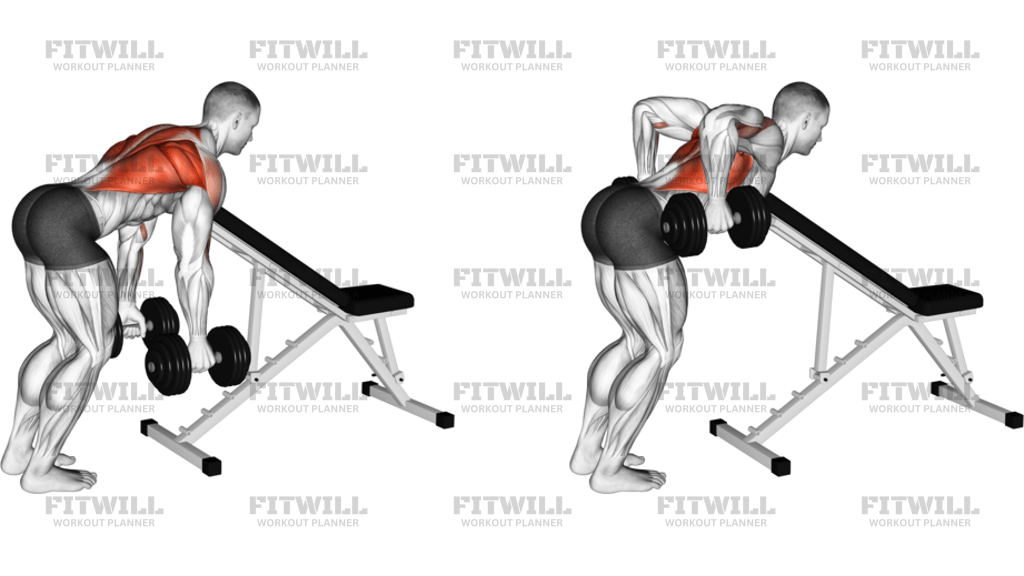
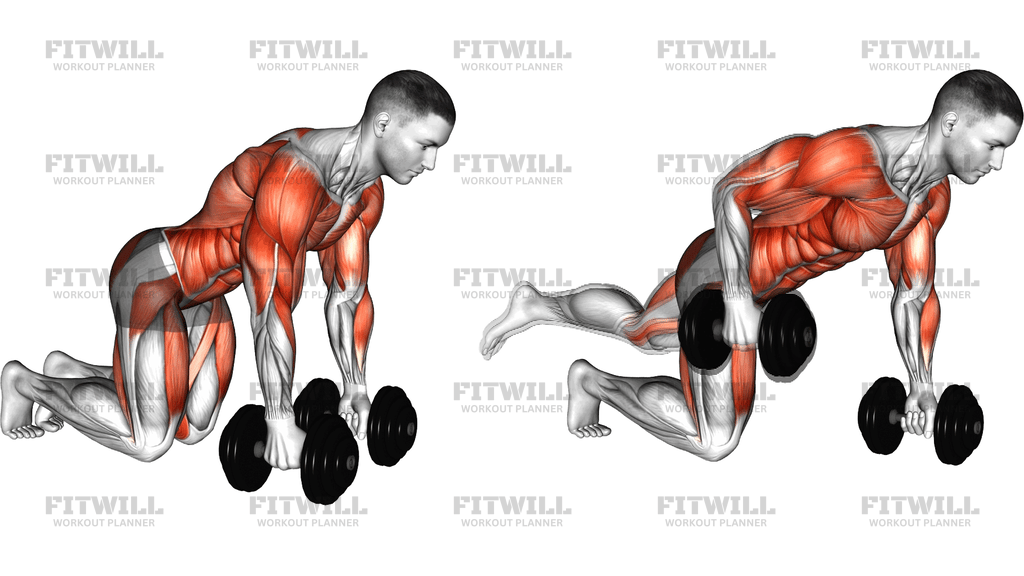
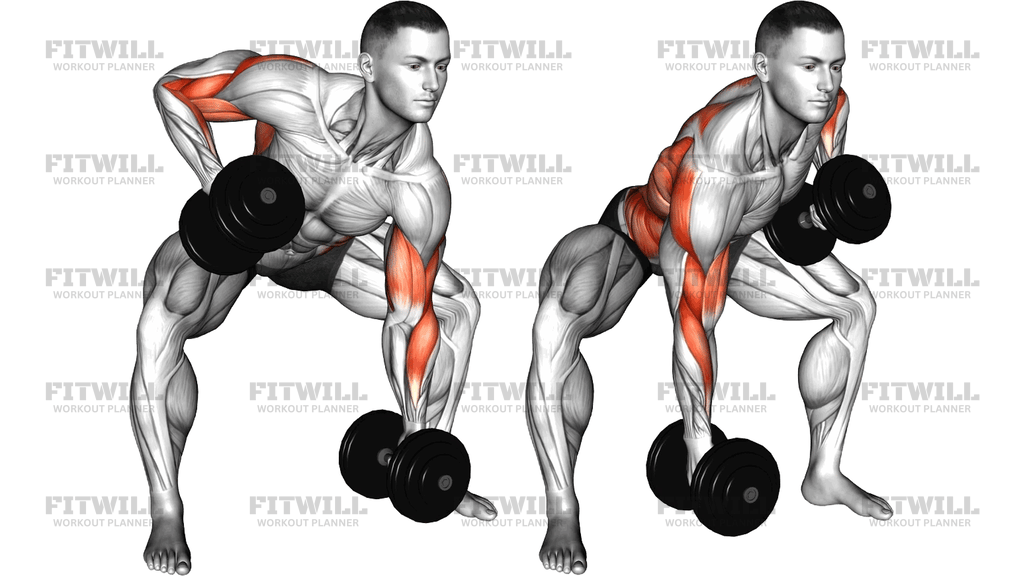
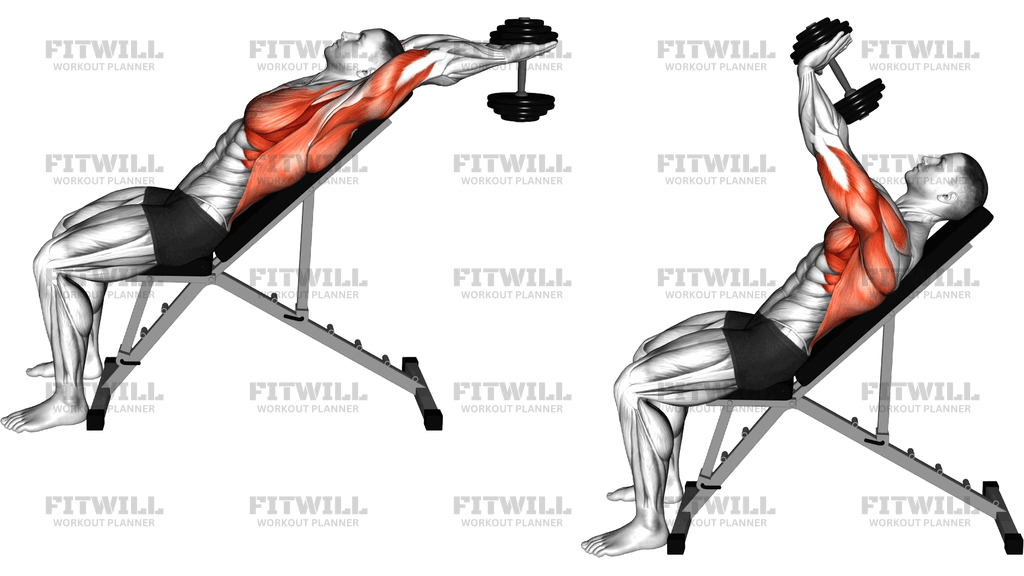
Dumbbell Split Stance Bent Over Row
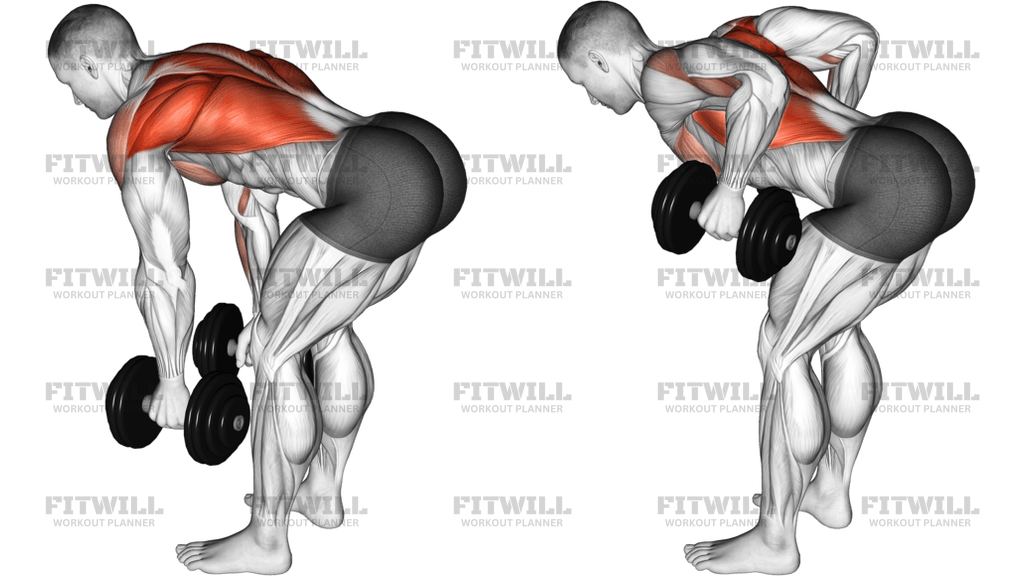
The Dumbbell Split Stance Bent Over Row is a one-arm rowing exercise performed from a staggered, hip-hinged position without a bench under your free hand. You hold a single dumbbell in one hand, take a split stance with your rear leg extended behind you, hinge forward until your torso sits somewhere between 30 and 60 degrees to the floor, and pull the dumbbell up toward your lower ribs. Because the non-working hand simply rests on the front thigh rather than pressing into a bench, your trunk has to do more of the stabilizing work than it would in a traditional three-point supported row.
This setup is a useful middle ground between a fully supported chest-supported row and a two-arm bent-over row. You still get the anti-rotation benefit of a staggered stance and a braced free hand, so the load on your lower back stays moderate, but your lats, rhomboids, and mid traps work hard to move the weight. The split stance also loads the front leg's glutes and hamstrings isometrically, which makes this a time-efficient choice when you want rowing volume without spending your entire session braced against a bench.
It suits lifters who have outgrown machine or bench-supported rows and want more trunk involvement, as well as anyone training in a minimal setup with only a pair of dumbbells. It pairs naturally with pressing movements in an upper-body day, and because each side works independently, it helps expose and gradually smooth out left-to-right strength differences that a barbell row can hide.
Setup matters more here than in a supported row. The wider and longer your split stance, the more stable your base; a narrow stance lets your hips rotate toward the working side as the weight gets heavy. Your hinge angle also determines the row path. If you pop up toward vertical between reps, the exercise drifts from a row into something closer to an upright pull, and your lower back takes the difference. Pick a hinge you can hold for every rep, not just the first two.
To execute well, think of driving your elbow back toward your hip and letting the shoulder blade glide back as the dumbbell approaches your ribs, then lower the weight under control until your arm is fully extended and your lat has stretched. Avoid twisting your torso to finish the rep; if your shoulder starts rolling backward or your trunk rotates, the weight is too heavy for a clean row. Keep your neck neutral by looking at a spot on the floor a foot or so in front of you.
The most common failure point is losing the hinge as fatigue sets in, so treat the last two reps of each set as the quality check. Stop the set when your torso angle or hip position changes, and reset your stance and brace between sides rather than rushing through.
[ Workout Log & Planner ]
Put your next workout in Fitwill
Keep your plan and training log ready when you are.


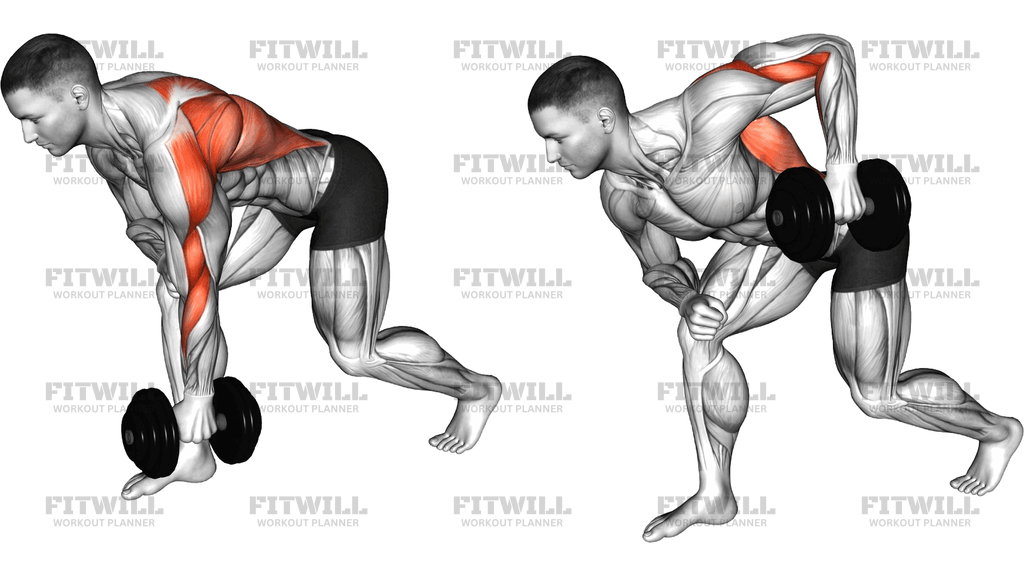
Instructions
- Hold a dumbbell in one hand with a neutral grip, palm facing your body, and let it hang at full arm's length by your side.
- Step into a split stance: front knee bent over the mid-foot, rear leg extended straight back with the heel lifted and weight on the ball of the foot.
- Hinge forward at the hips with a flat back until your torso is angled roughly 45 degrees to the floor, and place your free hand on your front thigh for light support.
- Brace your core and squeeze the glute of your rear leg to lock your hips in place before the first rep.
- Pull the dumbbell up and back toward your lower ribs, leading with the elbow and keeping it close to your torso.
- At the top, squeeze your shoulder blade back and down so the dumbbell finishes near your hip, not your chest.
- Lower the dumbbell slowly along the same path until your arm is straight and your lat is stretched, keeping the shoulder from drifting toward your ear.
- Exhale as you pull, inhale as you lower, and keep a steady rhythm instead of holding your breath.
- Complete all reps on one side, stand up, reset your stance, brace again, and repeat on the other arm.
Tips & Tricks
- If your torso rises toward vertical each rep, you are rowing too heavy for the hinge; your hips moving is the tell, not your arms.
- Keep the pull aimed at your lower ribs. Rowing toward the armpit or chest shifts work toward the rear shoulder and upper traps and away from the lats.
- Rest your free hand on your thigh for balance, but do not push hard into it. Leaning heavily on the support arm turns this into a crutch and lets your torso twist.
- Let the dumbbell hang fully at the bottom so the lat lengthens each rep; cutting the stretch short shrinks the range to a short, arm-heavy pull.
- Widen your split stance if you feel your hips rotating toward the dumbbell as the set gets hard. A longer stance gives your trunk more leverage to stay square.
- Grip the handle firmly but not white-knuckled. Excess grip tension early in the set fatigues your forearm before your back gets its work.
- Because the free hand is not planted on a bench, expect slightly lighter loads than your supported one-arm row; the trunk demand is the trade-off.
- Set the dumbbell down and re-brace between sides instead of rolling straight from one arm into the next. A rushed reset is where rounded backs usually happen.
- If your front knee drifts inward or your rear foot wobbles, shorten the stance slightly and consciously press the front foot into the floor through the whole set.
Frequently Asked Questions
Which muscles does the Dumbbell Split Stance Bent Over Row work?
The lats are the primary movers, supported by the rhomboids, mid traps, and rear shoulders as the dumbbell travels toward your lower ribs. The biceps assist on the pull, while the glutes, hamstrings, and lower back work isometrically to hold the split-stance hinge.
Why use a split stance instead of standing square with both feet?
The staggered stance gives your trunk a wider, more stable base and makes it easier to keep your hips square while rowing one side at a time. It reduces how much your lower back has to fight rotation compared with a symmetrical bent-over stance.
Do I need a bench for the Dumbbell Split Stance Bent Over Row?
No, and that is the point of the variation. Your free hand rests on the front thigh for light support, which keeps some of the stabilizing demand on your core while still offering more balance help than a completely unsupported stance.
How far forward should I hinge during this row?
Somewhere between 30 and 60 degrees of torso angle works, as long as you can hold that exact angle for every rep. More horizontal hinging biases the lats, while a more upright torso shifts some emphasis toward the upper back and traps.
Is this exercise suitable for beginners?
Yes, provided you start light and learn the hip hinge first. Beginners who can hold a flat-back hinge and pull the dumbbell to their ribs without torso rotation will get more from this than from trying to force heavy weight.
What is the most common mistake in the Dumbbell Split Stance Bent Over Row?
Losing the hinge and popping upright between reps, which turns the movement into a partial upright pull and loads the lower back unevenly. Fix it by reducing the weight and checking your torso angle against a mirror or your starting position each rep.
What can I substitute if I cannot keep my balance in the split stance?
Widen and lengthen the stance first, since a broader base usually solves the wobble. If balance still limits you, use a bench-supported one-arm dumbbell row, which trades some trunk demand for a much more stable setup.
Should my elbow stay tucked or flare out during the pull?
Keep the elbow close to your torso and drive it back toward your hip for a lat-focused row. Allowing it to flare wide changes the pull into more of a rear-shoulder and trap movement.
Is this row safe for the lower back?
For most lifters, the split stance and thigh-supported free hand keep trunk stress moderate, but the position is only as safe as your hinge. Stop the set if your back rounds or your hips shift, and build up load gradually as your hinge endurance improves.