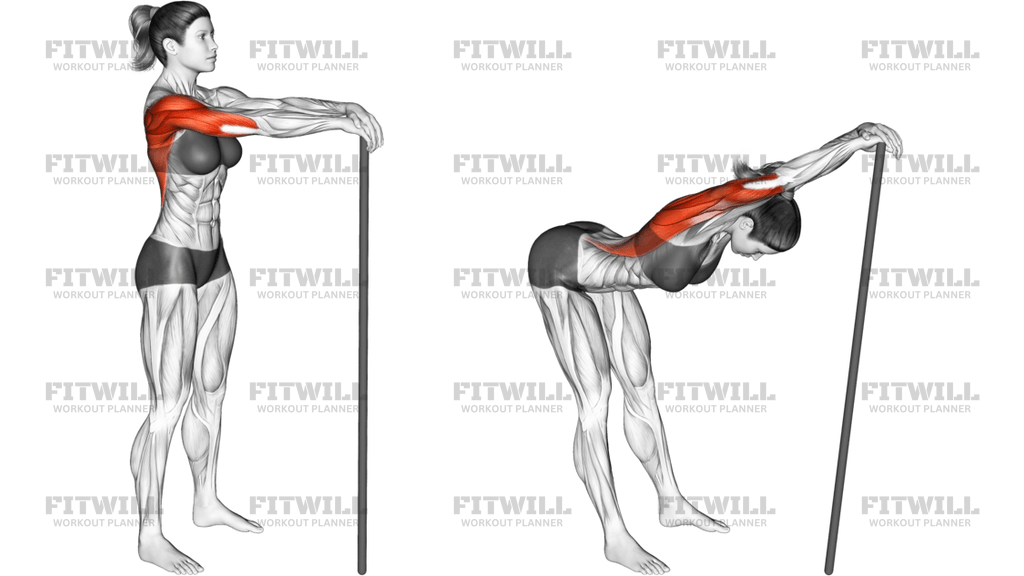
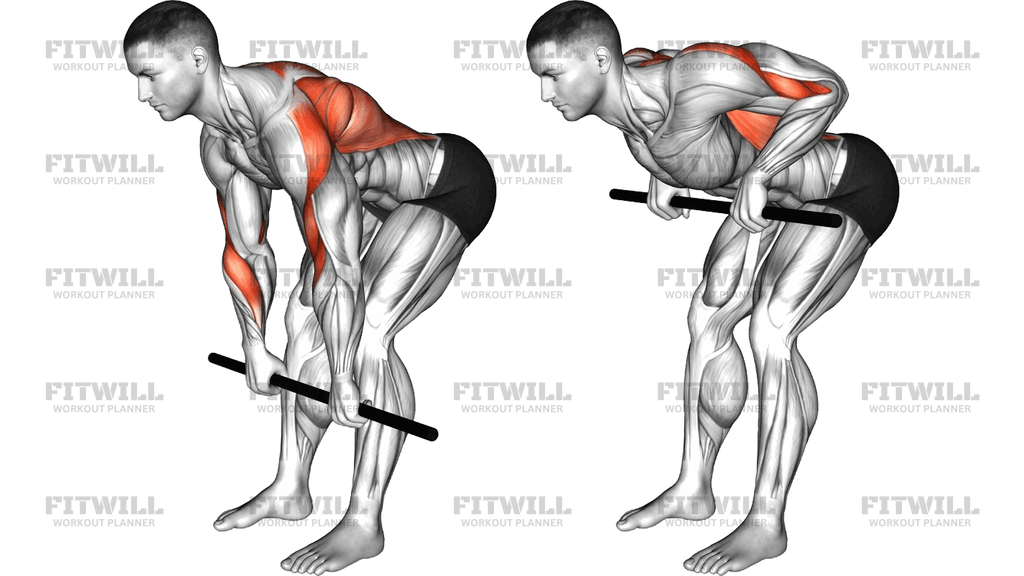
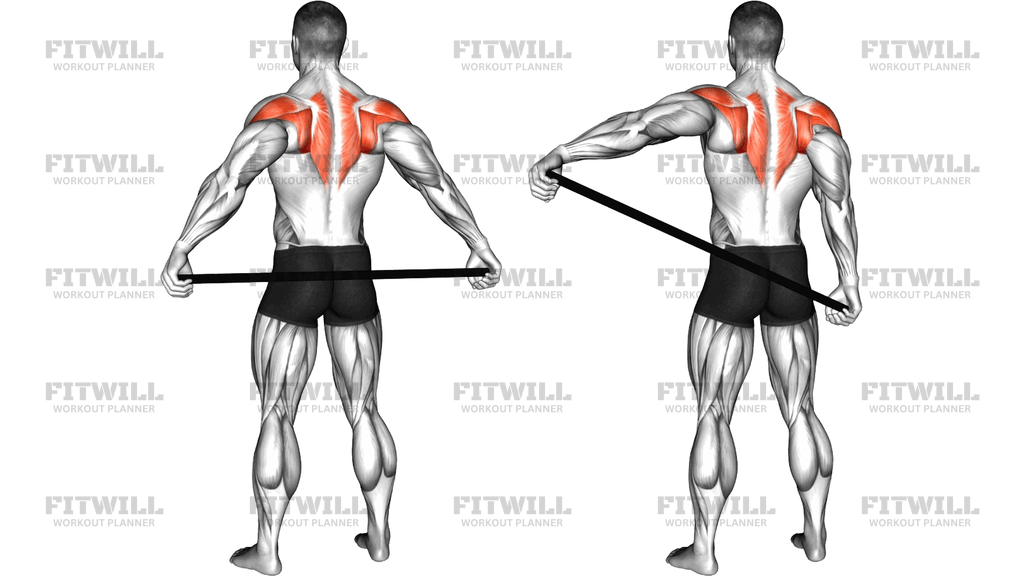
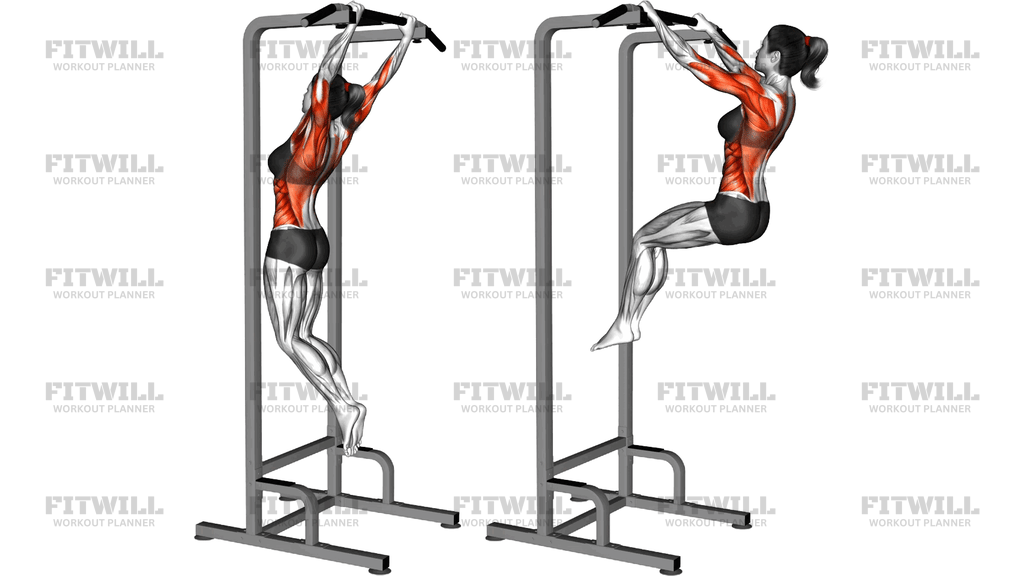
Stick Standing Rear Delt Raise
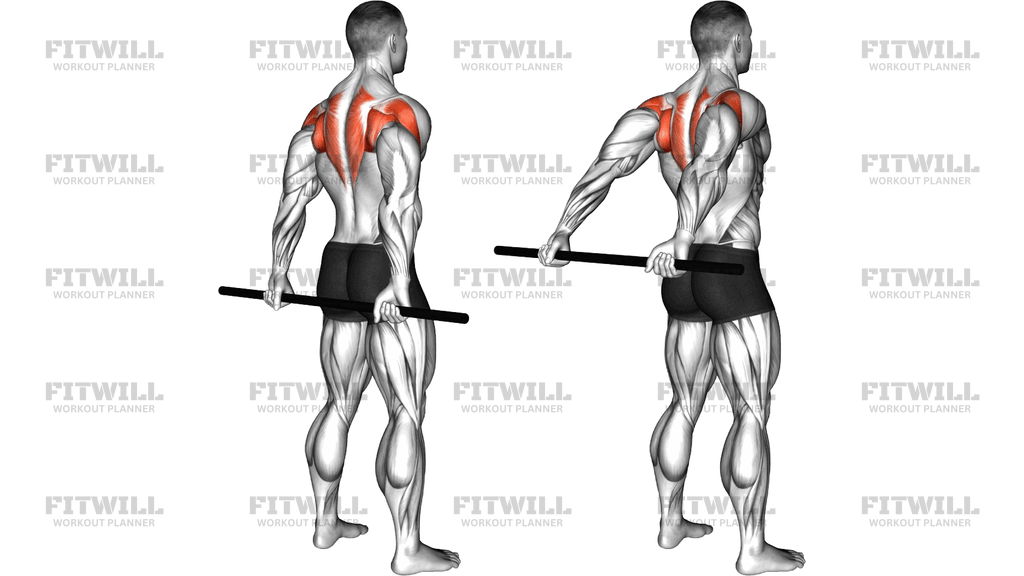
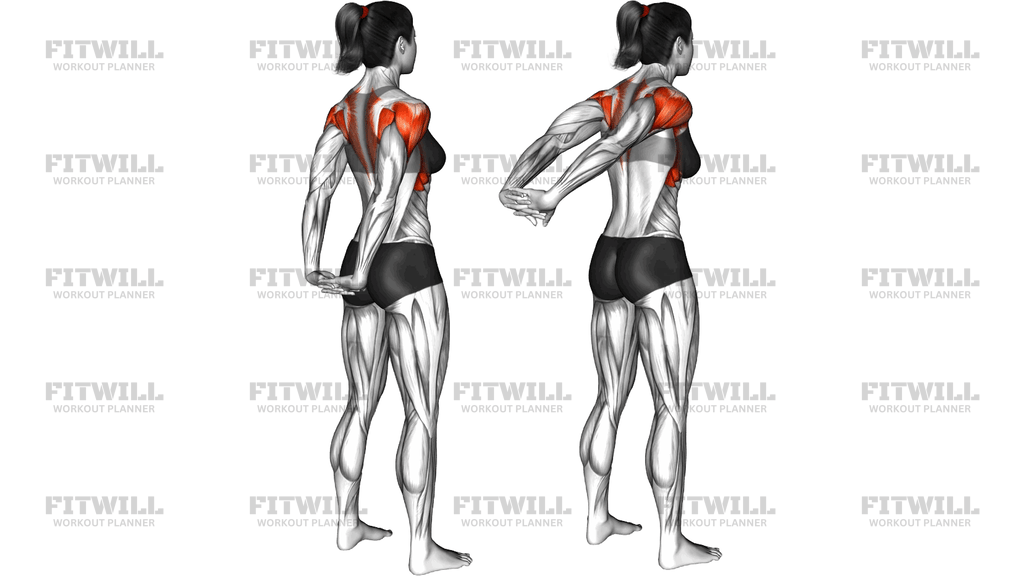
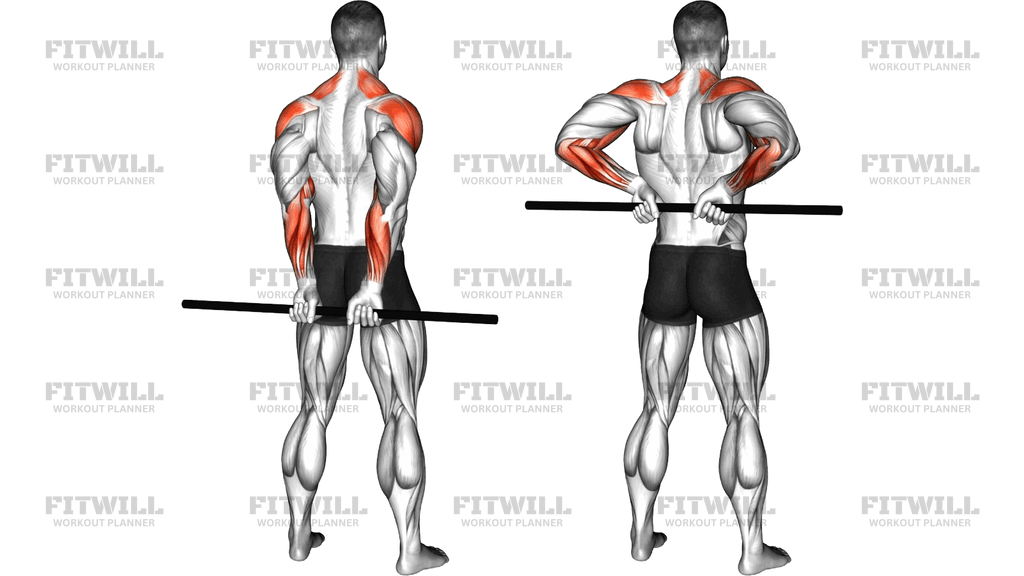
The Stick Standing Rear Delt Raise is a simple but surprisingly effective shoulder exercise performed with nothing more than a broomstick, dowel, or light training bar held behind your back. You stand tall, grip the stick behind your glutes with both hands, and raise it up and back away from your body, letting the elbows bend and drive backward as the stick travels toward your lower and mid-back. That backward lift against the limited space behind your torso is what isolates the rear shoulders in a way most pressing and pulling exercises never quite manage.
This is one of the few movements that directly targets the posterior deltoid while you stay upright and unsupported. Most people's rear delts are undertrained because daily life puts the shoulders forward — typing, driving, texting — and most gym work pushes or presses in front of the body. If your shoulders roll forward, your bench press outpaces your rowing, or your rear delts look flat compared to the front and side of the shoulder, this movement deserves a slot in your routine. It is equally useful as a warm-up primer before pressing days and as a light, joint-friendly strength exercise on its own.
The setup matters more than it looks. Because the stick sits behind your body, you cannot see your hands, so your grip width, torso angle, and shoulder position have to be established before you start. Grip slightly wider than shoulder width, stand with feet about hip-width apart, and keep your chest tall rather than leaning forward to give the stick room. Leaning the torso turns this into a lower-back exercise and robs the rear delts of the work. A rigid stick is actually an advantage here — it forces both sides to contribute, so a weaker or stiffer shoulder is instantly exposed.
To execute it well, start with the stick resting against the back of your hips, arms long. Lift by pulling the stick up and back, letting the elbows bend and flare outward while the shoulder blades draw together. The stick should finish somewhere around your lower ribs or mid-back, held a few inches clear of your spine. Pause for a beat at the top, then lower it under control back to the start. The range is short — that is normal — and the temptation to shrug or arch the lower back to buy extra height is the main thing to fight.
Because the load is a light stick, this is a repetition and control exercise, not a max-effort lift. It works well for higher reps, slow tempos, and pauses at the top. Powerlifters use it to balance heavy benching, desk workers use it to open the shoulders back up, and anyone rehabbing general shoulder stiffness can use it as a low-load re-introduction to backward shoulder movement. Keep the weight modest, keep the reps honest, and let the rear delts — not momentum — do the lifting.
[ Workout Log & Planner ]
Put your next workout in Fitwill
Keep your plan and training log ready when you are.


Instructions
- Stand upright with your feet about hip-width apart and hold a stick or dowel horizontally behind your back with both hands, grip set slightly wider than shoulder width.
- Let the stick rest against the back of your glutes or upper hamstrings with your arms fully straight and shoulders relaxed down, not shrugged.
- Brace your core lightly, keep your chest tall, and look straight ahead — do not lean your torso forward to make room for the stick.
- Breathe in, then pull the stick up and back away from your body by driving your elbows backward and letting them bend as the stick rises.
- Keep your wrists firm and your knuckles pointing away from your back so the stick clears your spine as it lifts.
- Raise until the stick reaches roughly your lower ribs or mid-back and your elbows point out to the sides, then squeeze your shoulder blades together for a one-second pause.
- Exhale as you lift, and keep breathing steadily rather than holding your breath through the rep.
- Lower the stick slowly and deliberately back down to the back of your hips, resisting the pull of gravity instead of dropping it.
- Reset your grip and posture at the bottom, make sure the stick is centered and level before starting the next rep.
- Complete your set, then step the stick out from behind you rather than swinging it around your body.
Tips & Tricks
- The most common mistake is leaning the chest forward as the stick rises — this steals room from the shoulders and dumps the work into the lower back. Stay vertical and accept a shorter range instead.
- If one side lags, the stick will tilt visibly because it is rigid. Slow down and consciously pull harder with the weaker side rather than letting the strong arm carry the bar.
- Do not shrug toward your ears at the top of the lift; the raise should come from the shoulder joint pulling back, with the shoulder blades squeezing down and together, not up.
- Keep the stick horizontal throughout. If one end drops, your grip has loosened or your torso has rotated — re-center your hands before continuing.
- Your wrists will likely feel this from the grip position behind your back. If wrist extension is uncomfortable, widen your grip slightly or use a thinner stick before abandoning the movement.
- Bend the elbows on purpose. Trying to keep the arms straight behind your back locks you out almost immediately, whereas letting the elbows flex lets the rear delts work through a real range.
- Use a slow tempo — two seconds up, one-second pause, two seconds down. The stick is light, so tempo and squeeze are your only tools for making the rear delts work hard.
- Start with higher reps in the 15-25 range. Because the rear delts are small and the load is minimal, low-rep sets here do little and only encourage straining.
- Do this as a warm-up before bench pressing or overhead pressing — it wakes up the rear shoulders and helps set your shoulders back into a better position under load.
Frequently Asked Questions
What muscles does the Stick Standing Rear Delt Raise work?
The rear shoulders are the primary mover, with the middle and lower traps and upper back assisting as the shoulder blades pull together. The forearms and wrist extensors also work isometrically because of the behind-the-back grip on the stick.
Why use a stick instead of dumbbells for a rear delt raise?
A rigid stick held behind the back forces both arms to work together and keeps the movement symmetrical, which dumbbells cannot do in this position. It also keeps the load light, making the movement suitable for warm-ups and higher-rep work.
Is the Stick Standing Rear Delt Raise good for beginners?
Yes — the stick weighs almost nothing, the range is short, and the setup is easy to learn. Beginners should focus on staying upright and moving smoothly rather than trying to lift the stick as high as possible.
Why can I only raise the stick a short distance behind my back?
The space between your spine and the top of the movement is naturally limited, and shoulder mobility plays a role too. A short, controlled range with the elbows bending is correct; forcing extra height usually means leaning forward or arching the lower back.
Should my elbows stay straight during the Stick Standing Rear Delt Raise?
No — the elbows should bend and flare outward as the stick rises. Keeping them locked straight restricts the path of the stick behind your back and shifts stress into the elbows and wrists instead of the rear delts.
My wrists hurt when holding the stick behind my back. What should I do?
Try a slightly wider or narrower grip so your wrists sit in a more comfortable angle, or use a thinner stick. If discomfort persists, stop and have the wrist mobility checked rather than pushing through pain.
How many reps and sets should I do?
Because the load is minimal, work in the 15-25 rep range for 2-3 sets with a slow tempo and a pause at the top. As a pre-press warm-up, one or two lighter sets of 15 are usually enough.
What can I substitute if I do not have a stick?
A broom handle, PVC dowel, or light straight bar all work identically. If nothing rigid is available, a resistance band held behind the back provides a similar backward pull, though the feedback on left-right symmetry is lost.
Can the Stick Standing Rear Delt Raise fix rounded shoulders?
It can help strengthen the muscles that pull the shoulders back, which supports better posture when combined with consistent training and attention to daily habits. It is not a stand-alone fix, and it should not replace professional advice if you have persistent pain.
Should I feel this in my lower back?
No — if your lower back works or aches, you are arching or leaning to fake extra range. Stand taller, brace your core lightly, and shorten the range until the effort sits in the back of your shoulders and upper back.