Standing Straight Elbow Together Lift
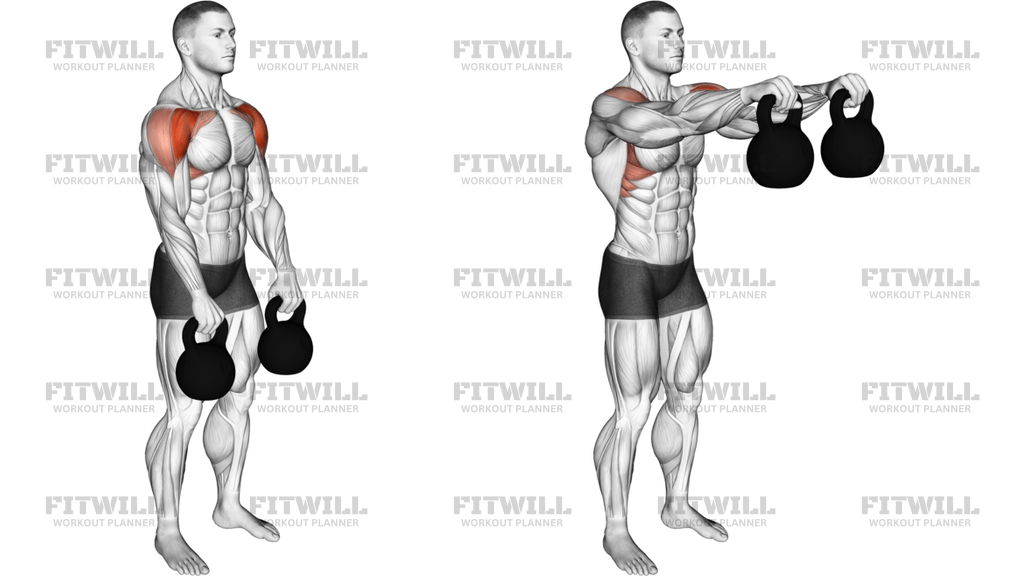
The Standing Straight Elbow Together Lift is a bodyweight front raise variation where both arms stay fully locked out and pressed close together as they travel from a low position in front of the body up past shoulder height. Because the elbows never bend, the leverage is deliberately unfavorable, which makes the shoulders work much harder than the same arc would feel with a dumbbell in hand. The hands stay alongside each other through the entire lift, adding a gentle squeeze through the chest rather than letting the arms drift apart as they fatigue.
This movement suits anyone who wants to train the front of the shoulders without equipment, whether that is at home, while traveling, or as a warm-up before pressing work. It is also a good teaching tool for lifters who tend to cheat front raises with a bent-elbow swing, since the locked-out position makes any body English immediately obvious. Coaches often use straight-arm raises like this to build shoulder endurance and improve awareness of scapular movement without loading the joint.
The main work is done by the front delts, which drive the arms up against gravity, with the upper chest assisting from the bottom half of the range. The side delts, upper traps, and the muscles around the shoulder blades stabilize and control the path, while the core works quietly to keep the torso from leaning back as the arms rise overhead. Grip demands are minimal, so the shoulders get a clean, isolated challenge.
Setup matters more than it looks. A tall stance with feet about hip-width apart, ribs stacked over the pelvis, and arms together before the first rep begins keeps the movement honest. If the arms separate or the elbows soften mid-lift, tension leaks away from the delt and the exercise turns into a loose arm swing. Staying light on the toes rather than rocking through the heels also protects the lower back.
To perform it well, raise the straight arms in a smooth arc toward the ceiling until the hands pass overhead or as high as the shoulders comfortably allow, then lower along the same line without letting gravity yank the arms down. The lowering phase is where much of the training effect lives, so treat it with the same attention as the lift. A few controlled sets of 10 to 20 repetitions are usually enough, since the short leverage makes even bodyweight reps challenging for the smaller shoulder muscles.
[ Workout Log & Planner ]
Put your next workout in Fitwill
Keep your plan and training log ready when you are.


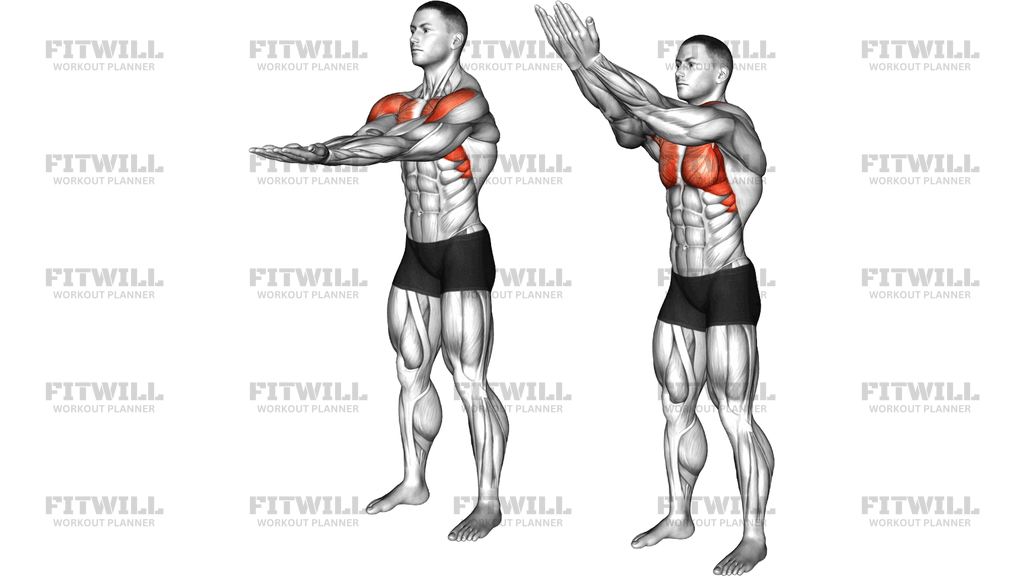
Instructions
- Stand tall with your feet about hip-width apart and your weight spread evenly across both feet.
- Extend both arms straight forward in front of your thighs with the elbows fully locked and the hands held close together, palms facing each other or slightly upward.
- Draw your shoulder blades down and back slightly, brace your abdominal muscles, and stack your ribs over your pelvis so your torso cannot lean back.
- Inhale, then raise both straight arms together in a smooth arc in front of your body toward the ceiling.
- Keep the hands alongside each other for the whole lift and resist any urge to let the arms drift apart as you approach the top.
- Continue until your arms are overhead or as high as your shoulders allow without shrugging or arching your back.
- Pause briefly at the top, then lower the arms along the same path with slow control until they return to the start in front of your thighs.
- Exhale as you lift and inhale as you lower, keeping the breath steady rather than holding it.
- Reset your posture between reps if you feel yourself leaning, and stop the set once you can no longer keep the elbows straight.
Tips & Tricks
- A soft elbow is the most common cheat here; if you cannot keep the arms fully straight for a rep, the set is over rather than the range shrinking.
- Do not shrug your shoulders up toward your ears as the arms rise; think of reaching long through the fingertips instead of lifting the shoulders.
- If your lower back arches at the top, squeeze your glutes slightly and tuck your ribs before the next rep, or shorten the range slightly.
- Moving too fast turns this into momentum training; a two-second lift and a two- to three-second lower keeps the front delts doing the work.
- Keep the hands within a few centimeters of each other the whole way; letting them separate shifts work away from the chest and weakens the delt's leverage.
- Warm the shoulders up first with a few arm circles, since straight-arm raises load the joint at a long leverage before any heavier pressing.
- If straight-arm reps are too hard from the thigh, start with the arms at waist height and raise from there rather than bending the elbows.
- Face a mirror from the side occasionally to check that your torso stays vertical; backward lean is easy to miss while you are focused on the arms.
Frequently Asked Questions
Which muscles does the Standing Straight Elbow Together Lift work?
The front delts are the primary movers, with the upper chest assisting in the lower half of the lift. The side delts, traps, shoulder blade stabilizers, and core all work to keep the arms on a clean path and the torso upright.
Why does the Standing Straight Elbow Together Lift feel harder than a dumbbell front raise?
With the elbows locked, the arms form a long lever, which multiplies the torque the shoulders must produce even with no added weight. A bent elbow shortens that lever, which is why bent-arm raises feel much easier.
Can beginners do the Standing Straight Elbow Together Lift?
Yes, it is a safe, load-free way to learn shoulder control. Beginners can shorten the range by lifting only to shoulder height or starting with the hands at waist level before progressing to the full overhead arc.
How many reps should I do of the Standing Straight Elbow Together Lift?
Because the resistance is limited to the weight of your arms, aim for moderate to higher reps, roughly 10 to 20 per set, for two to four sets. Focus on keeping every rep strict rather than chasing a very high number.
What is the most common mistake in this exercise?
Bending the elbows or swinging the arms with a backward torso lean as they pass chest height. Both habits steal work from the front delts; fix them by slowing the tempo and stopping the set when form breaks.
Should my hands stay touching during the Standing Straight Elbow Together Lift?
Keep them close together, alongside or lightly touching, throughout the lift. This preserves the chest involvement and keeps the shoulder working in the intended line; the arms spreading apart is a fatigue signal.
What can I use instead of the Standing Straight Elbow Together Lift?
A dumbbell or cable front raise trains the same area with more load, and a resistance band front raise adds tension through the top of the range. The bodyweight version remains useful as a warm-up or minimal-equipment option.
Is it safe to lift the arms fully overhead with straight elbows?
For most people with healthy shoulders, yes, as long as the torso stays upright and there is no pain or pinching at the top. If you feel shoulder impingement-type discomfort, stop just below the point of discomfort and build up gradually.
Can I use the Standing Straight Elbow Together Lift as a warm-up before pressing?
Yes, one or two light sets of 10 to 15 reps are an effective way to bring blood into the front delts and chest before bench presses or overhead presses, since the movement carries no external load.