Incline Plyo Push Up
The Incline Plyo Push Up is an explosive push-up variation performed with your hands elevated on a sturdy box, bench, or step platform. From the lowered position, you drive up hard enough that your hands leave the surface entirely, then catch yourself back on the box with bent elbows and immediately prepare for the next rep. Because the hands are elevated, the angle shifts load away from the lower chest and toward the upper chest and front shoulders while reducing the total body weight you have to move.
That elevation is what makes this movement so practical. A floor-based plyometric push-up demands significant pressing strength, and many people simply cannot generate enough force to get airborne with clean technique. Raising the hands onto a box shortens the lever, lets you practice the explosive intent of the movement, and gives you a way to progress gradually by lowering the box height over weeks of training. It is a go-to regression for athletes building toward clapping push-ups, and a useful explosive primer for lifters who want to activate fast-twitch fibers in the chest before heavier pressing work.
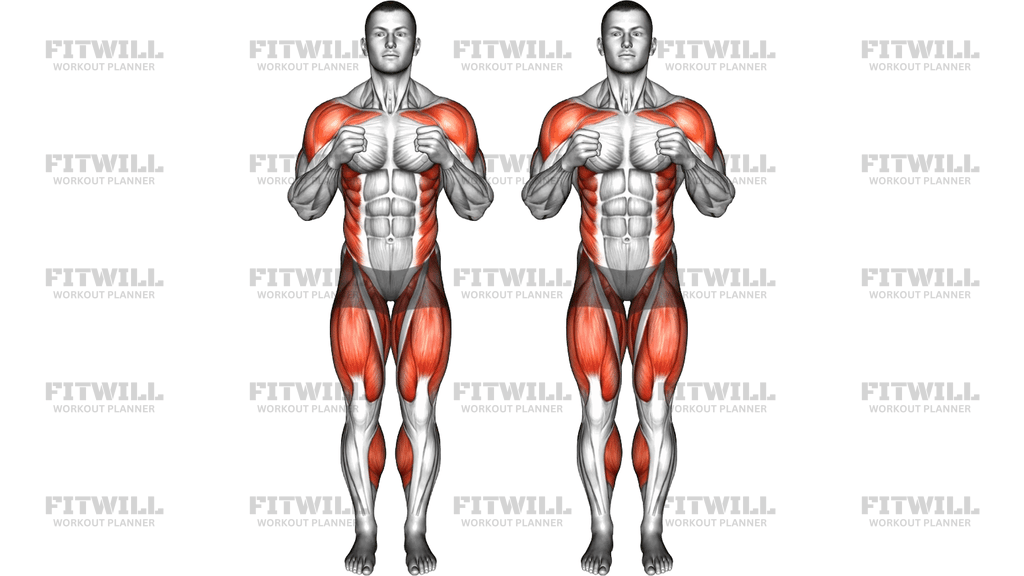
The exercise primarily trains the chest, with strong contributions from the triceps and front delts. Your core and shoulder stabilizers also work hard here, because catching your body weight dynamically on stiff arms is far more demanding on the shoulder girdle than a slow, controlled press. Think of it less as a muscle-building pump exercise and more as a power and speed tool with real stability benefits.
Setup matters more than it might seem. The box needs to be stable and heavy enough that it will not slide or tip when your hands land on it repeatedly. Place your hands about shoulder-width apart on the edge, walk your feet back until your body forms a straight line from head to heels, and brace your core before every rep. A sagging or piked hip position will bleed force and increase stress on your lower back and shoulders.
Execution comes down to intent and landing quality. Lower under control until your chest approaches the box, then push explosively and let your hands rise off the surface. Land with soft elbows that give way slightly to absorb the impact rather than catching on locked, rigid arms. Exhale forcefully on the drive, inhale as you reset, and stop the set as soon as your explosiveness noticeably fades. Quality of launch height is the measure of a good set here, not the number of reps.
You will see this movement in athletic conditioning programs, boxing and martial arts preparation, football and basketball upper-body power work, and in general training plans as a stepping stone toward advanced push-up variations. Treat it as a fresh, high-effort exercise: perform it early in a session when you are warm and sharp, not at the end when fatigue has already set in.
[ Workout Log & Planner ]
Put your next workout in Fitwill
Keep your plan and training log ready when you are.


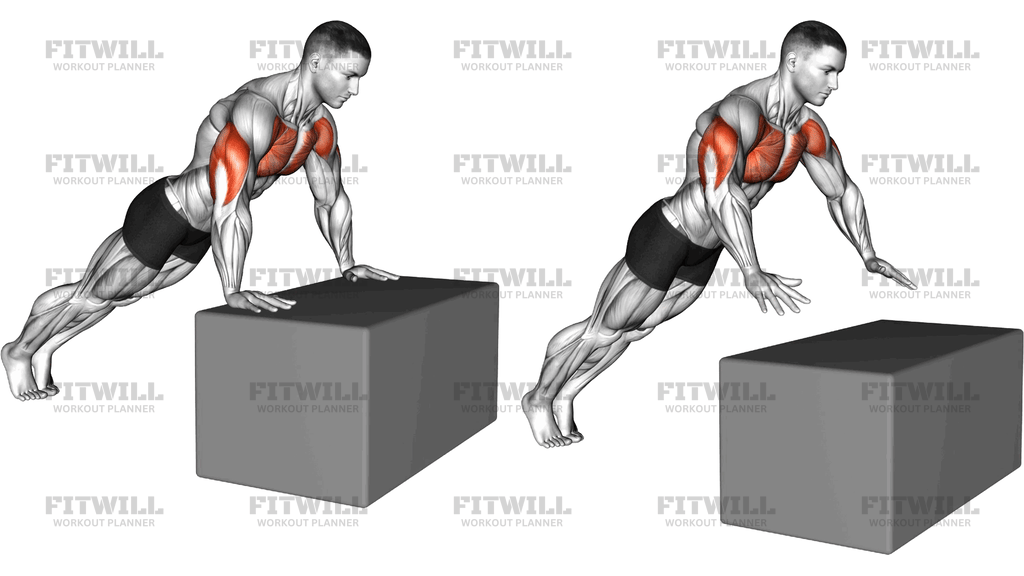
Instructions
- Place a sturdy box, bench, or step platform on a non-slip surface so it cannot slide when your hands land on it.
- Set your hands on the box edge slightly wider than shoulder-width, fingers spread and pointing forward, then walk your feet back until your body forms one straight line from head to heels.
- Brace your core and squeeze your glutes so your hips do not sag or lift as you press.
- Bend your elbows to lower your chest toward the box, keeping them at roughly a 45-degree angle to your torso rather than flared straight out.
- When your chest is just above the box, drive your hands through the surface explosively so your palms leave the box and your arms extend fully in the air.
- Land back on the box with your hands in the same position, elbows slightly bent so they absorb the impact instead of catching on locked joints.
- Reset your body line quickly, exhale sharply, and launch the next rep, or step away to end the set if your power drops.
- Breathe in on the way down and force your exhale during the explosive push.
- Keep your neck neutral by looking at the box slightly ahead of your hands, not up at the ceiling.
- Finish each set while your launch height is still strong; rest fully between sets because this is a power exercise, not an endurance one.
Tips & Tricks
- The most common mistake is a half-hearted push where the hands barely skim the box. Commit to driving all the way up; if you cannot clear the surface, your box is too low or you are too fatigued.
- If your lower back sags on the landing, it is usually a bracing problem. Squeeze your glutes and pull your ribs down before each rep rather than trying to fix it mid-rep.
- Catch each landing with a soft elbow bend, like a shock absorber. Landing on straight, rigid arms sends the impact straight into your elbow and shoulder joints.
- Start with a box at roughly hip height and lower it gradually over weeks. Progressing box height is the cleanest way to track progress here.
- Your hands tend to drift forward or back on the landing. Mark your hand position mentally or use a box with a flat top edge so every rep lands in the same spot.
- If your hips shoot up into a pike on the explosive drive, you are losing force through the core. Slow down one rep and feel your body stay in one piece, then return to speed.
- Do these early in your workout after a thorough warm-up. Explosive output drops sharply once your pressing muscles are fatigued, and sloppy landings follow shortly after.
- Stop the set when your reps get visibly lower or slower. Grinding out extra reps of a plyometric movement trains slowness, not power.
- A slippery or lightweight box is a real hazard here. Test it with a few firm hand placements before your first explosive rep.
Frequently Asked Questions
What muscles does the Incline Plyo Push Up work?
It primarily targets the chest, with strong assistance from the triceps and front shoulders. Your core and the stabilizing muscles around the shoulder blades also work hard to control each explosive landing.
Why perform the plyo push up on an incline instead of the floor?
Elevating the hands on a box reduces the percentage of body weight you press, making it easier to move fast enough to actually become airborne. This makes it an ideal progression toward floor-level plyometric push-ups like the clapping push-up.
Can beginners do the Incline Plyo Push Up?
Yes, if they can already perform solid sets of incline push-ups with a straight body line. Beginners should use a higher box, focus on controlled landings first, and only push for height once the catch feels stable.
How high should the box be?
Start with a box around hip height, which keeps the load manageable and lets your hands leave the surface cleanly. Lower the box over time as your pressing power and landing control improve.
How many reps should I do?
Keep sets short and explosive, typically 3 to 6 reps per set, and stop when your launch height or speed noticeably drops. This is a power exercise, so quality beats volume.
Is it safe to land with straight arms?
No, catching your full weight on locked elbows is one of the fastest ways to irritate the elbow and shoulder joints. Land with slightly bent arms that give and absorb the impact, then reset for the next rep.
What can I use if I don't have a plyo box?
Any stable, heavy surface works: a flat weight bench, a sturdy step platform, or even a solid table edge. Just make sure it cannot tip or slide when your hands strike it.
Should I do the Incline Plyo Push Up before or after heavy pressing?
Do it first, after warming up, when your nervous system is fresh. Explosive work loses its value quickly under fatigue, and tired shoulders also land less safely.
What is the most common mistake with this exercise?
Letting the hips sag or pike as the core fatigues, which breaks the body line and dumps stress on the lower back. Brace your core and squeeze your glutes before every rep, and end the set as soon as your position breaks.
How is this different from a regular incline push up?
A regular incline push-up is performed slowly with continuous hand contact, building strength and muscle. The Incline Plyo Push Up adds an explosive launch where the hands leave the box, shifting the goal toward speed, power, and reactive shoulder stability.