Plank Jump In
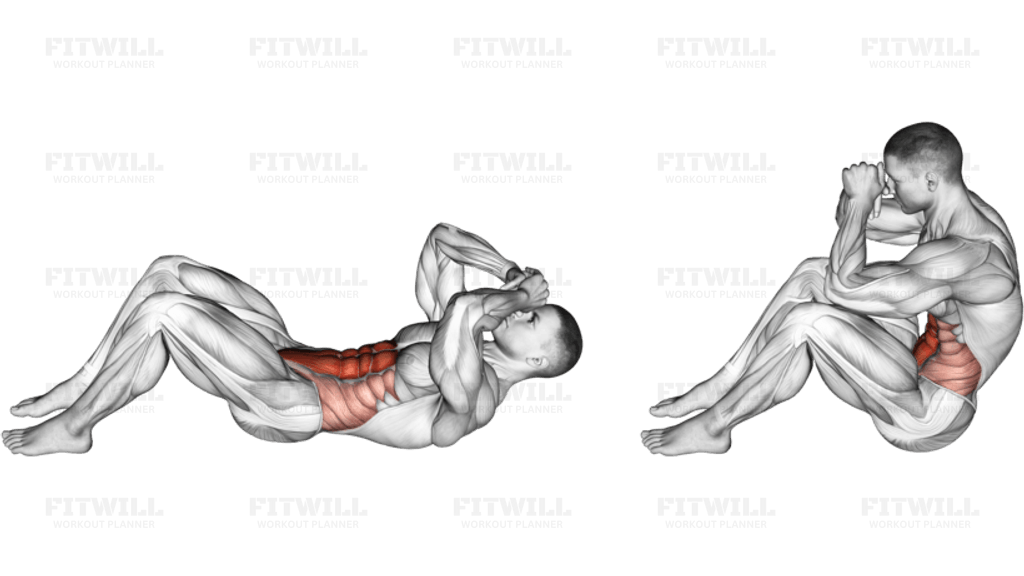
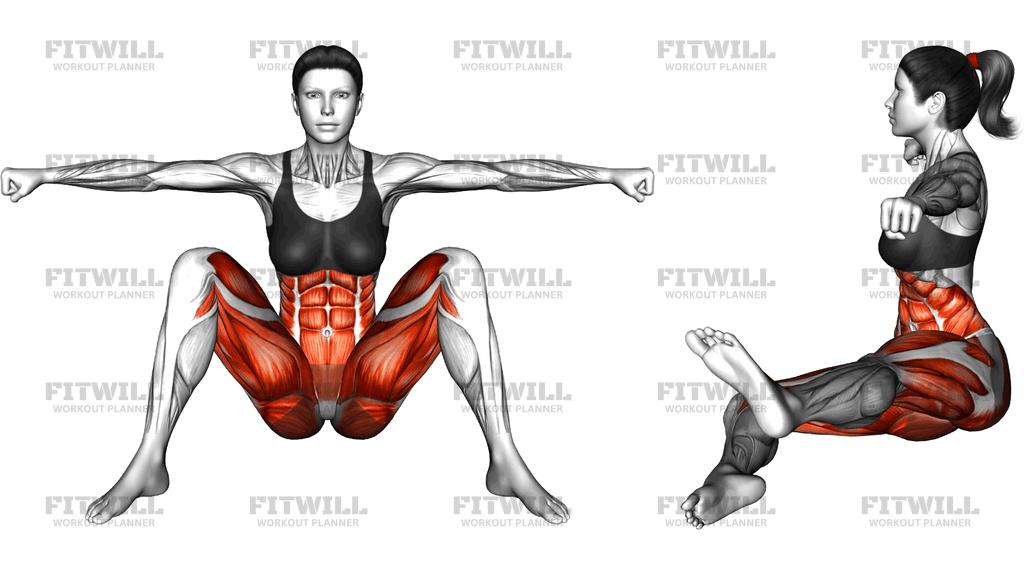
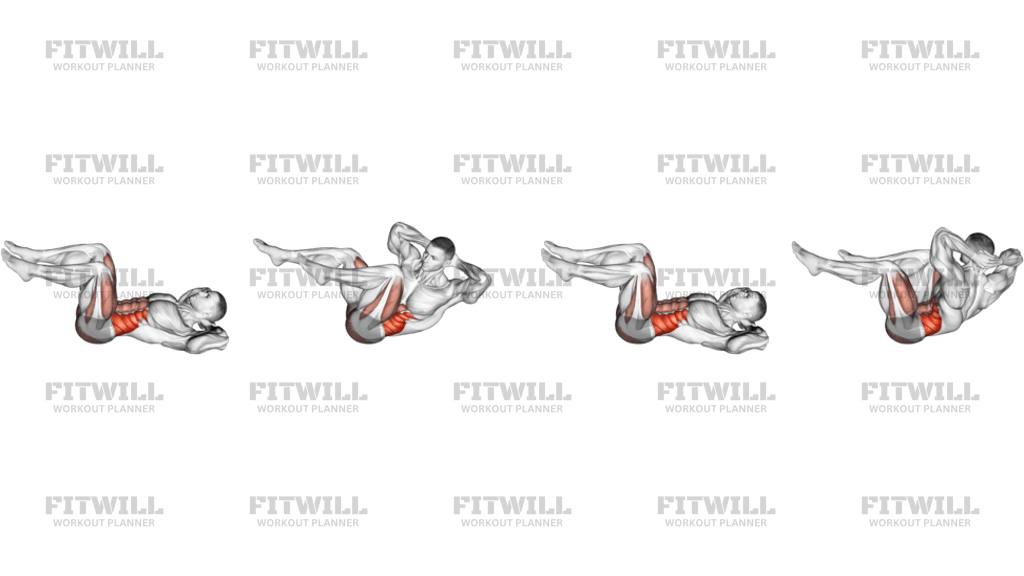
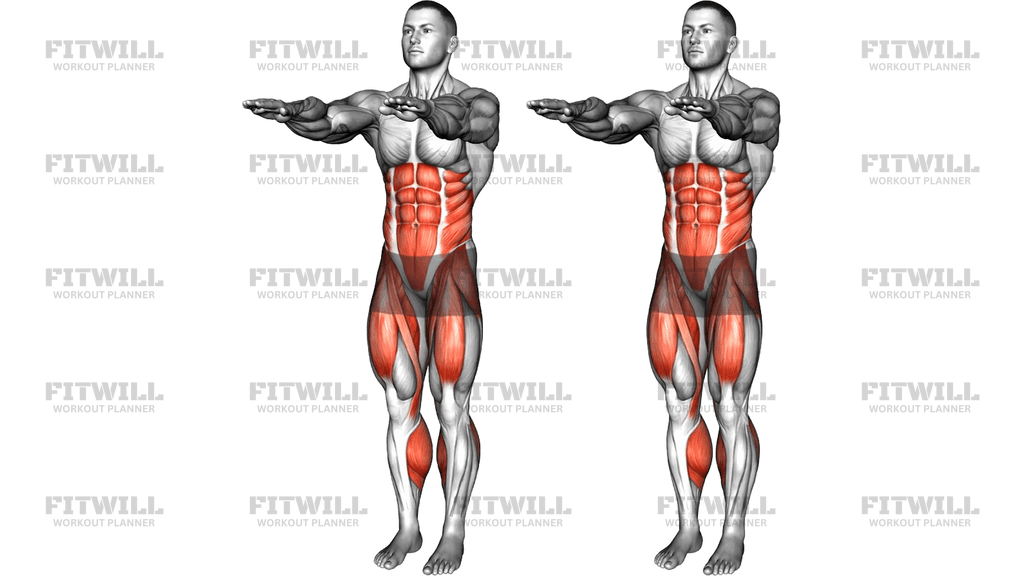
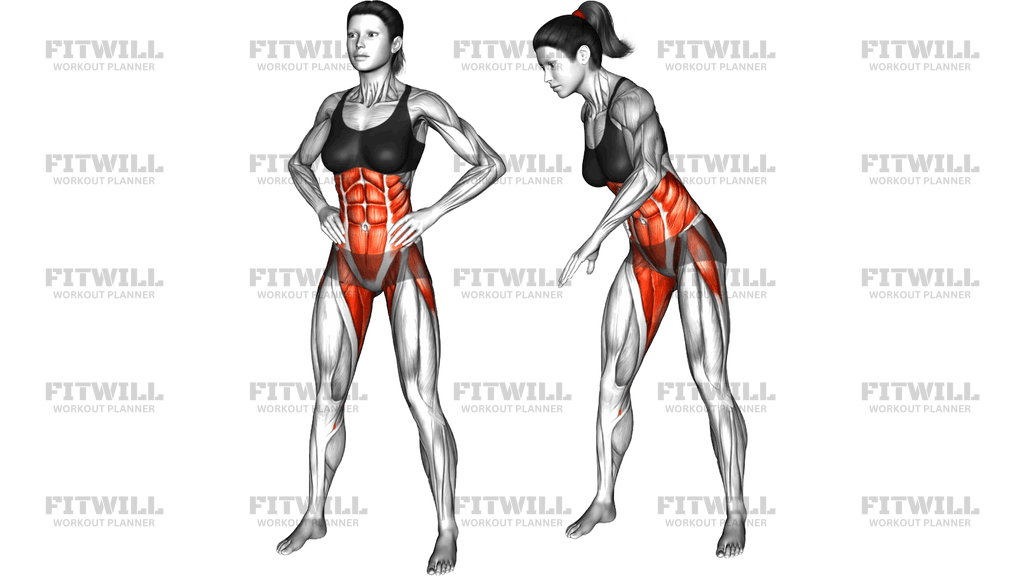
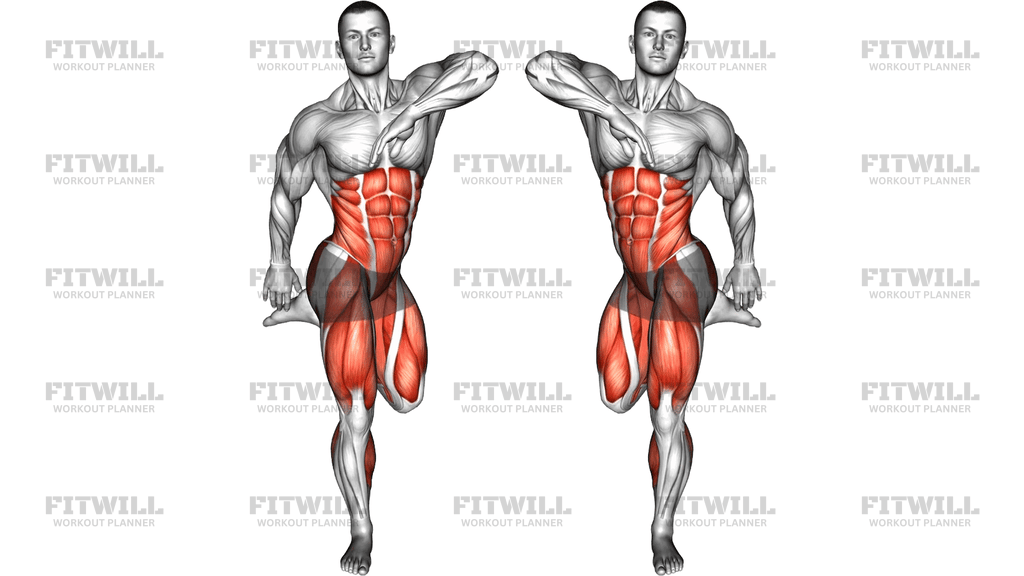
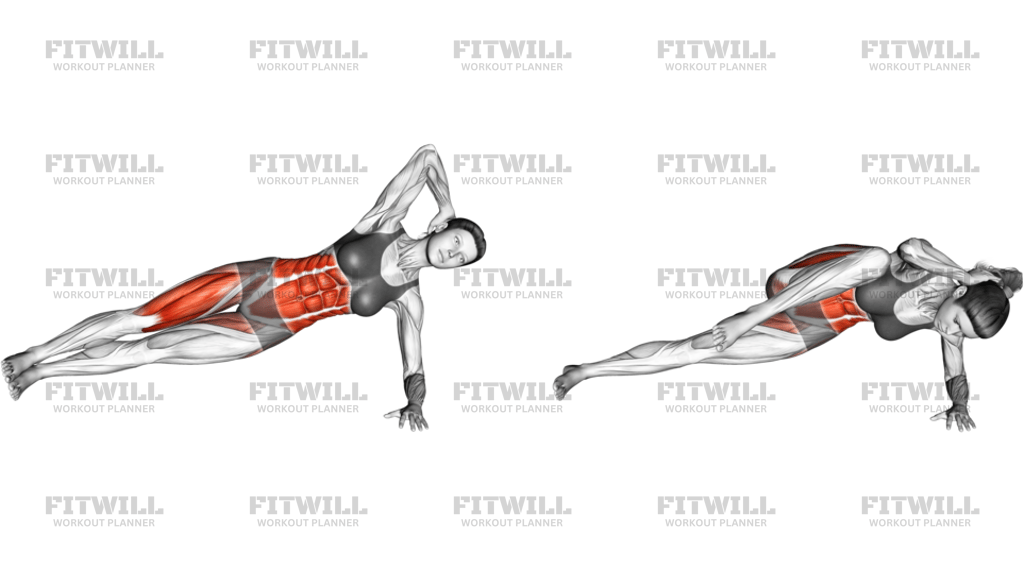
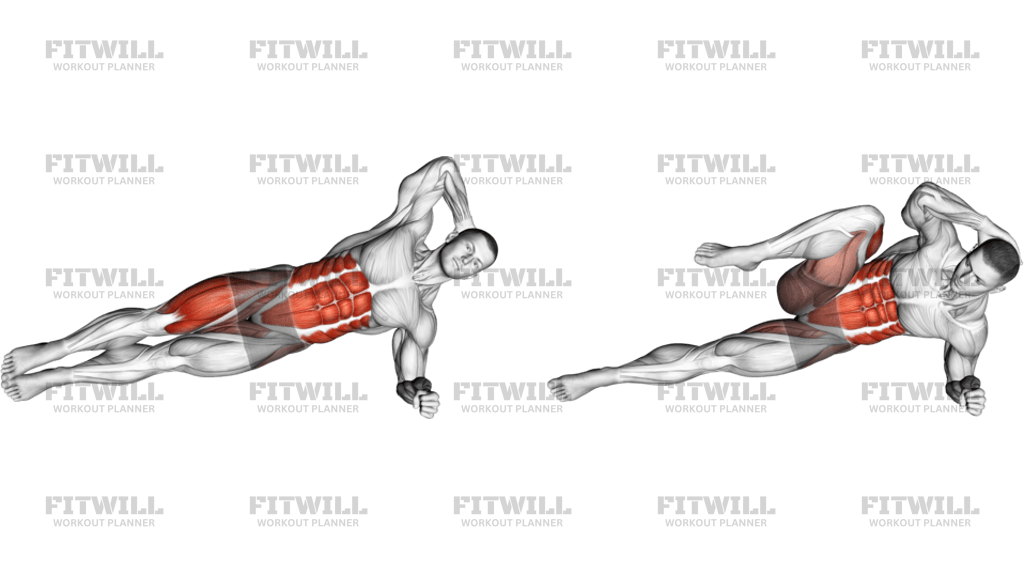
Plank Jump In is an explosive body weight movement that starts in a high plank and ends with both feet jumping forward to land just outside your hands in a low crouch, then jumping back to the plank. It blends core stability with lower body power, which makes it a popular bridge between pure ab work and full body conditioning drills. The image highlights the trunk and hip musculature for good reason: the entire midsection has to stay braced while the legs move quickly underneath you.
The main draw of this exercise is how it trains the core to hold shape under dynamic load. In a static plank your abs, obliques, and deep trunk muscles work isometrically, but the moment you snap your feet toward your hands, your hip flexors drive the knees forward while your abs must control the sudden shift of weight. Your shoulders and arms stabilize the upper body on the ground throughout, and your glutes and quads absorb the landing in the crouch.
Setup quality matters more than speed here. Because your hands stay planted the whole time, any sloppiness in your plank position gets amplified by the jump. If your hips sag or your shoulders drift behind your wrists, the landing becomes unstable and your lower back takes stress it does not need. A tight, straight line from head to heels gives your legs a stable hinge to move around.
To execute well, focus on jumping your feet as close to the outside of your hands as your mobility allows, landing softly on the balls of your feet with knees bent. Then push back explosively to the full plank without letting your hips pop up high. Think of the movement as a controlled frog hop rather than a sprawling collapse forward and back.
Plank Jump In fits naturally into circuit training, warm-up sequences for higher intensity sessions, and home workouts where no equipment is available. It pairs well with push-ups, mountain climbers, and squat jumps, and it can replace jumping jacks or burpee portions when you want extra core emphasis. Because it is a jump-based drill on straight arms, it does require healthy wrists, shoulders, and knees, so scale to step-ins if those areas are sensitive.
[ Workout Log & Planner ]
Put your next workout in Fitwill
Keep your plan and training log ready when you are.


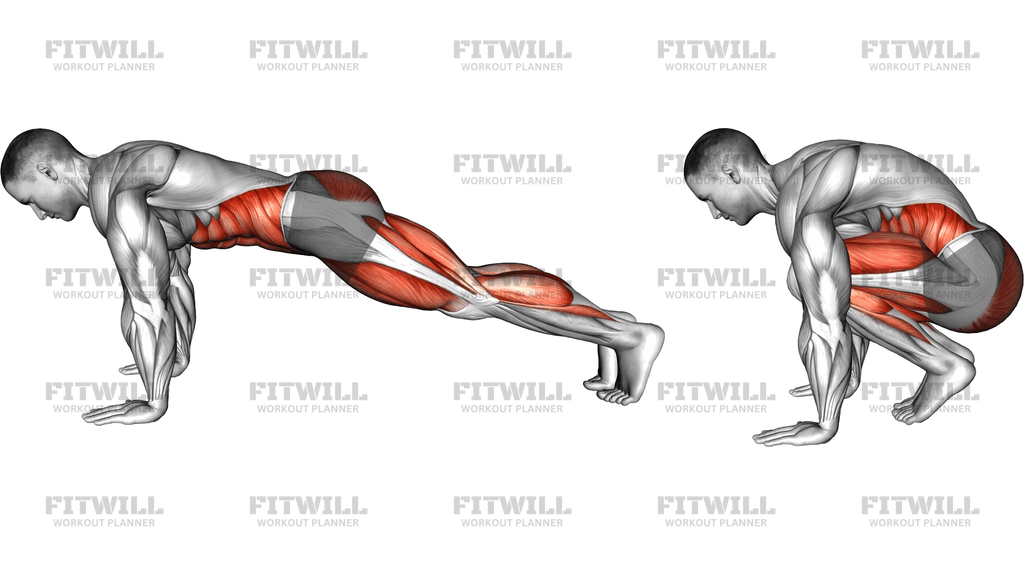
Instructions
- Start in a high plank with your hands set directly under your shoulders, arms straight, and your body forming one straight line from head to heels on the balls of your feet.
- Spread your fingers to grip the floor and screw your palms into the ground so your shoulders stay stacked over your wrists.
- Brace your core by pulling your ribs down and squeezing your glutes slightly before any movement begins.
- Exhale forcefully and jump both feet off the ground at the same time, driving your knees forward toward your chest.
- Land softly on the balls of your feet just outside your hands, settling into a low crouch with knees bent and hips down, keeping your hands planted.
- Pause briefly in the crouch to check that your weight is balanced between feet and hands, not dumped forward into your shoulders.
- Jump your feet back explosively, extending your legs until you return to the full plank with hips level and no sag in the lower back.
- Re-establish the straight plank line for a beat before starting the next rep.
- Breathe out on the jump in, breathe in on the jump back or during the brief reset, and keep a steady rhythm without rushing.
Tips & Tricks
- If your feet keep landing far behind your hands, work on hip mobility separately and gradually close the gap rather than forcing a deep crouch on day one.
- Hips shooting toward the ceiling on the jump back is one of the most common faults; cue yourself to extend the legs fully and squeeze the glutes at the top of the plank.
- Landing flat-footed with heavy thuds means your quads and calves are not absorbing force; aim for quiet landings on the balls of the feet.
- If your wrists ache, press more through the base of the palm and fingertips, or briefly rest on fists on a mat between sets rather than sinking into locked, strained wrists.
- Speed should only increase once you can do ten slow reps without your lower back sagging at the end of the plank position.
- On a smooth or slippery floor, place a mat under your feet as well as your hands so your feet do not slide out sideways on the jump.
- Keep your head neutral, looking down at the floor between your hands; craning the neck up tends to collapse the chest and shift weight into the shoulders.
- Fatigue usually shows up as a widening hand position as your shoulders tire; mark your hand spots on a mat to keep them fixed under your shoulders.
- For a low-impact version, step one foot and then the other forward into the crouch and step back, keeping the same braced plank between steps.
Frequently Asked Questions
What muscles does the Plank Jump In work?
The primary work comes from the abs and deep core, which hold the plank and control the weight shift. The hip flexors drive the knees forward, while the glutes, quads, calves, shoulders, and arms support the jumps and the landing.
Is the Plank Jump In suitable for beginners?
It can be, but most beginners should start with plank step-ins, where each foot moves forward one at a time. Once you can hold a solid plank for 30-45 seconds and step in cleanly, add the jump.
How far forward should my feet land during the Plank Jump In?
Aim to land just outside and slightly behind your hands, similar to a crouch position, with knees bent. If tight hips or thighs limit you, landing further back is fine as long as your plank and landing stay controlled.
Why do my hips sag when I jump back to the plank?
This usually means your core has fatigued or you are rushing the return. Slow the tempo, re-brace before each rep, and stop the set once you cannot keep a straight line from head to heels.
Can the Plank Jump In replace burpees in a workout?
It works well as a lower-impact substitute because it covers a similar plank-to-crouch path without the vertical jump or chest-to-floor portion. Add a push-up at the plank if you want more upper body involvement.
How many reps of the Plank Jump In should I do?
Start with 2-3 sets of 8-12 controlled reps, prioritizing a clean plank and quiet landings. As conditioning improves, you can increase reps or use time intervals of 20-30 seconds.
Is the Plank Jump In bad for my wrists or knees?
It loads the wrists in extension and the knees on each landing, so anyone with irritation in those joints should use the step-in variation instead. Warm up the wrists and keep landings soft on the balls of the feet to reduce joint stress.
Should my hands move during the Plank Jump In?
No, your hands stay planted under your shoulders for the entire set. If you find them creeping forward or outward, that is a sign of shoulder fatigue and a cue to rest.
How is the Plank Jump In different from mountain climbers?
Mountain climbers move one leg at a time with a steady running rhythm, while the Plank Jump In moves both legs together in one explosive hop. The two-leg jump demands more trunk control and more power from the hip flexors and quads.