Alternate Leg Lift Twist
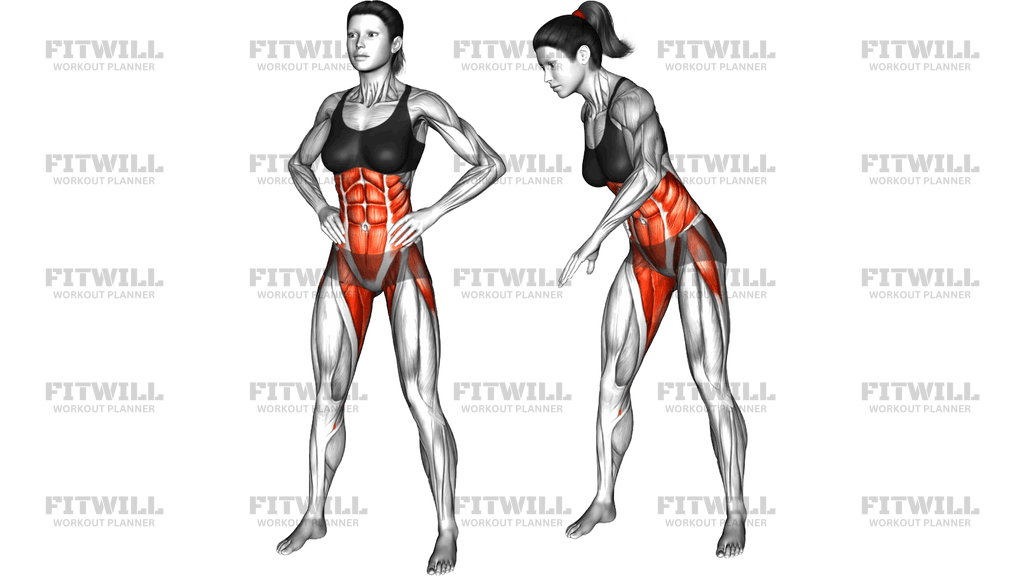
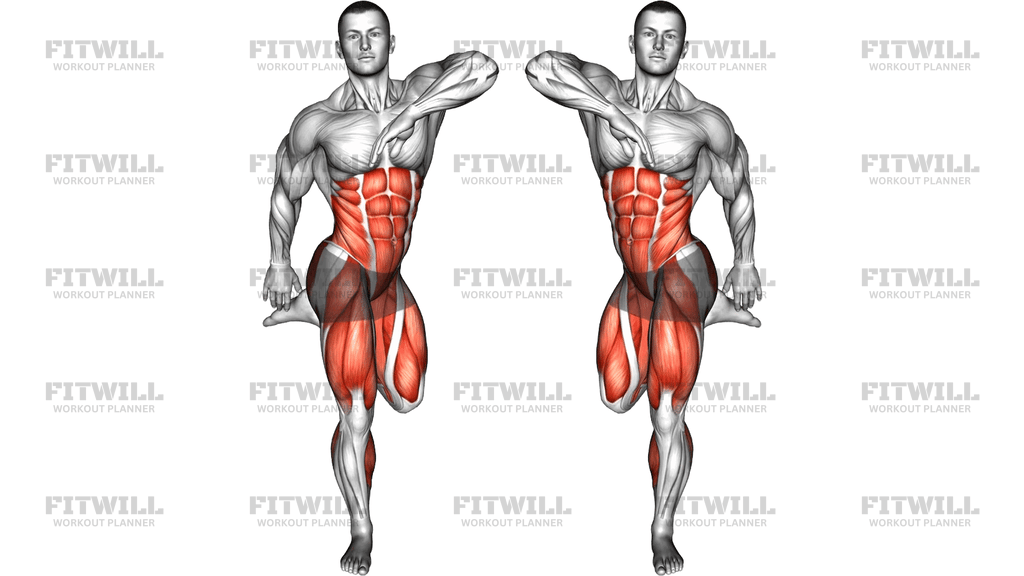
The Alternate Leg Lift Twist is a standing body weight core exercise that combines a single-leg knee lift with a rotation of the torso. You start tall with both arms extended straight out in front of your chest, then raise one knee up toward waist height while pulling it across your body toward the opposite side. The arms stay locked in place, which forces your midsection — not your shoulders — to produce the twist. Each rep works one side at a time, then you switch legs.
The main work falls on the abdominal wall, especially the obliques, which drive the rotational component, and the lower abs and hip flexors, which lift the knee. Because you're standing on one leg during every rep, your quads, calves, and the small stabilizing muscles around the hip and ankle are also constantly engaged to keep you balanced. It's a genuinely integrated movement rather than an isolated crunch.
This exercise is a good fit for people who want to train the core in a functional, upright position instead of lying on the floor. It's commonly used in warm-ups, circuit training, and general conditioning routines, and it works well as a low-impact way to raise your heart rate. Because it requires no equipment and very little space, it's practical for home workouts, hotel rooms, or quick training sessions with minimal setup.
Setup and posture matter more than speed here. Plant your feet roughly hip-width apart with your weight spread evenly across both feet, and extend your arms straight forward at shoulder height so they act as a fixed reference point. If your arms drift or your shoulders rotate ahead of your hips, the twist loses its tension and the obliques stop doing the work. A tall spine, level shoulders, and a firm brace before each lift keep the movement clean.
To execute it well, lift one knee to about hip height while rotating your torso so the knee travels toward the opposite side, squeezing through your waist at the top. Lower the leg with control back to the floor, re-center your torso, and repeat on the other leg. The tempo should be deliberate: a controlled lift, a brief pause at the top, and a slow return. Rushing turns this into a leg swing and strips most of the benefit away.
From a safety standpoint, the main risks are losing balance and twisting from the lower back instead of the trunk. Keep the rotation coming from your ribcage and waist, not by wrenching your lumbar spine, and stand near a wall or chair if balance is an issue when you're learning the movement. If you have hip or lower back concerns, use a smaller range of motion and a lower knee height until the pattern feels comfortable.
[ Workout Log & Planner ]
Put your next workout in Fitwill
Keep your plan and training log ready when you are.


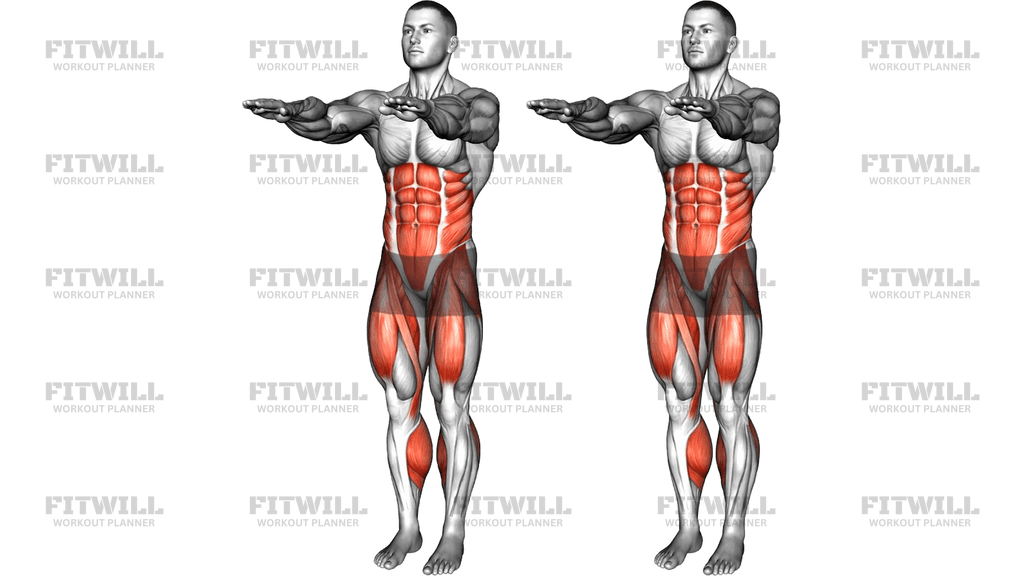
Instructions
- Stand tall with your feet hip-width apart and your weight distributed evenly across both feet.
- Extend both arms straight out in front of your chest at shoulder height, palms facing down or together, and keep them locked in this position for the entire set.
- Brace your midsection as if preparing for a light push, pull your shoulders back and down, and set your gaze on a fixed point forward to help with balance.
- Shift your weight slightly onto your left foot and lift your right knee up toward hip height.
- As the knee rises, rotate your torso to the right so the knee travels across the front of your body toward your left side, squeezing the waist as you reach the top position.
- Pause briefly at the top with the knee lifted and the torso rotated, keeping your arms level and forward the whole time.
- Slowly lower your right leg back to the floor and rotate your torso back to face forward, letting the arms return to center.
- Repeat the same lift-and-twist with your left knee rotating toward the right side to complete one rep of each leg.
- Exhale as you lift and twist, inhale as you lower the leg back down with control.
- Continue alternating legs for your target number of reps, resetting your stance and brace whenever you feel yourself rushing or wobbling.
Tips & Tricks
- The most common mistake is swinging the knee quickly and letting momentum do the work — lift the knee over a count of one to two seconds so the hip flexors and abs stay loaded.
- If your arms drop or drift toward the twisting side, the shoulders are stealing the rotation. Re-check that your arms stay parallel to the floor and centered in front of your chest on every rep.
- Rotate from the ribcage, not the lower back. If you feel the lumbar spine twisting sharply, reduce the knee height and focus on turning your waist instead.
- Wobbling on the standing leg usually means you're rushing or your base is too narrow — set your feet slightly wider than hip-width and slow the tempo until balance improves.
- Don't let the standing knee lock out completely; a soft knee makes it easier to absorb small balance corrections.
- Avoid shrugging your shoulders as you hold your arms up. Keep the shoulders down and relaxed so your neck and upper traps don't take over.
- If balance is a struggle at first, stand within arm's reach of a wall and touch it lightly with one fingertip for support until the pattern is stable.
- Breathe out on the lift rather than holding your breath — the exhale naturally reinforces the abdominal brace during the twist.
- Progress the exercise by pausing two to three seconds at the top of each twist, or by slowing the lowering phase, rather than by adding speed.
Frequently Asked Questions
What muscles does the Alternate Leg Lift Twist work?
The primary work comes from the abs and obliques, with the obliques producing the rotational twist. The hip flexors lift each knee, while the quads, calves, and hip stabilizers work continuously to keep you balanced on one leg.
Why do my arms stay extended forward during the Alternate Leg Lift Twist?
The extended arms act as a fixed reference point that stays level and centered while your torso rotates beneath them. This forces the twist to come from your waist and obliques rather than from your shoulders.
Is the Alternate Leg Lift Twist suitable for beginners?
Yes, as long as the range of motion is scaled down. Beginners can lift the knee lower, twist less, and stand near a wall for balance support until the coordination of lifting and rotating feels natural.
How high should I lift each knee?
Aim for roughly hip height, or whatever level lets you keep your torso tall and your arms level. If lifting higher makes you lean back or lose balance, reduce the height and rebuild it gradually.
Why do I keep losing my balance on the standing leg?
Balance usually breaks down when the movement is rushed or the feet are set too close together. Widen your stance slightly, slow the tempo, and fix your eyes on a stationary point in front of you.
Can the Alternate Leg Lift Twist replace floor crunches?
It trains the core in a different way — standing, rotating, and balancing — so it complements rather than fully replaces floor work. Using both gives you a more complete abdominal program.
Should I feel this in my lower back?
You may feel some involvement from the stabilizing muscles of the lower back, but you should not feel sharp twisting strain there. Rotation should come from the waist and ribcage, so back off the range if the lumbar spine feels stressed.
How many reps should I do of the Alternate Leg Lift Twist?
For general conditioning, 10 to 15 controlled reps per leg works well, focusing on a deliberate lift, a brief pause, and a slow return. Stop the set when your balance or form starts to deteriorate rather than pushing through sloppy reps.
What can I substitute if I struggle with the balance component?
A standing knee lift without the twist, or a lying alternating knee tuck with a rotation, trains similar muscles with less balance demand. You can also lightly touch a wall for support while you build stability.