Lying Prone I Raise
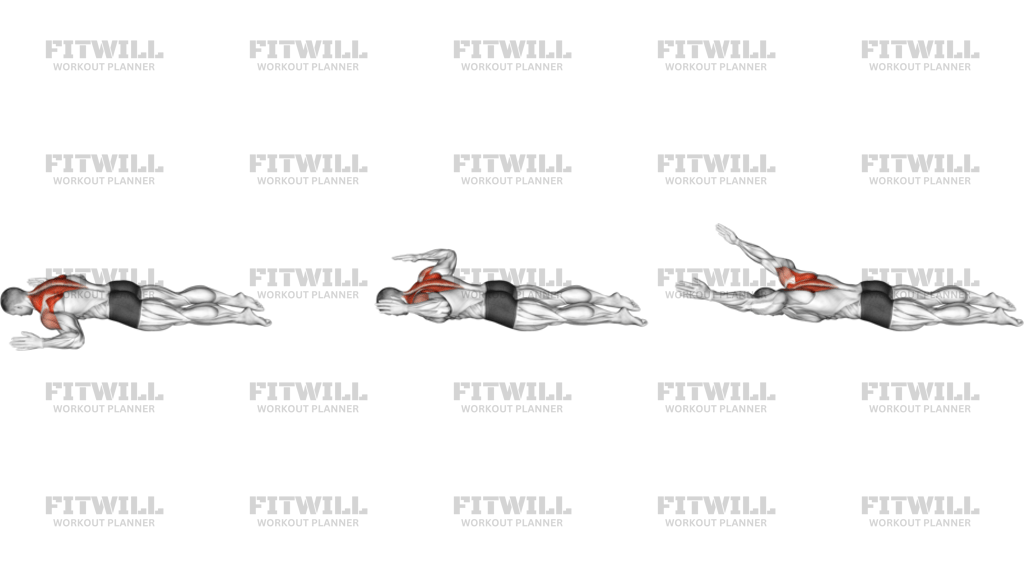
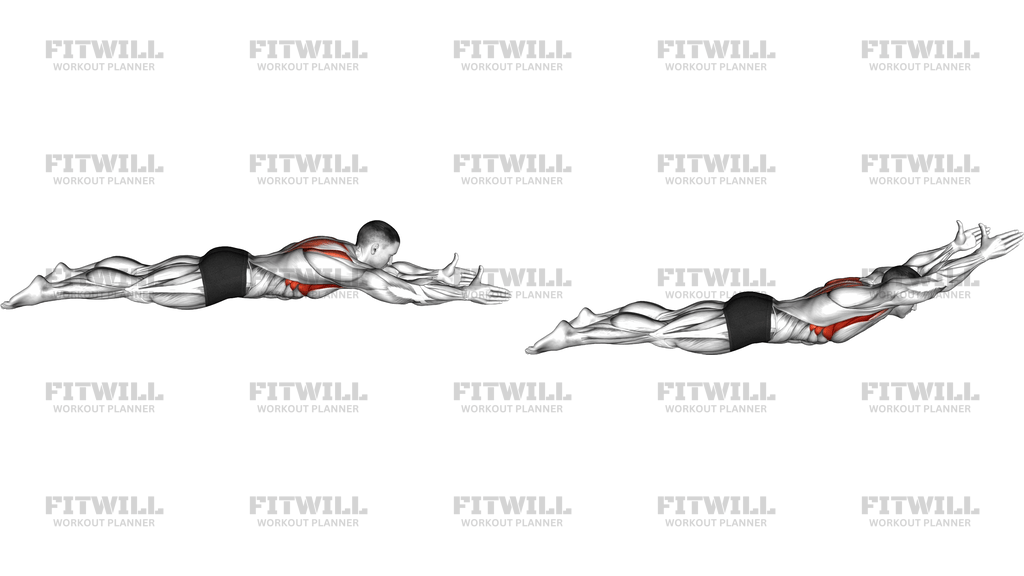
The Lying Prone I Raise is a bodyweight back exercise performed face down on the floor with your arms extended straight overhead so that your body and arms form the shape of the letter I. From that position, you lift your arms and upper chest toward the ceiling, squeezing the muscles between your shoulder blades and along the mid and lower back before lowering back down under control. Because the arms reach directly overhead rather than out to the sides, the emphasis shifts toward the lower trapezius, a commonly underworked area responsible for pulling the shoulder blades down and together.
This movement is especially useful for people who spend long hours sitting at a desk or hunched over a phone. Forward-head, rounded-shoulder posture tends to lengthen and weaken the lower traps while the upper traps and chest muscles get overworked. The prone I raise directly targets that weak link without any equipment, making it a go-to corrective drill in warm-ups, rehab-style programming, and general shoulder health routines. Swimmers and overhead athletes also use it to build endurance in the muscles that stabilize the shoulder blade during overhead motion.
The floor itself is part of the setup. Lying face down gives you constant feedback: if your chest and arms actually clear the ground, the work is coming from your upper back; if you cheat by cranking your neck or flaring your ribs, you will feel it immediately. Keep the movement small and honest. A few inches of controlled lift with a strong squeeze beats a big dramatic arch that comes from the lower back instead of the shoulder blades.
To perform it well, start with your forehead resting on or just above the mat, legs straight and relaxed behind you, and thumbs pointing toward the ceiling. Exhale as you float your arms up, thinking about lengthening your fingertips away from your body rather than simply lifting. Hold the top briefly, then lower slowly. Expect to feel this in a band across the middle of your back and around the inside edge of each shoulder blade, not in your neck or lower spine.
Because no weight is involved, this exercise is very beginner-friendly and easy to scale. You can add repetitions, extend the top hold, or eventually hold a light object in each hand once strict bodyweight reps feel effortless. If you have any history of shoulder impingement or neck pain, keep the lift range modest and stop if the position provokes discomfort rather than muscle effort.
[ Workout Log & Planner ]
Put your next workout in Fitwill
Keep your plan and training log ready when you are.


Instructions
- Lie face down on an exercise mat or the floor with your legs straight behind you and your feet relaxed, tops of the feet resting on the ground.
- Extend both arms straight overhead so your upper arms frame your head and your body forms a straight line from fingertips to toes, forming the I shape.
- Position your palms facing each other or thumbs pointing toward the ceiling, and rest your forehead on the mat with your gaze down.
- Gently brace your abdominals to keep your ribs from flaring and imagine lengthening your spine before you move.
- Exhale and raise both arms a few inches off the floor by pulling your shoulder blades down and toward your spine, letting your upper chest lift naturally with them.
- Pause at the top for one to two seconds with your arms straight and level, feeling the squeeze across your mid and upper back.
- Inhale and lower your arms and chest back to the floor slowly, keeping your fingertips reaching away from your body the whole way down.
- Complete all repetitions with steady breathing, never holding your breath, and keep your neck long rather than lifting your head to look forward.
- Between sets, reset your position completely so your shoulders stay square and both arms lift evenly on the next set.
Tips & Tricks
- Reach before you lift: driving your fingertips away from your shoulders activates the lower traps far better than simply raising your hands as high as possible.
- Do not chase height. If your torso arches sharply and your ribs push into the floor, your lower back is doing the job your shoulder blades should be doing.
- Keep your chin tucked slightly so your forehead stays near the mat; craning the neck up is the most common fault and usually means the weight of the head is straining the neck instead of the back working.
- Check that both hands finish at the same height. If one arm drifts higher, you likely have a side-to-side difference in shoulder mobility that is worth addressing.
- Keep your shoulders down away from your ears throughout the lift. Shrugging turns this into an upper trap exercise and defeats the purpose of the overhead arm position.
- A slow three-second lowering phase turns this into a much more demanding exercise even though no weight is involved.
- If you cannot lift your arms without strain, start with just the arms and no chest lift, then progress to lifting both together as your back strength improves.
- Squeeze your glutes lightly to anchor your pelvis and reduce any tendency to arch excessively through the lower back.
- Prone position can feel restrictive if the floor bothers your ribs or hips; sliding a thin pad under your hips can make long sets more comfortable without changing the movement.
Frequently Asked Questions
Which muscles does the Lying Prone I Raise work?
The main muscles are the lower and middle trapezius, supported by the rhomboids, rear shoulders, and the small muscles of the shoulder blades. The erector spinae assist lightly as the upper back extends, but the goal is shoulder blade control, not lower back work.
Why are the arms overhead instead of out to the sides in this exercise?
With arms overhead in the I position, the line of pull favors the lower trapezius, which depresses and upwardly rotates the shoulder blade. Arm positions like a T or W shift the emphasis more toward the mid-back and rear shoulders.
Is the Lying Prone I Raise good for beginners?
Yes. It uses only bodyweight, requires no equipment, and the floor gives instant feedback on whether you are lifting correctly. Beginners should focus on small, controlled lifts rather than height.
How high should I lift my arms and chest?
A few inches is enough. Your arms should clear the floor with your elbows straight and your hands level, and your upper chest may lift slightly with them. Excessive arching means you are borrowing from your lower back.
Why do I feel this in my neck instead of my back?
That usually means you are lifting your head and shrugging your shoulders toward your ears. Keep your forehead near the mat, your gaze down, and actively press your shoulders away from your ears as you raise your arms.
How many reps and sets should I do?
Two to three sets of eight to fifteen slow repetitions work well as a warm-up or accessory exercise. Since endurance matters for postural muscles, err on the side of controlled reps with a brief hold at the top rather than heavy effort.
Can I add weight to the Lying Prone I Raise?
Yes, once strict bodyweight reps are easy, you can hold a very light object such as a small plate in each hand. Only add load if you can keep your arms straight, level, and free of neck or lower back strain.
What can I use instead if lying on the floor is uncomfortable?
You can perform the same I-position arm raise on an incline bench with your chest supported, or standing while bent slightly forward against a wall. The key is keeping the arms straight overhead and driving the shoulder blades down.
Is the Lying Prone I Raise safe if I have lower back issues?
The lift itself is small, but any back extension can aggravate a sensitive lower back. Keep your glutes engaged, limit how high your chest rises, and if the position causes discomfort rather than muscular effort, skip it and consult a qualified professional before continuing.