Bodyweight Explosive Calf Raise
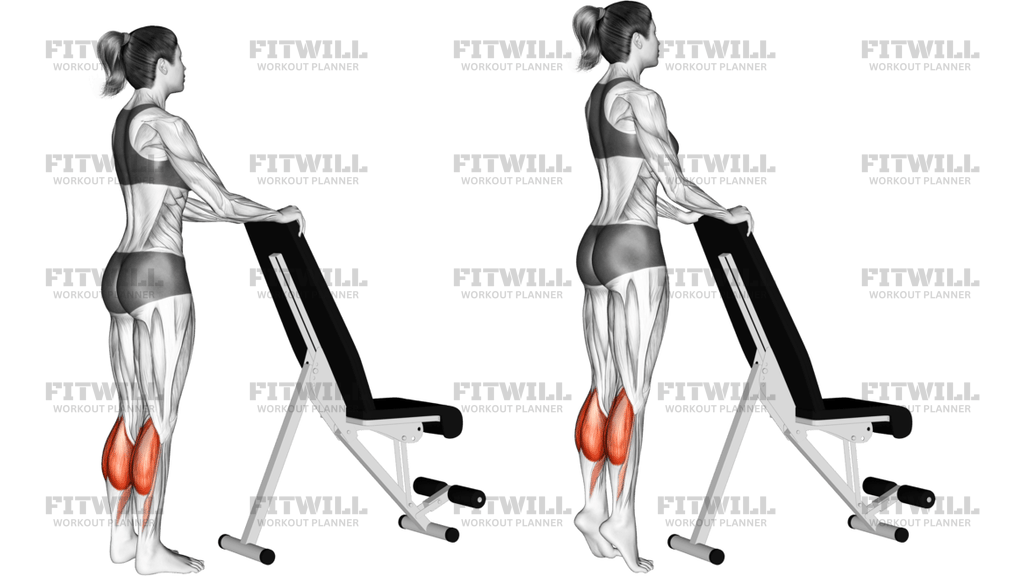
The Bodyweight Explosive Calf Raise is a standing calf exercise performed with no equipment, where you drive up onto the balls of your feet with speed and intent rather than slowly grinding through the rep. Instead of a controlled tempo raise, the focus is on pushing forcefully through the floor so your ankles extend rapidly and you rise as high as possible onto your toes, then lower back down under control to reset. The calf muscles are highlighted in the movement as the primary drivers, with the two-headed gastrocnemius on the back of the lower leg doing most of the visible work and the soleus underneath it assisting on every rep.
This movement suits anyone who wants stronger, more reactive lower legs without a gym. Sprinters, jumpers, and court-sport athletes benefit because explosive ankle extension is exactly what happens when you accelerate, cut, or rebound. It is also useful for general lifters whose calves respond better to speed and intent than to slow, high-rep pumping work, and for beginners who want to build a foundation before adding load to standing calf raises.
The setup matters more than people expect. Because there is no machine guiding the path, your balance, foot pressure, and ankle alignment determine whether the work actually lands on the calves. Standing tall with the balls of the feet firmly loaded, knees straight but not locked, and the ankle tracking in a straight line keeps the gastrocnemius in the driver's seat. Let the ankles roll outward or the knees bend, and the rep loses its purpose quickly.
Execution is simple but demanding. From a tall standing position, brace your core, press through the big toe and ball of the foot, and snap up onto your toes as fast as you can, reaching for maximum height at the top. Pause for a brief moment at the peak to own the position, then lower your heels back to the floor with control rather than dropping them. The explosive up, controlled down rhythm is what separates this from a casual toe raise.
Because the calf muscles handle high volumes in daily walking, they generally need meaningful volume and genuine effort to adapt. A typical approach is 2 to 4 sets of 10 to 20 quality reps, stopping when the snap in your rise fades rather than when the burn alone sets in. Quality of the drive matters more than rep count here.
Safety-wise, this is a low-risk exercise, but a few points are worth respecting. Perform it on a flat, non-slip surface, keep something sturdy nearby if balance is a limitation, and avoid bouncing the heels off the floor between reps, which can irritate the Achilles area over time. If you feel sharp pain in the Achilles or the bottom of the foot rather than normal muscle effort, stop and reassess your range and surface before continuing.
[ Workout Log & Planner ]
Put your next workout in Fitwill
Keep your plan and training log ready when you are.


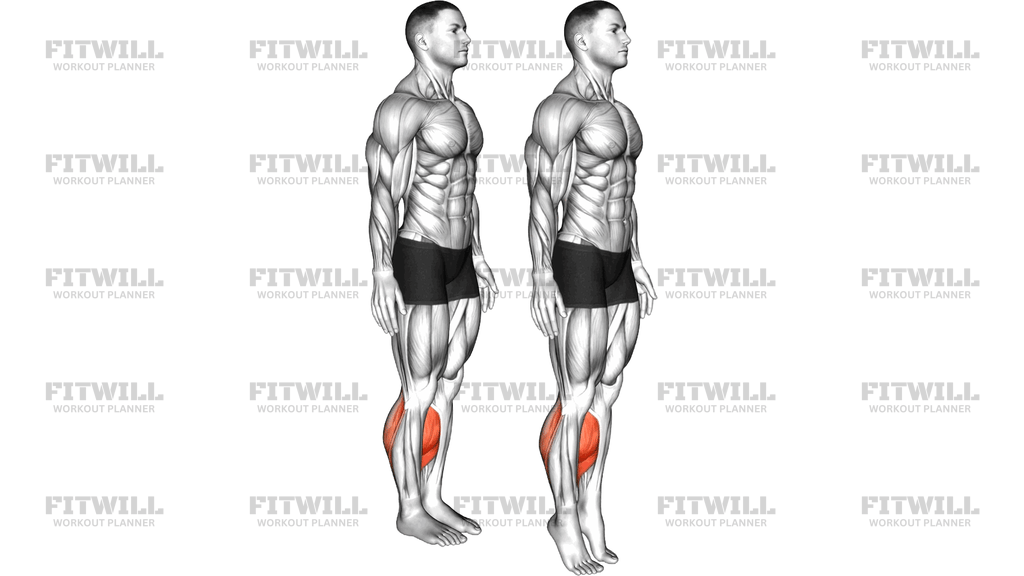
Instructions
- Stand upright on a flat, non-slip floor with your feet about hip-width apart, toes pointing straight ahead or turned out very slightly.
- Let your arms hang naturally at your sides, or place one hand lightly on a wall or sturdy object if you need help with balance.
- Stand tall with your chest up, ribs stacked over your hips, and brace your core lightly so your torso does not sway during the rep.
- Shift your weight onto the balls of your feet so your heels are just barely touching the floor, keeping your knees straight but not locked.
- Drive forcefully through the big toe and ball of the foot to explode up onto your toes, extending your ankles as fast and as high as you can.
- Hold the top position for a brief moment with your heels as high as possible and your calf muscles fully contracted.
- Lower your heels back to the floor under control over 1 to 2 seconds instead of dropping them, keeping tension in the calves as you descend.
- Exhale as you explode upward and inhale as you lower your heels back down.
- Reset your stance and foot pressure briefly at the bottom, then repeat for your target number of reps while keeping the upward drive fast and crisp.
Tips & Tricks
- If your heels drift outward as you rise, the ankles are rolling and the outer edge of the foot is taking over. Press deliberately through the big toe and inner ball of the foot on every rep.
- Bending the knees turns this into a soleus-dominant move and steals the stretch from the gastrocnemius. Keep the legs straight so the explosive drive comes from the ankle alone.
- If you find yourself rocking forward at the torso to help the rise, slow down and brace harder. The lift should come from the foot pushing into the floor, not from your upper body lunging ahead.
- Once the height of your toe rise visibly drops, the explosive quality of the set is gone. End the set there rather than grinding out slower reps, which changes the nature of the exercise.
- Do not let the heels slam down between reps. Catching the descent softly protects the Achilles tendon and keeps the calves loaded through the whole rep.
- A firm surface works better than a soft or cushioned one. On thick carpet or foam mats, the foot sinks and the explosive push loses its pop.
- If balance is the limiting factor, use a fingertip touch on a wall for balance only. Avoid leaning or pulling on the support, or you will unload the calves you are trying to train.
- Full ankle extension at the top matters. Rising only halfway keeps the range short and limits the calf work, so reach for the highest heel position you can control each rep.
Frequently Asked Questions
Which muscles does the Bodyweight Explosive Calf Raise work?
The gastrocnemius, the large two-headed muscle on the back of the lower leg, is the primary mover. The soleus beneath it and the smaller stabilizing muscles around the ankle assist on every rep.
How is the Bodyweight Explosive Calf Raise different from a regular standing calf raise?
The main difference is speed of the upward drive. In this version you push up onto your toes as fast and as high as possible to train power and reactivity, whereas a standard calf raise uses a slower, controlled tempo focused purely on muscle tension.
Is the Bodyweight Explosive Calf Raise suitable for beginners?
Yes, it is a good entry point because it requires no equipment and teaches proper foot pressure and ankle alignment. Beginners should start with fewer reps and prioritize a straight, non-collapsing ankle path before chasing speed.
Should my knees be straight or bent during the Bodyweight Explosive Calf Raise?
Keep your knees straight but not locked. Straight legs put the gastrocnemius in its most effective position, while bent knees shorten it and shift more work to the soleus.
Why do my calves cramp when doing the Bodyweight Explosive Calf Raise?
Calf cramping is common in this movement because the muscle works through a full range at high effort, often for the first time. Reduce your reps per set, stay well hydrated, and build volume gradually as the muscle adapts.
Can I do the Bodyweight Explosive Calf Raise every day?
Daily practice is possible at low volumes since the movement is low-skill, but the explosive quality needs recovery to stay sharp. Two to four focused sessions per week is a more sustainable way to progress.
What is the most common mistake in the Bodyweight Explosive Calf Raise?
The most common mistake is letting the ankles roll outward so the weight shifts to the outer edge of the foot. This reduces calf involvement and can strain the ankle over time, so keep pressure spread across the ball of the foot with emphasis on the big toe side.
What can I use instead of the Bodyweight Explosive Calf Raise if I need a substitute?
Slow-tempo standing bodyweight calf raises work when you want less joint stress, and single-leg calf raises increase the difficulty without equipment. If you have access to a gym, a standing calf raise machine or Smith machine calf raise with an explosive intent is the closest loaded version.
How many reps and sets of the Bodyweight Explosive Calf Raise should I do?
Two to four sets of 10 to 20 reps works well for most people. Stop each set when the height and speed of your toe rise start to drop, since preserving the explosive intent is the point of the exercise.
Is it safe to do the Bodyweight Explosive Calf Raise with a history of Achilles problems?
Explosive ankle extension places a fast load on the Achilles tendon, so anyone with a history of Achilles pain or tendon issues should progress cautiously. Start with slow calf raises, keep the range pain-free, and only add speed gradually without sharp discomfort.