Standing Double Crunch Knee Drive
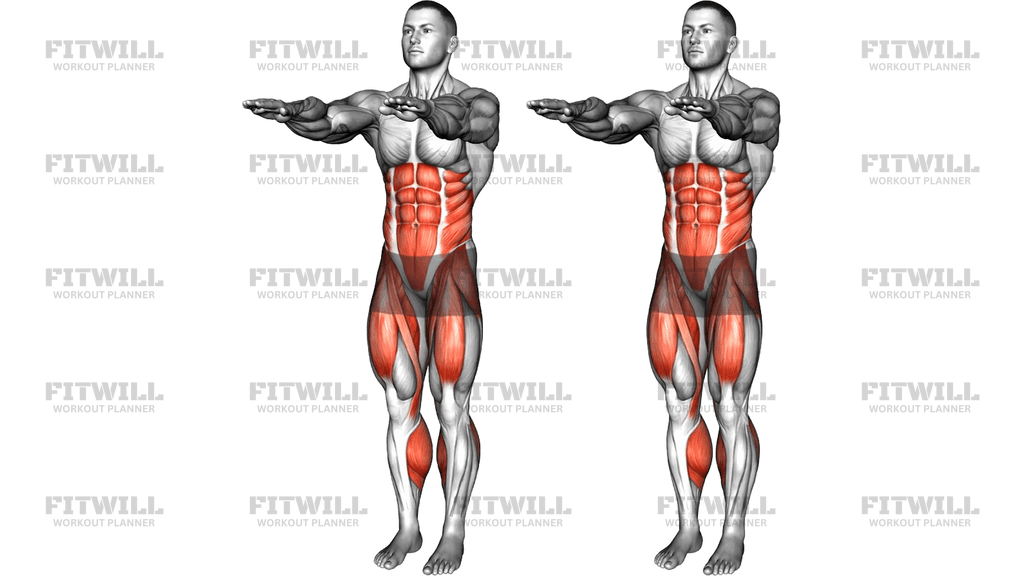
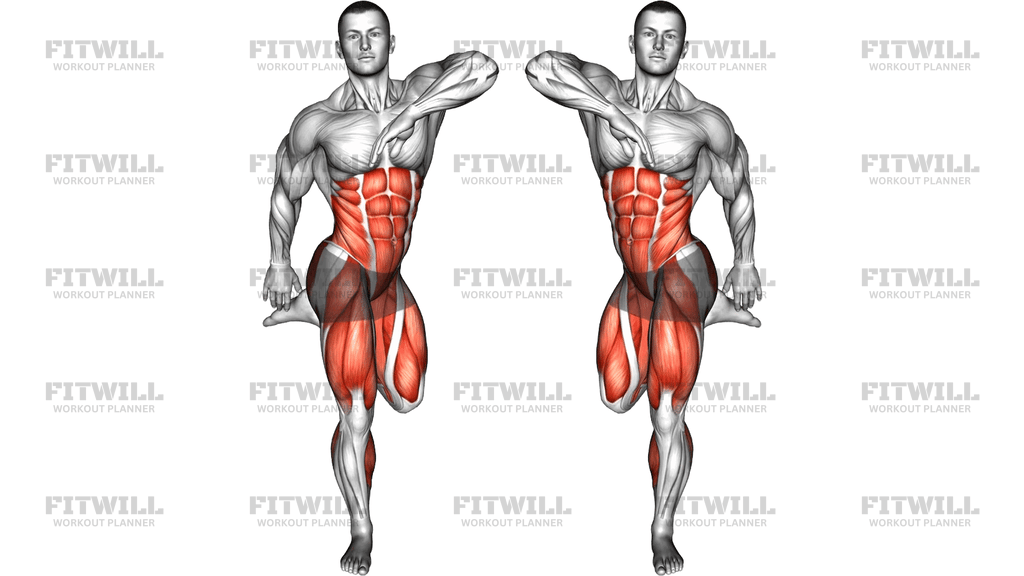
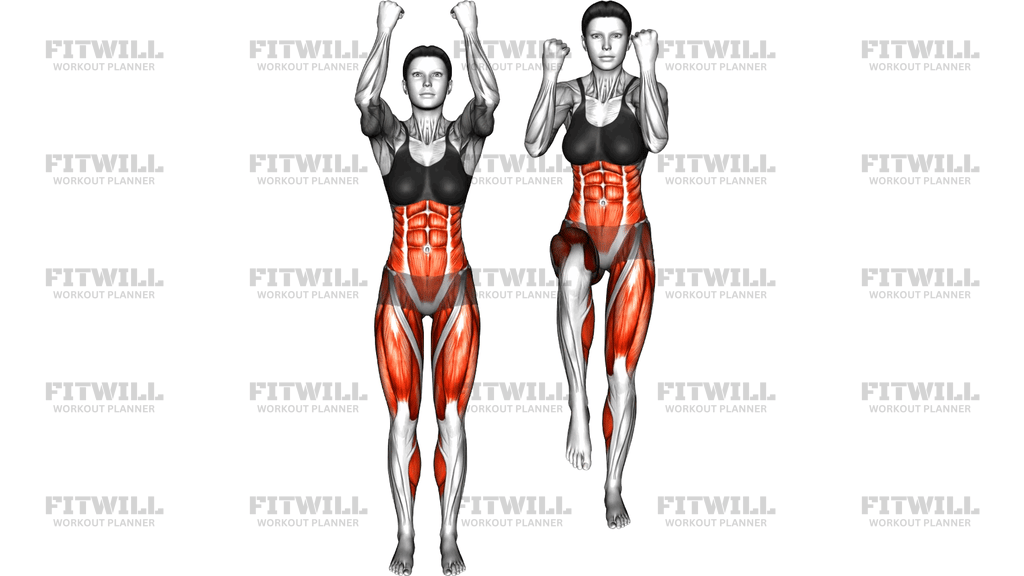
The Standing Double Crunch Knee Drive is a body weight core exercise that combines an upper-body crunch with a driving knee lift, all performed from a tall standing position. You start with both arms extended overhead, then simultaneously pull your elbows down and forward while driving one knee up toward your chest, so your hands and knee converge in front of your torso. This closing motion is what gives the movement its "double crunch" name: you are flexing the spine from the top down and the bottom up at the same time.
Because it requires no equipment and very little space, this exercise suits almost anyone looking to train the abs without getting on the floor. It works especially well in warm-ups, home workouts, circuit training, and conditioning finishers. The standing position also makes it a practical choice for people who find floor crunches uncomfortable on the neck, lower back, or tailbone, or who simply prefer movements that keep them on their feet.
The primary muscles worked are the rectus abdominis, the front wall of the abs that flexes the trunk. The obliques assist as they control the slight rotation and side-bending that happen when the knee drives up, and the hip flexors, particularly the iliopsoas and rectus femoris, power the knee lift itself. Your shoulders and upper back work isometrically to bring the arms down under control, and the standing leg, along with the calves and stabilizers of the foot and ankle, keeps you balanced throughout each rep.
Setup matters more than it might seem. A tall stance with feet roughly hip-width apart, ribs stacked over the pelvis, and arms fully overhead gives you the longest possible range for the crunch. If you start slouched or with the arms already low, you lose half of the contraction before the rep even begins. During the drive, the goal is to curl the ribcage down toward the pelvis rather than simply yank the knee up with the hip flexors while the torso stays vertical.
Execution should be crisp but controlled: pull the elbows down, crunch the torso forward and slightly toward the driving knee, lift the knee to at least hip height, squeeze the abs hard at the top, then lower the leg and arms back to the full overhead start without losing your posture. Alternating legs rep by rep keeps the workload even and challenges your balance on both sides.
A few practical points will keep the exercise effective and safe. Keep the movement smooth rather than ballistic, especially if you are new to standing core work. Avoid yanking on your neck or shrugging the shoulders as the arms come down, and keep the standing knee soft rather than locked. If balance is a limiting factor at first, stand near a wall or place your fingertips lightly on a sturdy surface until your stability improves. Done with intent, the Standing Double Crunch Knee Drive delivers a genuine abdominal challenge while also raising your heart rate, making it a time-efficient addition to almost any routine.
[ Workout Log & Planner ]
Put your next workout in Fitwill
Keep your plan and training log ready when you are.


Instructions
- Stand tall with your feet about hip-width apart, weight spread evenly across both feet, and your arms fully extended straight overhead with your hands in loose fists.
- Draw your shoulder blades down slightly so your arms stay long without shrugging, and brace your abdominal wall as if preparing for a light punch.
- Shift your weight onto your left leg and allow a small, soft bend in that standing knee so you are stable and not locked out.
- Exhale as you pull both elbows down and forward while crunching your ribcage toward your pelvis, and simultaneously drive your right knee up toward your chest.
- At the top of the rep, your elbows should be near thigh or knee level, your torso curled slightly forward, and your knee lifted to hip height or above.
- Squeeze your abs hard for a brief moment at the top, keeping the crunch and the knee drive connected rather than letting one lag behind the other.
- Inhale as you lower the right leg back to the floor under control and raise your arms back to the fully overhead starting position.
- Reset your posture briefly, making sure your ribs are stacked over your hips and your shoulders are relaxed away from your ears.
- Repeat the drive with your left knee, and continue alternating legs for the desired number of repetitions, keeping the tempo smooth on every rep.
Tips & Tricks
- The most common mistake is turning this into a knee raise with a vertical torso. If your chest stays upright the whole time, actively think about curling your ribcage down toward your hips as the knee comes up.
- Do not let the arms simply flop down. Pull the elbows down with intent, as if trying to crunch through the top of the movement with your upper body, so the abs rather than momentum do the work.
- If you find yourself shrugging as the arms come down, exaggerate the opposite cue at the start: reach taller and push your shoulders slightly away from your ears before every rep.
- Keep the standing knee softly bent. A locked knee makes balance harder and reduces your ability to absorb the small shifts in weight as the opposite leg drives up.
- Avoid letting the driving foot slam back down. Lowering it quietly and under control keeps tension on the hip flexors and abs and protects the standing knee.
- If your lower back arches as you return the arms overhead, do not reach quite as far back. Stop the arm extension at the point where your ribs start to flare, and build range gradually.
- For a stronger contraction, pause for a full second where the elbows meet the knee and exhale forcefully; this short hold often reveals whether the abs or momentum were doing the work.
- If balance is the limiting factor, stand with your back a few inches from a wall or lightly touch a counter with one hand until your stabilizers adapt, then progress to free standing.
- Alternate legs every rep rather than doing all reps on one side. This keeps the oblique challenge symmetrical and avoids one side fatiguing before the other.
- Once the body weight version feels easy, slow the tempo to a three-second descent or hold a light medicine ball at your chest to add resistance without changing the movement pattern.
Frequently Asked Questions
What muscles does the Standing Double Crunch Knee Drive work?
The rectus abdominis, the front sheet of the abs, is the primary mover, since it flexes the trunk as the elbows and knee converge. The hip flexors lift the knee, the obliques assist with the slight rotation and side control, and the standing leg's stabilizers keep you balanced.
Why does the Standing Double Crunch Knee Drive start with the arms overhead?
The overhead position lengthens the distance the torso has to curl, which increases the range of the spinal flexion. Starting with the arms already low would turn the movement into a simple knee raise with much less abdominal involvement.
Is the Standing Double Crunch Knee Drive good for beginners?
Yes, it is approachable because it uses no equipment and the range can be scaled easily. Beginners can lift the knee lower, move more slowly, or stand near a wall for balance, then progress to a full-height knee drive and a stronger crunch as control improves.
Should I alternate legs or complete all reps on one side?
Alternating legs every rep is the standard approach because it keeps the workload even and continuously challenges your balance on both sides. If you prefer doing all reps on one side, always match the count on the other side before moving on.
How high should I drive my knee during the Standing Double Crunch Knee Drive?
Aim for at least hip height, with thigh parallel to the floor being a solid target. Height matters less than the crunch itself, so if lifting higher makes your torso collapse backward, reduce the height and prioritize curling the ribcage down.
Can I do the Standing Double Crunch Knee Drive if floor crunches hurt my neck or back?
Often yes, because the standing position removes the neck-pulling habit common in floor crunches and keeps the spine loaded in a more neutral, weight-bearing position. Move smoothly, avoid forcing the crunch, and stay within a range that feels comfortable.
What is the most common mistake in the Standing Double Crunch Knee Drive?
The most common error is driving the knee up with the hip flexors while the torso stays vertical, which turns the exercise into a leg raise. The fix is to lead with the elbows and the crunch so the ribcage and knee move toward each other at the same time.
How can I make the Standing Double Crunch Knee Drive harder?
Slow the lowering phase to two or three seconds, pause at the top where the elbows meet the knee, or hold a light medicine ball or weight plate at your chest. Each option increases the demand on the abs without altering the movement pattern.
How many repetitions of the Standing Double Crunch Knee Drive should I do?
For muscle endurance and core conditioning, 10 to 20 controlled reps per side works well, either as a standalone core block or within a circuit. Focus on quality over volume; once the crunch disappears and it becomes a knee raise, end the set.
Does the Standing Double Crunch Knee Drive offer any cardio benefit?
Because you are standing and repeatedly driving the knees while moving the arms, your heart rate rises noticeably compared with floor crunches. Performed at a brisk but controlled pace in a circuit, it contributes to conditioning, though it is primarily a strength and endurance exercise for the core.